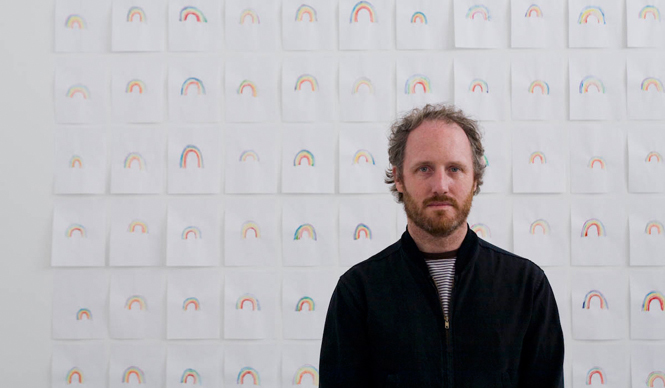
INTERVIEW | Director Mike Mills on '20th Century Women'
INTERVIEW | A Documentary Depicting People Battling Depression
Does Your Soul Have A Cold?
Director Mike Mills: Interview for Japanese Release (Part 1)
Depression affects one in fifteen Japanese people. Yet, until the year 2000, the word "utsu" was rarely heard outside psychiatric circles. Why did depression explode in such a short period? Director Mike Mills believed that one reason was the advertising campaign by pharmaceutical companies, "Do you have a cold of the soul?" This led him to decide to create a documentary that would delve into the reality of the condition. This film, which captures the everyday lives of depression patients with Mills's unique, gentle perspective, not only sheds light on the lesser-known aspects of depression but also vividly portrays the issues facing contemporary Japanese society.
Text by TANAKA Junko (OPENERS)
A New Globalization!?
—Why did you choose Japan as the setting for a film about depression?
I've visited Japan many times. One day, I was having coffee with a Japanese friend I'd known for three years, and she took out some pills and started taking them. Looking at the pills on the table, it suddenly struck me: aren't pills an American concept? The entirety of the concept of chemistry is contained within the pill. The entire world exists within this very small ball. And that world is entirely American.
To me, that scene looked like a new form of globalization. The way we think about health and mental health, the value system that dictates we "must be happy," this obsession with happiness—these are American ideas. The idea that you *have* to be happy. Americans do business by exporting these kinds of ideas. At that moment, I had a hunch that there might be a scheme by Western pharmaceutical companies behind this.

—What aspects of depression did you want to illuminate when you began filming? Did that change as you continued?
Fundamentally, I want to make films based on human portraits. I want to depict how people construct their worlds and what they think. This time, too, I wanted to photograph portraits of people who, while not just feeling down, are engaged in various activities in their daily lives. How do they cope with depression? How do they try to engage with the world? How do they seek out positivity... That's what interested me.
The people who participated each have their own ways of feeling better, and to me, these seemed more beautiful and hopeful than medication. They are by no means weak, nor are they lazy or victims. They are striving to improve. That's where I want to help. I have many acquaintances in America who suffer from depression, and I consider myself to have mild depression, but I had never spoken so deeply with people who have experienced severe depression. And I learned this time that it is something entirely different from mild depression.
INTERVIEW | A Documentary Depicting People Battling Depression
Does Your Soul Have A Cold?
Director Mike Mills: Interview for Japanese Release (Part 2)
They Are Not Monsters
Depression is a taboo subject in Japan. I still believe it's something pushed into the shadows. That's precisely why I think it's necessary for many people to first know that "people suffering from depression are working, living, and are not monsters at all." That's what I tried to show this time.
When I started filming, I had a rather critical view of medication and the pharmaceutical industry. However, some of the participants felt that medication had helped them, and as I encountered their perspectives, my view became more nuanced by the time the film was finished. While I still lean towards being against medication, I understand that it can be necessary. It can be helpful at times. Taking medication when you have depression can be frightening, but if it helps, that's wonderful.
—How did you meet the five participants—Takatoshi, Mika, Ken, Kayoko, and Daisuke? Were they all cooperative from the beginning?
First, Mr. Takuo Yasuda, a Japanese producer I trust deeply, sent out an announcement about this project to depression-related chat rooms. Depression is a significant presence in the online world. So, the response was greater than I expected, and quite a number of people participated.
Before filming began, I thought, "They might not open up easily." Especially in Japan, there's a way of thinking that considers reticence a virtue. I was a little worried. However, in reality, my worries were unfounded, and everyone spoke quite openly.
The people who participated this time had a sense of mission, like "something must be done." This is because they are aware of being misunderstood within Japanese society. They feel treated as if they don't exist, excluded from society. Everyone feels that way. They all said things like, "We wanted to prove that we are not frightening people, but simply people dealing with a serious condition."
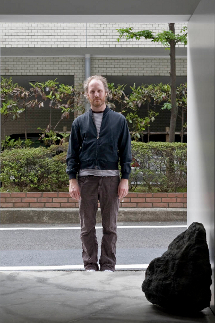
Even people who hadn't left their homes for years came all the way to Shibuya just for the interview. After selecting the people who fit the project there, I later visited their homes with a camera. It was for an initial meeting. Everyone trusted me, and they understood what I wanted to do, so things progressed very smoothly. I didn't want to impose my own opinions, so I just asked questions and gathered information. I didn't want to make judgments about what was right or wrong. The actual filming began when I came to Japan with the camera crew. It was a very slow start.
INTERVIEW | A Documentary Depicting People Battling Depression
Does Your Soul Have A Cold?
Director Mike Mills: Interview for Japanese Release (Part 3)
My Mother Also Had Depression
—Was it something you considered from before filming began, to focus not only on the person with depression but also on those around them?
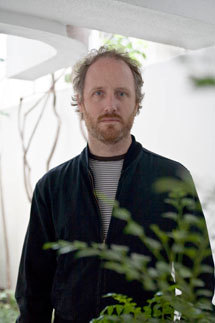
Even before filming, I wanted to interview their families and friends. As we began filming, I was deeply moved by the families' great generosity. I tried to understand where that generosity came from. Perhaps because they themselves or someone in their family has experienced the painful reality of depression, they feel a desire to help others who are suffering in the same way.
Actually, my mother also had depression. When I was young, if my mother fell into a depressive state, I remember thinking, "Does she have a lover?" Depression isolates people and makes them less open to others. They can't behave as they normally do. They become a bit selfish. Well, when you're in a depressive state, you can't really concern yourself with other people's affairs.
—The participants consistently said, "My personality caused my depression." However, traits like being diligent, having a strong sense of responsibility, and being considerate of others are not unusual; in fact, they are idealized personality types in Japan. Do you believe that these uniquely Japanese "ways of thinking" have contributed to the spread of depression?
People working in Japan are incredibly diligent. And very enthusiastic. There's considerable pressure to be pleasant, to deliver expected results, and to conform to others. While this exists to some degree in every country, it's particularly strong in Japan.
Speaking of success, my friend has an underground band in America, and even in the independent scene, they strive for success. In France, success isn't considered all that cool. So, what about Japan? There's an astonishing amount of pressure to bring down anyone who achieves success. In other words, it's not about being an outlier, but about doing what's expected, while also being considerate of others. This is a uniquely Japanese way of thinking. Well, commuting an hour each way, working until 8 PM, and then commuting another one to two hours... With this much stress, it's only natural to develop depression.
While these uniquely Japanese ways of thinking might contribute to depression, I also believe they can be a key to overcoming it. The reason the people who appear in this film agreed to participate is their desire to contribute to society and help others by sharing their experiences with depression. They act almost like activists. Speaking generally, in my own experience, it's highly unlikely for an American with depression to have such a mindset.
—So, diligence and a strong sense of responsibility might be the key to overcoming depression?
They are trying to treat themselves in various ways. Even if they are taking medication and attending counseling, there are still 23 hours left in the day. As a filmmaker, I tried to look at all aspects comprehensively, not just from one perspective. I was interested in what they do to alleviate their pain. As I continued filming, I discovered they were very creative and interesting people. Completely unexpectedly, they also have a sense of humor in many ways. They are all kind and dear people.

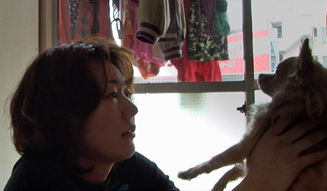
INTERVIEW | A Documentary Depicting People Battling Depression
Does Your Soul Have A Cold?
Director Mike Mills: Interview for Japanese Release (Part 4)
I Want to Show Things As They Are
—In the film, the types and dosages of antidepressants taken by the participants were displayed graphically. Was there a specific intention behind this?
In this film, I decided to focus the camera only on those taking antidepressants, without interviewing doctors or specialists. Therefore, I wanted to clearly show what and how much they were actually taking. As far as I could see, the types and amounts they were taking were considerably higher than the standard amounts for Americans, and I wanted to convey that. I also wanted to convey the fact that most of them were taking Paxil, a drug from a pharmaceutical company that conducted a major "depression awareness campaign."
I wasn't interested in injecting my own opinions or conveying a message. I wanted to show things as they are. And I wanted the audience to find their own meaning. For example, if you read a relatively long article in The Japan Times or The New York Times, right? It contains several facts, accounts from people involved, experts appear, and there's only one comment from someone suffering from depression. It's like that, isn't it? Five percent depression patients and ninety-five percent experts. I wanted to make it in a different way.

—This film prominently features the "enlightenment activities" regarding depression by pharmaceutical companies, starting with the advertising campaign. Do you believe that the situation surrounding depression in Japan would have been different if not for these enlightenment activities?
When my Japanese friend, mentioned earlier, started investigating after seeing her take antidepressants, I discovered a surprising article (※) about Western pharmaceutical companies bringing their advertising campaigns to Japan. That's what led me to make this documentary. Two of the women in the film took self-diagnosis tests for depression on a customer website run by a pharmaceutical company. The doctor they found was also from that site, though they didn't know it was a pharmaceutical company's site. And the doctors they found naturally prescribed that company's medication. It's quite surprising, isn't it? This is how they skillfully integrate into the culture.
In America, the antidepressant market grew rapidly from the 1980s and plateaued in the mid-1990s. To continue making profits, they needed to develop new markets. According to IMS Health, which collects global healthcare data, antidepressant sales in Japan increased fivefold between 1998 and 2003. This figure is just one example; the same thing is happening all over the world.
※ New York Times article:
http://www.nytimes.com/2004/08/22/magazine/did-antidepressants-depress-japan.html
—What is the main message you wanted to convey through this film? Now that it's finally being released in Japan, who do you hope will see it?
What I tried to do was to show the global issue of "the globalization of antidepressants" from an individual perspective, in a minimal and subjective way. All the participants cooperated generously with the filming out of a desire to help others suffering from depression. Now that it's finally being released in Japan, I am very happy that their wish can be fulfilled.
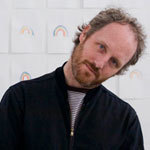
Mike Mills
Born in California in 1966, Mike Mills gradually made a name for himself as a graphic artist after high school. He provided logos and designs for X-girl and Marc Jacobs, and created CD covers and music designs for Sonic Youth and the Beastie Boys, becoming a central figure in the New York graphic scene of the 1990s. Influenced by Jim Jarmusch, he eventually began making films. While working on documentaries about musicians, he made his feature film debut with "Thumbsucker" in 2005. For his second feature, "Beginners" (2010), he wrote an original screenplay based on his relationship with his father, winning the Gotham Award for Best Film. "Social outsiders" is his consistent theme.
Does Your Soul Have A Cold?
Opening Saturday, October 19th, at Uplink Shibuya and other theaters nationwide.
Director | Mike Mills
Cinematography | James Laxton, D. J. Harder
Editing | Andrew Dickler
Producers | Callum Greene, Mike Mills, Takuo Yasuda
Starring | Takatoshi, Mika, Ken, Kayoko, Daisuke
2007 / USA / 84 min / Original Title: "Does Your Soul Have A Cold?"
http://uplink.co.jp/kokokaze/