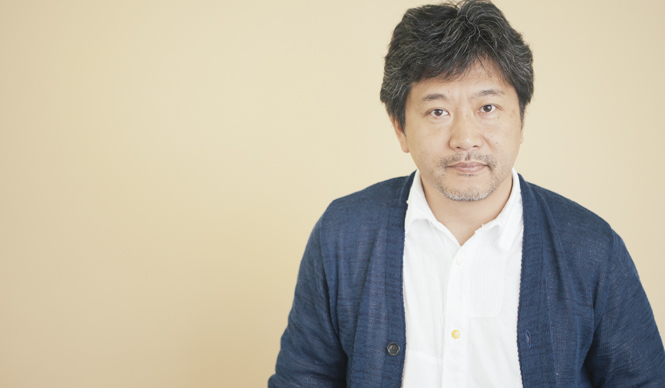
INTERVIEW | Director Hirokazu Kore-eda on his film 'Like Father, Like Son'
INTERVIEW | A Shocking Film Based on a Baby Mix-Up
Like Father, Like Son: An Interview with Director Hirokazu Kore-eda (Part 1)
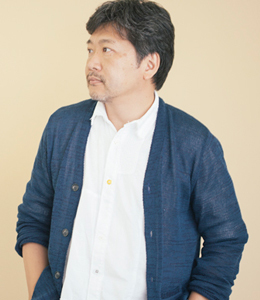
Hirokazu Kore-eda, now one of Japan's most representative directors, has consistently garnered international attention for his films, including 'Nobody Knows,' which was a sensation at the Cannes Film Festival, as well as 'Maborosi,' 'After Life,' and 'Still Walking.'The 66th Cannes Film FestivalHis latest film, 'Like Father, Like Son,' which won the Jury Prize at the festival, delves into the essence of fatherhood through the story of a baby mix-up. We spoke with Director Kore-eda about his vision for the film.
Photographs (portrait) by JAMANDFIXText by MAKIGUCHI June
Details Are Everything
—Watching the film, I felt that the difference between fatherhood and motherhood is reflected in the title. Mothers naturally awaken to motherhood through childbirth. Do you perceive a kind of emotional distance between such mothers and fathers?
For mothers, the 'like son' part isn't necessary. In our case, when my wife gave birth, it felt like she transformed into a different being. She suddenly became stronger. I thought, 'So this is how people change.' But I didn't feel that I had changed that much, and in reality, I hadn't.
I wondered if this was due to gender, the difference between someone who carried a child for ten months and someone who didn't, or something else entirely. Moreover, when children are young, fathers and mothers have different levels of daily closeness. So, children are completely dependent on their mothers, but fathers are not needed as much. This led me to think about my own sense of purpose, whether I was truly needed, and how I could be needed.
—In the story, when the mix-up is revealed, the father played by Fukuyama mutters, 'So that's how it is.' It seems his true feelings, having always found the differences strange, finally come out.
Fathers seek a sense of connection through similarities. They find comfort in seeing a link to themselves. I once told my wife that our child resembled me, and she seemed happy about it, saying with surprise, 'It makes you happy when they resemble you?' That's when I realized that for women, whether a child resembles them or not is irrelevant. We have a daughter, but I've heard that fathers tend to compare their sons to their own childhood.
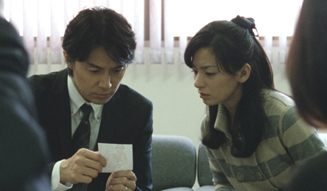
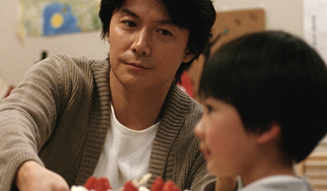
Especially for someone as accomplished as Nonomiya, played by Fukuyama, there's the thought, 'I could have done this at this age, why can't you?' Such types might think the undesirable traits were inherited from the wife (laughs). I felt it was realistic for those thoughts, which are usually kept hidden, to slip out.
—Although the mix-up is an unfortunate event, perhaps without it, the protagonist might have lived his life without truly engaging with his child.
Perhaps that's the case for many people. It's undoubtedly an irreversible tragedy, but I hoped that it would serve as a catalyst for fathers to actively embrace their fatherhood. That's what I wanted to convey.
—As time passes, the focus shifts from who chooses whom to how the adults interact with the children.
The choice of whom to choose is merely the starting point. Beyond that, I wanted the audience to contemplate what family truly means, or how a father's presence influences his children. I wanted these questions to arise within the viewers.
—Your films are known for their distinctive use of detail to create character. For this film, what kind of atmosphere were you aiming for, and how did you build up the finer points?
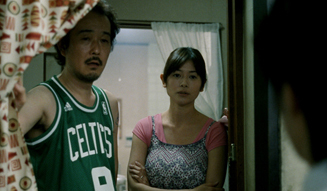
Details are everything. Especially when a major event like this occurs, and the focus is on the choice of which child to keep, it's easy for the audience to become overly invested in that single aspect. To prevent that, I felt it was crucial to meticulously layer the details of each family's life throughout the narrative. If the two families didn't emerge clearly beyond the event itself, the film would lack depth. So, I focused on this aspect, dedicating the most time to it.
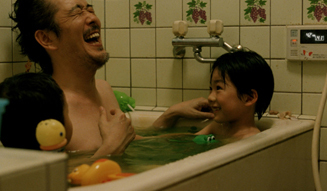
In Saiki's home, played by Lily Franky, time and relationships have accumulated within the house. There's a Buddhist altar, the remnants of a dog's kennel from a pet no longer present, New Year's decorations still unput away next to the TV, a grandfather, siblings, and even neighbors visit. I wanted the house to feel like a repository of accumulated time and human connections. In contrast, Nonomiya's home has eliminated all those accumulations. It's a nuclear family, no siblings, no relatives visit, and he frowns when they do. However, in Tokyo, many homes are likely like this. To the extent possible, without seeming unnatural, I even refrained from displaying children's drawings to erase that sense of accumulated history.
INTERVIEW | A Shocking Film Based on a Baby Mix-Up
Like Father, Like Son: An Interview with Director Hirokazu Kore-eda (Part 2)
Contrasting Fatherhood
—The film presents two contrasting images of fatherhood.
The way Saiki, played by Lily Franky, fathers his child was conceived by considering what kind of father Nonomiya would find objectionable for his own biological child. I wanted to create an opponent for Nonomiya, who has the arrogant idea of taking in both children. Initially, I wanted him to be someone Nonomiya would look down upon. But gradually, Nonomiya begins to feel that Saiki is a better father than himself, leading to jealousy and his increasing isolation. I wanted to see Fukuyama portray such a cornered man.
—Walking scenes are a recurring motif in your films. In this film, as in 'Nobody Knows,' 'Still Walking,' and 'I Wish,' your characters often walk. Does walking strengthen something within them?
I wonder why. But in the films I just mentioned, I consciously decided to capture the act of walking. I think about how to film a person's walk. Who are they walking with, and how? In 'Nobody Knows,' for instance, I filmed them climbing the same stairs together or descending alone, varying the combinations. In 'Still Walking,' I had people repeatedly traverse the same slope. I enjoy that. It's influenced by Mikio Naruse, who was exceptionally skilled at filming people's walks. Walking, stopping, and looking back. I put considerable effort into how actors walk and stop, as seen in classic Japanese cinema.
—Is this because, beyond the visual aspect, the act of walking, stopping, looking back, stumbling, and then walking again evokes the journey of life?
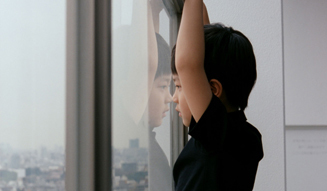
It might be interesting to interpret it that way. But more than anything, a person's gait reveals many things. In this film, too, each character's individuality emerged, which was fascinating. The back view of Fukuyama's child character, Keita, was particularly striking. In the scene with the cherry blossoms leading to the entrance ceremony, Lily Franky's character, walking with short, quick steps to keep up with the child, was wonderful. I love the subtle differences in personality that emerge in such moments. I believe the accumulation of these small details emphasizes the characters' humanity and leaves a lasting impression on the audience.
'Like Father, Like Son,' which received a standing ovation for approximately 10 minutes after its screening at the Cannes Film Festival in May, clearly resonated with a wide audience, transcending differences in culture, gender, language, and the decision to have children or not. The film poses questions to the viewer about the theme of 'fatherhood' and, more broadly, about human connection. How will your heart respond to these truly universal and eternal questions?
KOREEDA Hirokazu
Born in Tokyo in 1962. After graduating from Waseda University, he joined TV Man Union. His notable television works include 'Another Education: The Story of Ina Elementary School's Spring Class' (1991/CX), which won the ATP Award for Excellence, and 'When Memories Are Lost...' (1996/NHK), which received the Hoso Bunka Foundation Award. In 1995, his directorial debut film 'Maborosi' won the Osella Award at the 52nd Venice International Film Festival. Since then, he has released a string of acclaimed films, including 'After Life' (1998), 'Nobody Knows' (2004), and 'Still Walking' (2008). In 2009, 'Air Doll' was screened in the 'Un Certain Regard' section at the Cannes Film Festival to critical acclaim. His latest film, 'Like Father, Like Son,' was selected for the main competition at the Cannes Film Festival, where it won the Jury Prize.
'Like Father, Like Son'
Advance nationwide release: Tuesday, September 24 – Friday, September 27
Nationwide release begins Saturday, September 28 at Shinjuku Piccadilly and other theaters.
Directed, Screenplay, Edited by: Hirokazu Kore-eda
Starring: Masaharu Fukuyama, Machiko Ono, Yoko Maki, Lily Franky, Jun Fubuki, Kōji Yakusho, Kirin Kiki, Isao Natsuyagi
Distribution: Gaga Corporation
2013 / Japan / 121 minutes
http://soshitechichininaru.gaga.ne.jp/
© 2013 'Like Father, Like Son' Production Committee