
MOVIE | The Enduring Beat Literature, Fully Realized on Film: On the Road
MOVIE | 5 Pairs, 10 Winners Invited to Advance Screening!
The Beat Generation Reborn on Screen
MOVIE | On the Road: The Seminal Beat Literature of the 1950s, Fully Realized on Film (1)
Jack Kerouac's "On the Road," a masterpiece of 1950s Beat literature, is finally brought to the screen in its entirety by director Walter Salles. This "phantom project," which had been in development for years with numerous false starts, is now set to premiere. Ahead of its nationwide release on Friday, August 30th, OPENERS is offering 5 pairs of readers (10 winners) the chance to attend an advance screening on Monday, August 19th, starting at 6:30 PM.
Interview & Text by Junko Tanaka (OPENERS)
The Journey from Youth to Adulthood
Published in 1957, Jack Kerouac's "On the Road" is a timeless piece of Beat literature that Bob Dylan called "the book that changed my life." It profoundly influenced artists like Jim Morrison, John Lennon, Dennis Hopper, and Jim Jarmusch, and became the "hippie bible" for a generation in the counterculture era. It remains a celebrated novel of youth.
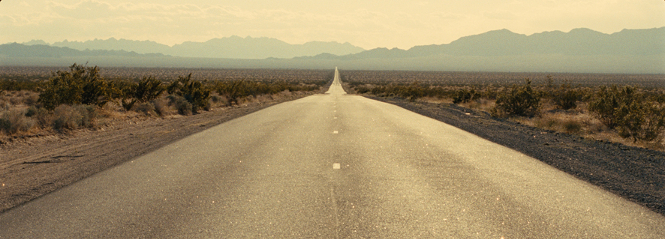
The novel depicts young people seeking freedom and truth through a series of spontaneous journeys. Their youthful experiences, colored by love, friendship, sex, drugs, and jazz, shed light on the universal "journey from youth to adulthood," revealing the ephemerality and solitude of life.
The novel, famously written in just three weeks, is based on Kerouac's own experiences traveling across the U.S. and Mexico. Consequently, the main characters are based on real people: Sal, the narrator, is Kerouac himself; Dean is Neal Cassady; Carlo is Allen Ginsberg; and Old Blue Lee is William Burroughs. "On the Road" thus serves as a valuable record of the friendships and lifestyles of the leading writers of the Beat Generation.
A "Phantom Project" Realized After 8 Years
It's no surprise that Hollywood would be drawn to a novel that continues to captivate young readers more than half a century after its release. The story of "On the Road" has been optioned for film adaptation numerous times, but the project repeatedly stalled due to Kerouac's unique improvisational style and the novel's lack of a traditional narrative structure.
Ultimately, the film rights were acquired by cinematic titan Francis Ford Coppola. While directors like Jean-Luc Godard and Gus Van Sant were considered, the project never materialized. However, Coppola's unwavering belief in the "phantom project" led him to Brazilian director Walter Salles, who emerged as a savior.
Coppola, deeply impressed by Salles's 2003 film "The Motorcycle Diaries," which chronicled a young Che Guevara's journey across South America, immediately approached Salles about directing "On the Road." Eight years later, Salles and screenwriter José Rivera have meticulously extracted the novel's core essence. By quoting key lines spoken by Sal and Dean and delicately capturing the emotions they convey, they have created a work that truly deserves to be called a complete film adaptation.
MOVIE | 5 Pairs, 10 Winners Invited to Advance Screening!
The Beat Generation Reborn on Screen
MOVIE | On the Road: The Seminal Beat Literature of the 1950s, Fully Realized on Film (2)
All of Life is on the Road
For Sal Paradise, a young writer devastated by his father's death, meeting Dean Moriarty was a bolt from the blue. Sal, raised in the American East, is intellectual and introspective. In contrast, Dean, from Denver in the West, is a man unbound by societal norms or rules, living life with uninhibited enjoyment of sex and drugs.
In the film, Sal utters these words: "I'm going to tell you, in my own way, what I feel about you. I'm going to tell you what you are. You're my best friend and my best pal, my brother, my soul—you're everything to me. You're the one that's got it all. You're the one that's got it all."
Instantly captivated by Dean's ephemeral, unconventional lifestyle and his beautiful young wife, Marylou, Sal embarks on a journey across the vast American continent with them. Through encounters and partings with various people, Sal deepens his irreplaceable bond with Dean. However, their incredibly stimulating "days on the road" were not to last forever.—.
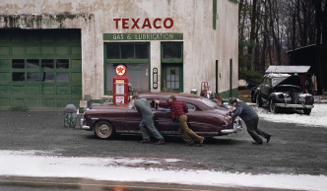
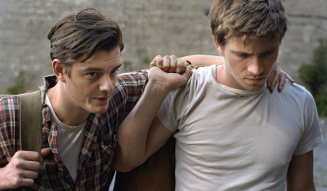
Sam Riley, who gained attention for his role in "Control" and also appeared in Neil Jordan's "Byzantium," plays Sal, Kerouac's alter ego. Garrett Hedlund, who starred in "Tron: Legacy" and quickly became a rising star in Hollywood, was cast as Dean, who lures Sal into his nomadic journey.
The film also features a stellar cast including Kristen Stewart, Amy Adams, Viggo Mortensen, and Kirsten Dunst, who were cast before their breakout roles in the "Twilight" series. Together, they bring the frenzy of the Beat Generation back to life on screen.
Salles dedicated an immense amount of time to preparation. He began by producing a documentary tracing Kerouac's footsteps. Before filming commenced, he brought in Gerald Nicosia, the author of Kerouac's extensive biography, to conduct intensive training for the actors. This meticulous approach clearly reflects Salles's commitment to remaining faithful to the original work.
Furthermore, Gustavo Santaolalla, a two-time Academy Award winner for his work on "Babel" and "Brokeback Mountain," incorporated jazz, a genre closely associated with Beat literature, into the film's score, imbuing it with dynamism. The acclaimed crew from "The Motorcycle Diaries," including cinematographer Éric Gautier and production designer Carlos Conti, provided strong support to director Salles, with whom they had a comfortable working relationship.
MOVIE | 5 Pairs, 10 Winners Invited to Advance Screening!
The Beat Generation Reborn on Screen
MOVIE | On the Road: The Seminal Beat Literature of the 1950s, Fully Realized on Film (3)
Finally, we present an exclusive interview with director Walter Salles. He shares his thoughts on encountering "On the Road" and the Beat Generation, offering his insights in his own words.
Mutual Trust Made This Film Possible
—Do you still remember when you first encountered the novel "On the Road"? What were your feelings after reading it?
It was the mid-1970s, when I was attending university in Brazil. It was a difficult time under a military dictatorship, and all media and art forms were subject to censorship. "On the Road" wasn't published there, so I had to read it in English. I was immediately captivated by the characters' freedom and their way of speaking, which was the complete opposite of our own lives. When it was finally published in Brazil in 1986, as if in response, the country began to move towards democracy. For me, the novel was too immense a presence; I never even considered making it into a film back then.
—Was adapting a novel with such a passionate fanbase an exciting experience, or was it daunting?
I believe that for any film, a director must have the resolve to jump out of a plane with a parachute that might not open. This applies not only to the director but also to the actors and crew. However, the director stands closest to the edge of the cliff, and I always maintain that resolve. That's how I approach filmmaking.
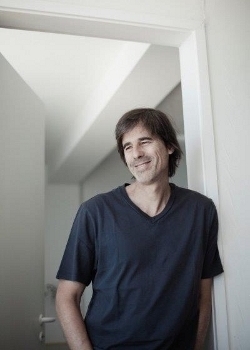
Perhaps it's slightly different for an original story. But with an existing work, like this novel, the director must resonate with the film's direction on some level. It requires a personal interest and a willingness to engage in the struggle. You have to start by figuring out how to realize the situations and scenes depicted in the original work.
This is my second time adapting a work that inspired a film, following "The Motorcycle Diaries" based on Che Guevara. It carries a great responsibility to faithfully recreate it on screen. At the same time, there's the challenge of maintaining that initial tension throughout. For both "The Motorcycle Diaries" and "On the Road," I had to undertake two journeys before filming began. These were journeys to question myself whether I possessed the necessary resolve I mentioned earlier. For "On the Road," in particular, I had to research exhaustively until I felt truly "ready."
I dedicated a significant portion of my life to this preparatory work: four years for "The Motorcycle Diaries" and six years for "On the Road." First, it was essential to understand what the original author intended to express and to contemplate how to adapt the story they created. This process required reducing my own anxieties about whether I could truly accomplish it, so I could approach filming with confidence.
—When and how did the casting take place? Were there any particularly memorable episodes?
The casting process itself began quite early, in 2005. Principal photography commenced in 2011, so it took about five and a half years from casting to filming.
I first met Kirsten Dunst, who plays Camille, because I felt she could express Camille's (Carolyn Cassady's) sensitivity and intelligence. I met Kristen Stewart when she was appearing in Sean Penn's "Into the Wild." "On the Road" was apparently a very important book for her, so much so that she could recite parts of it from memory. As she was the same age as Marylou in the book when she was 16, I proposed this role to her.
Shortly after Kirsten Dunst and Kristen Stewart were confirmed, we held an open reading in Los Angeles, where I met Garrett Hedlund. Garrett read two scenes and then read us a piece he had written himself. I was completely captivated. It described his experience leaving his hometown of Minnesota by bus for Los Angeles. I was deeply moved, and I realized that Garrett had actually experienced a journey similar to the one in "On the Road."
Following that, the production faced significant delays due to the severe impact of the 2008 economic crisis, making it difficult to secure funding. It wasn't until about six years after casting that we finally had a clear path to principal photography. By then, the actors had become very popular and had more work, a stark contrast to their situation before filming. Nevertheless, I strongly felt the need to trust my initial instincts, so I wanted to keep the cast as consistent as possible. Fortunately, the actors shared my trust in this project. I believe that mutual trust is what made this film possible.
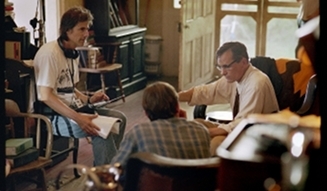
—Do you view the Beat Generation as a relic of the past, or do you believe their spirit lives on in today's youth?
To answer that, we must first return to the definition of "What was the Beat Generation?" and "What did they actually bring about?" One thing is certain: they were filled with a spirit of adventure and curiosity, seeking direct experience. And they consistently pursued freedom of the spirit in their actions.
Essentially, they lived in the era of Eisenhower and MacArthur, a time that leaned towards conservatism. I believe its influence remains strong even today. While the 1960s and 1970s certainly laid the foundation for a more liberated society, what we are witnessing today—Unfortunately, the situation where young men and women seeking greater freedom experience anxiety and fear doesn't seem to have changed much.
Confronting authority and taking action in the streets. In that sense, I believe the spirit of the Beat Generation lives on in today's youth, and when we recall the impulses that drove them, a similar energy arises. Kerouac, Ginsberg, Diane di Prima, Ferlinghetti, Gregory Corso... they broke down barriers and showed us the way, like rivers flowing into the sea. This led to the sexual liberation of the 1960s and a new literary history.
Above all, they strove for originality. Kerouac expressed something different from Ginsberg, and also different from Ferlinghetti. The Beat Generation fought for freedom. I believe this is still relevant today, and there is much we can learn from their words and actions.
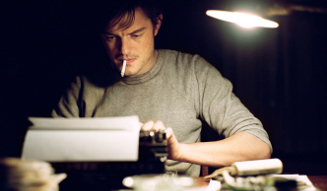
Advance Screening of "On the Road": 5 Pairs, 10 Winners Invited
Date: Monday, August 19th
Time: Doors open 6:00 PM, Screening starts 6:30 PM
Venue: Broadmedia Studio Screening Room
2F Asahi Soko, 1-14-7 Tsukishima, Chuo-ku, Tokyo
Application Deadline: Monday, August 12th, 10:00 AM
Applications are now closed.
Thank you for your many applications.
"On the Road"
Opening Friday, August 30th at TOHO CINEMAS SHANTE and other theaters nationwide.
Director: Walter Salles
Executive Producer: Francis Ford Coppola
Based on the novel "On the Road" by Jack Kerouac
Screenplay: José Rivera
Starring: Sam Riley, Garrett Hedlund, Kristen Stewart, Amy Adams, Tom Sturridge, Kirsten Dunst, Viggo Mortensen
Distribution: Broadmedia Studios
2012 / France, Brazil / 139 min / R-15 / Original Title: "On The Road"
http://www.ontheroad-movie.jp/
© Gregory Smith