Essay Series | #ijichiman's Musings: "Korean Cuisine That Maximizes the Individuality of Ingredients"
Essay Series | #ijichiman's Musings
Part 34: "Korean Cuisine That Maximizes the Individuality of Ingredients"
I grew up in Shin-Okubo, so I'm particular about Korean cuisine. Not really. I like Korean food, but my constitution doesn't agree with spicy dishes, so I can't eat much of it. And I've never been to Korea, so I don't know the authentic taste. Having spent my formative years in my teens and twenties in Shin-Okubo, I frequented places like "Harenuya," "Matsuya," and "Omni Shokudo" late at night. I've just had more opportunities than the average person to experience Korean cuisine that's close to the real thing.
Photographs and Text by IJICHI Yasutake
As a side note, the only thing I can't eat is silkworm pupae. I tried a dish called "Kaisanagi" (literally, silkworm pupae) at a now-closed Korean restaurant in Shin-Okubo, and when I attempted to eat it (or rather, just as I was about to), I realized, "Nope, this is impossible." I've been fine with frogs, spiders, grasshoppers, and even sparrows before, but silkworms are a no-go.
Anyway, getting back to the point, among the various international cuisines available in Japan, I find Korean food to be excellent. What's so good about it? It's versatile for any TPO. French and Italian are usually reserved for anniversary dates or business entertainment, and I don't often have opportunities to dine at high-end Chinese restaurants. On the other hand, while I might go to a casual Chinese eatery alone or for a late-night meal, I rarely go there as my first choice. I also like Thai and Vietnamese, but they aren't usually my first pick either. In that sense, from various perspectives, Korean cuisine is great.
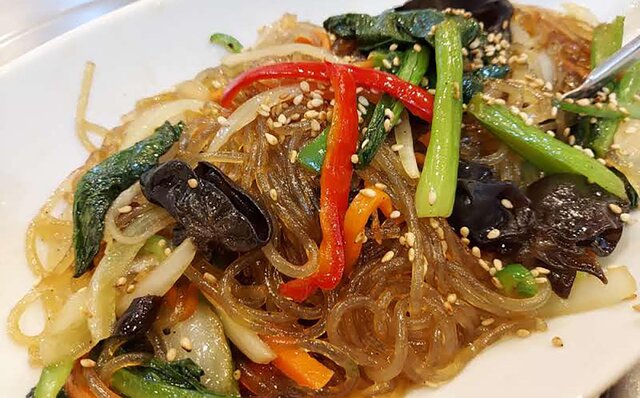
My criteria for choosing a Korean restaurant are that it's reasonably priced, delicious, unpretentious, and offers some surprising items on the menu. While classics like pajeon, japchae, bossam, and samgyetang are great, I can't resist ordering something when there's a menu item that makes me wonder, "What is this?" I particularly like restaurants that present a dish with a name that clearly sparks curiosity, yet offers no explanation or caption, relying solely on a photo. A surprising dish sparks conversation and is always a welcome addition.
Family restaurants and chain izakayas have largely shed their "cheap and poor quality" image from years past; most places now offer a "decently delicious" experience as standard. However, stumbling upon a place that is both affordable and exceptionally, outstandingly, unbelievably delicious is as rare as hitting the jackpot in horse racing. Considering this, a restaurant that everyone can agree is delicious, and also offers interesting and unique dishes alongside its own specialities, is one that makes you want to return.
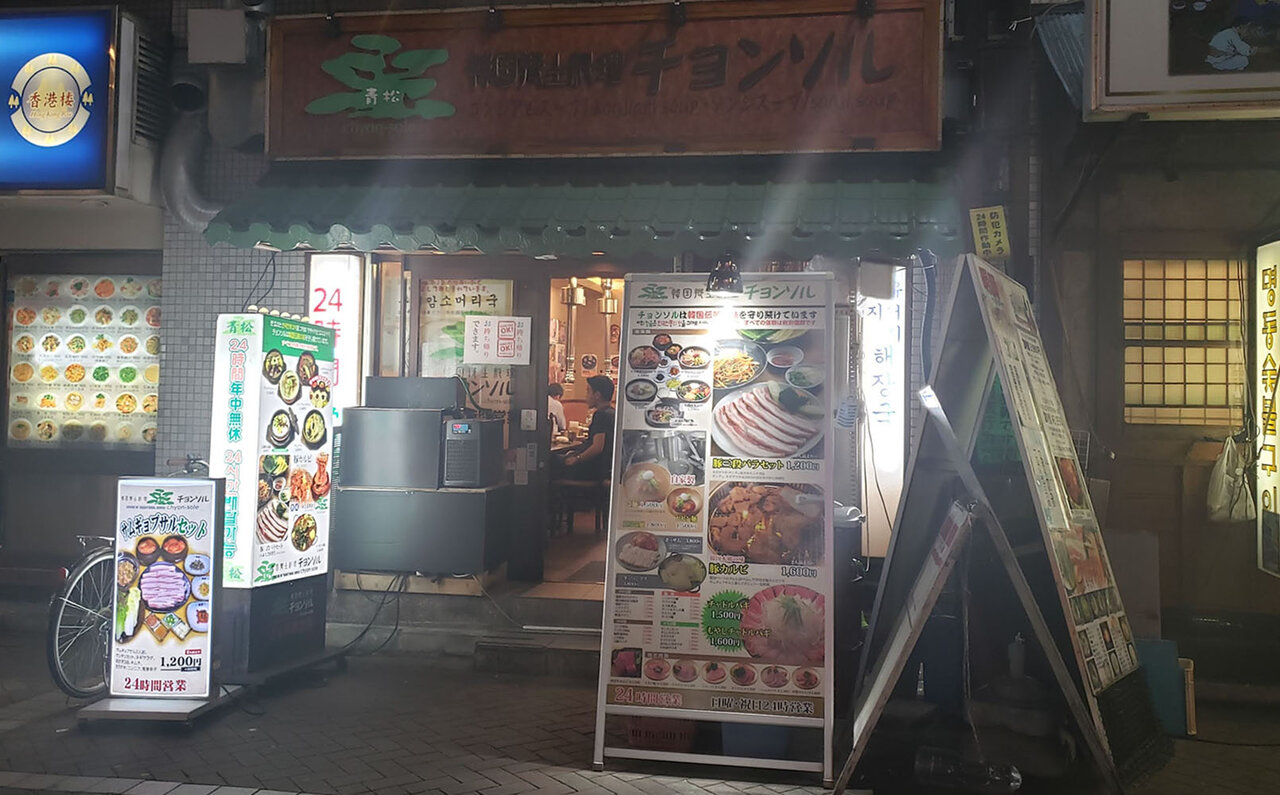
1. Cheong Sol (青松) - Akasaka Royal Plaza 102, 2-13-8 Akasaka, Minato-ku, Tokyo
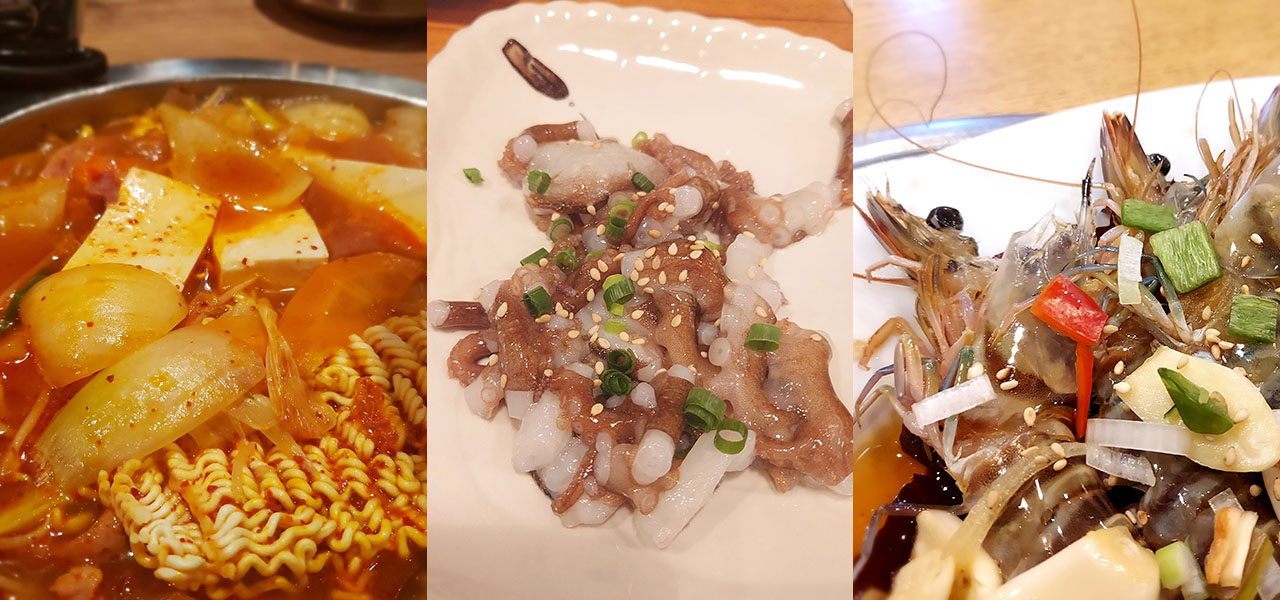
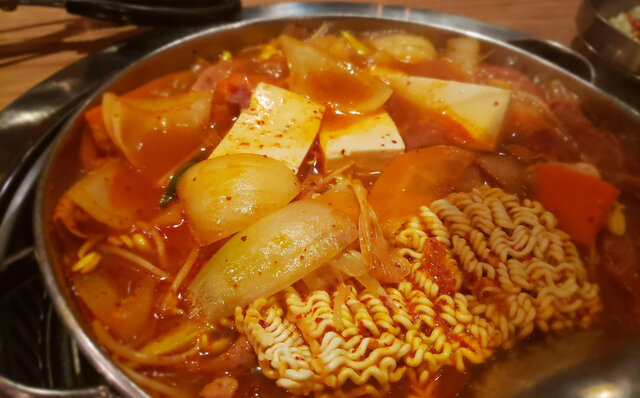
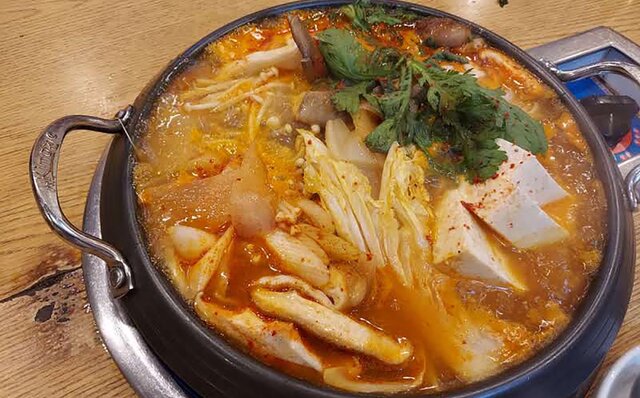
I'm not sure about now, but this popular Akasaka restaurant was famous for being open 24 hours. They offer an extensive selection of hot pots, including classics like budae jjigae,ホルモン (horumon), and gamja-jjigae, as well as grilled dishes.
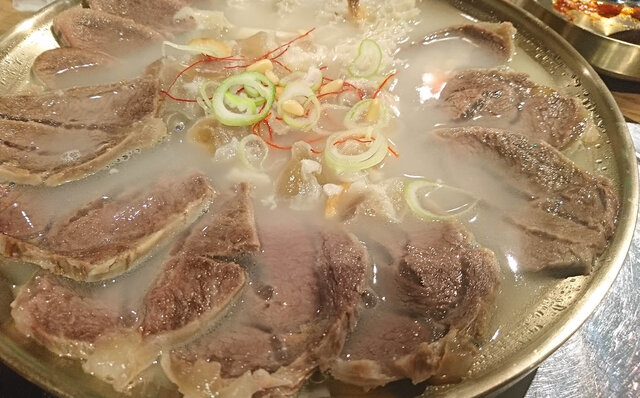
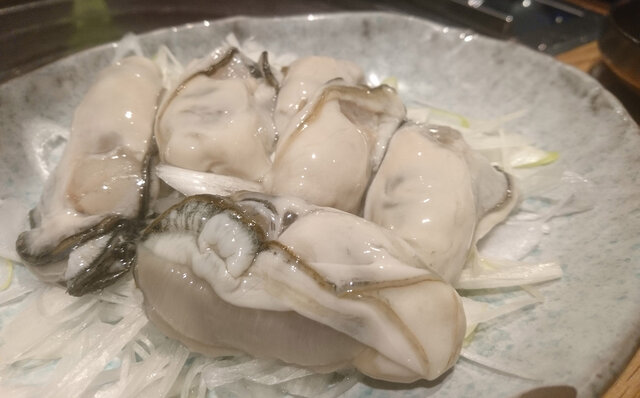
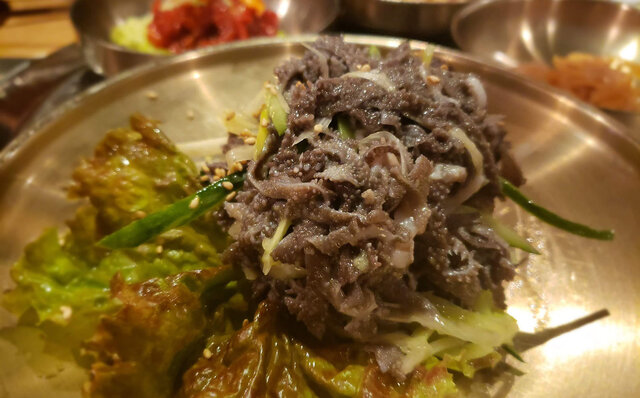
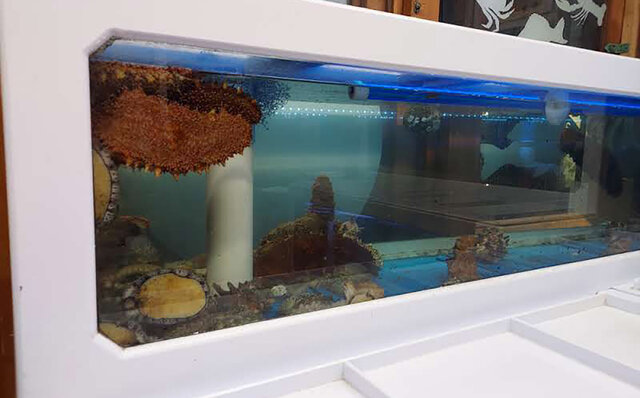
While raw oysters are irresistible in winter, here, you absolutely must try the live octopus sashimi, which wriggles in your mouth. The fresh, crisp texture combined with sesame oil and salt makes the makgeolli flow endlessly. Furthermore, for some reason, abalone sashimi is cheaper, so we order that too. For more unusual options, there's "seonji haejang-guk," a soup with jellied cow's blood, and "suyuk," boiled beef or pork served in its own broth. These might be considered unusual or simply not common in Japan, but they are sources of energy and definitely worth trying.
The menu is extensive, and each dish is quite voluminous, so it might be more enjoyable to go with a group of four or five people rather than two. Akasaka is an area where major TV stations, major advertising agencies, and major insurance companies—formerly considered "black companies"—are concentrated. It's a place where you can always find energetic men and women eating and drinking heartily, which explains why it's open 24 hours.
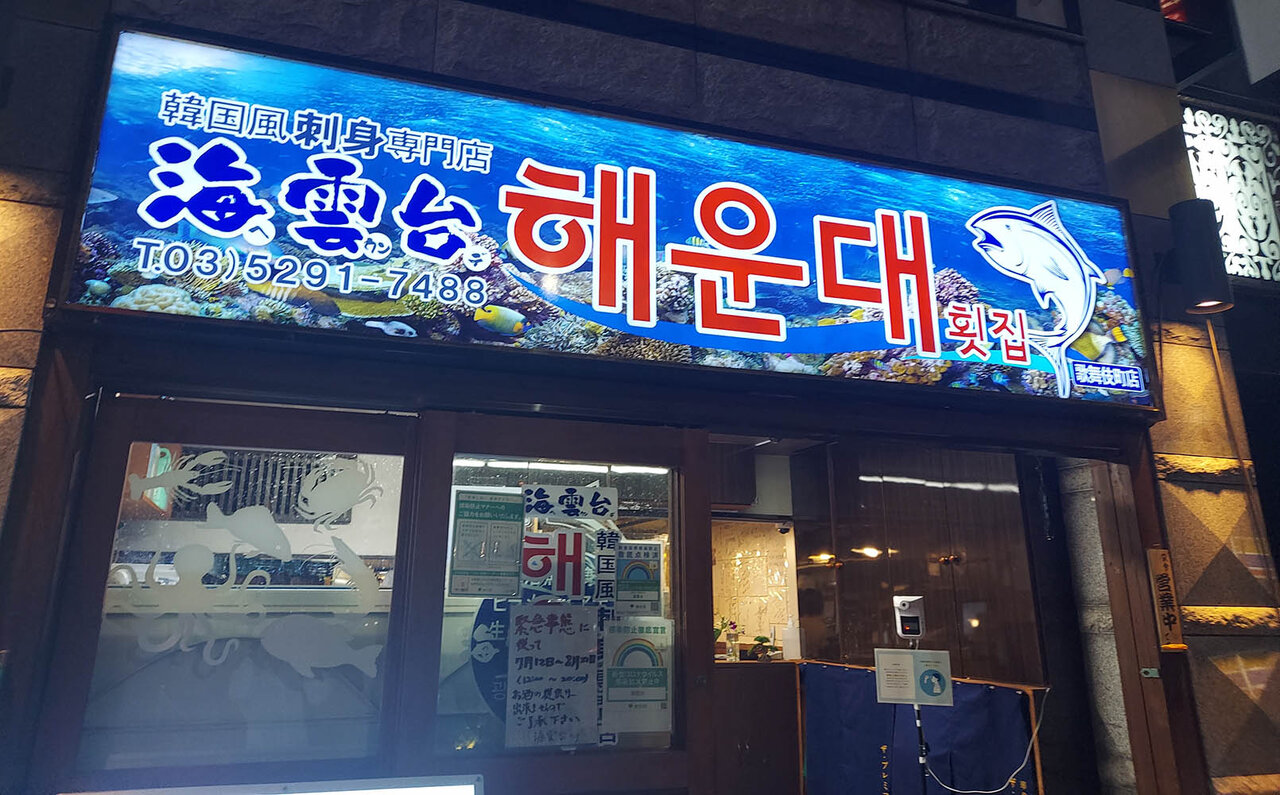
2. Haeundae (海雲台) - Akuyama Bldg. 1F, 2-32-12 Kabukicho, Shinjuku-ku, Tokyo
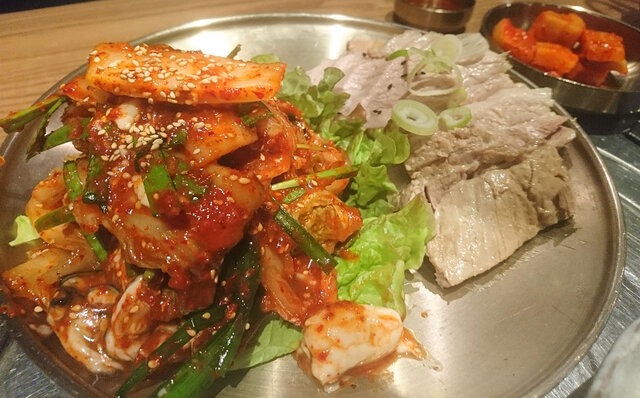
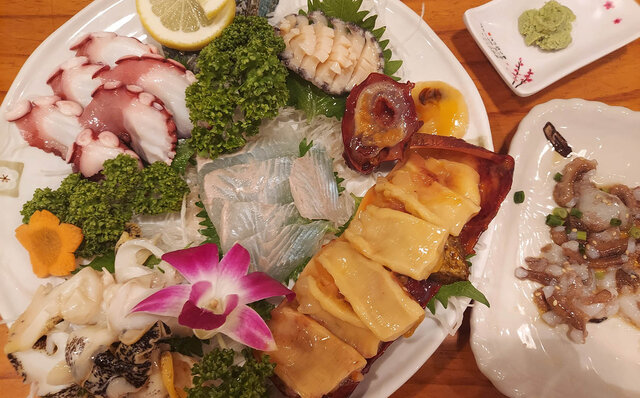
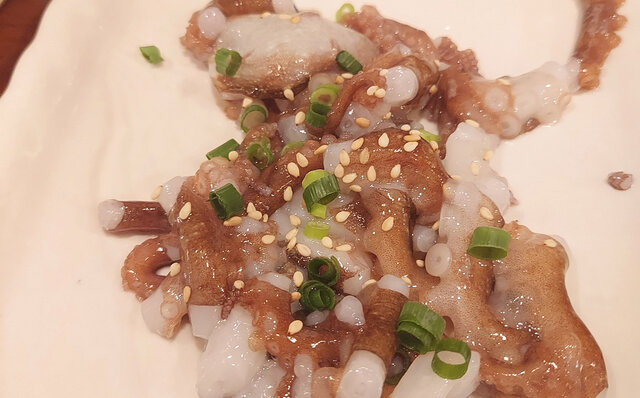
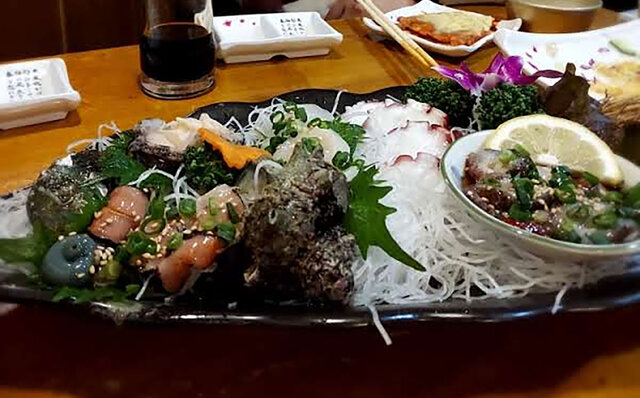
Haeundae has two locations near the area connecting Shokuan Dori in Higashi-Shinjuku to the Kabukicho batting center. As expected in the city that never sleeps, Kabukicho, this place normally operates until 4 AM. True to its name as a sashimi specialist, it offers a generous spread of fresh sashimi with a distinct aroma of the sea. There's abalone, whelk, flatfish (I think), and sea squirt in the summer. There are likely many other options. You can enjoy it with wasabi soy sauce, or wrap it in perilla leaves and lettuce with miso and chili peppers. Of course, here too, you must order the live octopus sashimi. It's a must.
While the menu has various items, the sashimi alone is plentiful and highly satisfying. After replenishing your energy with live octopus, head straight into Kabukicho.
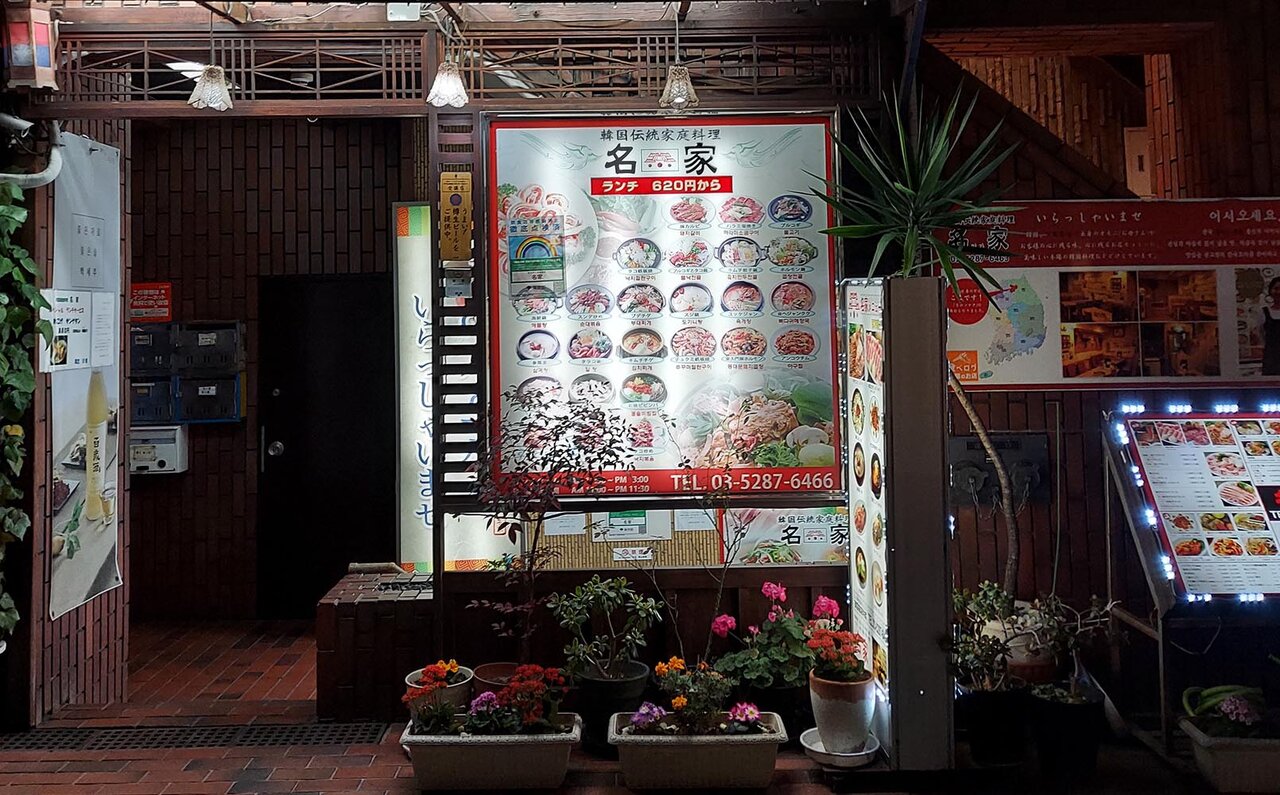
3. Myong Ga (名家) - Sakuragi Bldg. B1F, 1-5-13 Okubo, Shinjuku-ku, Tokyo
Myong Ga is located on Okubo Dori, heading towards Meiji Dori, just before the intersection, after leaving Shin-Okubo. Okubo Dori always bustles like Takeshita Street, but as you move away from the station, the aggressive touts decrease, and it regains the atmosphere of Shin-Okubo from the 20th century, which I appreciate.
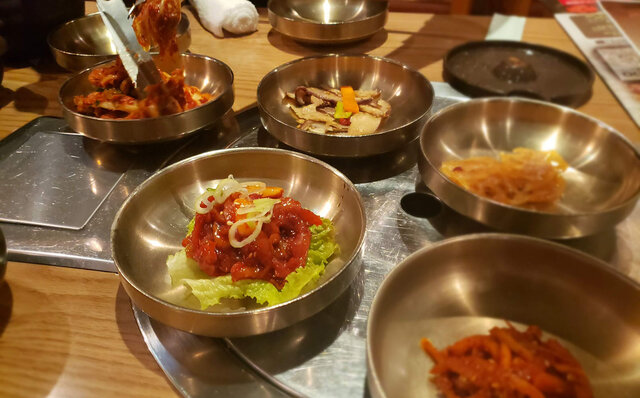
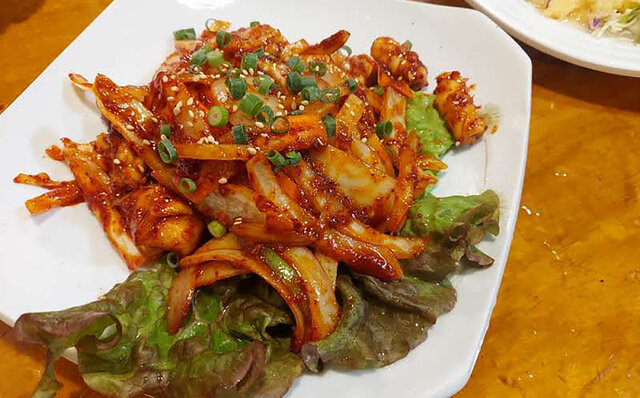
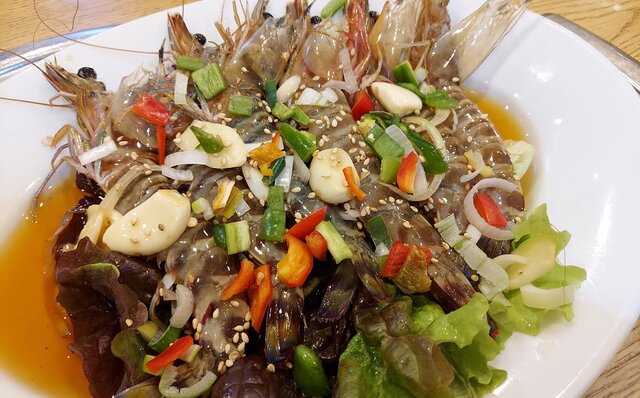
Myong Ga also has an extensive menu. The base flavor is spicy but delicious. The must-try is "saeujeot-guk," marinated raw shrimp in soy sauce. It's so popular that it frequently appears when you search the tag on Instagram. "Ganjang-gejang" (raw crab marinated in soy sauce) is also famous, but I personally prefer it to crab. Even so, eating saeujeot-guk gets your hands and mouth messy, the sauce might splash on your clothes, and the green chili peppers and raw garlic are potent. You have to suck them clean, so when you go, you need to share the intention with your companions: "Today, we're going to eat saeujeot-guk!" Also, it's only available when raw shrimp are in stock, and they might tell you at reservation that they don't know if it's available that day (though it usually is). So, it's advisable to share a contingency plan just in case.
I experienced firsthand how words become cliché when faced with something so incredibly delicious that you can't say anything else. The secret sauce, green chilies, and raw garlic enhance the plump sweetness of the raw shrimp. You are sure to be moved by this encounter with a dish that maximizes the potential of its main ingredient.
Korean cuisine, which maximizes the goodness of ingredients through various methods such as eating them raw, grilling, boiling, stir-frying, marinating, and fermenting. It's affordable, delicious, pairs well with drinks, aids digestion the next day, and leaves your skin glowing. Even after eating and drinking heartily, you won't feel heavy the next day. And it even boosts your vitality. The more I think about it, the more I write about it, the more I feel that Korean cuisine is the ultimate. I intend to increase my frequency of eating Korean food from now on.
IJICHI YasutakeBorn in Tokyo in 1982. While at Keio University, he was involved in planning and producing receptions and parties for major brands at an event company. After transferring to a PR firm, he worked as a planner and retired at the age of 30. He joined his friend of 20 years, the representative, in establishing Japan's first cold-pressed juice specialty store, "Sunshine Juice," and served as Vice President until September 2020. He currently supports corporate communications and branding for clients across a wide range of industries while continuing his urban explorations. His favorite foods are fugu and soft-shelled turtle. His favorite sports are baseball and horse racing. His favorite places are traditional coffee shops and casual izakayas.
Instagram:
ijichiman