Israel's Medical Tech Enabled the Fastest Vaccinations. What is the High-Tech Nation Like Today? | INTERVIEW
INTERVIEW | "Israel That Japanese People Don't Know" #1
Mr. Daniel Kolbar, Minister-Counselor for Economic Affairs at the Embassy of Israel in Japan
Israel, once primarily known for religion and conflict, is now called the Silicon Valley of the Middle East and is gaining attention for its high-tech industry. During the COVID-19 pandemic, it completed vaccinations for its citizens at the fastest pace in the world, further strengthening its presence as a cutting-edge nation in the medical field.
2021 World Happiness Reportranked 12th, surpassing the United States, the United Kingdom, France, and Germany.
Behind its rapid rise on the global business scene as a "Startup Nation" lies a high-level education system established since its founding in 1948, as well as a culture that values a spirit of challenge and trial-and-error, which is not widely known.
Do we Japanese truly know Israel?
In the first installment of our series titled "Israel That Japanese People Don't Know," we spoke with Mr. Daniel Kolbar, Minister-Counselor and Head of the Economic Mission at the Embassy of Israel, to explore the strengths and attractions that support Israel's national power.
Interview by MAEDA Yoichiro | Text by SHOJI Mami | Photograph by TAKAYANAGI Ken
Factors Behind the Proliferation of Excellent High-Tech Ventures
The development of Israel's high-tech industry is not a recent phenomenon. As mentioned in the book "Start-up Nation" published in 2011, innovation was already underway in the 1950s, from the nation's founding.
Even then, solar energy was used to heat water, and drip irrigation systems were developed for watering crops. These technologies have been exported and adapted worldwide. Why is it possible to produce so many excellent ventures in the high-tech industry?
First, there is government support for startups. We provide incentives for developing new technologies and for reform, and we have established venture capital firms as a private sector entity of the country.
The government not only supports funding for technological development but also shares the risks involved. If there are losses, the government covers half, making it easier for investors to invest. Furthermore, public and private sectors jointly fund research institutions to bring new technologies to fruition.
At the same time, the government acts as a hub for incorporating companies with necessary systems and funding from overseas, fostering collaboration with domestic startups to drive better technological development.
The Roots of the Startup Mindset Lie in the Nation's History and the Spirit of "Chutzpah"
While government backing is crucial, Israel also has a concept called "chutzpah." Originally meaning "boldness" or "audacity" in Hebrew, it is now used positively to embrace chaos, turn adversity into fuel, and act with courage. This spirit is said to connect to the entrepreneurial mindset.
Israel's history began with gathering people from all over the world to establish a nation in a desert. From the very beginning, it involved the risk of building a country, which is similar to the concept of a startup. Furthermore, the idea that "failure is not to be feared" and "failure is not shameful" is deeply ingrained in Israeli society and culture.
It is common for Israeli businesspeople to openly discuss business failures. Failure is not bad, nor is it something to be feared. Rather, one can learn from the experience and process, and apply it to the future. This, I believe, connects to the entrepreneurial mindset.
The "chutzpah spirit" is a characteristic of Israeli entrepreneurs. It's not limited to entrepreneurs; in Israeli companies, if the CEO proposes an idea, employees can openly suggest, "That's wrong, we should do this instead." There is a culture of speaking up without fear about what one believes can be done. Many successes have resulted from this.
High-Level Education and Healthcare System Place Israel Among Top Countries in "Happiness Rankings"
In the World Happiness Report (2021), Israel ranked 12th, higher than developed countries like the United States, the UK, France, and Germany. For context, Japan ranked 56th, illustrating Israel's high level of happiness.
The background to this includes the establishment of a free compulsory education system for ages 5-18 in 1949, when Japan was still recovering from post-war turmoil and poverty. The rapid growth of the digital health sector also plays a significant role, as evidenced by the nation's ability to complete vaccinations for a majority of its population at the fastest pace globally, which will be discussed later.
Currently, over 550 startups are active in Israel's digital health sector alone, developing technologies that allow for remote medical consultations and treatments via smartphones and other devices, eliminating the need for hospital visits or admissions.
Utilizing AI, IoT, and databases, AI diagnoses MRI and CT scan results, dramatically improving both the speed and accuracy of medical examinations. A representative Israeli startup in this field is Zebra Medical Vision. Another, Healthy.io, offers a service where patients can speak directly with a doctor using home devices and diagnose conditions like sore throats and nasal issues using in-home equipment, enabling remote healthcare. Furthermore, sensors continuously monitor patients, allowing doctors to track their condition and provide treatment without hospitalization.
What Was the Reason for the World's Fastest COVID-19 Vaccination Completion?
Israel's vaccination rollout was also exceptionally fast. We asked about the reasons behind this remarkable achievement.
The smooth vaccination process was significantly aided by the nation's long-standing focus on national digitalization. Over the past 30 years, the country's health management system has been digitized, with the medical history and prescription records of each citizen managed digitally.
Vaccination notices were distributed online, and vaccination status, side effects, and antibody development are all digitally tracked. This data is shared with Pfizer, contributing to the development of improved vaccines.
Israel has faced challenges with the escalating national healthcare expenditure. However, they have managed to reduce spending from 17% to 7%. This was achieved by investing in the development of digital technologies, an amount that exceeds previous healthcare spending. This approach could potentially be applied to Japan, which is also facing an aging population.
While citizens enjoy numerous benefits, Israel's tense relations with its neighbors mean that military service is a national obligation, including for women. Surprisingly, this also contributes to the entrepreneurial spirit.
The obligation of military service, conversely, signifies that each citizen is valued by the nation. Furthermore, serving alongside peers from diverse backgrounds often leads to lasting connections and joint ventures after service.
According to Mr. Kolbar, military service also cultivates a "mission impossible" spirit, where individuals are trained to believe that all planned endeavors are achievable. This unwavering determination to succeed in any plan can help one face the ups and downs of entrepreneurship. This, too, reveals a strength of Israeli startups.
Differences in Business Between Israelis and Japanese?
Let's also touch upon Mr. Kolbar himself. Before becoming a diplomat, he had an unusual career as a hotelier. At a Swiss university, he studied International Hospitality Management and Business Management, as well as finance, marketing, and economics. He chose a career in hospitality because it offered an international environment where he could connect with people from all over the world.
Given how Israeli startups actively incorporate foreign technology to enhance their own, Israelis seem to have a strong outward-looking orientation. In contrast, Japanese people tend to be more conservative in their thinking and inwardly focused. What are the differences that lead to the development of business?
Fundamentally, Israel is a nation of immigrants, formed by people from all over the world. This means that from birth, people are connected to other countries, and their roots are diverse.
Israel lacks natural resources and must import them. Also, with a small population and limited domestic market, Israeli industries began exporting early on. Today, exports of goods and services account for about 30% of Israel's GDP.
Moreover, Israelis enjoy traveling worldwide and are generally very open to absorbing new cultures and learning about different traditions, music, and ways of thinking.
While Japan and Israel differ historically and geographically, Japan's population is 12 times that of Israel. Israel views Japan as a major power with a unique language and culture. With its large population, businesses in Japan can thrive domestically, making it easier to operate within the country.
Must-See! New Attractions of Israel as a Tourist Destination
Beyond the fertile ground for nurturing excellent startups sought by global top companies, Israel offers many other attractions, including historical sites like Jerusalem and the Dead Sea. Finally, Mr. Kolbar shared insights into Israel's unique charms that are still not widely known in Japan.
The development of Israeli business has been influenced by its abundance of tourist destinations. The flow of people fosters the development of distribution and business. Without content that attracts visitors, business development is challenging.
In recent years, Israel has gained attention from a culinary tourism perspective. The gastronomy of Tel Aviv, with its diverse range of international restaurants, is highly acclaimed globally, and Israeli chefs active in London and New York are well-known.
Israeli chefs have developed fusion cuisine by curiously incorporating foreign culinary traditions and blending them with their own traditional food culture. This, offered to tourists, has led to the evolution of a unique Israeli culinary scene.
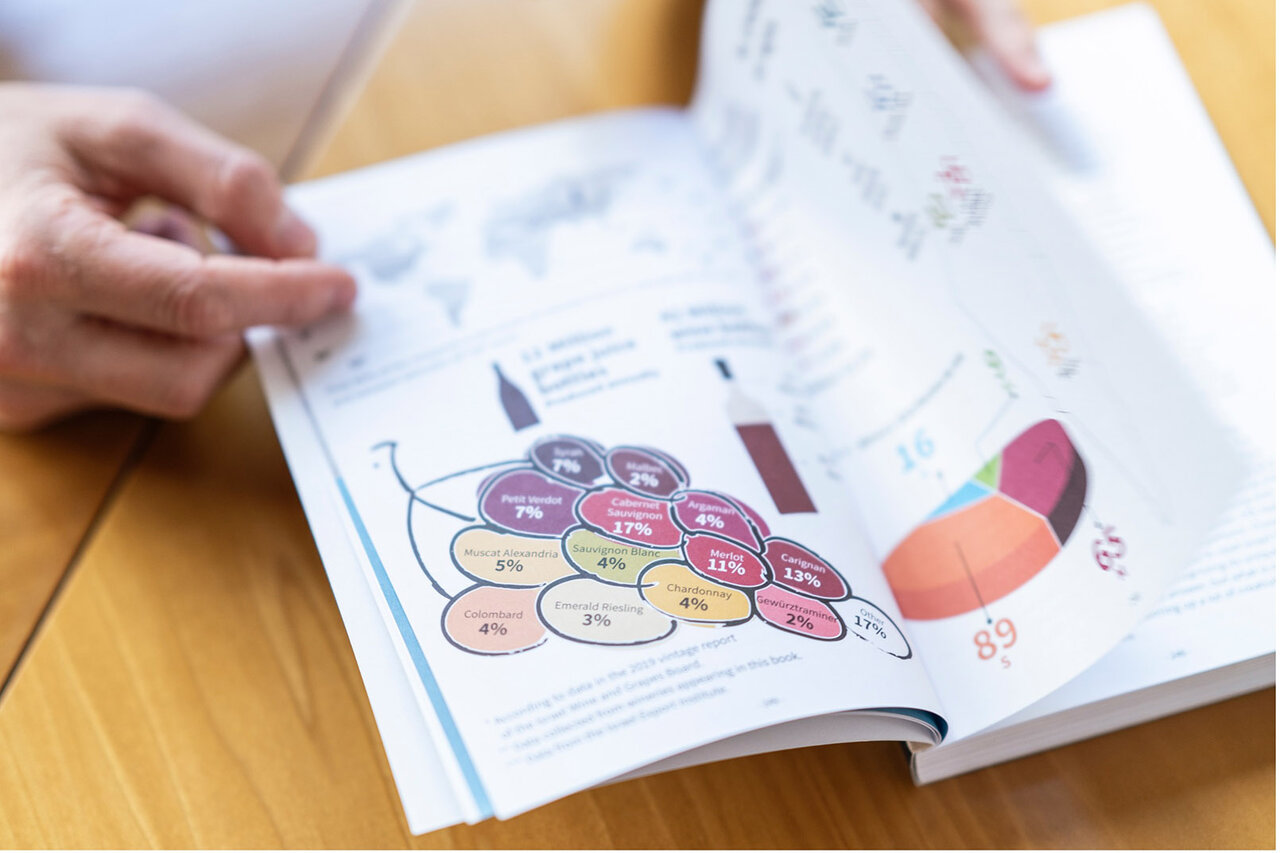
Winemaking in Israel dates back 3,000 years. After a period of cessation, production resumed with the adoption of techniques from Italy and France. Currently, quality is further enhanced through agritech (the application of ICT in agriculture), and Israeli wines, including those from the "Yarden" brand, are highly regarded internationally.
Unfortunately, many Japanese businesspeople seem too busy to engage in much sightseeing and often leave without exploring. I would be delighted if they could take the time to enjoy the sights.
Israel's history is relatively new, beginning in 1948. It is clear that the very history of its founding, bringing together people from around the world, is the origin of technological innovation, incorporating new cultures and technologies.
While Japan and Israel differ in culture, history, and geography, Japan, like Israel, has built its own unique culture by adopting and updating elements from other countries.
Currently, there are also joint efforts underway in the field of environmental conservation, such as the co-development of sustainable energy sources like wind and hydrogen power between Japan and Israel.
Could not the collaboration between these two countries, which share commonalities, create immense power by enhancing their respective technologies?
To achieve such a chemical reaction, increased human mobility in the post-corona era will be essential. And when visiting Israel for tourism or business, I highly recommend savoring the Tel Aviv gastronomy, which is gaining global recognition.
* A culinary philosophy encompassing food culture and history, originating in France.