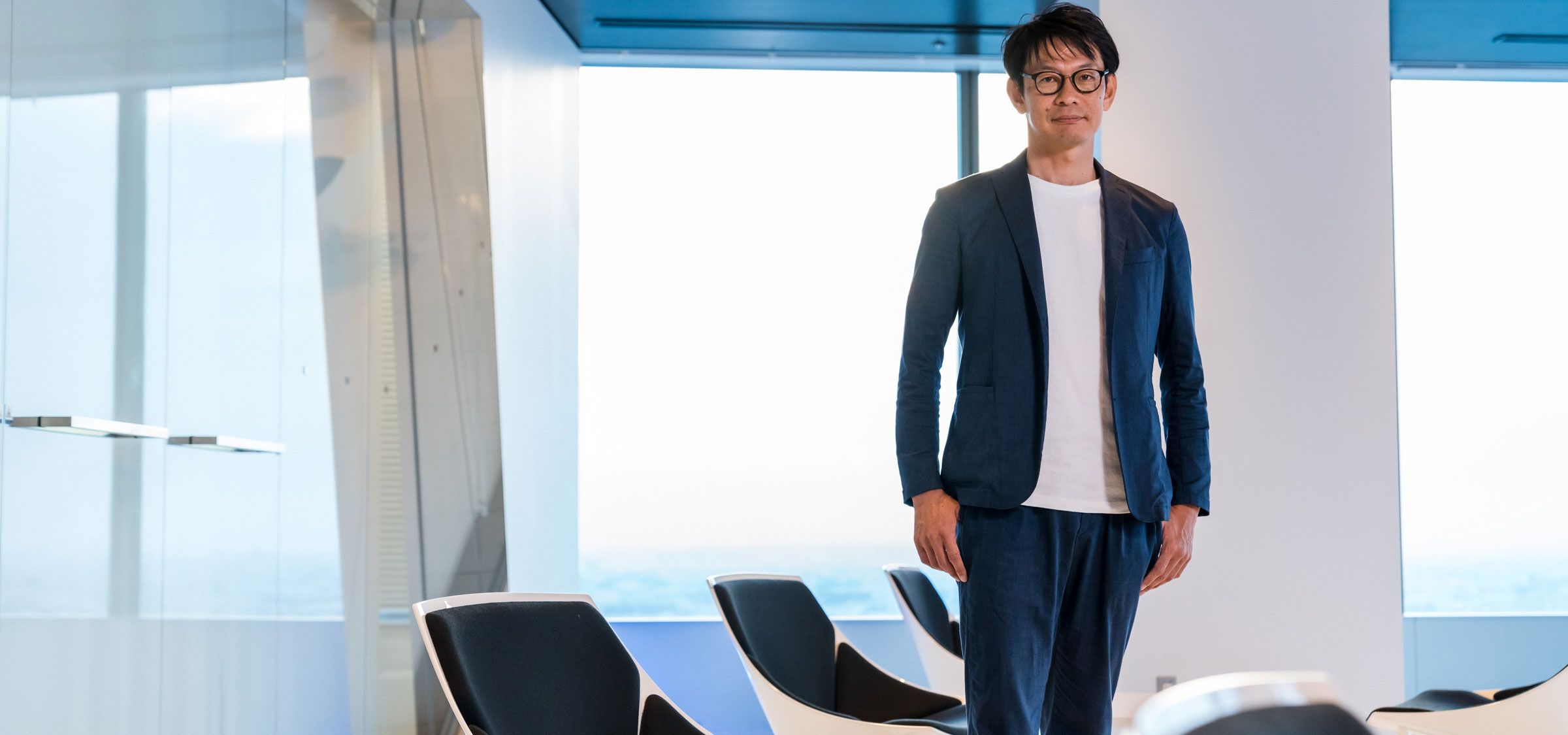
Mr. Ohno, Head of au Smart Pass, discusses future projections for Japan and the world | au
au | Shibuya 5G Entertainment Project
In 2030, Humanity Will Connect Anew in Virtual Space
au (KDDI), a company with a broad business scope encompassing various IT services centered on telecommunications like mobile phones, boasts many innovative and talented individuals with foresight. This time, we feature Mr. Takahiro Ohno, head of "au Smart Pass," which offers a diverse range of services from entertainment such as music, movies, and sports to shopping.
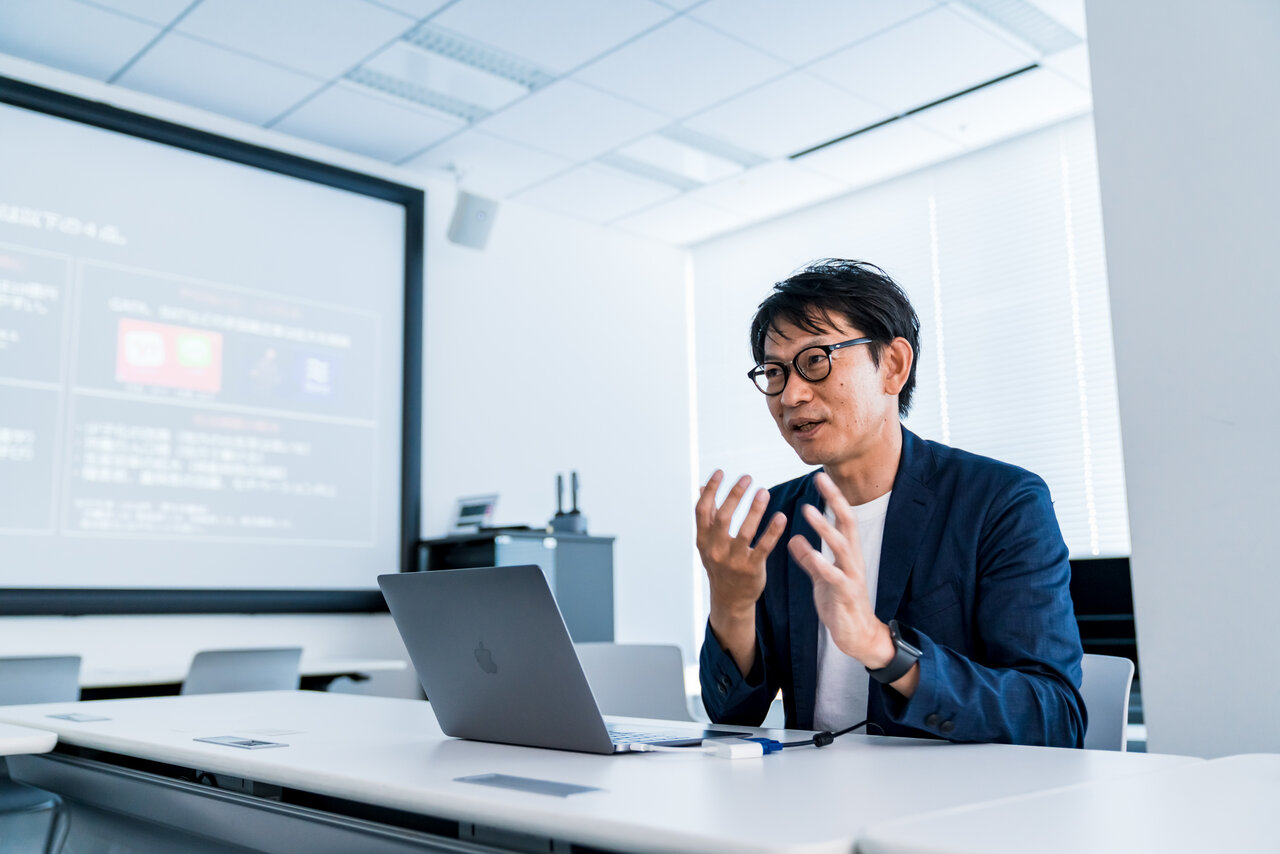
With over 15 million members and the recent introduction of ambitious content like 2D multi-angle video services, Mr. Ohno is also proactively opening "au Smart Pass" to users of other carriers. What is Mr. Ohno's vision for the future in 2030, and what will that world look like?
Text by TOMIYAMA eizaburo | Photo by TAKASE tatsuya
What I Learned After Spending 100 Hours in VR
OhnoJust before the COVID-19 pandemic, I already felt society was on the cusp of major change. So, I set aside my daily work and pondered the question: 'What will the future be like in 2030?' I named this concept 'Tomorrow Land,' with the hope of eventually connecting it to KDDI's business.
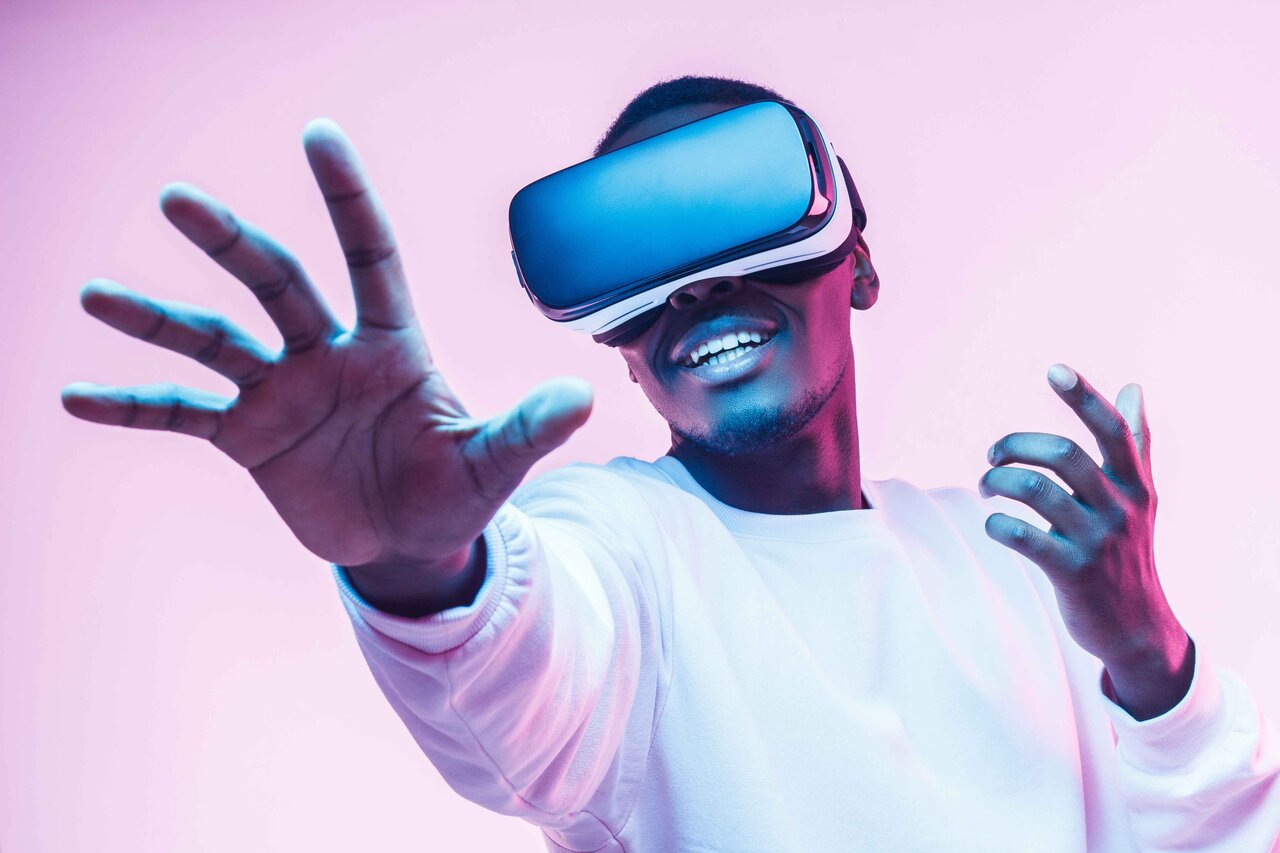
First, I spent a total of 100 hours experiencing various content in VR spaces. The world of VR headsets like the Oculus Quest is incredible. The sense of immersion is profound, and when I watched YouTube... to put it simply, it was like a 100-inch TV screen unfolding before my eyes. In the future, the expression of movies and video will undoubtedly change. Sci-fi and nature documentaries, in particular, have a strong affinity for VR. I imagine Star Wars or Jurassic Park creating incredibly immersive VR films.
— Just imagining Jurassic Park in VR sounds amazing.
VR Devices Will Become Lighter and More Accessible
OhnoRegarding VR devices, we'll see lighter, more accessible models resembling sunglasses. With a one-touch switch between real and VR vision, people will likely wear them on trains or in cars (autonomous driving), much like putting on earphones. In VR mode, you might even receive a notification when your stop is approaching. Furthermore, it will be possible to measure the heart rate and body temperature of people around you to detect danger in advance. The sense of touch and tactile feedback will also continue to evolve rapidly.
We Will Create Virtual Humans Identical to Ourselves
— When you mention the sense of touch, it brings to mind 'telexistence' (remote presence), where robots in the real world are operated remotely.
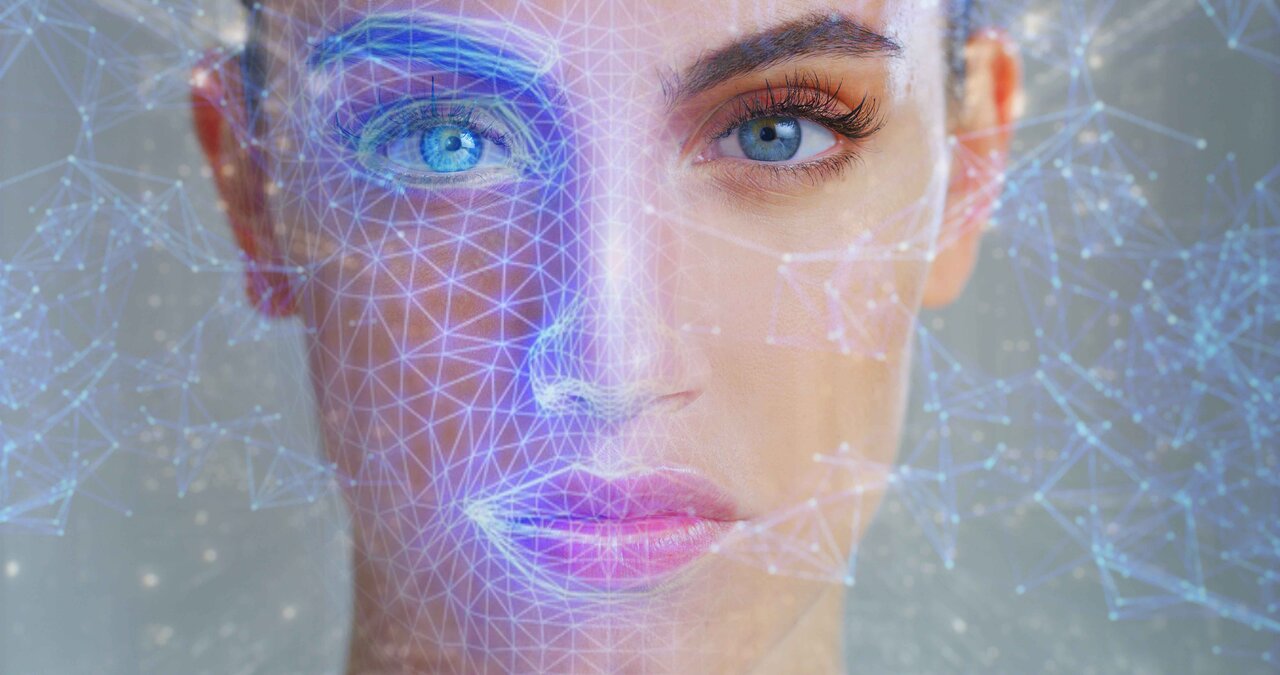
OhnoPrecisely. These technologies will be utilized in VR spaces alongside 'virtual humans,' which are ultra-realistic CG creations. Virtual humans are already being employed in promotional contexts by companies like GU for apparel. In the future, the realism of skin texture and body temperature will increase, and changing outfits will become completely flexible. Consequently, everyone will be able to create a 'virtual human identical to themselves' (avatar) to navigate VR spaces, buy clothes, and enjoy fashion. This will foster interactions nearly indistinguishable from real-life ones.
— The question of whether to make avatars identical to oneself might lead to discussions similar to those about anonymity versus real names on social media. However, as the concept of diversity becomes more ingrained, perhaps people will take pride in their individual existence.
OhnoThat's a possibility. In fact, when I ask university students, they respond very positively to the idea of virtual humans that look just like them. I believe it will become a world where people use them selectively, much like anonymous accounts on Facebook and Twitter.
— Indeed, it seems like people would skillfully utilize them in that way.
Gen Z is Sensitive to Social Good
OhnoSo, who will be the consumers in 2030? Despite the declining birthrate, Millennials and Gen Z will constitute about 60% of the working population. My daughter is 12 years old, and she'll be a first-year employee around 2030. So, I asked her classmates for a survey. Additionally, I interviewed about 30 friends and acquaintances aged 20 to 50.
My daughter's generation are digital natives, so they trust influencer reviews more than corporate advertising. This is already well-known. They also feel no discomfort in forming friendships online. Moreover, they value 'trust' over 'money.' And what is this trust? It's often measured by 'follower count.' Furthermore, they are sensitive to 'social good' (social contribution activities and support). When they travel, they participate in beach cleanups in the morning. They want 'to make good deeds a cherished memory.'
For my generation, the Baby Boomers, it might seem like 'Isn't that just hypocrisy?' But they genuinely do it with sincerity. That's something to be respected.
Another significant difference is that they possess an identity as 'global citizens.' Many Japanese junior high school students are K-pop fans, which is a global phenomenon. In other words, they don't have a strong sense of belonging to the culture of the country where they were born and raised; they feel as though they just happen to be living in Japan. They also have a strong sense of 'minimalism,' avoiding unnecessary purchases and opting for sharing. Furthermore, the concept of 'work styles' has changed due to the pandemic, and the notion of being bound by time is diminishing.
— I do feel that perceptions of what is cute, cool, or right are becoming universal.
Even as Technology Evolves, Human Desires Remain Unchanged
OhnoWhen forecasting the future, I emphasize the perspective that 'fundamental human desires do not change.' Even when interviewing various people, the strong desire to 'meet' others—be it lovers, friends, or mentors—persists. Additionally, desires like 'to see and experience' through travel, concerts, sports, and fashion, and 'to maintain health' through fitness and counseling, are also strong.
Furthermore, the desire 'to learn' is also an intrinsic part of being human. With the evolution of communication technologies like 5G, the concept of distance will disappear, expanding opportunities to learn from professionals living far away. I believe there's potential for growth in catering to middle-aged men who have a strong interest in hobbies.
— Humans, in their physical form, remain remarkably unchanged, sadly.
Humanity Will Return to a State of 'Connection' Similar to Pre-17th Century
OhnoNext, I shifted to a macro perspective to consider the direction the world is heading. The keyword here is the 'identity' of the 'global citizen' I mentioned earlier.
Looking back, the concept of nation-states as we know them today emerged after the 18th century. It's a relatively recent development in human history. What was it like before that? It was the era of the 'Roman Empire,' which governed vast territories while encompassing 'multiple ethnicities, languages, and religions.'
There were territories, but the people living there didn't strongly identify as 'being from country X.' There wasn't a closed, nationalistic consciousness; connections were more fluid. I believe we are returning to that era.
Vast territories encompassing 'multiple ethnicities, races, and religions.' This is something that companies like GAFA (Google, Amazon, Facebook, Apple) and BAT (Baidu, Alibaba, Tencent) are already practicing. So, I considered what KDDI should be doing in such an era. Returning to our roots, KDDI has historically researched 'connecting people' under the slogan 'Making Japanese phone calls cheaper.' I believe this concept of 'connecting people' will remain valid even in 2030.

If You Do Something Interesting, It Will Spread Globally on Its Own
— A service that transcends ethnicity, race, and religion implies the possibility of Japan being displaced by 'black ships,' doesn't it?
OhnoHowever, just as K-pop is popular worldwide, this is also an era where interesting things originating from Asia will spread globally on their own. To achieve this, it's crucial to fully embrace the desire of Millennials and Gen Z to connect.
— Specifically, what kind of connections are you envisioning?
OhnoWith the advancement of communication, it will become easier for people with niche interests, even minorities, to connect. Furthermore, we can solve customer challenges such as 'wanting to go but can't,' 'having to go when they don't want to,' or 'wanting to continue but can't.' This means that entertainment, commuting, fitness, and learning will all undergo transformation.
Moreover, as a corporation, I believe we should proactively address social issues. This includes improving the declining birthrate, revitalizing depopulated areas, and creating a society where individuals with disabilities or serious illnesses can thrive. Communication technology can support these endeavors.

Supporting Safe Encounters and Interactions
— So, you aim to create innovative content and services like these in the future? Then, as a provider of communication infrastructure, what will be expected of KDDI going forward?
OhnoWhen fulfilling fundamental human desires in virtual spaces, the question of whether virtual encounters and connections are truly 'trustworthy' and 'reliable' will become an issue. As our company handles a significant amount of personal information, ensuring secure communication will be a key challenge. We must serve as a deterrent when necessary. Being perceived as a 'trustworthy company' by our customers is paramount.
■ Profile /
Takahiro Ono
General Manager, Life Design Services Planning & Promotion Department, KDDI Corporation
Hometown: Hokkaido. Graduated from the Faculty of Economics, Sophia University. Joined KDD (now KDDI) in 1995.
Worked at a US subsidiary of KDDI (NY office) from 1998 to 1999. Involved in the establishment and operation of the KDDI Open Innovation Fund, a venture investment fund, from 2011.
Currently serves as General Manager of the Life Design Services Planning & Promotion Department, overseeing the au Smart Pass service with its 15 million member base and responsible for new business development. Additionally, he is an outside director of KCJ Group Inc. (which operates KidZania) and holds positions at Loco Partners Inc. (operating the accommodation booking site Relux) and mediba Inc. (operating advertising businesses, etc.).
Certified Small and Medium Enterprise Management Consultant, registered with the Ministry of Economy, Trade and Industry.