Experience the new pulse of tradition in Okunaka-su | LOUNGE
LOUNGE | Okunaka-su
Experience the New Pulse of Tradition in Okunaka-su
Nakasu spreads out, connecting Hakata and Tenjin. While often perceived as a glamorous district, a walk through its backstreets might change that impression. Historic paths, where the symbolic Hakata Gion Yamakasa festival races, extend through the area, and the cultural sophistication nurtured by the city still feels palpable. It possesses a hue that suggests not flashiness, but rather a sense of calm and refinement. Yet, it is by no means stagnant. There's a feeling of steady evolution, while still respecting its historical background.
This series, named "Okunaka-su," aims to discover Fukuoka's new charms by capturing that very atmosphere.
Part 1President Nakaoka of the long-established Japanese confectionery shop, Suzukake, whom we interviewed in Part 1, described the atmosphere of Okunaka-su as "a sophisticated everyday life."
In this installment, the second of the series, we explore the allure of Okunaka-su from the perspective of those involved in Hakata's traditional crafts.
Text by NAGASAKI Yoshitsugu Photograph by NOGUCHI Shuji & NAKAMORI Makoto
A Second-Generation's Challenge Unveils a New World of "Hakata Mizuhiki"
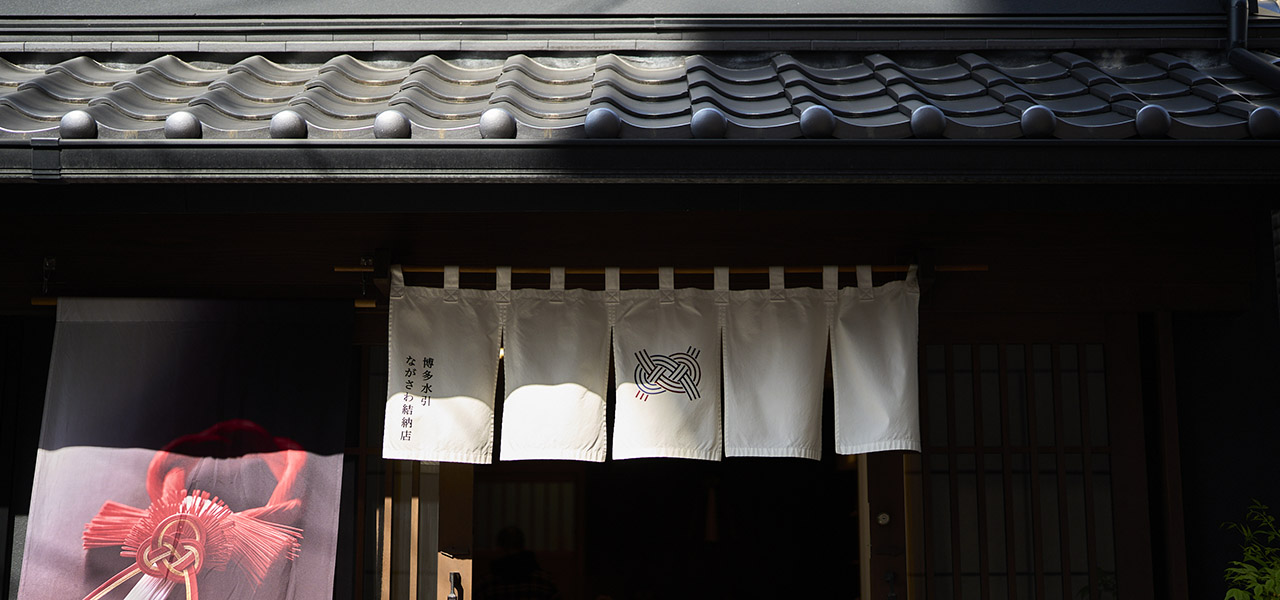
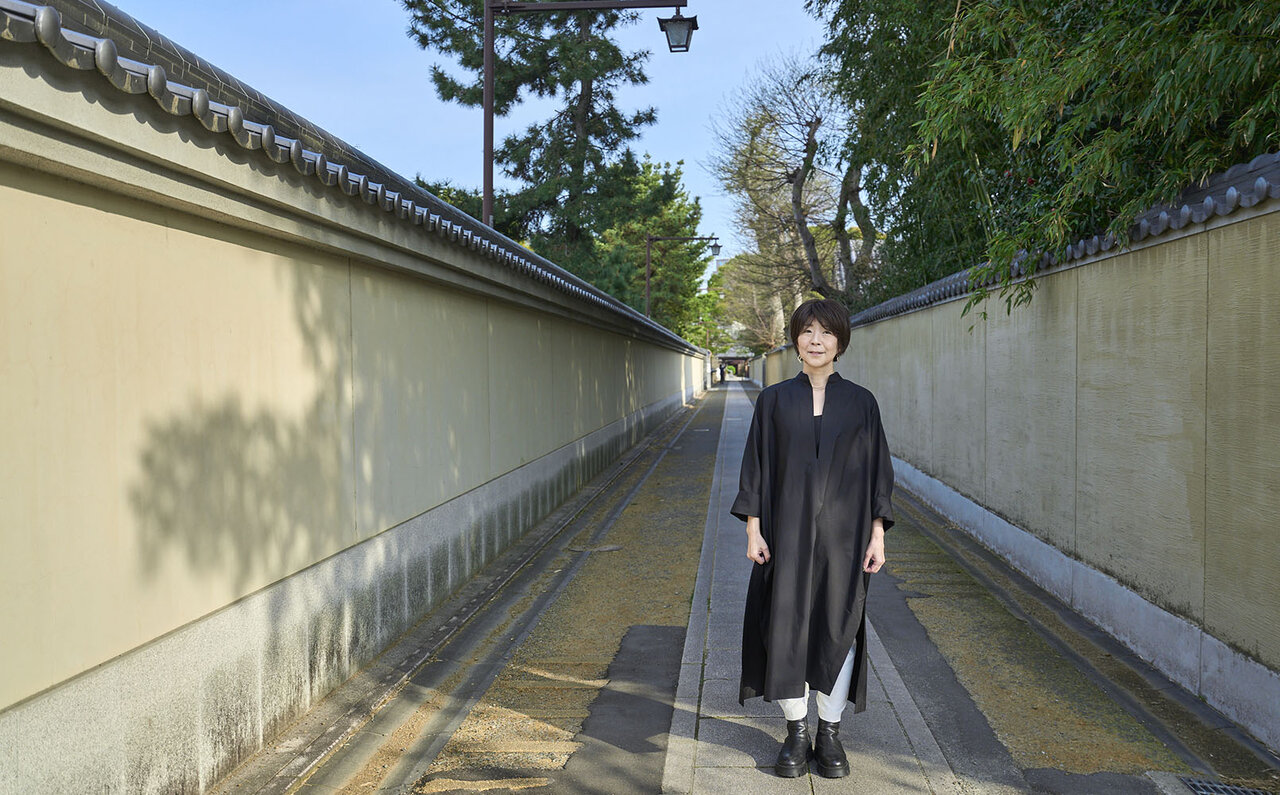
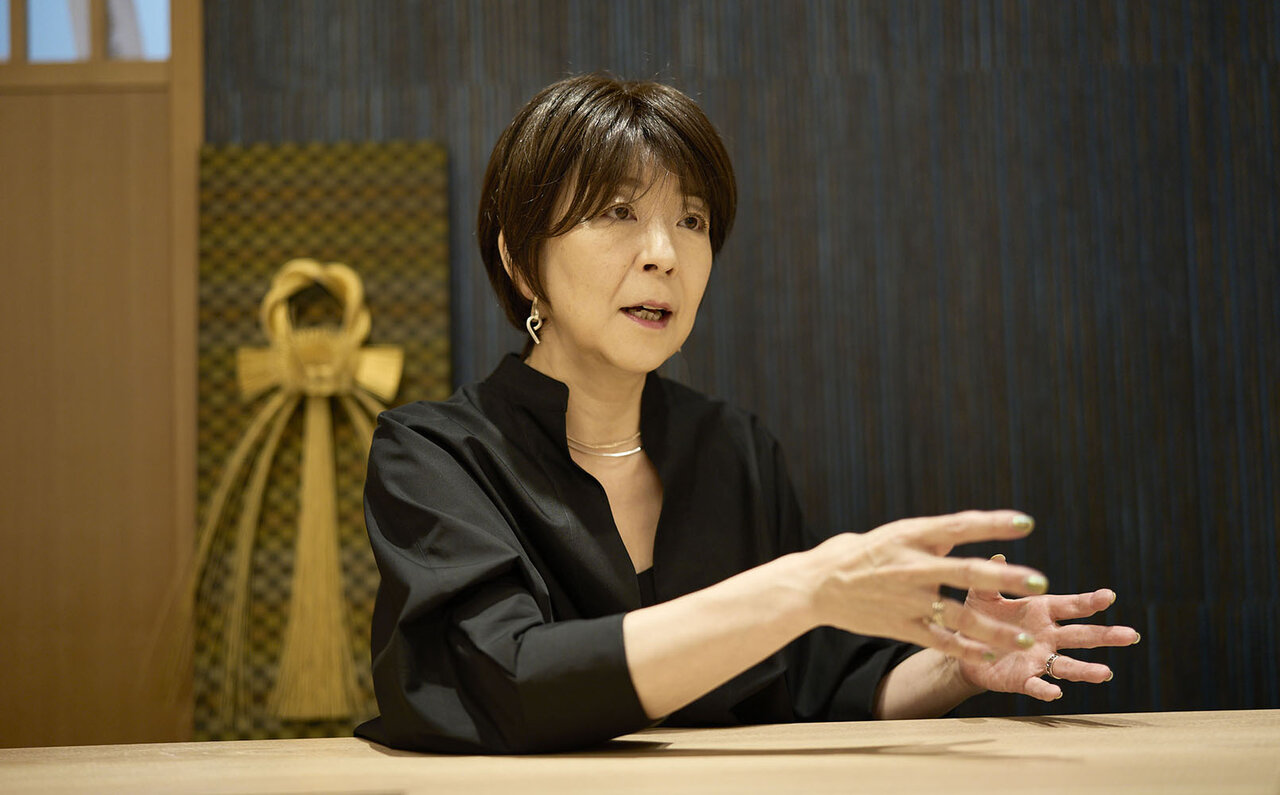
Gofukumachi, near Nakasu, is a town with a charmingly nostalgic streetscape, yet among its buildings are several establishments that hint at modern elements. Tucked away down a narrow alley appears a sleek, jet-black modern building. This is "Nagasawa Yuinoten," a purveyor of Hakata mizuhiki. Hiromi Nagasawa, the second-generation owner, welcomed us.
"Hakata mizuhiki began with my father's generation, but he originally ran a teahouse. He handled mizuhiki for betrothal gifts there, and I heard that he started making them himself to explore new forms of mizuhiki. It has a history of about 52 years."
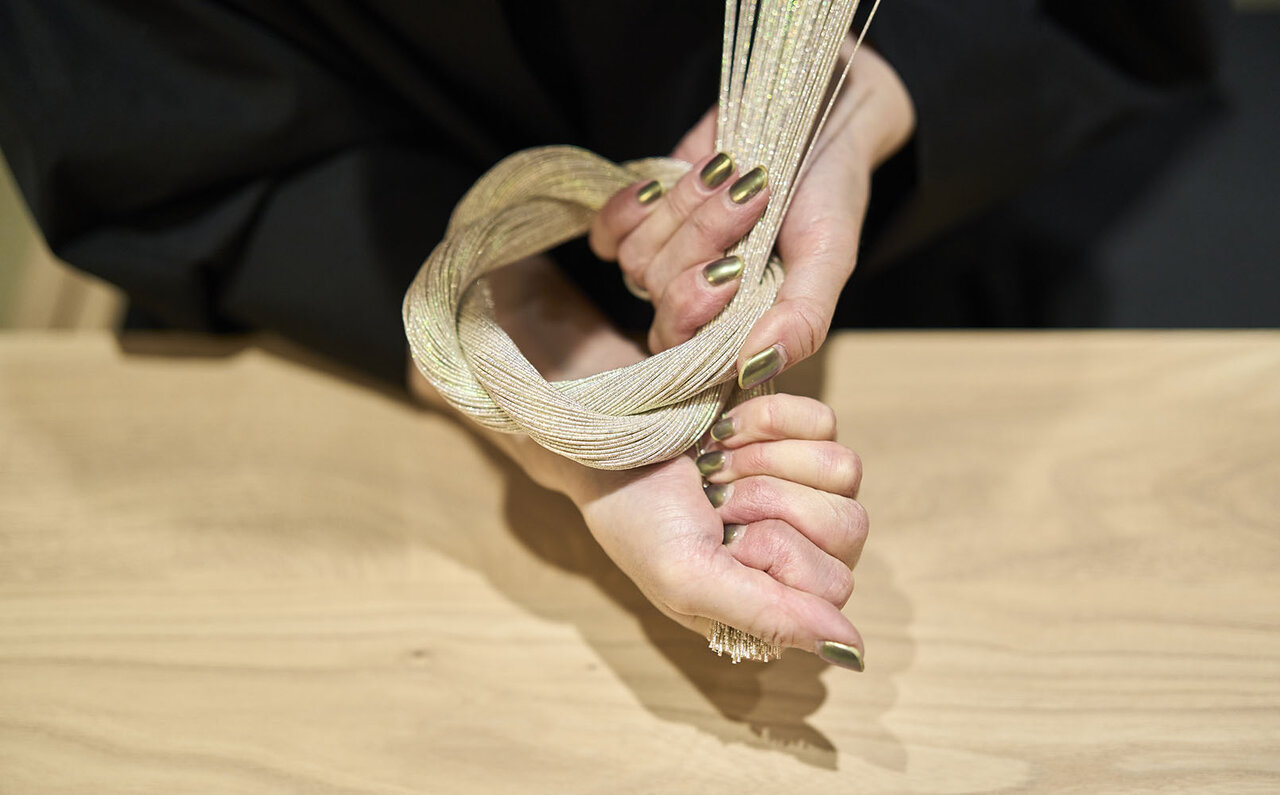
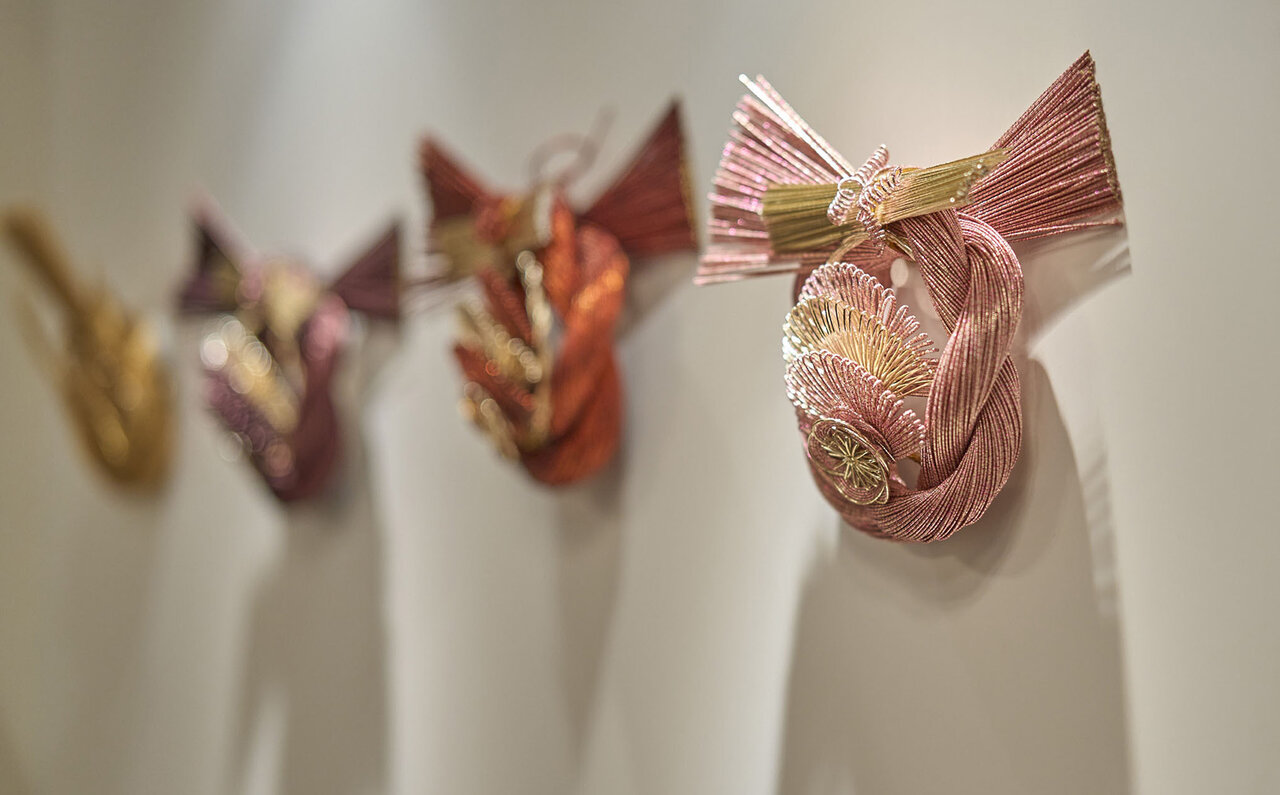
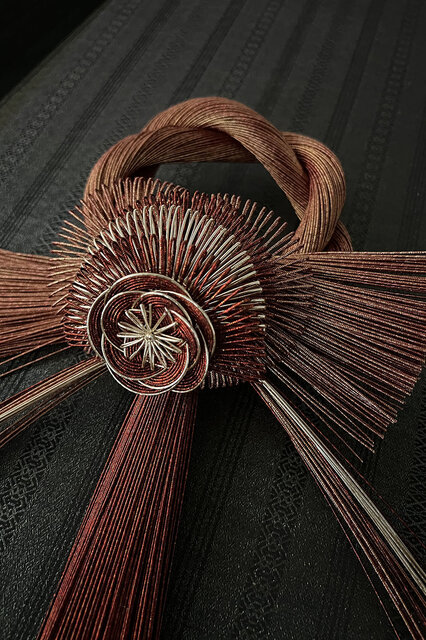
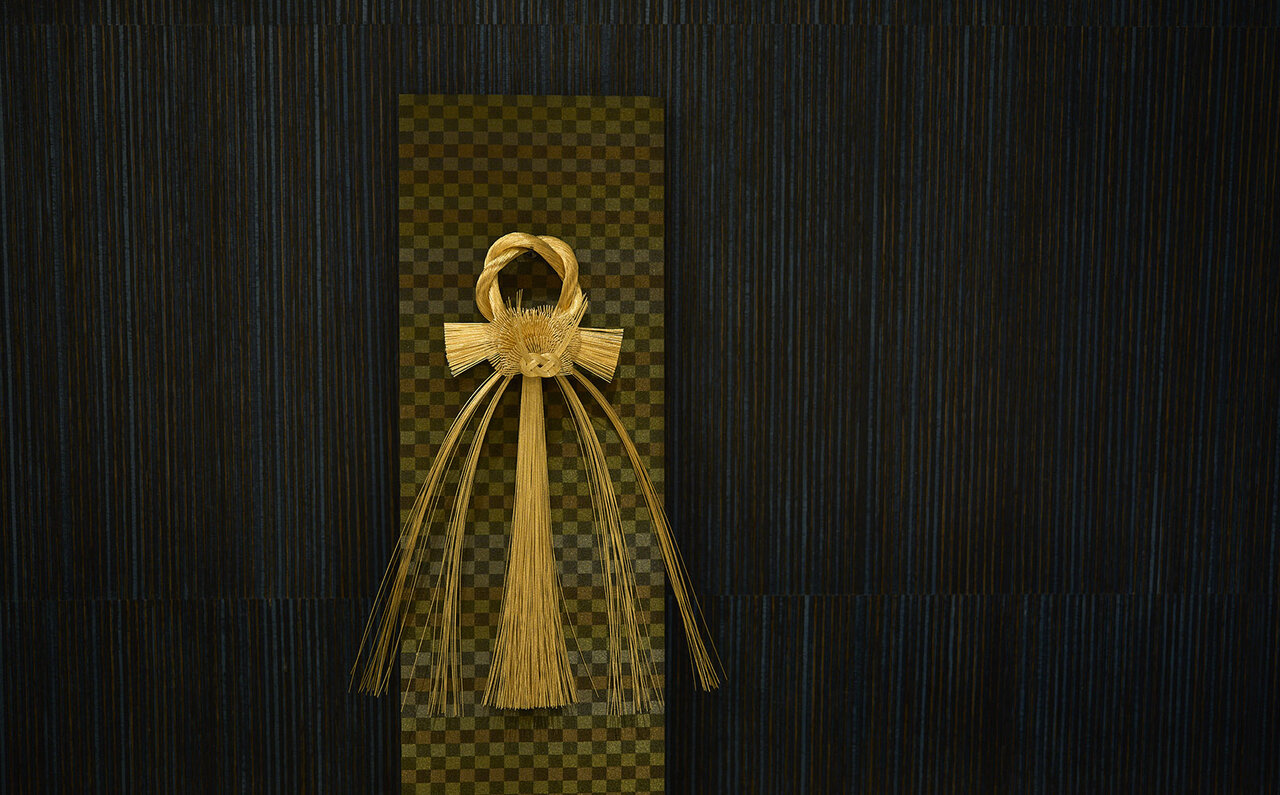
Thus, the elder Hiroaki infused Hakata's culture with mizuhiki, elevating it to what is now known as "Hakata mizuhiki." The characteristic "twist" of Hakata mizuhiki possesses not only strength but also a chic elegance. It is the second-generation Hiromi who inherits the techniques cultivated by Hiroaki and attempts to connect them with the present era. Traditionally, mizuhiki carries the meaning of connecting and binding people. Hakata mizuhiki is precisely that, passed down from father to daughter.
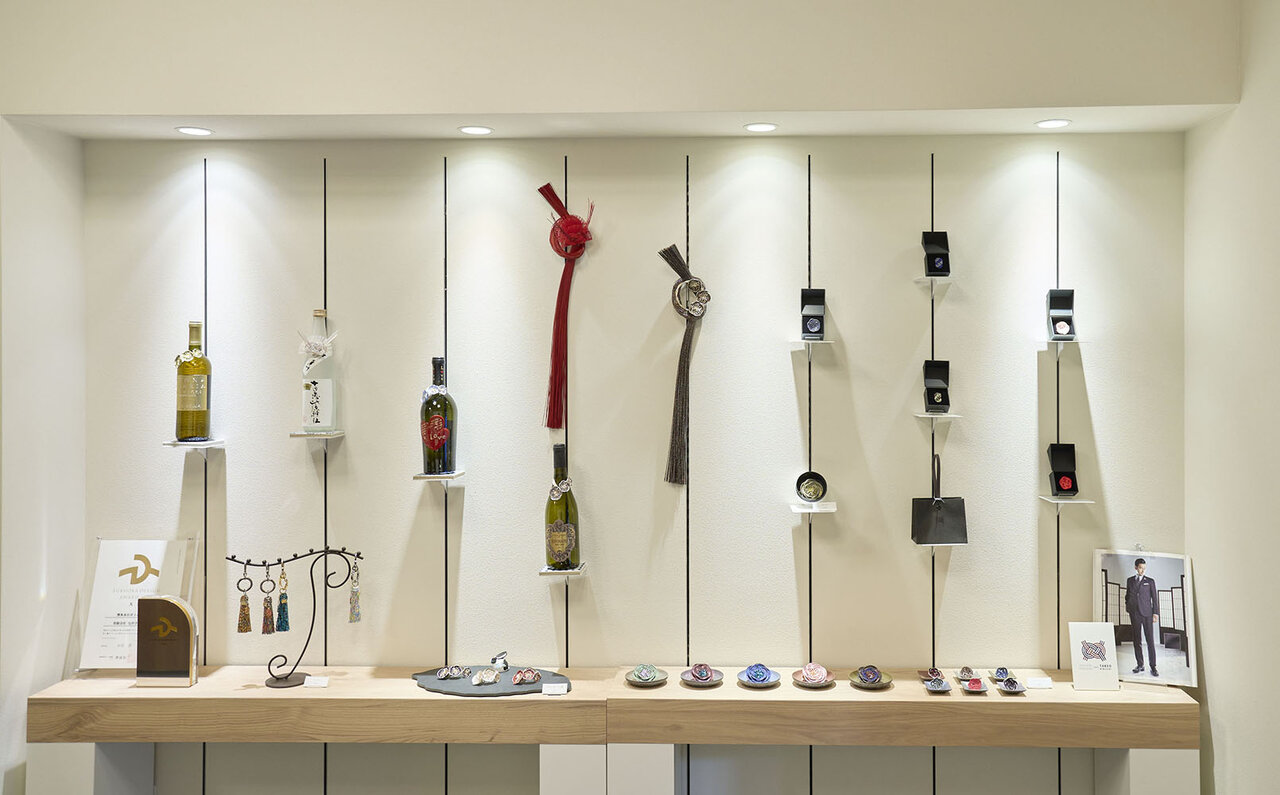
"Compared to my father's time, the custom of betrothal ceremonies itself is declining. We must change the situation where demand exists only for betrothal gifts. Therefore, while maintaining the quality of the mizuhiki, we have created new uses by adding design elements. These include bottle ribbons and rings that add an accent to gifts, chopsticks rests that can be used in daily life, and boutonnieres* that can be used as accents for formal occasions."
*An accessory worn on the lapel buttonhole of a jacket.
Hiromi, who worked as a graphic designer in Tokyo after graduating from university before returning to Fukuoka to take over the family business, creates new mizuhiki in a wide range of styles, from lustrous pieces to subdued tones rarely seen elsewhere. Her chicly colored mizuhiki, in particular, blends seamlessly with modern interior decor and is highly valued as gifts for company relocations or new homes in Hakata. Furthermore, in 2017, a mizuhiki bottle ribbon was chosen as a gift for attendees of the G7 Kitakyushu Energy Ministerial Meeting. Former U.S. Ambassador to Japan Caroline Kennedy, in particular, showed great interest. Over 50 years, through the meticulous crafting and adaptation of its techniques, Hakata mizuhiki is steadily establishing its position as a contemporary craft.
"We inherit the techniques passed down from the previous generation and pursue colors and shapes that can only be achieved through manual labor. Therefore, mass production is difficult, but we hope that Hakata crafts, born from the technique of mizuhiki, will be passed down to the next generation and seamlessly integrate into daily life as chopsticks rests or interior decorations."
While preserving tradition, they do not forget innovation to create connections with the modern era. Hakata mizuhiki embodies this spirit, reflecting the essence of Okunaka-su.
Hakata Ori: An Aura That Colors Everyday Life
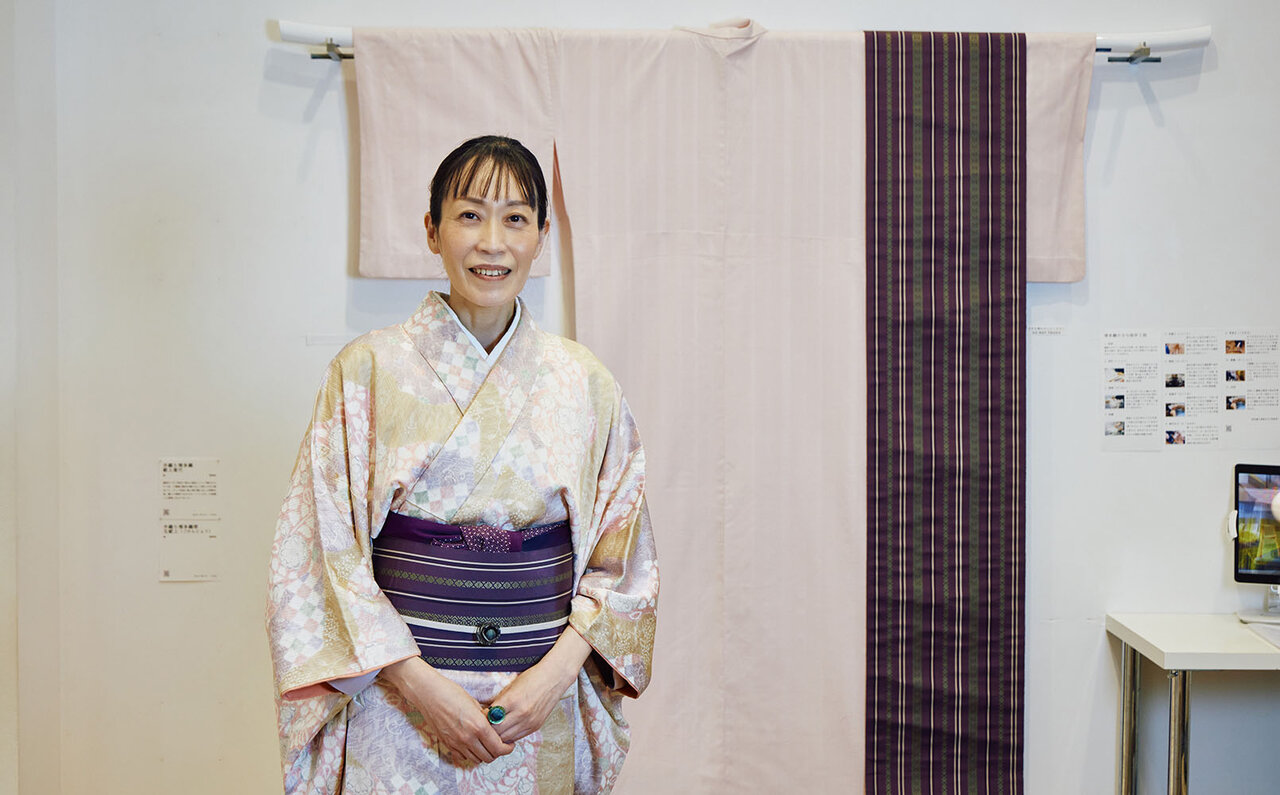
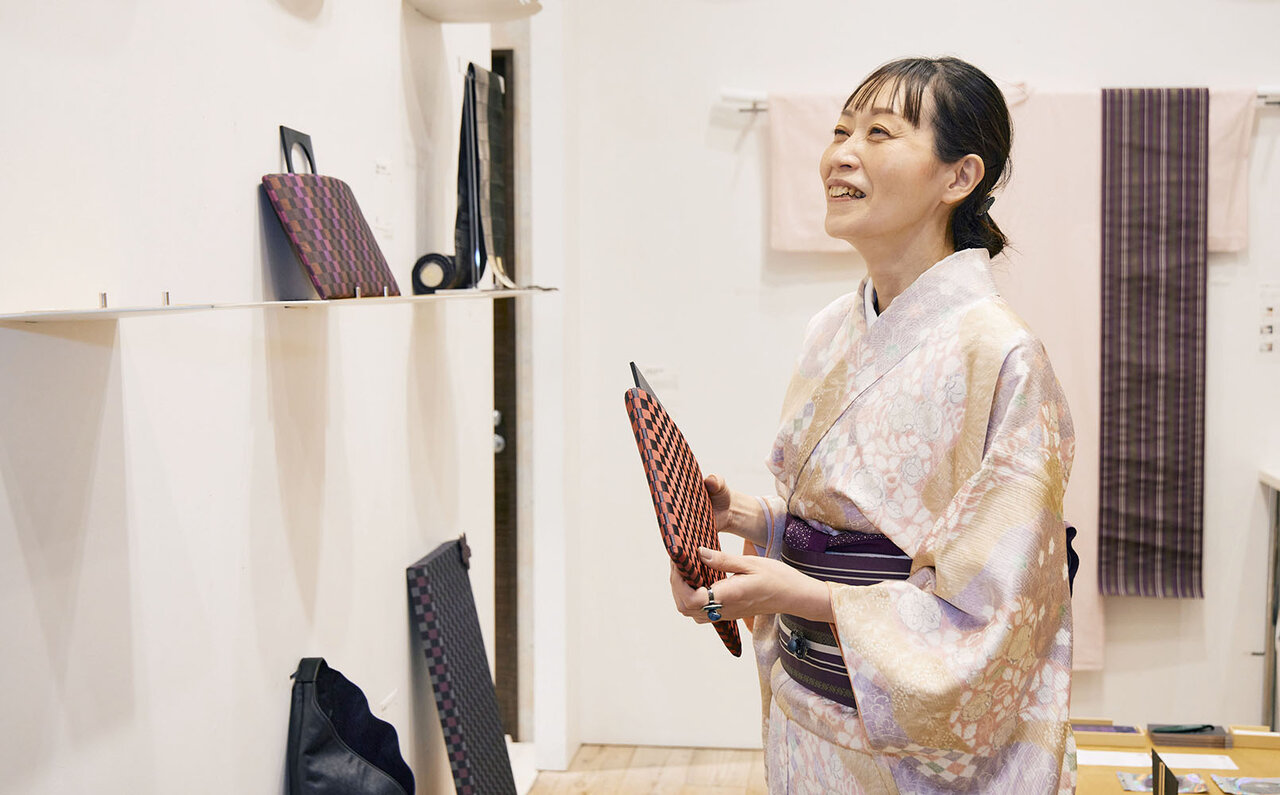
The traditional crafts breathing life into Okunaka-su are not limited to Hakata mizuhiki. There are also beloved traditional crafts such as Hakata dolls and Hakata Ori. Among these, Hakata Ori is a craft that places emphasis on educating the next generation, with the establishment of a school called "Hakata Ori DC (Development College)." Yumiko Fukahori, a master of Hakata Ori hand-weaving techniques and a graduate of Hakata Ori DC, is exploring new facets of Hakata Ori.
"The history of Hakata Ori is ancient, with its origins traced back to weaving techniques brought back by Hakata merchants from the Chinese dynasty of Song. During the Edo period, the feudal lord at the time, Lord Nagamasa Kuroda, selected Hakata Ori as a tribute to the Shogunate, and the "Dokko Hanazara" pattern, the origin of Hakata Ori, came to be known as the 'Kensho-gara' (tribute pattern). I aim to incorporate my own 'color' while utilizing these traditional techniques and patterns. In Hakata Ori, color and pattern are primarily expressed through the warp threads (tateito), but I often express color through the weft threads (yokoito) with that intention in mind."
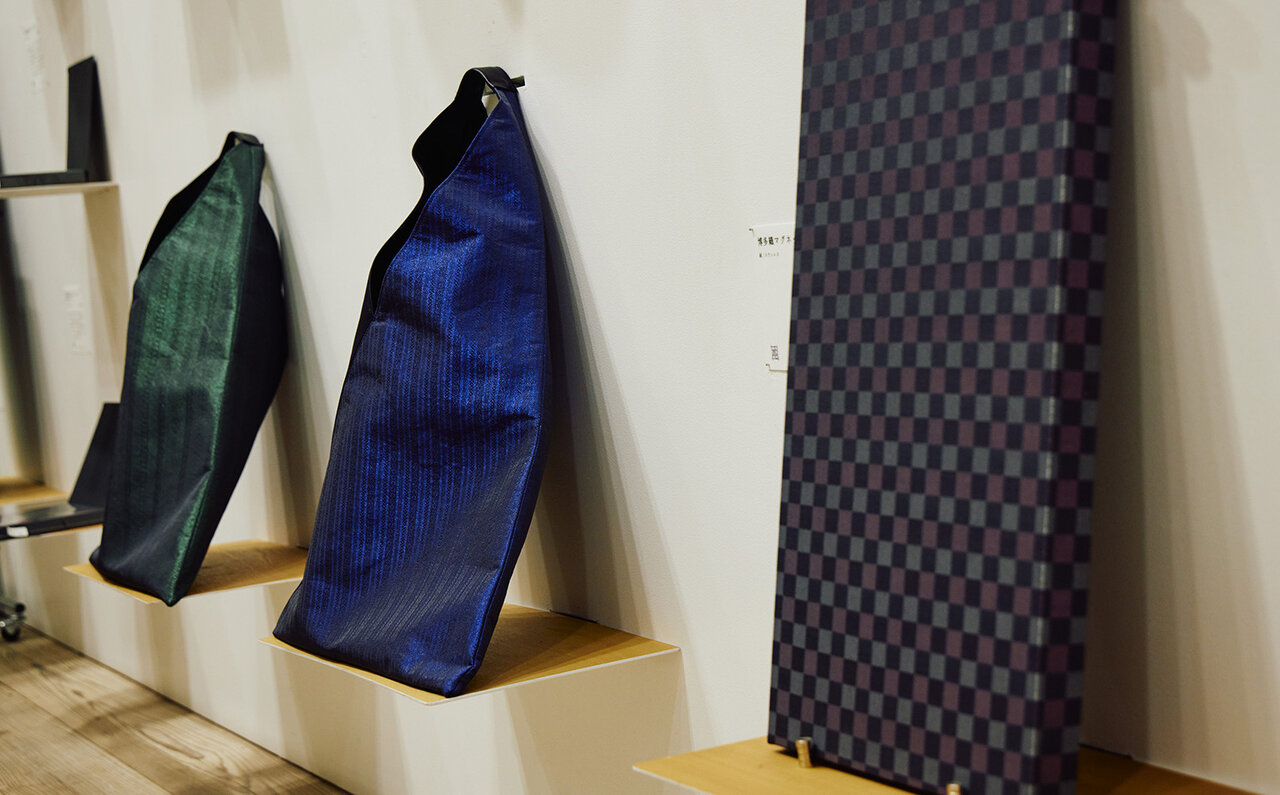
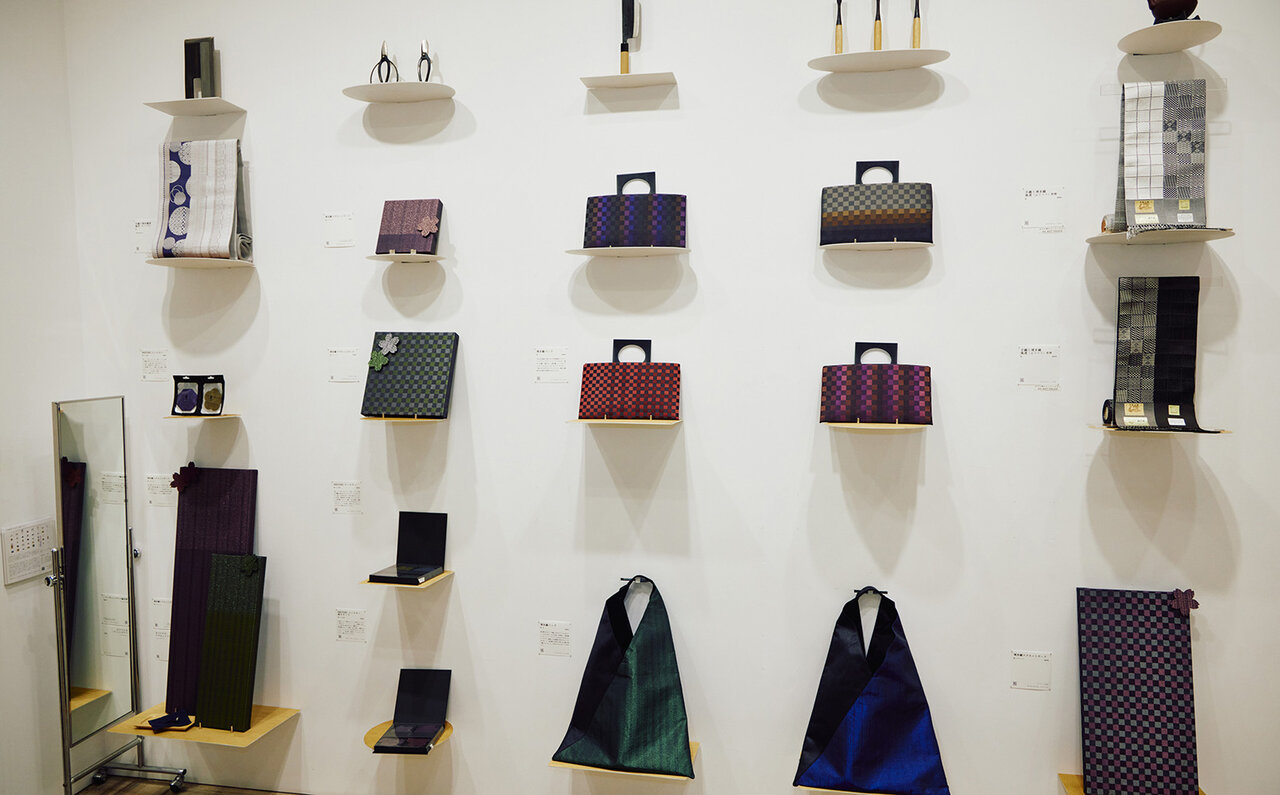
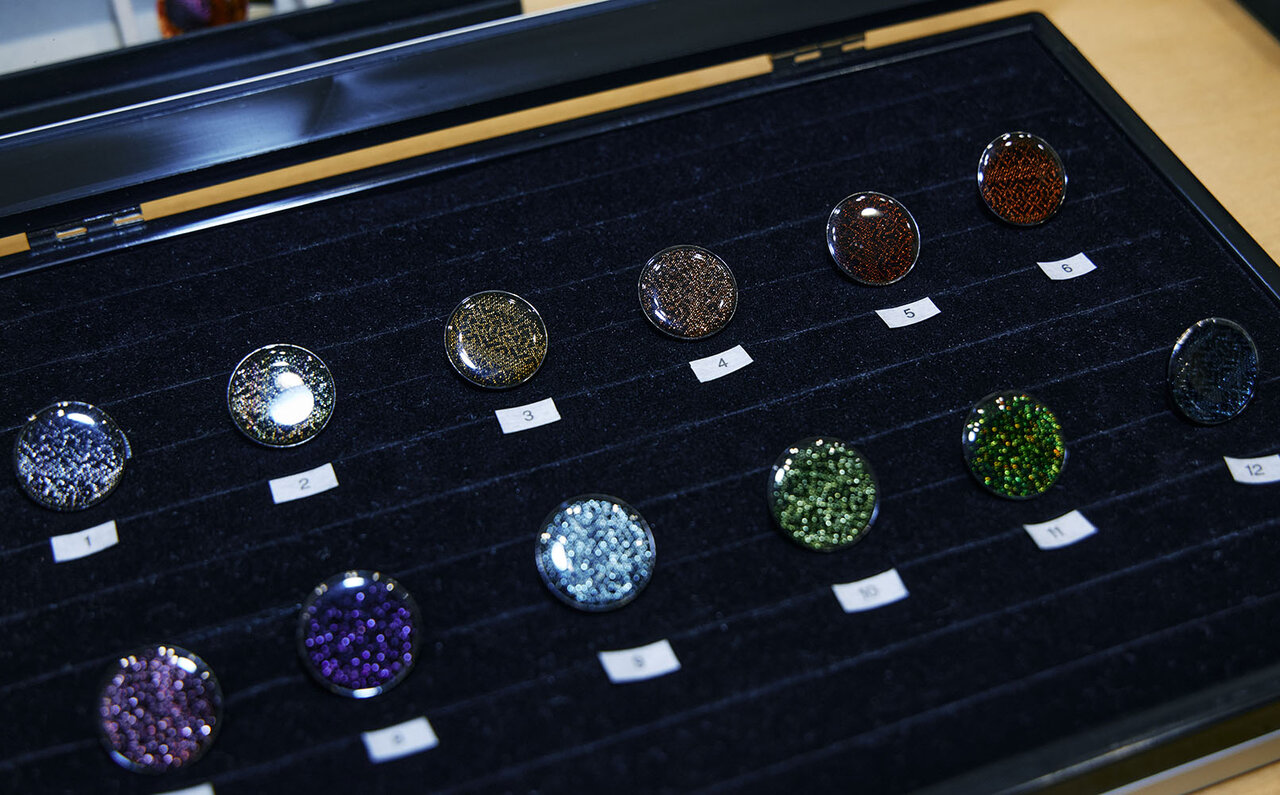
Although Fukahori humbly calls herself inexperienced, the color palette she uses for the weft threads is unique. While distinct from conventional Hakata Ori, it possesses a profound depth. Beyond the color schemes, her works are eye-catching, skillfully incorporating Western aesthetics into items such as interior boards, handbags, and button accessories. It seems to be an ingenuity born from a deep understanding of Hakata Ori, yet Fukahori originally worked in a profession unrelated to it.
"After settling down following my work in Tokyo, I learned about the school (Hakata Ori DC) at a opportune moment. I diligently acquired the techniques through the detailed guidance I received daily from the instructors. I'm not trying to do anything particularly groundbreaking; rather, I aim to find my own unique expression while firmly preserving tradition."
Fukahori's Hakata Ori, with its lamé threads and simple tone-on-tone patterns, naturally looks beautiful as obi sashes and kimonos. However, it is perhaps more significantly through everyday items like handbags and brooches that it encourages an awareness of Hakata Ori. This method of integrating the designs of traditional Hakata Ori into subtle everyday moments resonates with the "sophisticated everyday life" that President Nakaoka spoke of as the charm of Okunaka-su in the previous installment.
Nagasawa of Hakata mizuhiki and Fukahori of Hakata Ori are both updating traditional crafts through their respective approaches. These two individuals are, in fact, acquainted. They have even collaborated, creating a beautiful interior board adorned with Hakata mizuhiki on a Hakata Ori board.
What both of them have in common is that they bring new vitality by leaving the city and then returning. This also echoes the history of Hakata's cultural formation, which, as a gateway to Asia since ancient times, has absorbed various cultures and sent them out in new forms.
What can be felt from this is the pulse of creation, absorbing cultural elements from different roots. The passion for change that lives within tradition. That is also the charm of Okunaka-su.
Sponsor: Royal Park Hotels and Resorts Co., Ltd.The Royal Park Canvas Fukuoka Nakasu - Scheduled to open August 4, 2023
An urban resort where you can be embraced by Kyushu's nature, feel its charm, and find healing.
https://www.royalparkhotels.co.jp/canvas/fukuokanakasu/