Feature: Noriyuki Nakamura's Special Contribution – Decoding Asia's Culinary Trends at Asia's 50 Best Restaurants
Special Contribution by Columnist Takanori Nakamura
The Noteworthy "Asia's 50 Best Restaurants"
Decoding Asia's Gastronomic Trends in the 2015 Rankings (1)
The "World's 50 Best Restaurants" (hereafter, World's 50) has gained recognition in Japan. Its Asian counterpart, "Asia's 50 Best Restaurants" (hereafter, Asia's 50), launched in 2013. While their scope differs, the awards share the same objective: to identify the most delicious restaurants in Asia today. This year, marking its third iteration, the awards have revamped their rules and structure, drawing closer to the quality of the World's 50. Naturally, it's said to have generated even greater excitement than in previous years. Takanori Nakamura, Japan's representative on the World's 50 Academy, flew to Singapore, where the awards ceremony was held, to experience the fervor firsthand. Let's delve into Asia's latest culinary scene with Mr. Nakamura.
Text by NAKAMURA TakanoriEdited by TANAKA Junko (OPENERS)
Asia's Ranking, by Asians
The ranking for Asia's No. 1 restaurant in 2015 was announced on March 9th at the Capella Hotel in Singapore.
Asia's 50, with San Pellegrino & Acqua Panna as its main sponsor, has now reached its third year. The ranking's profile has grown with each iteration. This year, over 100 media representatives and more than 500 industry professionals gathered at the venue. One of the key points of interest was, of course, the top spot. Would Bangkok's Nahm, last year's winner, retain its title, or would Tokyo's Narisawa reclaim it from second place? Or perhaps an unexpected contender would emerge? Speculation was rife, especially since the judging methods and panel were significantly altered for this third edition.
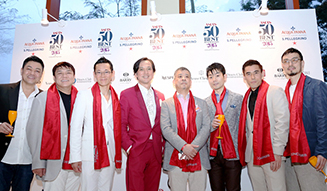
Japanese chefs who attended the awards ceremony, with the author (center)

The scene at the "Asia's 50 Best Restaurants" awards ceremony
Asia's 50 first launched in 2013. For the inaugural year and the second year, the top 50 Asian restaurants were determined by extracting only the votes for Asian restaurants from the ballots cast by over 900 World's 50 judges worldwide. However, for the 2015 rankings, 300 new judges were appointed, with the sole criterion being residency within Asia.
In other words, it has become a ranking of Asia, by Asians. The true aim of this rule change is to discover hidden culinary gems within Asia and to enhance the accuracy and credibility of the rankings. Limiting the judging to residents of Asia is likely the most suitable approach for this. By narrowing the scope of judges and their areas of activity, the organizers also hoped to better reflect local flavors and the diversity of culinary cultures.
The coveted No. 1 spot was awarded to Gaggan in Bangkok, a significant jump from its third-place finish last year. Chef Gaggan Anand, originally from Kolkata, is an Indian national. The news that an Indian-run Indian restaurant in Bangkok had been named Asia's No. 1 for 2015 surprised many.
Special Contribution by Columnist Takanori Nakamura
The Noteworthy "Asia's 50 Best Restaurants"
Decoding Asia's Gastronomic Trends in the 2015 Rankings (2)
An Indian Chef Reaches the Pinnacle of Gastronomy
Chef Gaggan, with extensive restaurant experience including a stint at Spain's El Bulli, was already a figure of interest in the global restaurant scene for his unique and innovative gastronomic creations inspired by Indian street food. With a vision to revolutionize Indian cuisine through cutting-edge techniques, he opened his eponymous restaurant in Bangkok in 2010. The establishment, unified by its colonial style, is reputed to offer a dining experience brimming with Gaggan's passion and creativity.
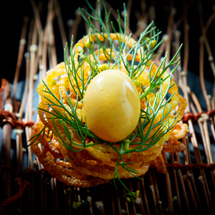
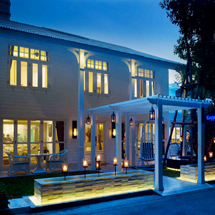
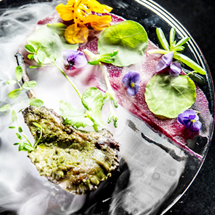
Gaggan in Bangkok was crowned Asia's No. 1 this year.
However, achieving the top position in Asia within just five years of opening seems to have surprised the chef himself. Gaggan remarked, "I never imagined that an Indian like myself would reach the pinnacle of gastronomy in Asia." Yet, he added with a beaming smile, "I believe in the power of ingredients and food, because eating inspires me," leaving a memorable impression.
Eight restaurants from Japan made the list, with Tokyo's Narisawa maintaining its second-place position from last year. Nihonryori RyuGin ranked fourth (up from fifth), and L'Effervescence placed twelfth (up from twenty-fifth), demonstrating their strong presence. While Narisawa, Japan's highest-ranked restaurant, ceded the top spot to Gaggan, its popularity and the judges' assessment of its quality seemed notably high. Chef Yoshihiro Narisawa commented after the awards, "Regardless of the ranking, Japan has wonderful artisans in its restaurants, and I believe the overall level, including producers and customers, is very high."
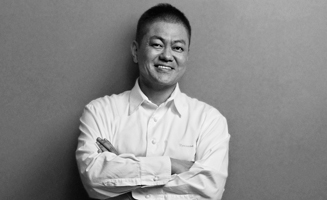
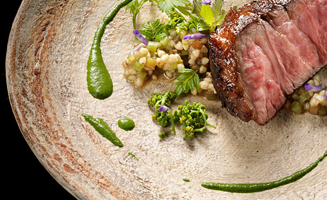
Narisawa, which maintained its second-place ranking from last year
Among the Japanese contingent, Hajime in Osaka, ranked fourteenth this year, garnered particular attention. It climbed 28 places from last year's 42nd position, earning the Highest Climber Award. His success is undoubtedly encouraging news for regional Japanese restaurants striving outside of Tokyo. Furthermore, the awarding of the Asia's Best Pastry Chef prize to Hidemi Sugino of Idémi Sugino in Kyobashi, Tokyo, was a significant talking point, marking the first time a Japanese chef received this honor.
Notably, last year's winner, Nahm, dropped significantly to seventh place, highlighting the volatility of the rankings. Conversely, eight restaurants made their debut on the list, including two from the Philippines and Cambodia, marking their first appearance as countries.
The competition among restaurants within Asia intensifies year by year, and this year's rankings seemed to reflect an acceleration of that trend. It is well-known that cities like Singapore and Bangkok are leveraging restaurants and gastronomy as key attractions for tourism, with their governments actively promoting them. However, other countries and regions such as South Korea, Hong Kong, and Taiwan are also showing similar initiatives. In this context, the rankings offer insights into the combined effects of government inbound tourism strategies, destination appeal, and information dissemination tactics.
The fact that Japanese restaurants saw their rankings improve across the board after the judges were changed to Asian residents undoubtedly confirms their strong support within the region. Even factoring in the boost from the weaker yen and the increase in visitors to Japan, their performance was remarkable. Nevertheless, with South Korea boasting three restaurants on the list, and new establishments opening in the Philippines, Cambodia, Myanmar, Malaysia, and Indonesia, this thrilling ranking promises to remain a captivating watch.
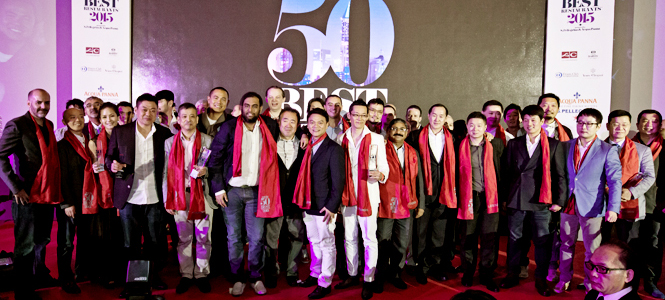
Chefs who attended the awards ceremony in Singapore
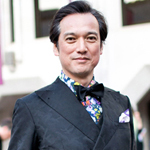
Takanori Nakamura
A columnist, he is active in magazines, newspapers, and television, focusing on luxury lifestyles including fashion, culture, gourmet dining, travel, and hotels. In 2007, he was awarded the Chevalier (knighthood) by the Ordre des Coteaux de Champagne. Since 2010, he has also served as a goodwill ambassador for Norway through "Hr. Style Norway." He is currently the representative juror for "World's 50 Best Restaurants" in Japan. He holds a 7th dan in Kendo and is a tea ceremony instructor with the Great Japan Tea Association. His recent publication is "Meiten Recipe no Junrei Shugyo" (World Culture Publishing).