INTERVIEW | To Commemorate the Release of "How to Harbor Grudges Correctly," the Author Discusses a "Constructive" Life
INTERVIEW|Special Talk: Nobuko Nakano × Masato Sawada
Commemorating the Release of "The Right Way to Settle a Grudge"
The Authors on Pursuing a "Constructive" Life (Part 1)
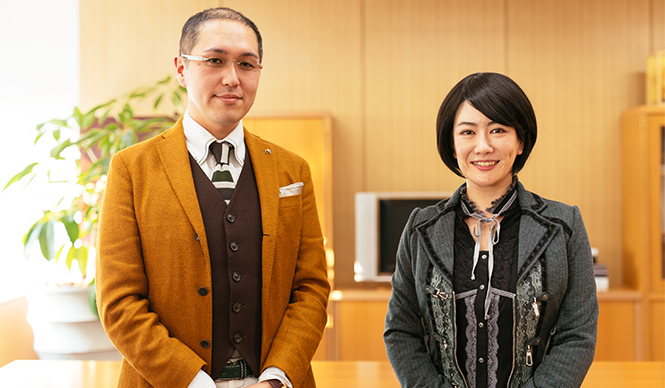
Even as adults, feelings of envy and jealousy persist. "Why does that person always get preferential treatment?" "Why can't I genuinely celebrate my best friend's marriage?" Where do these negative emotions stem from? OPENERS invited Nobuko Nakano and Masato Sawada, co-authors of "The Right Way to Settle a Grudge," released on February 3rd, to discuss the true nature of negative emotions and the secrets to skillfully managing them for a constructive life.
Photographs by KAMIYAMA YosukeInterview & Text by TSUCHIDA Takashi
Using Envy and Jealousy for Self-Growth
—The core idea of this book seems to be about understanding and skillfully utilizing envy and jealousy. What prompted you to write this new book?
Masato Sawada (hereafter, Sawada)This book is titled exactly as my website. My research theme is "envy" and "grudges."
Nobuko Nakano (hereafter, Nakano)As you know, Sawada is a researcher of negative emotions.
When you look at recent business books, don't you find many that offer advice like, "Do this to succeed," or "Do this to make your life go well"? I find that bookshelf to be quite suffocating.
—It feels like every book is shouting, "Go for it! Go for it!"
NakanoI find that trend a bit difficult. I think people actually want to confront themselves more honestly.
However, if we were to explain this solely through neuroscience, it would become a discussion about nerve cells and brain mechanisms, which might come across as cold. That's why, by co-authoring with Sawada, a psychologist, I felt we could develop a narrative that is closer to everyday life.

—The book also describes your backgrounds. Why did you become a psychologist? Why a neuroscientist? It seems to be the result of earnestly contemplating how to deal with your own negative emotions.
NakanoAlthough we are scholars, we are also individuals living with our own struggles. We've written about these without holding back.
SawadaEven if we're told not to be envious or not to bully, negative emotions genuinely exist. It's suffocating to be constantly bombarded with messages of encouragement without acknowledging them.
—The book introduces a practical technique called "metacognition."
NakanoYes. It's the only thing we can truly control.
Everyone wants to avoid feelings like envy and jealousy. But the desire to "not want to have them" implies that we "naturally have them." This means there was a reason for having them. Negative emotions arose because they were necessary for survival. Therefore, these emotions are not something we can inherently control.
However, humans have a unique brain region called the prefrontal cortex. With this prefrontal cortex, we can skillfully use envy and jealousy to foster our own growth. In other words, to manage negative emotions effectively, we must train this area. From this perspective, we introduced the technique of "metacognition."
Acknowledging Negative Emotions is the First Step
INTERVIEW|Special Talk: Nobuko Nakano × Masato Sawada
Commemorating the Release of "The Right Way to Settle a Grudge"
The Authors on Pursuing a "Constructive" Life (Part 2)
Acknowledging Negative Emotions is the First Step
—The concept of "metacognition" is quite striking. It makes you realize, "Ah, there's a way to do this." And you wouldn't know about it unless someone told you.
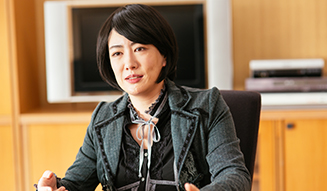
NakanoThat's right. When seeking revenge, we tend to think we should inflict pain on the other person too. That's also natural.
However, the era when such emotions were advantageous for humans has likely passed. In modern society, the way to settle a grudge that yields benefits is to leverage negative emotions to "increase your own profit," "foster your own growth," or "increase your own earnings."
—When you can practice "metacognition," it feels like you can overcome major hurdles in life.
NakanoI would be very happy if you felt that way.
—Will negative emotions themselves continue to evolve in the future?
SawadaFor instance, envy often stems from the belief that someone else possesses something you desire, or that your own share might decrease. What are your thoughts on this, Nakano?
NakanoConsidering that society is becoming more affluent, I believe negative emotions will decrease. This is because envy operates by trying to take away the resources another person has. However, if society is so abundant that one cannot possibly consume all the resources one acquires, there is no longer a need to envy.
SawadaBut they won't disappear entirely?
NakanoIt will take generations for them to disappear, so it seems it will still take considerable time.
—To put it bluntly, how should we live our lives by acquiring the know-how described in this book?
SawadaFeelings like envy, grudges, jealousy, and righteous indignation are all painful. That's why we tend to ignore them, but the first step is to become aware that you are experiencing such emotions.
Conversely, it's a missed opportunity not to notice them when you have them.
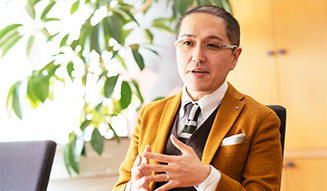
In an old episode of "Doraemon," a tool appeared that eliminated pain. A character says, "I was hit by a train, but I didn't feel any pain at all." However, being hit by a train would certainly be fatal.
In essence, pain serves as a signal. If we continue to ignore that signal, we risk destroying ourselves.
In this book, we've included hints on how to recognize your own pain amidst various problems and how to utilize that pain. The book's argument is not to eliminate pain, but to make the most of it.
NakanoThe idea of "eliminating" is akin to the concept in Western medicine of using antibiotics to kill all bacteria. We tend to arrive at such conclusions, but emotions are also living things, and they arose for a reason. It's more advantageous to use those emotions to achieve better results.
In other words, "holding a grudge is also a talent."
—I see.
Metacognition: A Survival Tool for Modern Life
INTERVIEW|Special Talk: Nobuko Nakano × Masato Sawada
Commemorating the Release of "The Right Way to Settle a Grudge"
The Authors on Pursuing a "Constructive" Life (Part 3)
Metacognition: A Survival Tool for Modern Life
NakanoTo "hold a grudge" means to have the capacity to hold a grudge.
SawadaThat energy is proof that you have been hurt. It's important to recognize that you are hurting.
NakanoThat's right. And I hope people will accept that they have the capacity to hold grudges. First, acknowledge your current state as it is. "I am holding a grudge right now."
Next, carefully consider how you can resolve it and how you can feel better.
Thoroughly contemplate how to maximize your own value and steer the situation in that direction. Isn't that the right way to settle a grudge?
—That's what it means to "control negative emotions and live constructively," isn't it?
SawadaIncidentally, people often say, "I'll show them." But there's no more meaningless act. Wanting to get back at someone who looked down on you is like letting that person control your life. It's the same as saying to the person who insulted you, "I want you to praise me."
NakanoSawada has just made a very important point. When holding a grudge, we tend to view our lives through the standards of the person we resent. However, unless we change that perspective, the grudge will never disappear, even if we manage to defeat them in some way.
Determine your own worth based on your own standards. When you realize this, resentment transforms into a treasure that illuminates yourself. That experience becomes your strength and a driving force for further self-improvement.
In other words, "metacognition" is one of the training methods for drawing your value standards back to yourself.
—"Metacognition" is indeed a survival tool for modern life. It seems to be a fortress for living authentically without relying on religion. Thank you for sharing such an interesting discussion today.
By mastering "metacognition" as described in "The Right Way to Settle a Grudge," one can transform negative emotions like envy and jealousy into nourishment, creating a future that benefits oneself. This is no different from an eco-power generation project that reuses waste to produce energy.
Smart emotional control in a smart society. "Metacognition" appears to be an indispensable skill for this. I want to become such a person. Or perhaps, in a few years, it will already be considered "common sense."

Nobuko NAKANO
Neuroscientist, Ph.D. in Medical Science. Graduated from the Faculty of Engineering at the University of Tokyo, completed the doctoral program in Brain and Nervous System Medicine at the Graduate School of Medicine. Worked as a researcher at the French National Institute of Health and Medical Research (INSERM) from 2008 to 2010. Since 2013, has served as a visiting professor at Higashi Nippon International University and an associate professor at Yokohama City University. Alongside her research, she is active as a commentator on various television programs. http://ameblo.jp/nobukonakano/

Masato SAWADA
Psychologist. Ph.D. in Psychology, Certified Clinical Psychologist, Certified Clinical Developmental Psychologist. Graduated from the Department of Human Relations, University of Tsukuba, completed the doctoral program in Psychology at the Graduate School of Human Sciences. Since 2007, has been an associate professor at the Faculty of Education, Utsunomiya University. Serves as a permanent director of the Japanese Association of Emotional Psychology and vice-chairman of the Tochigi Prefecture Committee for Countermeasures Against Bullying. While researching bullying and emotions, he also conducts research and lectures on effective teaching practices. http://schadenfreude.jp/
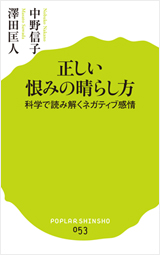
The Right Way to Settle a Grudge
Authors: Nobuko Nakano + Masato Sawada
Publisher: Poplar Publishing
Price: ¥780
Available Now