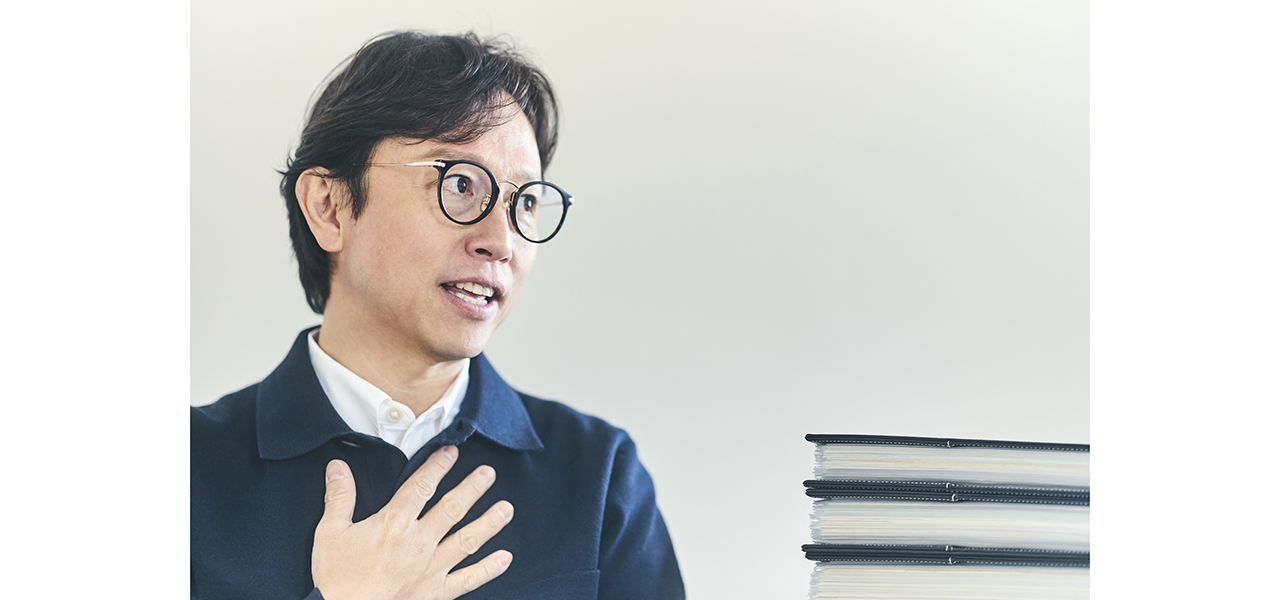
The principle of Bansho Riho Gaku posits that "luck can be designed for the better."
LOUNGE | The Study of Universal Principles
Do you think fortune-telling is about "predicting the future"? "The Study of Universal Principles" is a school of divination that takes the exact opposite approach. By combining the nine stars calculated from one's birthdate with the "direction of birth = directionality," it is a practical discipline of designing actions by first reading auspicious directions. Tetsuro Saito, who inherited the teachings from his grandfather who established the theory, says that one's luck, like physical strength, "accumulates with training." This time, we introduce three real cases where luck was designed through the practice of this theory. Leaving aside the complicated jargon of divination and feng shui, we will guide you to the entrance of a life that "moves luck," which might make you want to open the compass on your smartphone this weekend.
Text by TSUZUMI Aoyama | Photography by TAKAYANAGI Ken
What "Designing Luck" Means in The Study of Universal Principles
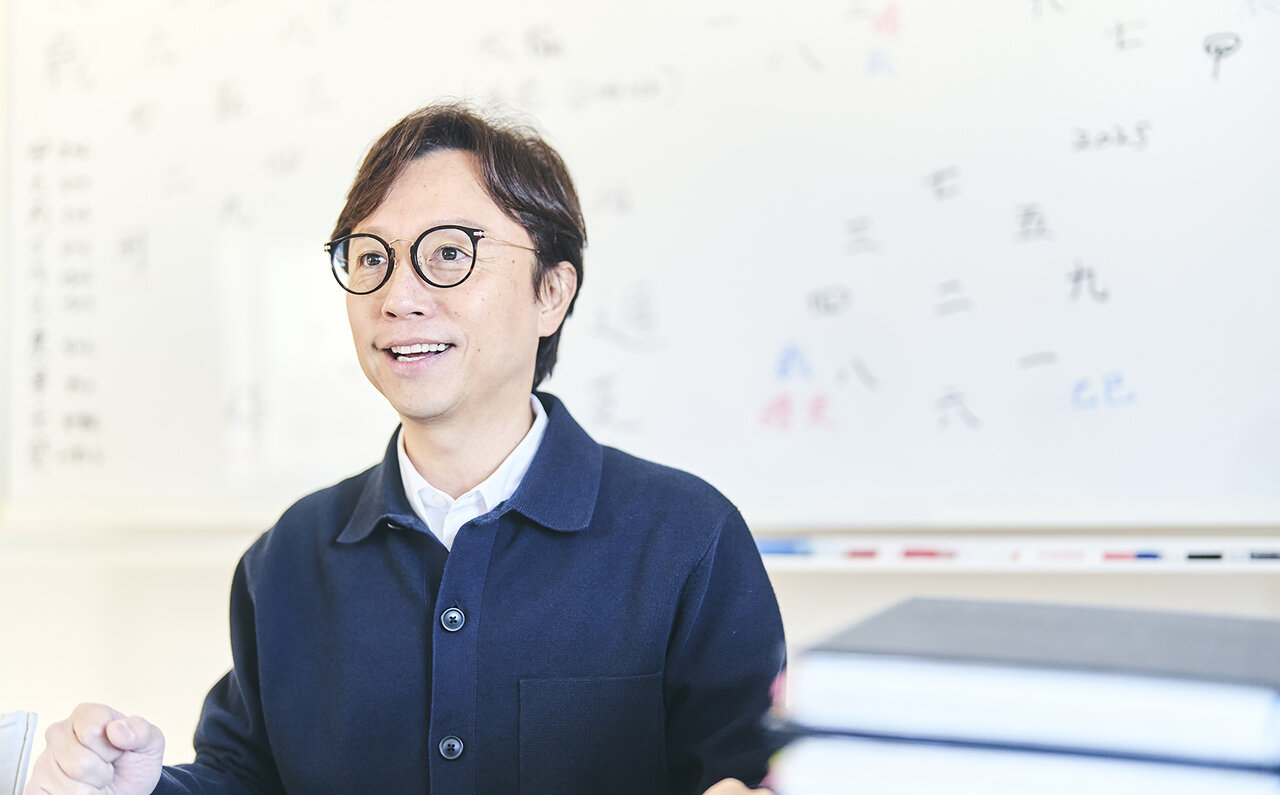
Let's start with the basics. Kyusei Kigaku, or the study of nine stars and directions, is a system of directional divination organized in Japan from the late Meiji to the Taisho eras. It assigns birthdates to nine stars (from One-White Water to Nine-Purple Fire) and reads the flow of energy and auspicious/inauspicious directions for the year, month, and day. Its purpose is to obtain guidelines for action to improve one's luck. It became popular among the masses in the early Showa period and became a standard indicator for moving or starting a business in the Showa 30s.
The Study of Universal Principles adds its own unique gear to this. Koyu Sasaki (1914-1993), a philosophy doctor after the war, thought that "stars alone are too coarse in granularity" and named the eight directions assigned at birth "directionality" (Kojiritsu), combining them. Nine stars (9) x Directionality (8) = 72 types. This gained a reputation for "hitting the core of strengths and weaknesses," and spread to the general public with the publication of "Introduction to Ankensatsu" (Shodensha) in 1979. Tetsuro Saito, Koyu's grandson, began offering lectures and consultations in earnest from 2013, and has provided divination and guidance to over 17,000 people, including important figures in politics and business, as well as athletes.
If Kyusei Kigaku is like the "weather forecast from the Japan Meteorological Agency," then The Study of Universal Principles is closer to "pinpoint weather." While the auspicious direction based on stars alone might have been "West," by layering directionality, it can be narrowed down to "West-Southwest, or Northeast in November."
In modern terms, The Study of Universal Principles is a "practical theory for designing luck." Here are the three principles for mastering it.
1. Know Yourself
The nine stars determined by birthdate are the "engine," and the direction of birth, or directionality, is the "steering wheel." The 72 types, a combination of the two, tell us the position of our accelerator and brakes. "Tuning your luck begins with understanding your strengths and weaknesses," says Saito-sensei.
The nine stars determined by birthdate are the "engine," and the direction of birth, or directionality, is the "steering wheel." The 72 types, a combination of the two, tell us the position of our accelerator and brakes. "Tuning your luck begins with understanding your strengths and weaknesses," says Saito-sensei.
2. Know Others
If your boss has West directionality and your partner has Southeast directionality, their desired speed and goals will be different. By comparing stars and directionality, you can see when to compromise and when to distance yourself. "Relationships can be adjusted. If you don't get along, you just need to make it work."
If your boss has West directionality and your partner has Southeast directionality, their desired speed and goals will be different. By comparing stars and directionality, you can see when to compromise and when to distance yourself. "Relationships can be adjusted. If you don't get along, you just need to make it work."
3. Read the Flow
The nine stars have weather maps for the year, month, and day, and both high-pressure (auspicious) and low-pressure (inauspicious) systems move in cycles. It's easier to slide into a favorable wind by taking a step forward during those times than to stop out of fear of misfortune. Moving in an auspicious direction (Kihōtori) also greatly improves one's luck. If you have "auspicious direction savings" accumulated from favorable winds, you won't lose momentum even on days with headwinds.
The nine stars have weather maps for the year, month, and day, and both high-pressure (auspicious) and low-pressure (inauspicious) systems move in cycles. It's easier to slide into a favorable wind by taking a step forward during those times than to stop out of fear of misfortune. Moving in an auspicious direction (Kihōtori) also greatly improves one's luck. If you have "auspicious direction savings" accumulated from favorable winds, you won't lose momentum even on days with headwinds.
Once these three principles sink in, you should be able to easily understand "why" the hacks introduced in the rest of this article work.
First, Know Your Star and Directionality
First, let's find out your "directionality." The method is surprisingly simple.Visit the website provided by Saito-senseiand enter your birthdate. You will immediately get a reading like, "You have Southeast directionality." This system allows you to know the "steering angle" that matches your nine-star engine.
A quick reference table for the nine stars can be foundhere, so please check that as well.
Below is a quick reference table that broadly lists the personality keywords for the eight directions. The detailed nuances are sufficiently explained in the diagnostic results, so here, please imagine your "specialty" and "pitfalls."
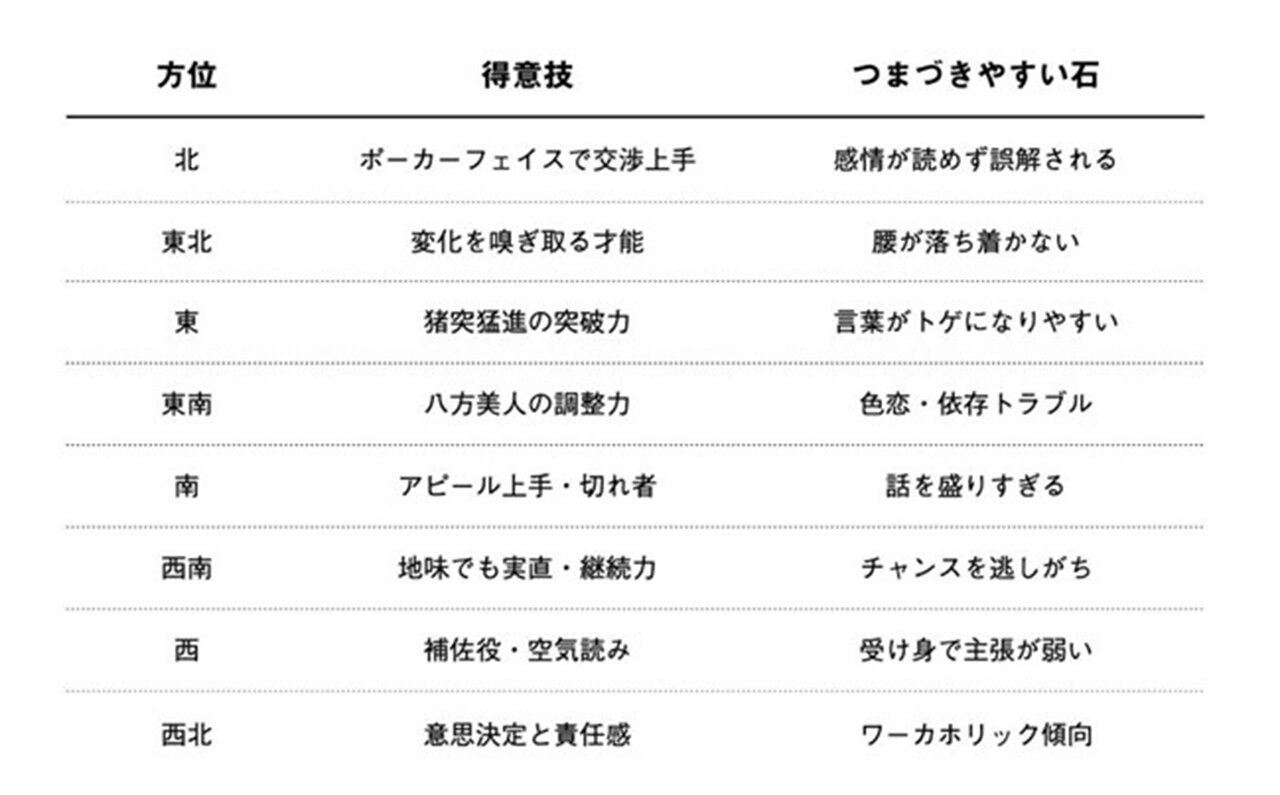
Knowing that you are "East directionality = prone to sharp remarks" makes it easier to devise countermeasures, such as consciously speaking last in meetings. Conversely, weaknesses can be seen as an overuse of strengths. The impassivity of North directionality can be utilized as "temperature control before decisions," and the "easily influenced" nature of West directionality can be used as an antenna for catching trends.
By now, you know your star (engine) and directionality (steering wheel). Next, let's move on to case studies of three people who actually turned the wheel.
3 Examples of Designing Luck
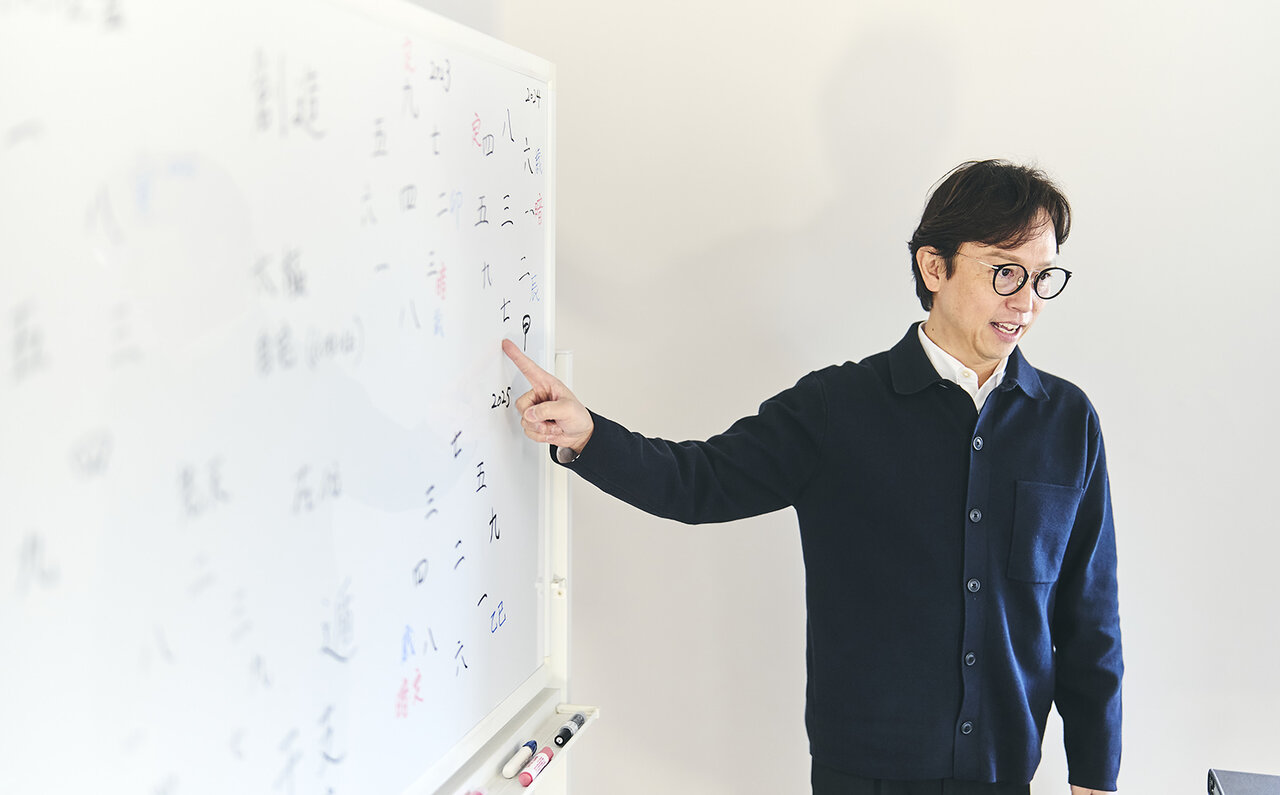
"When things aren't going well, it's just that the accelerator and the steering wheel aren't meshing. The star is the engine, and directionality is the steering wheel. Just by adjusting the mesh by 1 millimeter, the car starts to move straight ahead" (Saito-sensei).
We will introduce two cases of people whose lives improved due to Saito-sensei's guidance, and one case study of a successful person analyzed through The Study of Universal Principles, for a total of three case studies.
First, a case where a社長 (president) of the "follow me" type reduced employee turnover from 30% to 5%.
This executive's primary star is "Two-Black Earth" with "North" directionality. He excels when he can command from behind the scenes, but being highly capable, he achieved a certain level of success through his own efforts. As a result, he began relying on his youthful exploits and became a "front-line commander" shouting orders at morning assemblies.
"Those with North directionality are essentially 'silent stabilizers.' They perform best when they don't overspeak." Following Saito-sensei's advice, instructions to subordinates were changed to concise messages via chat.
As a result, there were zero resignations in six months, and gross profit increased 1.4 times. "It must have taken considerable effort on your part to shift from commanding to coordinating, but this is a good example of the results appearing from your diligent efforts" (Saito-sensei).
Next, the true story of a creative director who "landed a large-scale project."
His primary star is "Nine-Purple Fire" with "Southeast" directionality. He is a person with a star that seeks the spotlight and a "receptive to all" steering wheel. However, he himself maintained a narrow network, adhering to a policy of "not working with people I dislike," which led to stagnant project fees.
"The strength of Southeast directionality is its 'come one, come all' nature. The moment you close the gate based on likes and dislikes, the favorable wind stops" (Saito-sensei).
For six months, he adopted a rule of accepting any project brought to him and opened himself up. He secured the overall direction of a commercial facility development by a major railway developer (approximately 500 million yen annually), quadrupling his project fees.
"For Nine-Purple Fire, everything is about 'how you shine the light.' If you broaden your scope before selecting, the light will always return" says Saito-sensei.
Furthermore, an anecdote about a celebrity known to everyone. Shohei Ohtani.
His primary star is "Six-White Metal" with "South" directionality. He is a star that pursues ideals, with a steering wheel that "thrives when watched."
"Six-White is a star that only chooses the 'royal road.' South directionality blossoms best in the 'center of the stage.' The reason he was able to pursue the two-way path is the backup from his star and directionality" (Saito-sensei).
In the 2024 offseason, he moved to the Dodgers, whose symbolic color blue aligns with the year of "Three-Green Wood" which signifies growth, and the team won the championship.
In 2024, Six-White Metal was in the Northeast, indicating entry into a palace of change. Empowered by this favorable wind, Ohtani himself achieved an OPS of over 1.050 in the first two months of the season, numbers that mark him as one of the league's premier sluggers.
"This is a prime example of turning the environment itself into a favorable wind. When the star, directionality, and yearly cycle align in three layers, you get the 'feeling that effort directly leads to results'" analyzes Saito-sensei.
What these three individuals have in common is that they grasped their own "tendencies" through their stars (engine) and directionality (steering wheel), and maximized favorable winds by making only slight adjustments to their actions. We hope you too will open your compass and turn the wheel towards an auspicious direction.
Accumulating Good Fortune with "Kihōtori"
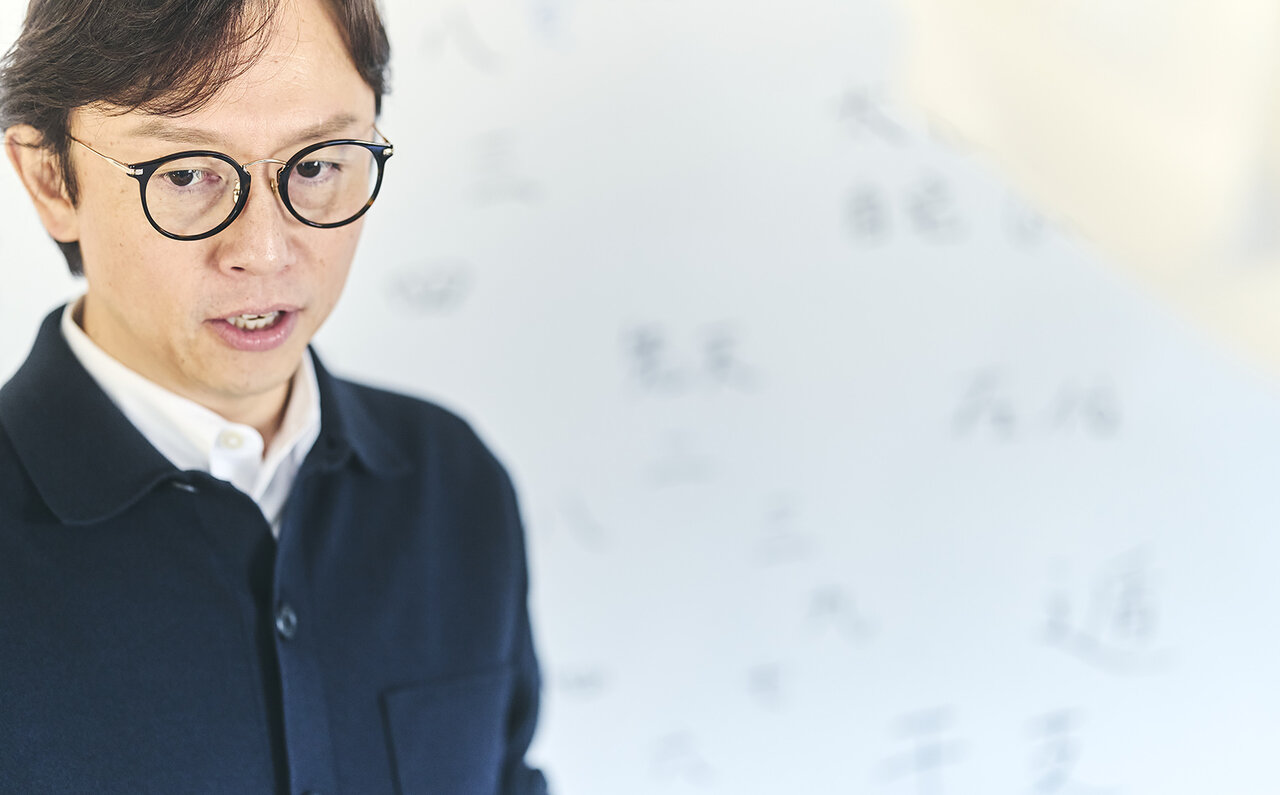
As seen in the case studies, The Study of Universal Principles involves grasping one's "tendencies" through "star x directionality," then subtly adjusting actions to capture favorable winds, and repeating this process to improve one's luck. Here, we will cover another core concept of The Study of Universal Principles: "Kihōtori."
Kihōtori is a simple action technique of "moving once in the direction where energy is currently gathered, taking in the good energy, and then returning." While the traditional idea in Kyusei Kigaku is that the longer the travel distance, the stronger the effect, The Study of Universal Principles posits that it can be sufficiently accumulated within one's living area without extreme travel distances.
"For Kihōtori, traveling two or more stations away by train within Tokyo allows for Kihōtori at the shortest distance. Upon arrival, staying for at least 2 hours allows you to absorb the local energy into your body, thus completing the Kihōtori. However, the farther you go and the longer you stay, the more your luck will improve" (Saito-sensei).
In Kyusei Kigaku, a "year plate" is announced annually, arranging the "nine stars" on a directional chart. Similarly, there are "month plates" and "day plates." Think of these as annual and monthly weather maps indicating whether the arrangement of stars is auspicious or inauspicious.
Furthermore, by layering the month plate and day plate, directions where auspiciousness overlaps appear for only a few days – these are special bonus directions. Conversely, there are also directions of "Ankensatsu" (a type of inauspicious direction) where misfortune is concentrated for that year alone.
"Incidentally, there is something called a 'Great Auspicious Direction.' This is when the year plate, month plate, and day plate all align auspiciously. This is particularly effective when moving residences," says Saito-sensei. While it varies by star, it occurs a few times a year.
If you absolutely must travel in the direction of Ankensatsu for business, for example, you can create a "positive balance" by staying in an auspicious direction for a night before or after to offset the deficit. Noting down the destination and date in your planner like "June 20th, West-Southwest, 3 hours stay from home, 20km away" will naturally show the correlation between savings and results.
According to Saito-sensei, "Regarding how to enjoy yourself at the destination, I first recommend visiting a shrine in that direction. The reason is that it is the place with the most concentrated energy in that direction, purified and maintained by our ancestors for hundreds of years. After bathing in that energy, you are free to act as you please in that direction. Eating delicious food to absorb energy, relaxing at a cafe, or even working in that direction are all fine. Water, in particular, contains a lot of energy, so taking a bath in an auspicious direction is highly recommended."
Listening to the engine sound with the nine stars, adjusting the steering wheel with directionality, and reading the favorable winds with the year and month plates – The Study of Universal Principles is more of an action design technique than divination. If you increase your "auspicious direction savings," you won't fear the "debt" of misfortune.
First, try visiting an auspicious direction away from your home, relying on your smartphone's compass, and staying for over two hours. That step will be the first action in designing your luck. If you wish to deepen your understanding, attending Tetsuro Saito's lectures to learn from practical examples is also a shortcut.
Tetsuro Saito
Proponent of The Study of Universal Principles / A leader in Kyusei Kigaku, he is the grandson of the late Koyu Sasaki, a philosophy doctor and Kyusei Kigaku instructor. He began learning Kyusei Kigaku and philosophy from Koyu in the third grade of elementary school. He moved to the United States at age 20 to study media communication. After returning to Japan, he worked as an interpreter for politicians and athletes before becoming an independent Kyusei Kigaku instructor in 2013. He provides Kyusei Kigaku instruction to a wide range of people, including politicians, chairpersons of listed companies, celebrities, Olympic athletes, and ordinary housewives. As of March 2024, he has instructed over 8,583 individuals in Kyusei Kigaku and provided divination to over 17,000 people.
Proponent of The Study of Universal Principles / A leader in Kyusei Kigaku, he is the grandson of the late Koyu Sasaki, a philosophy doctor and Kyusei Kigaku instructor. He began learning Kyusei Kigaku and philosophy from Koyu in the third grade of elementary school. He moved to the United States at age 20 to study media communication. After returning to Japan, he worked as an interpreter for politicians and athletes before becoming an independent Kyusei Kigaku instructor in 2013. He provides Kyusei Kigaku instruction to a wide range of people, including politicians, chairpersons of listed companies, celebrities, Olympic athletes, and ordinary housewives. As of March 2024, he has instructed over 8,583 individuals in Kyusei Kigaku and provided divination to over 17,000 people.