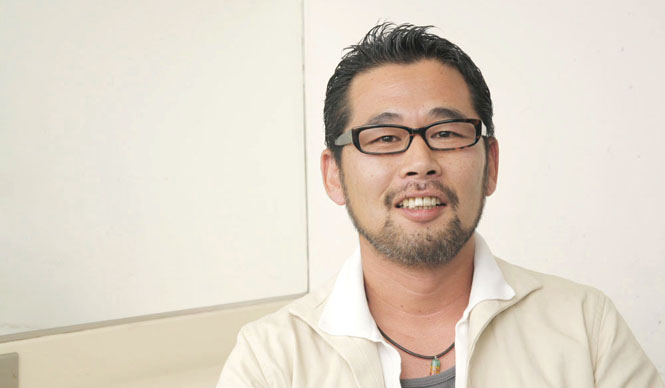
Chapter 5: An Interview with TV Director Tadahisa Fujimura
Chapter 5
Interview with TV Director, Hisanobu Fujimura
Hokkaido Television's local program, "Suiyo Dō Deshō." This unique "travel variety show," featuring local talents Yo Oizumi and Takayuki Suzui alongside two directors, aired for six years starting in 1996. During that time, its popularity rapidly spread not only within Hokkaido but also to people in other regions who heard about it through word-of-mouth online. Eventually, reruns began airing on many regional stations outside Hokkaido, and the DVD series released after the show concluded recorded unprecedented sales, topping the Oricon charts.
Hisanobu Fujimura, the chief director at Hokkaido Television, appeared at the "Gekiteki 3-jikan SHOW" (Dramatic 3-Hour Show). In an interview held just before the main event, with the venue packed with passionate "Dō Deshō fans," he spoke about his approach to program creation and the problems facing television today. His demeanor was exactly like "Fujiyan" as he appears on the show.
Text by OPENERSPhoto by Jamandfix
※ This interview is approximately 5,000 characters long.
It is a long page, but this structure was intentionally chosen to maintain the flow of the conversation.
We apologize for any parts that may be difficult to read.
— Mr. Fujimura, your face seems a little flushed...
Ah, I had some (beer) earlier, so I couldn't help myself.
— (Laughter from everyone)
Well then, shall we get to the interview...? By the way, what kind of publication are you?
— We are a web magazine called OPENERS.
Ah, I saw it the other day. With people like Ryuichi Sakamoto involved, you're creating something quite stylish. How is the operation? You must have to upload articles quickly, so it must be tough.
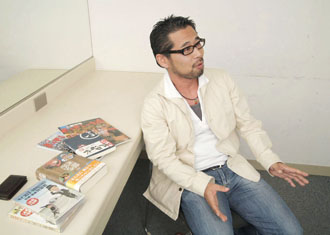
— For a web magazine, every day is basically a deadline. And television must be tough too, right?
Television has a history of about 50 years, and we have the right to barge into people's homes, don't we? That's a powerful position to be in as a medium. With the web, readers have to actively seek it out, so I think it's really tough to gain an audience unless you create truly excellent content. Lately, TV people say they're 'interested in the internet,' but I think, 'Are they idiots?' So, if you're going to do something on the internet, it really comes down to the 'content.'
— What is important in creating truly excellent content?
I think you just have to rely on your instincts. And those instincts are built on 'experience.' For example, how do you best utilize a creative person who writes interesting things? That 'instinct for how to use them' requires a certain amount of experience, don't you think?
— Do you have any rules for 'how to convey' things to your readers or viewers?
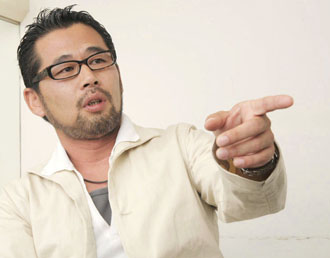
If you start thinking, 'Let's convey this to a million people,' you can't do anything. So, it's about conveying it to the people around you, like you (pointing to the interviewer). If you told me to make the person here cry, I'm confident I could do it in a night. I create things with that kind of sensibility. But if it's about making all Japanese citizens cry—that's impossible, isn't it? If you keep in mind vague goals like 'attracting more people,' program creation just becomes a matter of following a manual.
For example, the "Dō Deshō" website was created with the idea that I dislike the internet's tendency to make you 'jump between various pages,' so I felt it was enough to show things in one place. There were no established web design conventions there. We proceeded based on what Ureshino-san (the cameraman director) and I thought was 'interesting,' like 'This might be good' or 'This is easy to see.'
— Indeed, that approach is the most 'unwavering,' and above all, it carries conviction.
Exactly, exactly. Without conviction, nothing is interesting. So, I approach everything I create in that way. When I watch current TV dramas, they're just not interesting. The direction feels so artificial. If they get angry, the young actors immediately throw things, and when it's a crying scene, it starts raining... 'It's not raining!' I think at that moment. You can't get immersed in the story like that. The director might think that's the standard way, but that never happens in real life, does it? So, I just want to do the opposite.
For instance, imagine you're filming someone crying. In dramas, they keep zooming in and showing the actor. I think that's strange. Because if someone is crying right in front of you, you'd normally look away, right? You'd think, 'Oh, they seem to be crying.'
So, in my case, I think it's okay not to be filming them directly. I think that has more impact on the viewer.
When I talk about this, people in the industry usually say, 'Yeah, that's right~,' but on set, they just go with 'We need to zoom in here' without thinking. That's where we come in. We think, 'Should we really be zooming in here?'
— It seems like strange, traditional conventions have taken root.
Television has only been around for about 50 years, so it's not really a tradition yet. Initially, television's objective was to 'beat movies,' but now there are too many fixed ideas, like 'comedy should be like this' or 'dramas should be like this.' Currently, this is the trend, and creators are mindlessly focusing on those aspects.
I think people in other media are thinking much harder. TV is in a dangerous situation... But as someone who makes TV, I still have pride in not 'losing' even in this situation.
— I think the same can be said for web magazines. We think, 'How can we keep readers from getting bored?'
I think you're already mistaken if you start thinking about 'not letting them get bored.' No, people *do* get bored (laughs).
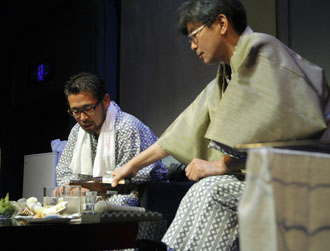
Scene during the "3-Hour Show" performance. Chatting with Mr. Ureshino over a beer.
The setting for this scene was 'a night at an inn during a trip.'
— But in reality, "Suiyo Dō Deshō" is never boring to watch.
Hmm, even when I watch footage from 10 years ago, I find it funny myself. What we're actually doing isn't about whether it's boring or not. That show is, in a sense, 'traditional performing art' (laughs). So, even if we crossed America by car, if we just kept 'leveling up,' it would eventually end. The next thing could be a '2-day, 3-night hot spring trip,' and that's fine. It's traditional performing art.
Yo Oizumi is now in his mid-thirties, but I'm looking forward to seeing what the 40-year-old him will be like. Just thinking about that makes it not boring. If you start thinking about 'not letting them get bored,' you'll definitely hit a wall in program creation.
Well, the only thing that would change that approach is if one of the four of us died (laughs).
— So, you're not aiming for 'leveling up'?
(Pointing to the interviewer again) I thought about making this person laugh, so we went to America, and now, 'Let's go to Antarctica!' But I don't think that's really it. People in the industry always want to level up, don't they? But I think making this person laugh is much simpler. The moment people enter this world, they somehow forget that 'sensibility.'
— In the case of "Dō Deshō," viewers might expect, 'After the overseas trip, the next one will be like this,' but we're often pleasantly surprised when it turns out to be a simple domestic trip (laughs).
We don't think about it (laughs). We never think about surprising people. We just want to go to Okinawa, so we come up with a plan. We don't care about your expectations (laughs). Of course, we add some humor for the show's sake.
— But still, we end up laughing.
You laugh, right? The person who was angry moments ago is now laughing. Isn't that better for everyone? Ultimately, program creation is about 'people connecting with people.'
— I've heard anecdotes about writers and journalists showing their finished manuscripts to editors first and genuinely listening to their initial feedback and suggestions. Listening to you, I feel that television program creation might be similar in that relationship.
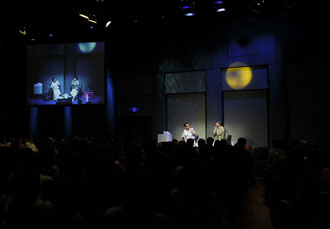
In the second part, a 'full moon' appears in the background. A thoughtful touch.
Yes, the beginning is crucial. Actually, I basically start editing without any prior plan. Normally, when you start editing, you cut the footage, think about the structure, and so on, but I don't do any of that. I don't even watch all of it. Once I start watching a 60-minute tape, I begin the editing process. I don't even watch the last tape.
— Huh?
So, it's closer to drawing a picture from beginning to end. I'm the creator, but I don't know how it will turn out until I make it (laughs).
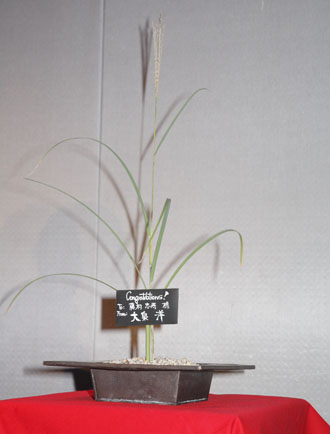
A congratulatory flower from Yo Oizumi on the day. Or rather, 'a single pampas grass.'
— But the size of the canvas is decided, right?
That's not decided either (laughs). We don't decide the number of broadcast episodes for a project beforehand. There's the framework of a 30-minute program, so I feel I have to manage that, but sometimes it expands to 45 minutes (laughs). When there's no other way.
So, 'deciding on the first impression' is something I really value. I don't think anything good will come from overthinking it at that point.
If I'm going to think, I think during the planning stage. Not in meetings, but in my own head. But since I only think within my own head, things often turn out differently from reality when we go to America or wherever, but I'm serious about it (laughs). I research it thoroughly.
— Even with a seemingly reckless travel itinerary?
I thought, 'I can do this' (laughs). I went with full confidence, but then we'd run out of time at the end, and the cast would say, 'Fujimura-kun, aren't you a bit strange?' and I'd have no comeback... But I think those aspects also contribute to the humor of "Suiyo Dō Deshō." But I'm really serious about it (laughs).
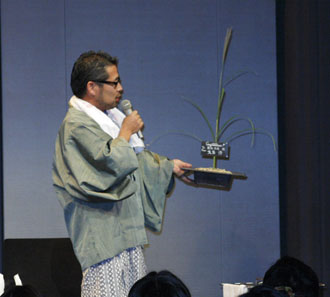
His playful jabs at the flower, while showing affection for Mr. Oizumi, drew laughter from the audience.
— (Laughs). I suppose it's because the creators are enjoying themselves that it gets conveyed to the viewers.
When you say 'enjoying,' I feel that term is a bit misleading for me.
It's more about 'passion,' isn't it? I think it's 'passion.' It doesn't have to be for something grand. For example, if there's a place you 'want to go.' You passionately advocate for it in various ways just to go there. There was a project where we canoed down the Yukon River, and that area is considered sacred for canoeing. I wanted to go. So, I explained it passionately to the cast. Then Oizumi and Mister (Takayuki Suzui) would say, 'If Fujiyan feels that strongly... well, okay.' In other words, I think it comes down to whether there's someone who has genuine passion.
— Speaking of the transmission of that 'passion,' the "Dō Deshō" crew of two talents and two directors seems to have a strong sense of unity.
Our heat transfer rate is high. But there's one person whose rate is a bit lower. Mister sometimes takes a while for that passion to reach him (laughs). Oizumi, Fujimura, and Ureshino have a solid core of passion, but Mr. Suzui is often a bit cooler (laughs). But when that happens, it can lead to a 'different kind of dish,' which can be interesting in its own way.
Well, by the end, they usually warm up and feel like, 'It was worth going, wasn't it?'
— (Laughs). You declared, 'We'll do Dō Deshō for life!' in 2002. How do those words resonate with you now?
Variety shows are certainly fun, but Mister has started wanting to direct films, and Oizumi wants to act, and those feelings have emerged in each of them. But I think that's natural and expected. I also have things I want to do, like create animations or movies.
People who like "Suiyo Dō Deshō" always ask, 'When is the new one coming out?' But for the "Dō Deshō" crew, "Suiyo Dō Deshō" is half of it, and the other half is what we want to do ourselves. I think we're currently working with that balance shifting. For the past two years, the balance has leaned a bit towards my personal projects, but the other half is always there. The moment it shifts back, we'll probably go on another trip.
As for 'doing it for life'... well, I don't know if we'll actually do it for life (laughs). But if we think in that kind of timeframe, it's not a problem if we haven't done it for two years. If we had said, 'We'll do it every year!', then it would be an issue since we haven't, but we don't really think about it, and we're not worried.
However, there's a sense among the four of us, even if unspoken, that the pendulum might swing back towards "Dō Deshō." Even if 'doing it for life' is a complete fabrication (laughs), we've aligned our feelings towards that goal, so I'm not worried at all, and we'll continue like this. When you look at it over a long span, making things is easy.
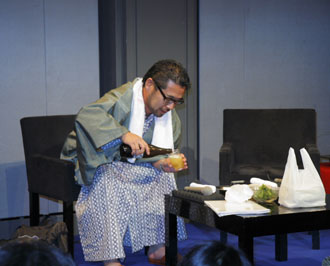
His "3-Hour Show" was conducted in a consistently relaxed atmosphere.
There were several bathroom breaks due to the continuous flow of beer...
— In creating programs over such a long span, what do you value?
I think it's 'creating the environment.' To create something you can be satisfied with, you first need to arrange your surrounding environment. We first created an environment where we could do "Suiyo Dō Deshō" with true freedom.
— One of the charms of "Dō Deshō" is the 'deception of Oizumi,' where you don't tell him the企画 (plan) or destination beforehand. We look forward to seeing Mr. Oizumi being tricked again in the new installment.
Even when creating new installments, my schedule is important, but Oizumi's schedule is the least of my concerns (laughs). Well, he's probably the busiest, but when it comes to planning, he ranks at the very bottom.
I don't think I'll deceive him this time, but I won't tell him the destination (laughs).
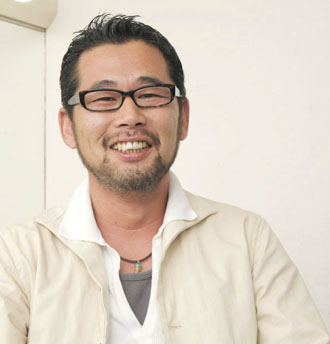
Hisanobu Fujimura
Hisanobu Fujimura. Born in Nagoya in 1965. Graduated from Hokkaido University in 1990 and joined HTB Hokkaido Television. In 1996, he launched "Suiyo Dō Deshō" as chief director. For the program, he handles everything from the lively exchanges with cast member Yo Oizumi to editing and narration. Although the regular broadcast ended in 2002, the DVDs released the following year have sold a total of 2 million copies across 10 titles to date. In addition to this program, he also directed plays for the theater troupe "Team Nacs" in 2003 with "Suiyo Tenmakudan," and this year, he directed a drama adaptation of Shinosuke Tatekawa's rakugo performance "Kanki no Uta."
Suiyo Dō Deshō
A late-night variety show produced by Hokkaido Television Broadcasting (HTB). It began airing on October 9, 1996, and its fanbase expanded nationwide through word-of-mouth, the internet, and DVD sales. The cast includes Takayuki Suzui and Yo Oizumi, with location directors Hisanobu Fujimura and Masamichi Ureshino. Essentially, these four embark on rather reckless journeys, and their travels are broadcast. Incidentally, these four are collectively known as the "Dō Deshō Crew." Regular broadcasting ended in September 2002. Currently, reruns such as "Dō Deshō Returns" and "Suiyo Dō Deshō Classic," as well as new episodes produced and broadcast irregularly, are being aired sequentially across Japan, starting with Hokkaido. Furthermore, the "Suiyo Dō Deshō DVD Collection," a re-edited compilation of the program, is also being released sequentially.
Win a Big Panel of Hisanobu Fujimura from "Gekiteki 3-jikan SHOW"
Applications for this were closed on Friday, December 12, 2008. Winners will be contacted regarding their shipping details. Thank you for your many applications. (OPENERS Editorial Department)