
An Interview with Jacques Mignot, Martell Heritage Director | MARTELL
MARTELL
The Aged Cognac "Cordon Bleu"
Its "Cutting-Edge" Enjoyment (1)
Don't shy away thinking, "Cognac is far too much..." It would be a great loss in life to dismiss it without trying. In advanced bartending cities (like NEW YORK, LONDON, SINGAPORE), cocktails using cognac are breaking through. A "Mojito," made by diluting aged cognac with soda and generously garnishing with mint leaves, much like a single malt highball, is simply the coolest. Huh? Why must it be aged, you ask? A very pertinent question. In this interview, we'll delve into that with Mr. Jacques Mignot.
Photographs by OHTAKI KakuText by TSUCHIDA Takashi (OPENERS)
Only Well-Crafted Cognac Tastes Good Diluted
Dilution allows the aromas of cognac to slowly unfurl. Scents reminiscent of vanilla and beeswax from the aging oak barrels, along with notes of roasted almonds, are gently released as they mingle with water. However, Jacques Mignot points out that "dilution is only permissible for high-quality cognacs." This is because while adding water enhances the strengths of cognac, it also accentuates its weaknesses. Mr. Mignot further explains:
“While there are two types of Martell XO, Cordon Bleu in particular is characterized by its light and fruity taste. This is because we use a higher proportion of grapes from the Borderies cru compared to others.”
*XO stands for Extra Old, referring to long-aged cognac aged in barrels for six years or more (Editor's note).

For the sake of cognac novices, a brief explanation is in order. Cognac, in essence, is a brandy made exclusively from grapes cultivated in the six crus of the Cognac region in southwestern France. Martell owns wineries in four of these superior crus. Borderies, as mentioned by Mr. Mignot, is particularly distinctive; its clay soil mixed with hard limestone yields cognacs with a light, floral bouquet-like character. Even with aging, they retain their lightness, and dilution further enhances their complexity.
As previously mentioned, cognac is already trending in leading bartending cities, and it is here that Martell's XO cognac, "Cordon Bleu," is gaining particular attention.
Mr. Mignot further elaborated on what sets Martell apart from other houses:

“In cognac production, we first press the harvested grapes and ferment them for about ten days to create the base wine. This newly made wine typically contains a lot of lees, but it is usually distilled with these lees mixed in.
However, at Martell, we carefully remove the lees and use a clear wine, completely free of lees, for distillation. This is because Martell consistently aims for 'aromatic cognac' and 'light cognac.'”
I see, so the secret to Martell "Cordon Bleu" having a light and fruity taste, after an aging period of at least six years, is becoming clearer. But the story doesn't end here.
“After the distillation process, the cognac is aged in barrels, and the oak used for these barrels is also distinctive. Typically, there are two types of oak used for barrels: the coarse-grained oak from Limousin and the fine-grained oak from Tronçais.
Using Limousin oak barrels accelerates the aging of cognac. It also readily imparts oak aromas, but at the same time, it transfers bitterness to the cognac.
Conversely, using Tronçais oak barrels takes longer to age, but it results in aromas like vanilla or beeswax, and leaves no bitterness at all. Naturally, Martell exclusively uses these Tronçais oak barrels.”
Page02. A Fine Cognac Sings Twice
MARTELL
The Aged Cognac "Cordon Bleu"
Its "Cutting-Edge" Enjoyment (2)
A Fine Cognac Sings Twice
We've established that Martell "Cordon Bleu" makes an excellent base for cocktails, but we mustn't forget its traditional enjoyment neat. From here, Mr. Jacques will guide us through the basics of tasting.
“First, we will taste the aromas in stages. Initially, without swirling the glass, bring your nose close. You should detect scents like violet or white flowers.
Next, swirl the glass. This time, you should perceive more fruity notes, reminiscent of apricot jam or chutney.”
First, as is. Then, swirl the glass. These two steps are crucial, he says. Otherwise, one cannot fully appreciate the world of aromas that cognac offers. It's about expanding your senses through aroma before tasting.
“This isn't limited to cognac, but human senses are superior in olfaction than gustation. Therefore, it's important to accurately perceive delicate and subtle information through your nose.”
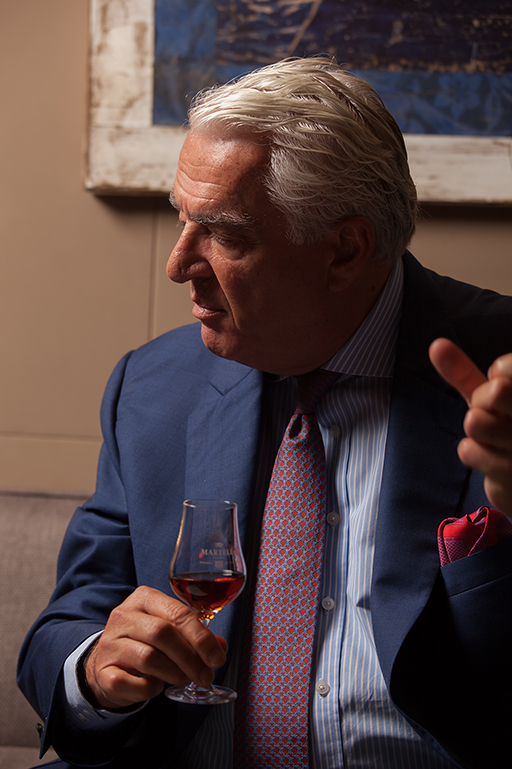
So, there's a reason behind savoring the aromas of cognac over time. Moreover, such moments seem ideal for a relaxed post-meal interlude or a tranquil time before bed. Above all, being enveloped in the rich aroma brings a sense of calm.
“When enjoying it neat, chocolate pairs exceptionally well. The cocoa notes complement aged cognacs. It also pairs nicely with coffee or a cigar.”
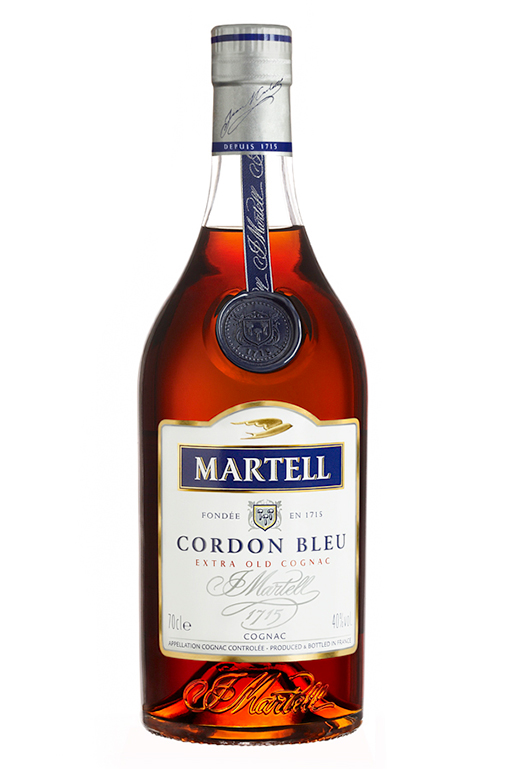
Martell Cordon Bleu
Price | Suggested Retail Price ¥18,500 (excluding tax)
Volume | 700ml
Alcohol Content | 40%
Since its debut in 1912, this exquisite cognac has been positioned as a legend. Its bottle design, unchanged from that era, is simple and unpretentious, yet possesses a modern flair. While popular as a base for cognac cocktails, it is also recommended to be savored neat.

Jacques Mignot
Martell Heritage Director
Joined Martell in 1984. For over 30 years since, he has been with the cognac maison boasting the oldest history. Born and raised in the Cognac region, he studied law at the University of Bordeaux, then pursued further business studies at the University of Edinburgh in Scotland. "The Bordeaux region is synonymous with wine. Scotland is the land of great whisky. I was able to spend incredibly valuable time in these esteemed regions."