Essay Series | #ijichiman's Musings, Part 3: "Shimbashi, A Salaryman's Town Scattered with Remnants of the Showa Era"
Essay Series | #ijichiman's Musings
Part 3: "Shimbashi, A Salaryman's Town Scattered with Remnants of the Showa Era"
"To insist only on the safety and security of the body, and to ignore the life and death of the soul and spirit, is wrong (Yukio Mishima)" – In this series by Yasutake Ijichi, a board member of "Sunshine Juice," Japan's first cold-pressed juice specialty store, he delves into the diverse, human-centric content of the town, which stands in stark contrast to the ultimate healthfulness of Sunshine Juice, exploring its history, changes, customs, and culture. The third installment proposes ways to enjoy Shimbashi, known as a mecca for salarymen.
Photographs and Text by IJICHI Yasutake
Memories of a Historic Town We Wish to Preserve for a New Era
Shimbashi is often called "a town of salarymen." True to that reputation, I barely recall setting foot in Shimbashi before I started working. I might have gone to Ginza, but I always passed through Shimbashi.
Shimbashi became one of my areas of activity in my 30s, when I became involved with Sunshine Juice. Now that my office is in Shimbashi-Toranomon, I spend most of my day here in Shimbashi.
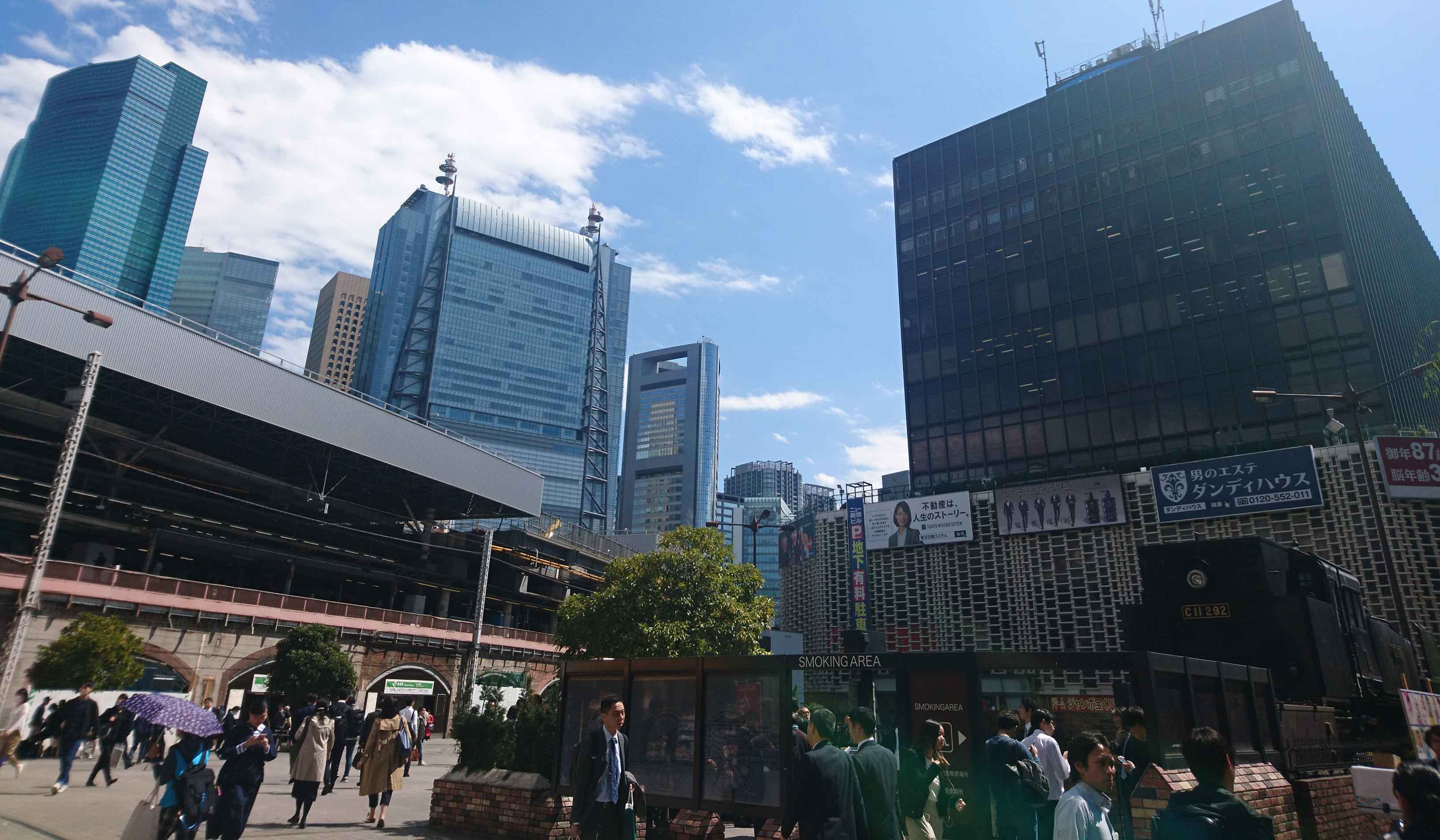
The face of Shimbashi as a "town of salarymen" hints at the transitions of the Showa era, from the post-war period through the era of rapid economic growth. Symbolizing this are the "Shimbashi Ekimae Building" and "New Shimbashi Building," which, rooted in post-war black markets, supported the rapid development of the Japanese economy through technological innovation and capital investment, and were likely sanctuaries for the salarymen who formed its workforce.


Both buildings, which remain sanctuaries to this day, exude a distinct presence: the Shimbashi Ekimae Building, with major corporations like Dentsu, NTV, and Shiseido lining its汐留 (Shiodome) exit, and the New Shimbashi Building towering opposite, across the train tracks, near the SL Square.
The Shimbashi Ekimae Building is home to many convenient shops, both old and new. Sunshine Juice also has its Shimbashi branch on the first floor, but in the past, after meetings at Dentsu, I would usually stop by the basement B1F kissaten "Parlor Kimuraya" to cleanse my mind before returning to the office.


Opposite Sunshine Juice is "Pon Neuf," where the hamburg steak with plenty of onions is irresistible. Next door is "Maruya," where you can get a satisfying pork cutlet for 700 yen. On the second floor, "Nanagura" offers exquisite Inaniwa udon and the best appetizers. When it comes to bee hoon and zongzi, "Bee Hoon Higashi" is the only place that comes to mind. Every floor has a constant queue during lunchtime. Don't forget that the classic Western confectionery, "Parie Ogawaken," famous for its raisin sandwiches, reigns here. Bringing these as a gift after a meeting can change the flow of conversation.
The New Shimbashi Building, on the other hand, exudes a slightly more cluttered and chaotic atmosphere. While the first floor has neat cafes and standing soba noodle shops, the rest feels like another world.


The B1F is mostly filled with eateries, but if you wander around, undecided, you'll eventually find a dimly lit game center, with Street Fighter II and Tekken beckoning.
On the second floor, there was a kissaten called "POWA" that served delicious Neapolitan spaghetti, though sadly it closed last year.
I used to frequent it, and across from it was an adult shop, and further on, various Chinese massage parlors would beckon. These temptations are no match for Street Fighter II or Tekken. Sometimes, police officers in uniform patrol during the day, and even without going, a Google search for "New Shimbashi Building 2F" should give you a glimpse of its peculiarity.
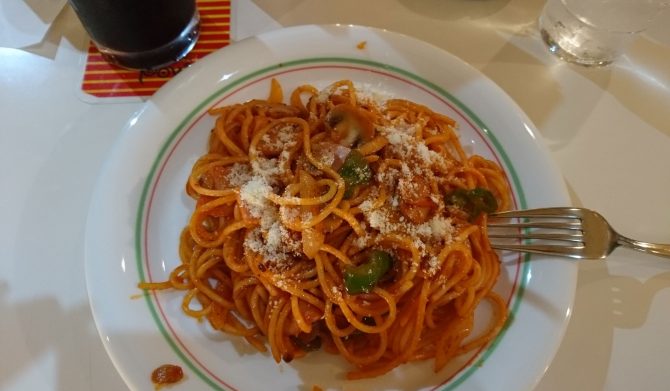
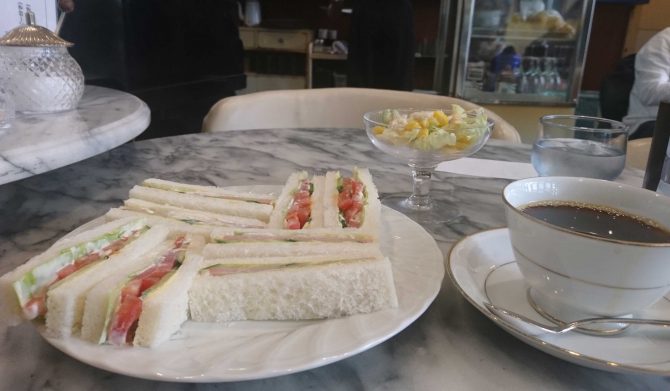
Incidentally, now that POWA is gone, I often visit a kissaten on the third floor called "Cattleyas."
If you have a discussion over sandwiches here, ideas that wouldn't emerge in a conference room will mysteriously spring forth in this lounge-like space.
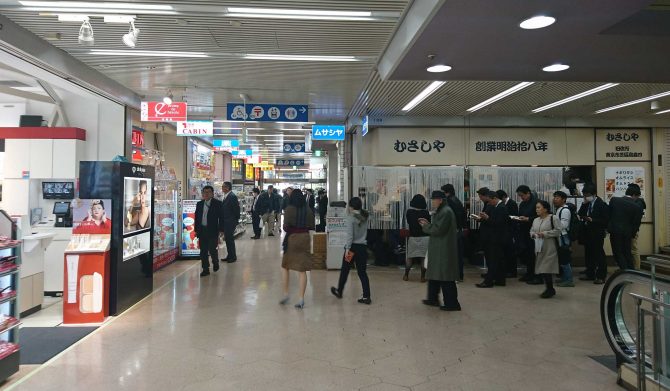
The most memorable establishment in the New Shimbashi Building is "Musashiya" on the first floor. There's always a long queue at lunchtime, but the counter seating is side-by-side, so the turnover is quick.
As soon as you join the queue, you're prompted to order. I usually go for the omurice, or the omudry, which is omurice with dry curry wrapped in the egg. Then I consider whether to get a large portion and whether to add a mini hamburg steak.
After ordering, you'll be seated in less than 10 minutes of waiting. The omurice, served with spaghetti in a slightly spicy tomato sauce, is not the fluffy, melt-in-your-mouth kind, but a retro style wrapped in a thinly, softly cooked egg. It offers outstanding stability.
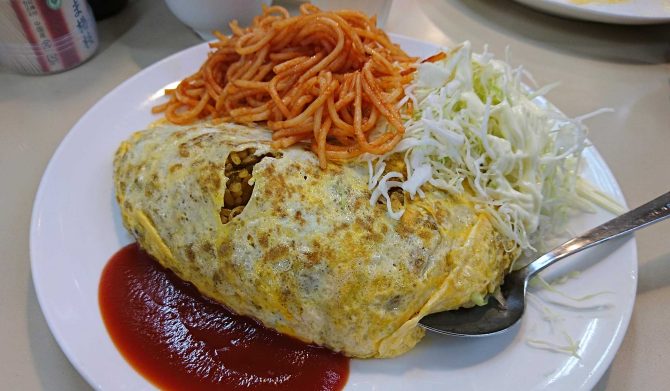
Business is inherently subject to unexpected changes, such as emergencies, hardships, and sometimes risky ventures and challenges. That's why there's no room for adventure at lunchtime. Lunchtime satisfaction significantly impacts afternoon work performance, and I don't have the luxury of meticulously planning my lunch spot every day, so what I seek in lunch is absolute stability.
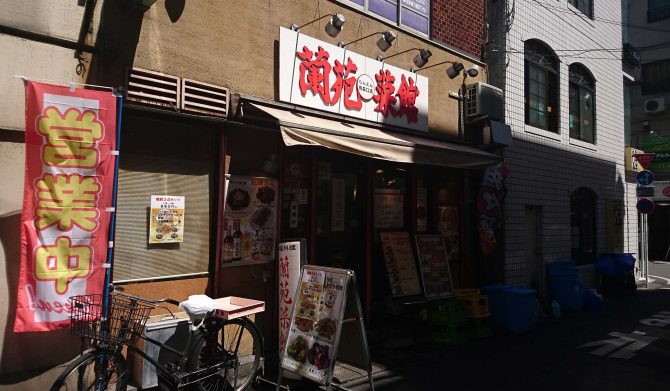
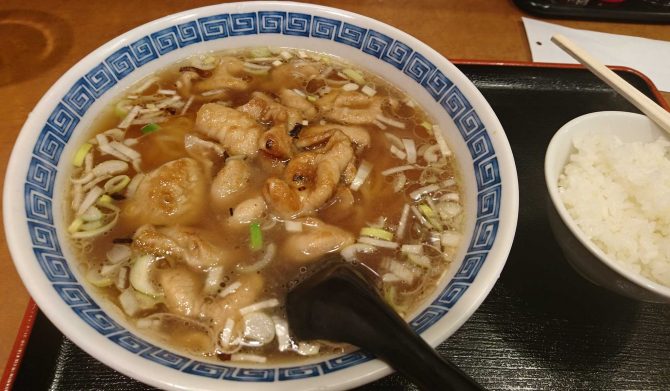
For the stability I seek, it's "Musashiya" for rice, and "Ranen Saikan" for noodles. They're nothing special, just typical "town Chinese" restaurants, but there's a reason I frequent them: the garlic intestine noodles. As someone who adores offal (internal organs), this dish is irresistible. It's not prominently listed on the lunch specials, but they'll make it if you ask. The copious amount of offal, infused with a perfectly balanced, strong saltiness and garlic, hits the spot when you're tired. It's especially divine when eaten after sweating profusely on a hot summer day.
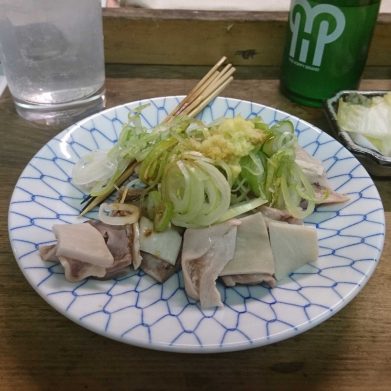
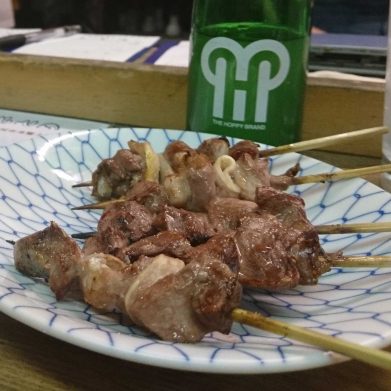
Perhaps because Shimbashi is close to Shibaura, there are many offal yakitori restaurants.
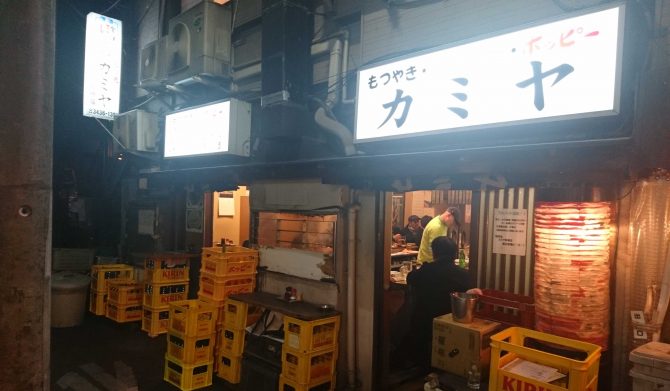
When it comes to offal yakitori in Shimbashi, the famous one is "Makochann," a sister restaurant to Azabu Juban's "Abechan," but for evening offal, "Kamiya" is excellent. When it's crowded, you might have to wait at the outdoor standing bar, but the tables are made of stacked beer crates. And the first thing that confuses first-time visitors is the absence of chopsticks. You eat with the skewers.
The prices are also reasonable, 400 yen for 5 skewers. I've been to quite a few offal yakitori places in Tokyo, but it's rare to find such affordability, 80 yen per skewer, in Minato Ward. Being able to have a light drink here with sashimi and grilled skewers before heading to the first bar of the night makes for a truly fulfilling day.
And what gives vitality and energy to a body tired from work? Nothing other than soft-shelled turtle. At "Shinbashi Kazuhisa," you can enjoy a whole one.


If you make a reservation in advance, they will prepare the soft-shelled turtle just before your arrival in the evening. First, they sever the head and extract the blood and bile, which are then mixed with sake and drunk. The high freshness results in a rich flavor without any gaminess. The meat, internal organs, ovaries, and testes can be enjoyed as sashimi, deep-fried, or in a hot pot.
The soup for the soft-shelled turtle hot pot – the "marunabe" – is a golden consommé soup in appearance. It's a rich, deeply flavorful, and indescribably blissful taste. Finally, it's finished with zosui (rice porridge).


Shimbashi, a town that has supported salarymen, the backbone of the Japanese economy, through the Showa and Heisei eras. Markets that spontaneously formed from a mix of small shops, like the Musashikoyama dining street, Shimokitazawa food market, and Nakameguro Kōka-shita, have rapidly disappeared in recent years. Once destroyed, they cannot be recreated intentionally.
While everywhere is redeveloped with similar concepts and transforms, the remnants of the Showa era still remain. If we only value newness, we end up with endless consumption and nothing left behind. I believe it's also important to value the old, pass it on to the next generation, and make it an asset. Shimbashi is the town I wish could continue to live on while preserving its current form.
Shimbashi Ekimae Building
Address: 2-20-15 Shimbashi, Minato-ku, Tokyo
New Shimbashi Building
Address: 2-16-1 Shimbashi, Minato-ku, Tokyo
Ranen Saikan
Address: 3-20-8 Shimbashi, Minato-ku, Tokyo
TEL: 03-3431-6988
Hours: Weekdays 11:30 AM - 4:00 AM
Saturdays 11:30 AM - 11:30 PM
Holidays 11:30 AM - 9:30 PM
Closed Sundays
Kamiya
Address: 4-19-1 Shimbashi, Minato-ku, Tokyo
TEL: 03-3436-1391
Hours: 4:30 PM - 11:00 PM *Closed Sundays and holidays
Shinbashi Kazuhisa
Address: Eagle Karasumori Bldg. 2F, 3-11-1 Shimbashi, Minato-ku, Tokyo
TEL: 050-5594-4156
Hours: Weekdays 5:00 PM - 12:00 AM *Saturdays only for groups of 5 or more
Yasutake IJICHI
Vice President, Sunshine Juice Inc.
Born in Tokyo in 1982. While at Keio University, he was involved in planning and producing receptions and parties for major companies at an event company. He then moved to a PR firm, where he engaged in planning and management of marketing communications and branding from a PR perspective. He resigned at the age of 30. With his representative, a friend since junior high school for over 20 years, he established "Sunshine Juice," Japan's first cold-pressed juice specialty store, and currently holds his position. His favorite foods are fugu (pufferfish) and soft-shelled turtle. His favorite sports are baseball and horse racing. His favorite places are kissaten and casual izakayas.
Instagram:ijichiman