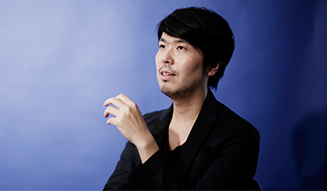
INTERVIEW | Genki Kawamura and 12 Legends Create a "School for Adults"
INTERVIEW | A "School for Adults" Taught by Legends
An Interview with Genki Kawamura, Author of "Work."
12 People, 12 Approaches to Work
Genki Kawamura, the producer behind hit films like "Confessions" and "Moteki," meets with 12 legends. He posed this question: "What were you doing when you were my age?" What are the work philosophies of these individuals who have made their careers and lives more enjoyable and the world more interesting?
Photographs (interview) by SUZUKI KentaText by TANAKA Junko (OPENERS)Cooperation by Yuka Okada
Adults Need School, Too
The serialized column "Shigoto no Gakko" (School of Work), which ran in the magazine "UOMO" starting in 2013, garnered significant attention. It was essentially a "school for adults," seeking wisdom from masters who have made the world more interesting through their work. The faculty included an impressive lineup of 12 individuals such as Hayao Miyazaki, Shigesato Itoi, Hiroshi Sugimoto, and Ryuichi Sakamoto. And the student representative who bravely engaged them was film producer Genki Kawamura.
"Once you start working, you're often told 'learn by doing' or 'learn by watching,' and no one teaches you like they did in school. But I've always believed that adults need school. Now that I can handle my work, I'm exploring how to make it even more interesting, and I wanted to ask the legends not for some special advice, but about how they broke through, made recovery shots, or simply how they had fun during their struggling younger days. I wanted to ask about these things from the perspective of an ordinary reader."
True to his word, Kawamura fearlessly posed his questions to the masters. "How do I find what I want to do?" "I'm afraid of failure, what should I do?" "What do Japanese people need now to compete on a global scale?" The genuine glimpses into the masters' true selves that emerge from these earnest exchanges are the book's greatest appeal.
"What was common among the 12 people was that they are all active. Not a single one was resting on their laurels saying, 'I used to do this kind of work.' They only talked about what they wanted to do next. Also, all the masters remember their past well. They've internalized even negative emotions and bitter experiences, turning them into strength. I never really liked the term 'decluttering.' That's why I don't give up on my work, and I was reminded that I can create because all my past embarrassing and painful moments exist within me."
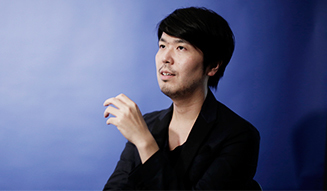

For the 35-year-old Kawamura, the 12 individuals he engaged with were all more than twice his age. He wanted to speak not with his immediate rivals, but with "super-tough opponents" far above him. One might expect to feel intimidated, but he says he approached the challenge with a natural ease.
"I approached the interviews aiming to listen from a close distance. My image was of a teacher I was very close to in school. I wanted to get as close as possible within the given two hours. I believed my feelings would be conveyed because they were all people I deeply admired. However, I did prepare diligently. There was preparation, the lesson, and then review. I structured the book so that readers could experience the process I went through. Also, this book might be the ultimate act of youthful indiscretion. If I had been more considerate, I wouldn't have suddenly asked Director Miyazaki, 'Why did you cry during your own film?' (laughs)"
Incidentally, this book takes the form of a business book. This is perhaps natural given its theme of work, but as you read, you realize it sets itself apart from other business books. It doesn't unilaterally present a single "answer," nor does it offer guidance on "how to do it." Instead, it simply recounts the 12 individuals' unique paths, in their own unvarnished words.
"I myself don't read many business books. That's probably because I believe the answers to work aren't found in business books; you have to find them yourself. These are truly complex times. Everyone's work environment and values differ, and a single method can no longer solve everything. Fundamentally, when you're stuck, your body and your history are sounding an alarm, and when you're on the verge of grasping something, it's the continuous flow within you that's shouting. It feels like the masters have shown me firsthand that you can only find the answers within your work, while you're doing it."
Thus, after a year-long curriculum, Kawamura has finally reached graduation day. He believes that somewhere within this book lies the shape of each reader's future. This autumn, why not step into the "School of Work" to search for your near-future self?

Genki KAWAMURA
Born in Yokohama in 1979. After graduating from Sophia University, he produced films at Toho, including "Densha Otoko," "Confessions," "Villain," "Moteki," and "Parasyte" (released November 29). In 2010, he was selected as a producer for "Next Generation Asia" by The Hollywood Reporter, and the following year, he received the "Fujimoto Award," given to outstanding film producers, at the youngest age in history. His first novel, "If Cats Disappeared from the World," published in 2012, has been made into a film. His latest work is the novel "Otokou" (released October 15), serialized in "Brutus."
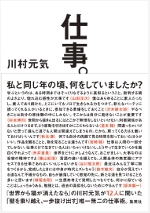
"Work."
Author | Genki Kawamura
Guests | Yoji Yamada, Kōtarō Sawaki, Hiroshi Sugimoto, Sō Kuramoto, Yasushi Akimoto, Hayao Miyazaki, Shigesato Itoi, Kishin Shinoyama, Shuntarō Tanikawa, Toshio Suzuki, Tadanori Yokoo, Ryuichi Sakamoto
Publisher | Shueisha
Price | ¥1,400 (excluding tax)
Available in hardcover and e-book
http://www.shueisha.co.jp
http://ebooks.shueisha.co.jp/detail.php?book=sg948141