April 28, 2015
Sake Sommelier Chizuko | Part 4: How Sake is Enjoyed Abroad
A Sommelier's Debut at the French Restaurant "Daniel" in New York!
Part 4: How Sake is Enjoyed Overseas
Hello from New York. I'm Chizuko, a sake sommelier. It’s been a while. I recently returned to Japan for the first time in a year. Of course, I savored plenty of delicious sake and meals, but I also visited various sake breweries. I was drawn even deeper into the charm of sake and returned to New York with my love for it reaffirmed.
Text by ChizukoPhoto by Kenji Takigamihttp://www.kenjitakigami.com/
A Project to Challenge the Notion of Pairing Sake with Japanese Food
While in Japan, it was like "the light of a lighthouse shines on those nearest it"—I only truly realized how wonderful Japanese food culture, which I had always taken for granted, was once I stepped across the ocean. I'm ashamed of how I used to consume it without proper appreciation!
Today, I'd like to talk again about what I'm challenging myself with as a sake sommelier in New York.
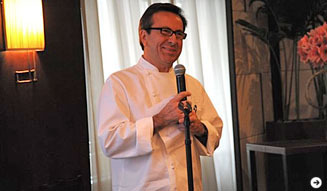
A little while ago, I had an unparalleled opportunity at "Daniel," a representative French restaurant in New York, to serve as a sake sommelier.
The project aimed to introduce Ishikawa Prefecture's ingredients and food culture to the chefs of a leading New York French restaurant, allowing them to explore new possibilities for Ishikawa's culinary culture using their own ideas and techniques. This initiative was planned by the "Go-han Society," an organization supported by prominent figures including the owners and chefs of popular Japanese restaurants in New York, as well as renowned French and Italian chefs deeply knowledgeable about Japanese cuisine, such as Daniel Boulud, Jean-Georges Vongerichten, and David Bouley.
Go-han Society
http://www.gohansociety.org/
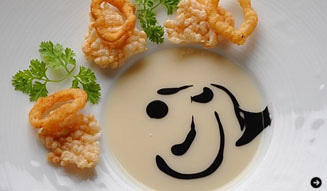
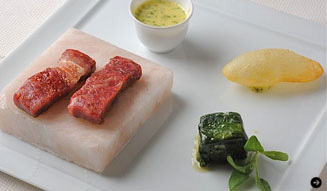
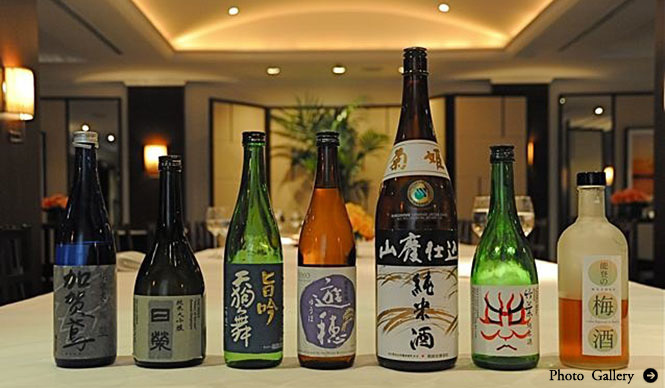
Here, at the French restaurant "Daniel," I had the pleasure of selecting sake from Ishikawa Prefecture to pair with dishes made using ingredients from the same region. I also selected glassware and cups. The excitement of glimpsing "Daniel's" inner workings, which are usually off-limits, mingled with the intense pressure not to make any mistakes. However, with the swift support of the veteran servers, preparations were completed in no time. As expected of "Daniel," the staff moved with flawless efficiency. It was a valuable learning experience!
In the world of wine, the initial appetizers are typically paired with light-bodied or sparkling wines, gradually transitioning to richer, full-bodied types that match the main course in volume. In terms of price, it often follows a progression from lower to higher.
However, with sake, light-bodied, crisp types often fall into the Ginjo category. Due to the complexity of their brewing process, they can be more expensive than full-bodied Junmai-style sakes. If you're unsure about sake selection, I recommend starting with a Ginjo-style sake from the list. Its light palate and fruity or floral aromas make it a perfect first glass. Of course, once you become more accustomed to sake and understand your preferences, this isn't a strict rule. But if you were to follow the wine approach and start with the least expensive options, you might end up pairing a sake with a prominent rice character with delicate appetizers.
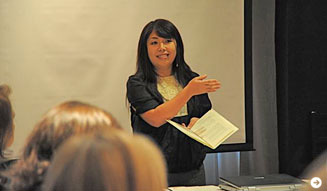
For one of the main dishes, a rich fish preparation featuring butter and cream, I selected warm sake. On the day of the event, I realized there were no ochoko (sake cups) suitable for warm sake, causing a moment of panic! As I scurried around the kitchen, I spotted a row of elegant espresso cups. It struck me then that while the project aimed to break the mold of pairing sake only with Japanese food, I had been fixated on serving warm sake exclusively in traditional ceramic cups. The warm Kikuhime Yamahai Junmai, served in espresso cups, was surprisingly well-received. Now, please enjoy the dishes (click on the photos).
Being able to participate in this wonderful project has given me a glimpse of new possibilities for my career as a sake sommelier and a future where sake can be enjoyed on dining tables around the world.
With a significant decline in sake consumption within Japan, an increasing number of sake manufacturers are turning their attention overseas each year. Rather than simply thinking "if Japan isn't viable, let's go abroad," I hope that by sharing how sake is enjoyed internationally, we can foster new sake enthusiasts within Japan, where diverse global cuisines are available. For existing fans, I hope this inspires them to discover even more ways to enjoy sake.
Next time,Chizuko the Sake Sommelier's First "Collaboration with Farmers!"Stay tuned!
SAKE DISCOVERIES
http://www.sakediscoveries.com/