April 28, 2015
Sake Sommelier Chizuko | Part 1: Why a Sake Sommelier in New York?
Part 1: Why a Kikizakeshi in New York?
Starting today, I'm Chizuko, a Kikizakeshi/Sake Sommelier, who will be sharing insights on the sake scene from New York for OPENERS. I look forward to our time together.
Text by ChizukoPhoto by Atsushi Nishijima, Hideki Kato / Notions United LLC
What comes to mind when you think of sake?
Perhaps images of stuffy old men, or the dreaded hangover… I suspect many of you still hold such negative preconceptions about sake, thinking, "Sake isn't really for me…"
While I now proudly call myself a "Sake Sommelier," that used to be me. After moving to Tokyo from Akita for university, I'd drink chu-hai or cheap wine, not even knowing what they were made of, feeling like a sophisticated adult in the big city. Oh, how embarrassing.
So, how did I, someone like that, come to fall in love with sake?
It happened one day while working in the fashion industry. A stylish, mature gentleman from a client company took me to an intimate, hidden gem of a restaurant in Tokyo.
The proprietress, assuming I wouldn't be fond of sake, first served a chilled sake as an aperitif, so cold it was almost a light sorbet. I was astonished by its fresh aroma, texture, and taste. Then, the subsequent recommendations continued to surprise me… Before I knew it, my negative impressions of sake had vanished, and I felt as though a new door had opened for me.
Incidentally, this temperature is called "Yuki-bie" (snow chill).
At the time, I had no idea that sake had different temperature designations, but there are also other beautiful, evocative Japanese terms like "Hana-bie" (flower chill), "Ryo-bie" (cool chill), "Hyuuga-kan" (sun-warmed), and "Hitohada-kan" (body temperature)… Isn't this the very essence of Japanese "iki" (chic, stylishness)?
Why a Kikizakeshi in New York?
To see a beverage named after our country, "Nihonshu" (Japanese sake), gain international acclaim, and to understand that acclaim, allows us to feel a sense of Japanese identity, pride, and confidence. I believe this resonates not only with the brewers but with all of us Japanese people.
Of course, it would be ideal to maintain that sentiment along with economic benefits while still in Japan, but I truly believe that if we can inspire the world to embrace the allure and fantasy of Japan, our small island nation can become even more vibrant.
Though my contribution may be small, as a Japanese person raised in the land of rice, I wish to be a small part of that bridge. By sharing this sentiment in New York, the center of the global economy and a melting pot of cultures, I am confident that a path will open! With that conviction alone, I continue to share my unique sake journey with each person from around the world, cherishing every grain of rice.
The Sake Path, City Style
Now, I'd like to introduce a part of the sake scene in New York.
First, let me introduce the long-standing establishment that inspired me to become a Kikizakeshi/Sake Sommelier, the very place that comes to mind when you say "sake" in New York: Sakagura (http://www.sakagura.com/).
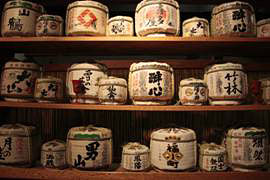
Here, they offer over 200 types of sake and more than 20 types of shochu. What's more, most of the sake is available by the glass, which is a wonderful bonus. If you can't decide, you can try a tasting before making your choice.
Located in the basement of an office building, its secretive entrance, making you wonder "Could it really be here…?", is part of its charm. It was once even voted the No. 1 spot for secret dates on a New York website. You can enjoy sake pairings with everything from appetizers to desserts.
In the summer, I recommend something crisp and bubbly. For women who are hesitant about sake, I urge you to try this sparkling sake, which resembles champagne, as if you've been tricked.
Enjoy it not in an ochoko, but in a flute glass: Dassai Junmai Daiginjo Sanwari Kyubu Sparkling Nigori on the rocks, from Asahi Shuzo in Yamaguchi Prefecture, or Bon Muroka Nama Genshu.
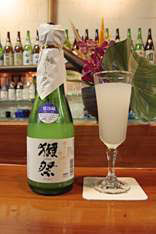
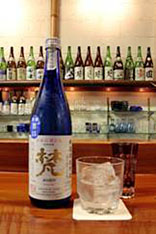
Above Sakagura is Sobatotto (http://www.sobatotto.com/).
My top recommendation here is the bar located immediately to your left upon entering. The cocktails created by the popular mixologist, Gen Yamamoto, are all healthy and juicy, made with fresh fruits and vegetables.
Not only can you savor the natural flavors of the ingredients, but Gen's technique of further enhancing the characteristics of the alcohol is truly unique, embodying the delicate spirit of Japan.
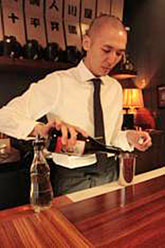
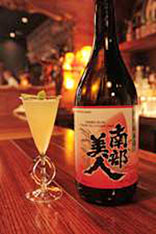
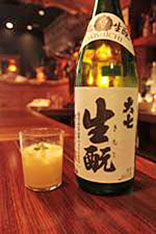
From top left in the photo: Mixologist Gen Yamamoto. A crisp, refreshing, vitamin-packed cocktail using fresh plums and Nanbu Bijin Tokubetsu Junmai. The sweetness of roasted yellow corn and the rich flavor of rice create a nostalgic milkshake-like cocktail using Daishichi Kimoto Honjozo.
I hope to continue bringing you "SAKE AND THE CITY," Chizuko the Kikizakeshi's sake journey from New York, so I look forward to your continued readership.
There's still much more to share, but that's all for today.
SAKE DISCOVERIES
http://www.sakediscoveries.com/
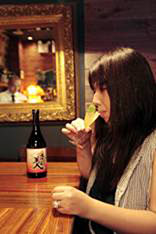
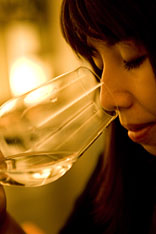
Me enjoying a cocktail with plum and Nanbu Bijin