April 5, 2015
Secrets behind the Success | Series Vol. 12: Veer Singh, Founder of 'Vana Malshi Estate'
Behind the Scenes of Business Leaders
12th Feature | Veer Singh (Founder of Vana Retreats)
A Philosophy of Happiness from India for Modern Life (1)
What are the daily lives and thoughts of successful business leaders like? In our series "Secrets behind the Success," we go behind the scenes to reveal the personal lives of these accomplished individuals through interviews.
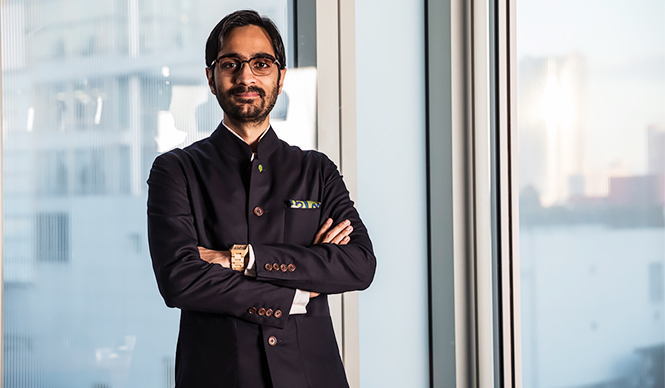
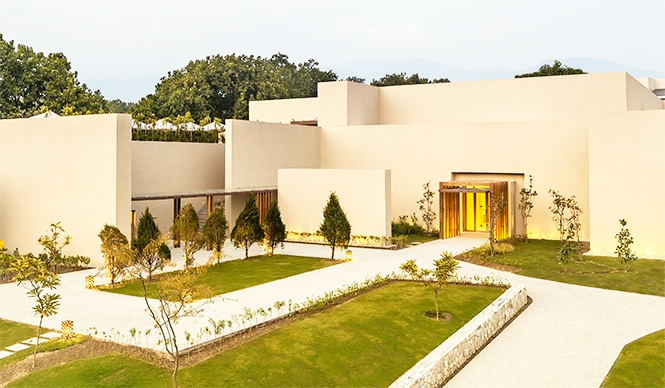
In January 2014, Vana Retreats (hereafter referred to as Vana), a sprawling 21-acre sanctuary overlooking the sacred Himalayas, opened its doors in Dehradun, India. Its founder is Veer Singh, a man with a background of living in the UK and Spain, and a keen interest in linguistics, flamenco, music, art, and organic farming. What led him to establish a retreat with such a unique concept? We delve into his management philosophy and his profound commitment to well-being.
Photographs (portrait) by NAKAMURA Toshikazu (BOIL)Text by MAKIGUCHI June
Well-being is, in essence, happiness
—This is your first time in Japan, isn't it? What are your impressions?
I've always had a very positive impression of Japan. Since childhood, I'd heard that this country respects beauty, design, elegance, nature, politeness, and the spiritual world. Having spent time here, I can confirm that it's true. I want to learn more about Japan.
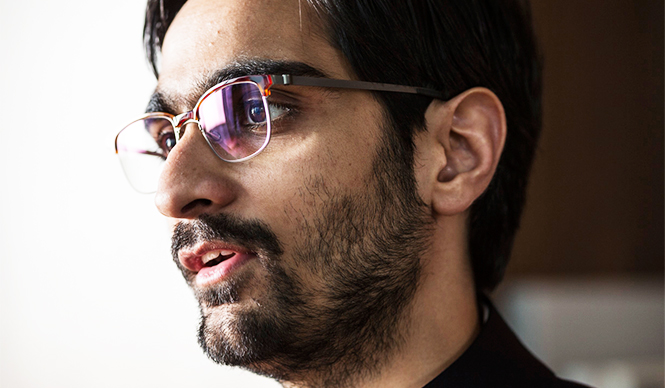
—You lived in the UK and Spain and had diverse interests. Why did you ultimately decide to create a retreat?
That's always the first question I'm asked! (Laughs) I don't have a definitive answer yet, but what is clear is that I've always strived to create spaces where people can discover their own value. Through my various experiences, I've sensed that people worldwide feel a disharmony with nature and society. I want Vana to be a place where individuals can seek answers to live in harmony with the world around them.
—It seems that many people around the world are beginning to recognize the importance of wellness.
Currently, the term 'wellness' is primarily used to refer to mindful eating and exercise. My definition of well-being, however, is a state where everything is in harmony and fulfillment. In other words, it's about happiness. It encompasses physical, mental, emotional, social, and professional aspects, as well as ecological and spiritual perspectives, touching every facet of life.
The further we drift from a natural way of life, the more likely it is that some aspect of our balance will be disrupted, leading to negative consequences. Our nutrition suffers, our mental health declines, and we begin to experience emotional problems. As more people feel unhappy and unfulfilled, the demand for places like Vana will likely grow.
—So, for those truly seeking wellness, the needs are unique to each individual.
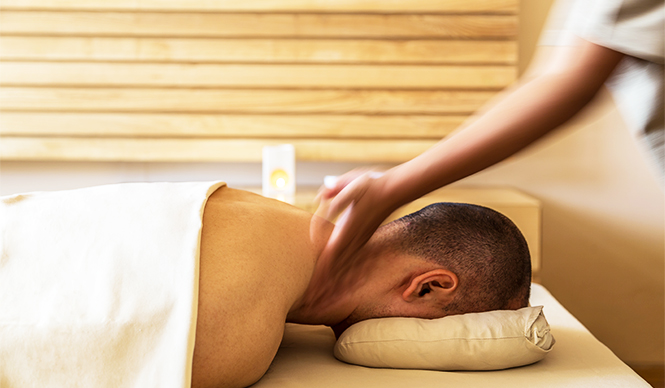
Precisely. That's why we don't offer pre-packaged solutions. Vana is not a resort, so we only accept bookings for stays of five nights or more. The price includes everything: accommodation, all meals, drinks such as smoothies and teas, treatments, consultations, group activities, and round-trip transportation from the airport. Upon arrival, we conduct thorough consultations to understand each guest's needs and preferences, allowing our expert staff to craft a bespoke program. This approach is quite unique. If a guest isn't satisfied with their program after two days, we will reconfigure it as many times as needed, at no additional cost.
—From how many countries have you welcomed guests?
We've welcomed guests from India, of course, as well as Germany, the UK, the USA, France, Brazil, Switzerland, Austria, Mexico, Bahrain, Australia, and Japan.
Behind the Scenes of Business Leaders
12th Feature | Veer Singh (Founder of Vana Retreats)
A Philosophy of Happiness from India for Modern Life (2)
True hospitality requires a genuine spirit behind it
—What are the advantages of having a retreat in India?
India is a crazy country, encompassing diversity, complexity, vastness, chaos, and confusion! (Laughs) But India also possesses traditional medicine like Ayurveda and yoga. Its deep connection to the spiritual world is also a significant advantage. While India's values are currently shifting away from the spiritual, the people and methodologies that preserve ancient wisdom remain very much alive. For these reasons, India is an exceptionally advantageous location for practicing wellness.
—What does operating Vana mean to you personally?
It's my own journey. It's also the journey for my team. And, of course, it's a journey for our guests. The guests are paramount, but so are the members of my team. Many companies claim to value their employees, but how many truly practice it? I strive to do just that. Our 310 staff members are provided with healthy, organic meals, and have access to yoga, dance, music lessons, hiking, gardening, and cooking classes. To ensure our guests have an exceptional experience, pursuing the happiness of myself and my staff is incredibly important.
—What do you do, or what is essential, to achieve the highest level of hospitality?
True hospitality requires a genuine spirit behind it. Every staff member must share a sense of integrity and possess a clear purpose in realizing our vision. That's the first step. Next, as a leader, it's crucial to constantly remind the team of that vision. Many service industries invest in staff training to enhance hospitality, but it's meaningless if it's not genuinely expressed to the customers. We must ensure that our hearts and services remain connected, not solely driven by profit.
Furthermore, at Vana, we emphasize a balance in our service style. We are elegant and formal, showing respect to our guests, yet we also strive for a relaxing and warm atmosphere. In the service industry, it's easy to lean too heavily in one direction. I believe we've achieved a good balance at Vana. Japanese hospitality is also wonderful; I feel a resonance with the spirit of Vana.
—Do you have any future plans?
We are planning to establish two new Vana properties. Each will offer a distinctly different approach to well-being. Since well-being is integral to all aspects of life, I believe we can create diverse retreats by focusing on different facets. Both will be located outside of India and will be somewhat smaller in scale than the current property.
—What do you consider important for a leader?
Many people offer advice on what leaders need – this is important, that is necessary. Opinions vary, which means there's no single correct answer. Therefore, I don't read management books. What a leader needs differs depending on the country, culture, field, and era. The leaders of my father's generation were vastly different from those of today. I believe understanding this is crucial.
I constantly question my own thinking and whether my actions are right. And I work diligently. One can focus on luxurious details to project a glamorous leadership image, but I believe such a persona is not what is sought after, especially in today's world. Next, I focus on improving myself as a human being. My greatest effort is in cultivating patience, as I am often exposed to stress and pressure. I feel I am genuinely developing patience. And importantly, focusing on the 'here and now.' Coupled with the ability to anticipate the future and learn from past actions, I believe these are the qualities a leader needs.
Behind the Scenes of Business Leaders
12th Feature | Veer Singh (Founder of Vana Retreats)
A Philosophy of Happiness from India for Modern Life (3)
Disconnecting from work is key to relaxation
—Do you have any mottos or quotes you recall when making decisions?
I was raised in a Sikh family. At one point, I wore a turban and my hair reached my feet. Throughout my life, I've encountered various faiths, and for the past three years, I've been studying Buddhism. It was there I encountered the concept of 'mindfulness' – the practice of being present and focused. Decisions, whether big or small, are vital to life. Therefore, when making a decision, I am conscious of my current emotions and how they are affecting me to arrive at an answer. I also keep the word 'compassion' in mind.
When overwhelmed by negative emotions, such as anger or confusion, remembering to extend compassion to others helps me find calm.
—Do you carry any lucky items with you?
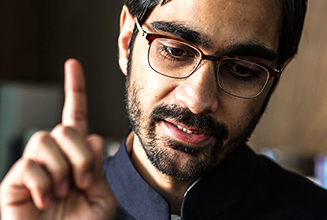
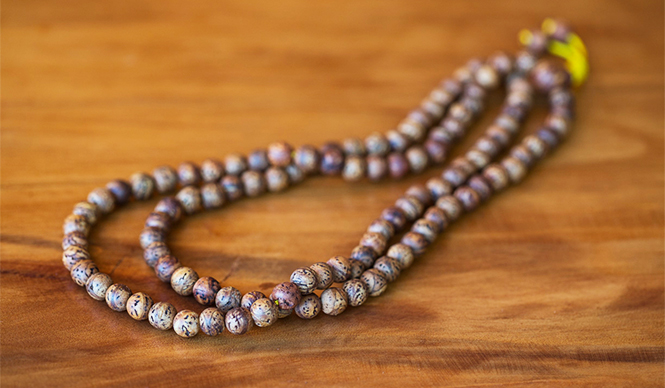
I cherish a mala gifted to me by someone I respect, and I always wear it. I also carry Vana stationery and envelopes for writing letters to guests. And a USB made from recycled wood. My tablet case was made by a friend and has my initials on it. I also frequently wear suits from the Indian brand Abraham & Thakore for business occasions. What I'm wearing now is also from the same brand; it's based on the Bandhgala, a traditional Indian garment. I like it because it uses Indian fabrics and techniques, and has no padding or interfacing, making it very comfortable to wear.

—How do you relax amidst your busy schedule?
Perhaps it's my nature to be detail-oriented. I invest time in even the smallest things. I must try the menus and treatments myself first. It's no wonder I'm busy! (Laughs) Therefore, I prioritize sleep. It's not just for my body, but more importantly for resetting my mind. I usually get six to eight hours of sleep. I value my meals as they deeply affect my mood and energy. While I enjoy indulging in rich food sometimes, I make sure to balance it afterward. And perhaps a bit of exercise. When I have time, I go for walks or do push-ups. Meditation is also effective, and listening to my favorite music or watching a movie helps me disconnect from work, which leads to relaxation.
—What kind of movies do you enjoy?
I don't have a specific genre preference as long as the acting, story, and direction are excellent. Anything other than typical action movies. Most of the films I love are Spanish. I particularly like Alejandro Amenábar's 'The Sea Inside.' (Based on the autobiography of Ramón Sampedro, a quadriplegic who fought for 30 years for the right to end his life, it won the Academy Award for Best Foreign Language Film in 2005.) Javier Bardem's performance was outstanding. I also enjoy romantic films.
—So you enjoy romantic stories as well.
To create something related to design, beauty, and the heart, much like Vana, I believe one must possess a romantic sensibility.
Singh, who deeply understands the Buddhist concept of 'mindfulness'—now a focus for leaders worldwide—and reflects it in his business and personal life. His philosophy that establishing oneself as a person worthy of respect naturally cultivates a good leadership image reflects a sincere dedication to operating a retreat that nurtures the human mind and body. We look forward to his future endeavors.
Veer Singh
Born in New Delhi, India, in 1983. Studied abroad in the UK and Spain during his university years. In the UK, he majored in physics and deepened his knowledge of organic farming and ecology, while also developing interests in art and music. He later decided to pursue organic farming in Spain, seeking a sustainable way of life. After being involved in farm management, he dedicated himself to promoting new agricultural practices in India. Drawing on the knowledge and skills acquired through his diverse experiences, he resolved to establish the groundbreaking Vana Retreats. Following several years of preparation, it opened in January 2014.
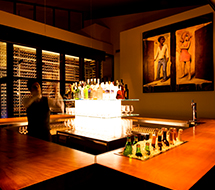
With the cooperation of
TWO ROOMS Grill & Bar
Opening Hours | Lunch 11:30–14:30, Dinner 18:00–22:00 (Sundays until 21:00), Lounge & Bar 11:30–02:00 (Sundays until 22:00)
5F AO Building, 3-11-7 Kita-Aoyama, Minato-ku, Tokyo
Tel. 03-3498-0002
http://www.tworooms.jp/ja/