March 13, 2015
Yasuhiro Mihara | Episode 3: A Conversation with Chieko Watanabe, President of Avanti (Part 1)
Considering the Cotton You Wear
Part 3: A Conversation with Chieko Watanabe, President of Avanti (1)
In "Criterion MIHARAYASUHIRO," fashion designer Yasuhiro Mihara engages in dialogues with individuals who are driving societal change, exploring what concrete actions are needed to improve the world and what the future "criteria" will be. This is the latest installment.
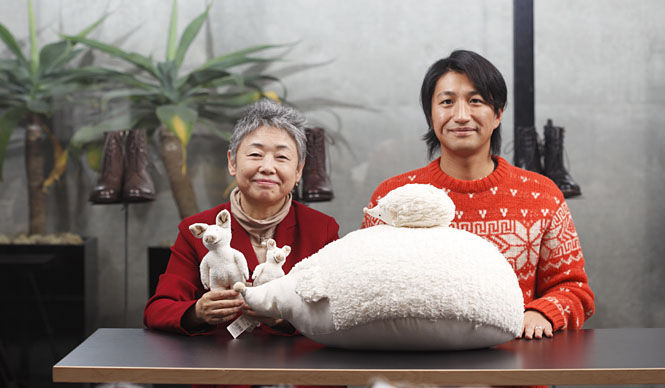
For this third installment, we feature Chieko Watanabe, a leading figure in organic cotton in Japan and the president of Avanti, a premier organic cotton company.
Photos: JamandfixSummary: Yasuhiro Takeishi (City Lights)
Organic Cotton: Encompassing Agriculture, Industry, and Commerce
MiharaMs. Watanabe, it’s been a while. Thank you for joining me today.
WatanabeIt has indeed been a long time. I’m so glad to see you looking well.
MiharaTo begin, could you please provide an overview of organic cotton and its current status?
WatanabeCertainly. Cotton is a material that spans three sectors: agriculture, where it is grown; industry, which processes it from yarn to fabric and final products; and commerce, which sells these products. While what is commonly called "pesticide-free organic cotton" falls under agriculture, the industrial processes also cause environmental damage. For organic cotton, it is crucial to establish standards that minimize environmental impact across all three sectors.
MiharaI see. So, each sector needs to address its environmental impact.
WatanabeThat’s right. Let’s start with agriculture. It might be helpful to explain how cotton is cultivated in developed and developing countries today.
In developed countries, mechanized agriculture is advanced, relying heavily on chemicals such as herbicides, fertilizers, and pesticides. Cotton is also often harvested mechanically using defoliants.
Water is another critical factor. Cotton cultivation requires vast amounts of water, leading to the extraction of groundwater and the construction of irrigation systems. While carbon dioxide and global warming are currently the focus of environmental concerns, water is said to be the next major issue, and irrigation is one of the causes of dwindling freshwater resources globally.
MiharaSo, agriculture in developed countries has pursued these methods to improve productivity and reduce costs.
WatanabePrecisely. This modern mechanized agriculture has caused immense environmental damage. In contrast, agriculture in developing countries inflicts significant harm not on the environment, but on people.
Cotton Farming: Damaging Both Environment and People
MiharaAre you referring to issues related to labor wages and sanitation?
WatanabeThe working conditions for farmers are extremely poor. Illiteracy rates are very high among farmers in developing countries, and when using pesticides or herbicides, they may not be able to read the instructions properly, leading to misuse. There are even statistics indicating that this affects 5 million people worldwide.
Furthermore, current agricultural practices often begin with purchasing genetically modified seeds, a situation common in both developed and developing countries. In developing nations, farmers often buy seeds by mortgaging their harvest, essentially starting with debt. However, since agriculture is subject to natural conditions, there's no guarantee of repayment, and some farmers fall into mental distress due to their debts. Health issues from pesticide exposure are also a major concern.
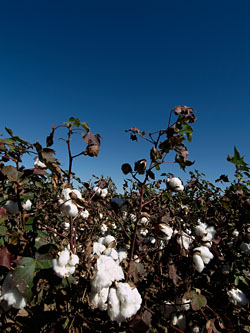
Organic Cotton from Avanti's Contracted Organic Farms
MiharaSo, they are engaged in farming while enduring both mental and physical hardship.
WatanabeYes. In India, for example, it is said that approximately 100,000 farmers have died in the past three years due to pesticide-related illnesses or suicides driven by debt. Another significant issue is that child labor has become the norm.
MiharaIt's become a fundamental part of the system? Isn't that also a cause of the illiteracy you mentioned earlier?
WatanabeExactly. Girls aged roughly five to fourteen are often employed as laborers, unable to attend primary or secondary school. This contributes to higher illiteracy rates.
MiharaIs this also an issue with the education system?
WatanabeOf course, developing countries have schools. However, while tuition might be free, parents may not be able to afford textbook costs, preventing them from sending their children. Moreover, child labor is very cheap; for instance, for the same job, a child might earn 10 rupees a day, while an adult woman earns 20 rupees and an adult man earns 30 rupees. Consequently, employers hire cheaper labor, leading to increased adult unemployment. This situation creates a vicious cycle.
MiharaI understand. Cotton is used in most of our clothing, but it seems that a large portion of it, in reality, has a negative impact on both the environment and people.
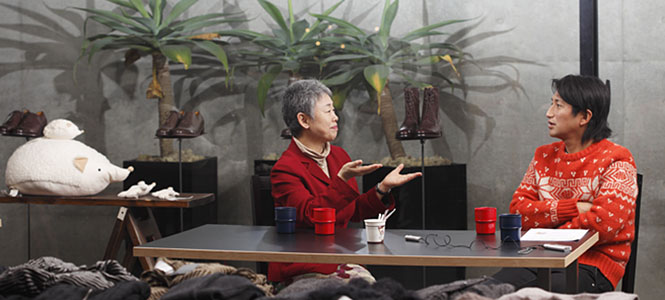
The Unseen Realities of Cotton Farming
WatanabeThese realities are not widely known even within the textile industry. This is because 99.99% of raw cotton in Japan is imported. Furthermore, about 90% of cotton products are also imported, so there is little focus on the agricultural aspect.
MiharaIndeed, I don't really feel that connection either.
WatanabeTherefore, we want people in the textile industry to be more aware of the conditions under which raw cotton is cultivated. It's not necessarily about asking them to switch to organic cotton, but rather about the importance of simply knowing the current reality.
MiharaBased on what you've told me, cotton seems to have only negative aspects.
WatanabeWhile that may be true regarding the environment and people, cotton is what farmers rely on for their livelihood, so it's not something that should be eliminated.
MiharaThat's true. So, what is the current situation of cotton farming in developed countries?
WatanabeEven in developed countries, the situation of cotton farming is not ideal. As I mentioned earlier, while increased water usage can boost cotton yields, it also incurs costs, making it inefficient as a crop. Additionally, organic farming requires crop rotation. As long as the soil is organic, any crop can be planted, so it's natural to plant crops with higher revenue. Cotton, however, is a relatively low-income crop.
MiharaSo, the number of farmers cultivating cotton is also decreasing.
WatanabeThat's right. For farmers, knowing how much income they can earn per acre by cultivating a particular crop is a matter of survival. In this regard, corn has become a significant issue in recent years; its price has soared as a raw material for bioethanol, an alternative energy source to fossil fuels. It's gaining attention not as a food crop, but for its energy potential. Therefore, farmers are increasingly choosing to grow corn because it offers higher revenue from the same land. This trend is prevalent in the United States, and Brazil is also currently benefiting from corn cultivation.
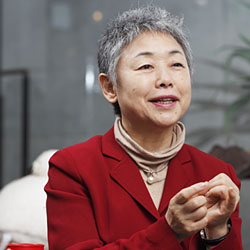
Chieko Watanabe
Born in Shari-gun, Hokkaido, in 1952. After graduating from the Faculty of Commerce at Meiji University, she joined Tasco Japan, a lens manufacturing company. In 1985, while serving as vice president of Tasco Japan, she established Avanti as a subsidiary and became its president.
She first encountered organic cotton in 1990 and began focusing exclusively on it at Avanti that same year. In 1993, she established a local subsidiary in Texas, USA, and played a key role in founding the Japan Texas Organic Cotton Association. Since 2000, she has served as vice chairman of the NPO Japan Organic Cotton Association (JOCA). She actively participates in NPOs and gives lectures, working to promote organic cotton and establish global standards.
Avanti Direct Web Store "Pristine"
http://www.pristine.jp/

These socks, created by fashion designer Yasuhiro Mihara, are made from a blend of cotton and hemp to ensure both functionality and natural material properties, offering excellent moisture absorption and quick-drying capabilities. They feature a unique color palette and nep-flecked yarn, with a distinctive brand logo embroidered on the heel to serve as a stylish accent. Knitted on a 60-gauge machine, they provide a relaxed, comfortable fit.
These socks, sold exclusively through the web store "LUMORE'S," will have a portion of their proceeds donated to welfare facilities in Tokyo through the Tokyo Charity Bank, operated by the Tokyo Council of Social Welfare, as per the intentions of Mihara and OPENERS.
