March 18, 2015
Peter Barakan and Kaori Nakano Discuss "21st Century Dandyism" (Part 2)
Kaori Nakano's "The Genealogy of Dandyism: Men Admired by Men" Commemorative Publication
A Conversation with Peter Barakan on 21st Century Dandyism (Part 1 of 4)
Part 2: Class Consciousness in Modern Britain – "When an Englishman Opens His Mouth, Someone Will Dislike Him"
In the first part, we spoke with Peter Barakan about whether "dandyism studies" is a phenomenon unique to Japan.
This time, Barakan, who is from Britain, discusses class consciousness in modern Britain, looking at figures like Prince Charles, the late Princess Diana, and the British aristocracy.
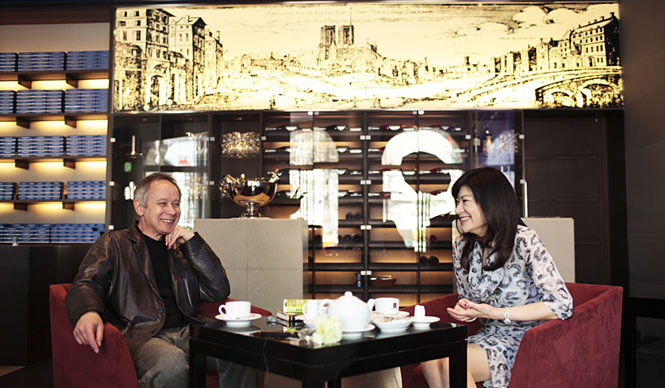
Text by Kaori NakanoPhoto by JamandfixWith the cooperation of Le Comptoir du Relais
Fragmented Class Consciousness
Peter BarakanI was nominated by Kaori to be her conversation partner this time, but I'm not that much of a dandy myself...
Kaori NakanoNarcissism doesn't seem to be well-regarded. But many dandies are narcissists. Beau Brummell, for example, wasn't necessarily well-liked by his contemporaries, perhaps because he provoked irritation, like, "Why is he so obsessed with his appearance? Doesn't he have anything else to do...?"
BarakanThat might be true, but more than anything, perhaps they couldn't forgive him for trying to climb out of his social class? Britain has a very strong sense of that. Especially in that era, I think that feeling was even stronger.
NakanoEven now?
BarakanConsiderably.
NakanoI thought that since Tony Blair started talking about a "classless society," people would talk about class less than before.
BarakanThere's a book called "Watching the English: The Hidden Rules of English Behaviour" by Kate Fox. It's an easy-to-understand book about the attitudes and behaviors of the English. She writes that the classes, which used to be divided into upper, middle, and lower, are now blurred, with about five categories. Upper middle and lower middle have merged.
NakanoIt feels like the middle has been subdivided.
BarakanThose who are upper middle and lower middle are very particular. They insist they are upper middle, not just middle (laughs). Apparently, the truly upper class are surprisingly not particular and don't hold prejudices.
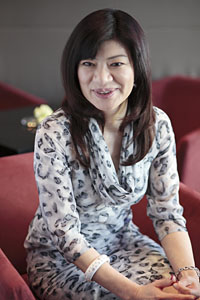
Kaori Nakano
NakanoI get the impression that both the current Conservative leader, David Cameron, and the Mayor of London, Boris Johnson, are from the upper class and free from prejudice. Mayor Johnson, in particular, doesn't seem to care much about his appearance.
BarakanIt's not as classless as Tony Blair claimed. While it has shifted towards materialism, class consciousness is still deeply rooted.
NakanoIn what way, specifically?
BarakanJust by the way you speak, if you use slightly difficult words, you might be looked down upon.
NakanoReally!?
BarakanIt depends on who you're talking to. Nowadays, there's a trend to act more common, to speak in a way that seems a bit lower than your actual class or upbringing.
NakanoReverse snobbery?
BarakanRather than acting upper class, it's better to be casual. There's quite a bit of that. In that kind of atmosphere, if you speak normally and clearly, or intellectually, it's a no-go (laughs).
NakanoYou have to be quite careful.
BarakanIt was around the time of Princess Diana that more people started speaking in a commoner's style.
NakanoThe era of the 80s, when "Sloane Rangers" started becoming a topic?
BarakanPrincess Diana never spoke like a queen. Prince Charles did, though. Even though Diana must have been raised in that environment. Things changed from that generation, didn't they?
NakanoDid Princess Diana intentionally speak that way? Like, "I'm going to break royal conventions..."
BarakanNo, it was the mood of the times. Something you unconsciously go along with. Princess Diana had that kind of vibe even before she married Charles. Not that she was rude, but she seemed like an ordinary person. Being upper class yet commoner-like is what's most admired.
NakanoBoris Johnson is like that too. He's rather eccentric. I sometimes wonder if he's doing it on purpose.
BarakanBritain is a country that cherishes eccentricity, unlike Japan. Many wealthy people go their own way, and no one really says anything about it.
Even Among the British Aristocracy...
BarakanThere's an old saying, like a proverb: "When an Englishman opens his mouth, someone will dislike him" (laughs). Just by the way you speak, it tells everything about your family, education, and background, so it can give a very distant impression to certain people.
NakanoIn what situations do they get disliked?
BarakanThey aren't disliked from high up. They're disliked from below. Especially from those just below them. I think it's mostly "envy."
NakanoIt's frightening how they don't appear that way from the outside world.
BarakanThose who aspire to the upper class might feel envy more strongly. In the past, people knew their place and were content, thinking "that's just how it is," and didn't have the ambition to climb up. Perhaps it changed due to American influence?
NakanoNot that American influence led to equality?
BarakanThe class system has continued for hundreds of years. During the Blair administration, the hereditary peerage in the House of Lords was changed to a life peerage, right? Even so, I think it will take another 100 years for the consciousness of nobility to disappear (laughs).
NakanoNowadays, many nobles are poor and only have their titles.
BarakanThey might have large mansions but no money, so they turn parts of their homes into tourist attractions and live off the income.

Peter Barakan
NakanoWe can see the reality of impoverished modern nobles at National Trust mansions. I also read an article about a nobleman who works as a gardener. A gardener with "Lord" before his name (laughs).
BarakanIn a way, that's kind of nice, isn't it? (laughs)
NakanoIt's not that high class means good economic status, nor that low economic status necessarily means low class... That's what's interesting about Britain, but that complexity seems to be the cause of complicated feelings about class.
A Conversation with Peter Barakan on 21st Century Dandyism (Part 1 of 4)
Part 3: Comparing British and Japanese MediaTo be continued
Part 3: Comparing British and Japanese MediaTo be continued
Related Articles | Kaori Nakano Profile | Fragrance Dojo
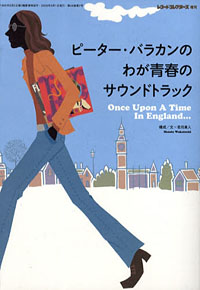
Peter Barakan's Soundtrack of My Youth
(Record Collector's Special Edition)
Music Magazine / 1600 yen
The good fortune of spending one's youth in London in the 1960s –
The thrill of seeing The Beatles at my first concert, the shock of hearing a nascent Jimi Hendrix live –
Intense experiences unique to London in the 1960s and early 70s, and the young days spent deepening my love and understanding of music through them.
A compilation of the series "Once Upon A Time In England ~ Peter Barakan Recounts His Teenage Music Experiences" (2005-2008) from "Record Collector's." Includes a full-color frontispiece packed with extremely rare items like concert programs and tickets from the time, plus a guide to his favorite records!
http://peterbarakan.cocolog-nifty.com/blog/
With the cooperation of |
Le Comptoir du Relais
Tel. 03-5428-4591
http://www.latourdargent.co.jp/daikanyama/