April 13, 2015
CD 'Hana to Mizu' Release Commemoration: Kiyoshi Kensaku Interview (Part 1)
The Newest Form of "Jazz Japonisme"
Nels Cline Interview (Part 1)
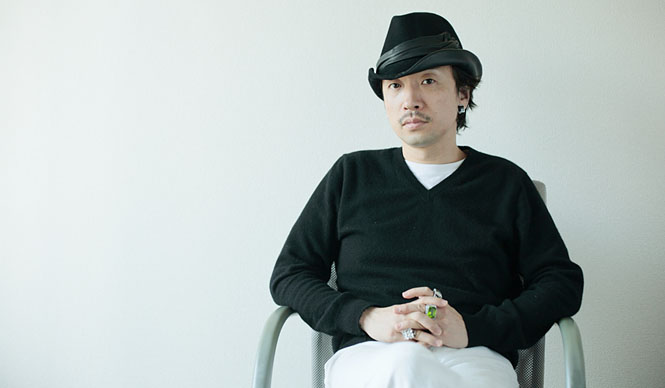
Jazz saxophonist Nels Cline is a multifaceted artist, known as a musician, writer, commentator, and even a resident of Kabukicho.
In 2008, he was in charge of the Galleria BGM selection at Tokyo Midtown, and recently released the collaborative CD "Hana to Mizu." The album features jazz pianist Hiroshi Minami and includes everything from standards and improvisations to covers of J.S. Bach. The slow jazz sound, a duo of saxophone and piano, has resulted in a work that can be described as the quintessential music of "New Japonisme," suitable even for a tea ceremony.
We spoke with Nels Cline, who continues to release prolific works, about his latest album "Hana to Mizu" over two installments.
Text by OPENERSPhoto by Jamandfix
“How about we create a sense of improvisation, as if performing in a tea room?”
—Why did you title this work, the soundscape of Midtown, "Hana to Mizu"?
This is a concept proposed by Matsuo Basho, and more precisely, it's "Hana ni Mizu." If I used that directly as the title, Basho's image would be too strong. I wanted something broader, more "Japonisme," not limited to Basho.
—Did the image of Midtown inspire you?
Not particularly (laughs).
I was in charge of music selection for Midtown for the past year, so we decided to collaborate and create an album—it's truly a special project. At first, anything was possible, but the work I did at Midtown was background music specifically for that location, similar to the compilation album "Hotel Cost."
So, initially, we considered ideas like smooth jazz, but after much thought, we decided to create a work as a duet with Hiroshi Minami, with whom I had been performing live for some time.
As I was creating the work, I had a flash of inspiration that it should have a "Japanese" feel—what you might call "Jazz Japonaisque." That's why I chose the theme "Hana to Mizu," from Basho's "Hana ni Mizu." I discussed with Minami-san, saying, "How about we gather elements of 'Japonaisque' from writers like Jun'ichirō Tanizaki or Zeami, and create a sense of improvisation, as if performing in a tea room?" And that's how this album came to be.
—The album features a lot of improvisation (inpro) rather than composed songs. It seems rare to find albums like this these days.
Half of the tracks are improvisations. Of course, artists like Derek Bailey, who are masters of hardcore improvisation, perform entirely through improvisation (laughs). But a mix of half improvisation and half composed pieces is something we've been doing since our live performances.
The sound isn't overly dense, so the goal is to make it difficult to distinguish between improvisation and composition as you listen to each track. It's like a transformation of haiku, where improvisation feels like a composition, and composition feels improvisational. But aren't haiku, ikebana, tea ceremony, and sumi-e painting highly improvisational? Historically, there have been many instances of "Japonisme" that draw analogies between jazz improvisation and these arts. It's a kind of Orientalism, with excessive use of the shakuhachi, for example (laughs). This time, however, the image was different.
When Japanese people embrace "Japanese-ness," they inevitably exoticize it.
—The album has a generally calm atmosphere. Was this influenced by Midtown?
No, not at all (laughs).
The serene quality of this work isn't due to Midtown; it stems from the theme of "Hana to Mizu."
—So the title perfectly captures the album's mood.
In any case, I asked Minami-san to "play with fewer notes"—because skilled jazz pianists can play much more expansively. It's essentially minimalism. So, we approached it as if performing in a tea ceremony setting.
—How did you first meet Minami-san?
Minami-san is an essayist, but he comes from the Waseda University Modern Jazz Society, a circle with the most influential connections in the Japanese jazz scene, and later studied at the Berklee College of Music. I met him shortly after he returned to Japan. When I wanted to perform in Japan after returning, I didn't have any band members, so I was introduced through a mutual acquaintance. I believe it was around '89 or '90.
—The album includes covers. What was the selection criteria?
I made the selections, choosing pieces that would sound good when performed in this style. Also, the theme this time is "Jazz Japonisme," in other words, "Japanese-ness." Following YMO, a trend of "Exotic Japan" emerged. "Exotic Japan" is reminiscent of Hiromi Go (laughs).
However, when Japanese people engage with "Japanese-ness," they are inherently forced into a state of exoticization. We don't wear kimonos, practice tea ceremony or ikebana, or read haiku. We're practically not Japanese anymore. Therefore, when we do something that seems "Japanese," it becomes a parody at that very stage. This signifies the breakdown of essentialism. There are many such musical examples. Jazz also has a history of "Japonisme," like Masao Koga playing folk songs (laughs). There were many in the 70s and 80s.
Nevertheless, in this simple style of soprano saxophone and piano, we're not playing folk songs or using Japanese scales. When considering the newest form of "Jazz Japonisme," I felt it would be better to perform jazz pieces composed in the 1930s and 40s. So, all the songs are jazz standards, and I chose ones that would sound good when played quietly.
Nels Cline Interview (Part 2)To be continued
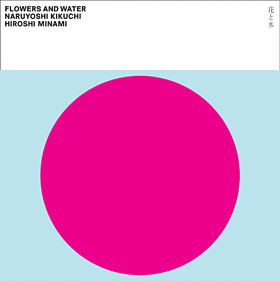
Album "Hana to Mizu"
3,000 yen / ewe records
http://www.kikuchinaruyoshi.com/nouvelle.html
Live Information
◆ Nels Cline & Hiroshi Minami "Hana to Mizu" Tour
May 1 (Fri) Okayama Runes Hall
(Inquiries) Tel. 086-234-5260
May 2 (Sat) Osaka Phoenix Hall
(Inquiries) Tel. 06-7732-8888
May 5 (Tue, Holiday) Tokyo Billboard Live TOKYO
(Inquiries) Tel. 03-3405-1133
◆ Nels Cline DUB SEXTET
May 20 (Wed) Tokyo Uguisudani Tokyo Kinema Club
(Inquiries) Tel. 0570-00-3337
◆ Nels Cline and Pepe Tormento Ascalar
June 5 (Fri) Tokyo Globe Theatre
(Inquiries) Tel. 0570-00-3337
Nels Cline Official Website
http://www.kikuchinaruyoshi.com/