May 11, 2015
Maki Yoshida, Part 51: Tales of Food - Spring Beans (Part 2)
Part 51: Tales of Food - Broad Beans (Part 2)
Broad beans, also called "sora-mame" because their pods grow pointing upwards towards the sky, or written as "ka-mame" because the pod shape resembles a silkworm, are characterized by their plump, rounded form.
This time, I'd like to talk about these truly captivating beans, which can lead to an "I can't stop eating them" state once you start.
Narration by Maki YoshidaEdited by Fuyuki TogawaPhoto by Jamandfix
The Deliciousness of Broad Beans, Eaten in Season
Still, why are broad beans so delicious? (laughs). I'm sure I'm not the only one who thinks so every time I eat them.
Even when simply lightly boiled with salt, they have a mysterious charm that brings a smile to the eater's face. Boiling them with salt is said to remove excess elements and leave just the right amount of umami, making them perfectly seasoned and, in my opinion, the most delicious way to eat them.
Their beautiful green, sometimes described as jade. The unique aroma and subtle sweetness that spread through your mouth when you eat them fresh from boiling. With just beer and broad beans, a moment of bliss is practically guaranteed.
Moreover, raw broad beans aren't available year-round; they only appear in stores for this limited period. It's not quite like the "Hiyashi Chuka (cold ramen) has begun!" signs you see in early summer, but the "Ah, the broad bean season has arrived!" feeling of seasonality is, I believe, one of the factors that firmly captures the hearts of broad bean fans.
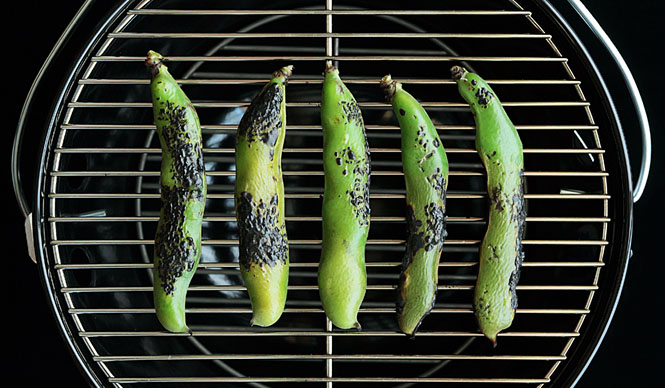
Another elegant way to enjoy them is to place the broad beans, still in their pods, on a grill and roast them until the surface turns black. Roasting them in the pod allows the beans inside to steam perfectly, resulting in a more fluffy texture than when boiled. It's also easy to prepare, so I sometimes roast them myself. If you ever have the chance to enjoy a barbecue outdoors, please give it a try (laughs).
The black part along the edge of the bean is commonly called "ohaguro" (tooth blackening). If this part is green, it means the bean is young and tender, so you can eat it with its thin skin.
Jade-Colored Jewels, Protected with Overzealous Care
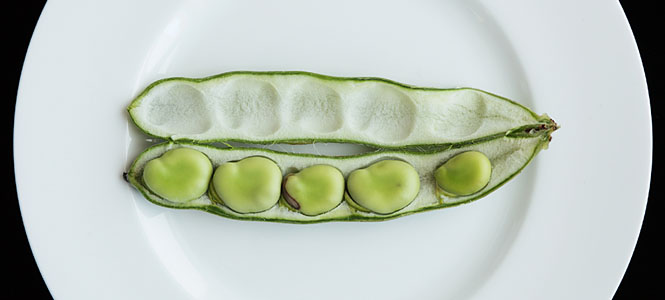
Among the many types of beans, broad beans have a unique appearance. They come in thick, plump pods. When you open a pod, the beans are neatly lined up, nestled in a pure white, fluffy cushion. No other bean is as protectively housed as the broad bean.
Broad beans are structurally fascinating, perhaps because they are delicate and precious, requiring such careful protection. They are also known by the nickname "Otafuku-mame" because their characteristic round, flattened shape resembles "Otafuku" (a traditional Japanese character representing good luck and beauty), and they seem to have various other names depending on the region. In any case, once you shell all the beans from the pod, they take up surprisingly less space, and I'm always a little disappointed every time... even though I know it will happen (laughs).