May 11, 2015
Part 43: Stories About "Eating" – Food Packaging
Part 43: Stories About Food – Food Packaging
Food packaging can be seen as a product's presentation in itself. Some packaging entices purchases, some is all show, and some is packed with age-old wisdom and ingenuity. Looking anew at food packaging reveals many facets...
Narration: Maki YoshidaSummary: Fuyuki TogawaPhoto by Jamandfix
What is Required of Packaging?
Resource recycling, waste separation. Considering limited resources and the future of our planet, these are surely self-evident. Yet, even with environmentalism being so loudly advocated, the excessive packaging of food shows no signs of improvement, which, frankly, is hard to comprehend.
As you know, before supermarkets became commonplace, food was primarily sold face-to-face in small local shops. You'd chat with the shopkeeper while selecting fish or vegetables displayed in baskets or on plates, pay, and place them in your own shopping basket. Wrapping was usually just newspaper, and for items like tofu, you'd bring a pot to the store to buy it.
The modern supermarket style is said to have originated in America in the early 1900s. Customers freely choose what they want from a wide array of products and pay at a single checkout. A trip around the store could fulfill all your needs, from groceries to daily necessities. This convenient self-service, requiring less labor than face-to-face sales, was enthusiastically welcomed by consumers as a rational approach.
The subsequent dramatic development of supermarkets, driven by barcode-based POS systems, is still fresh in our memory.
However, along with self-service came the crucial role of "visual appeal" for packaging. To make products look more attractive, beautiful packaging and uniformly shaped items became desirable. Recently, we've seen containers with false bottoms to make the contents appear more voluminous, and even thin colored wraps to enhance vibrancy. This excessive packaging, pushing the boundaries of fair play, is becoming all too common. A quick trip to the supermarket often results in more trash than food, which is quite a predicament.
Traditional Packaging with Functional Design
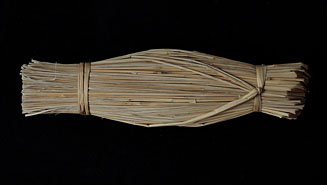
Meanwhile, packaging that embodies age-old wisdom and ingenuity remains.
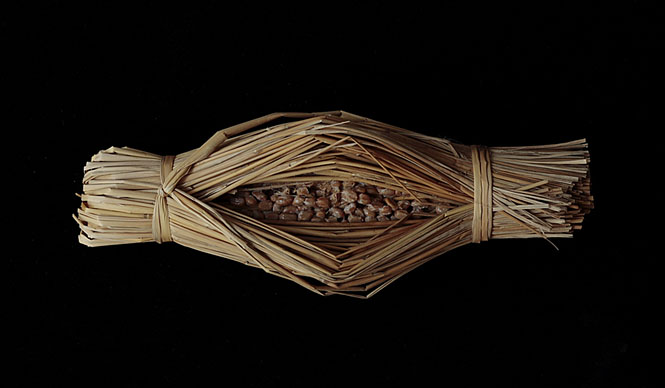
Natō wrapped in rice straw has become a rarity these days, but boiled soybeans, when in contact with the natto bacteria on the straw and kept around 40°C, ferment into natto. The straw maintains an appropriate humidity for the bacteria to respire, aiding fermentation.
Straw is a material used in the manufacturing process that also serves as the packaging itself, and it conveniently aids in transport. The ingenuity of people in the past is truly admirable.
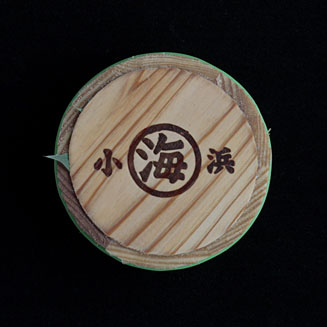
Another favorite is the specialty product from Wakasa Obama, "Kodai no Sasazuke" – a delicacy of small sea bream, filleted and tightly packed in a small cedar barrel. The seasoning of rice vinegar and salt is exquisite, but what's truly impressive is its appetizing appearance (laughs). Furthermore, the cedar barrel has preservative properties and helps regulate the moisture content of the contents, while the bamboo leaves packed with it are said to have preservative and color-retention effects. The sea bream touching the bamboo leaves retains its natural rosy hue until the barrel is opened, further enhancing its appeal.
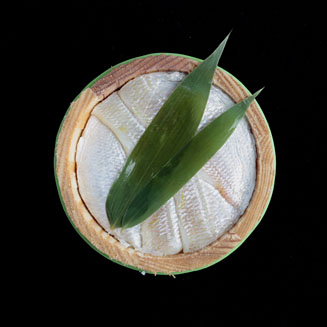
While this sea bream is delicious served as is with wasabi and soy sauce, I highly recommend trying it as "Konbume" (kelp-cured). Wipe the fillets with sake, sandwich them between sheets of dampened kelp, and let it rest in the refrigerator for about an hour. The flavors meld beautifully, creating an elegant dish. Alternatively, finely chop the kelp and sea bream from the konbume to make a delightful side dish, or enjoy it as a wonderfully satisfying topping for ochazuke (rice with tea).
Both the natto and sasazuke demonstrate packaging that is not mere decoration but is intricately crafted from necessary materials in the production process, avoiding waste. This is truly wonderful. However, their exceptional ability to make you think, "This looks delicious!" is what makes them outstanding packages. It seems that good traditional design is indeed being well-preserved in the world of food packaging.