
March 9, 2015
Chapter 19: The Allure of Africa / Accessories I
Chapter 19: The Allure of African Accessories I
African accessories possess diverse characteristics depending on the region and ethnic group, their allure so profound it transcends words, captivating with their depth. One imagines the elegant figures of African women adorned with these magnificent pieces. Yet, upon visiting Africa, one rarely sees women actually wearing them. Considering the widespread poverty in many African nations, the items we purchase are, of course, luxuries, and it's unlikely the women can afford to wear them. Furthermore, as wealthier individuals increasingly favor Western brand accessories or gold jewelry, traditional ethnic accessories are beginning to disappear from their lives.
Nevertheless, the accessories sold in African markets radiate a captivating light for us. Their unique forms, colors, and delicate craftsmanship... Thus, this time, I will introduce the charms of various accessories I purchased in Africa.
Text and photographs by Noriko Asano
Niger
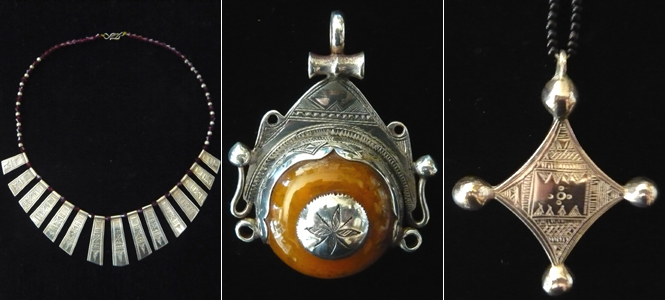
The silver accessories crafted by the Tuareg, the nomadic people of the Sahara Desert whom I have introduced many times before. Each piece, handmade and traditionally passed down, immediately catches the eye. The combination of silver and agate, the inlay work – these are not just African accessories; they are the most captivating accessories for me.
The "Tuareg" model, released in 2003 by a certain famous luxury maison, is said to have been inspired by the accessories they create. Necklaces, rings, bracelets – all possess a refined sensibility that sets them apart from other African accessories. These are exquisite pieces that I would want a sophisticated woman to wear.
Furthermore, many Tuareg accessories are designed to be worn by men. Rings and necklaces without stones, with their unisex forms, are also popular among stylish men.
Kenya
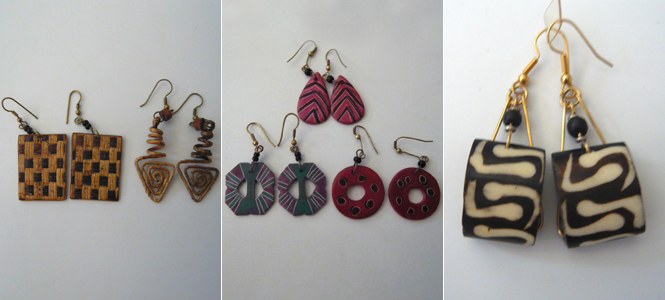
Kenya offers a wide array of affordable accessories made from banana fiber, soapstone, and cow bone, each unique and capable of adding a touch of accent to everyday life.
My recommendation is banana fiber earrings. They are light, natural, and perfect for summer.
Soapstone pieces are vibrantly colored and feature distinctive ethnic patterns. However, be careful, as the stone can chip easily if not handled with care!
Cow bone accessories, with their wild aesthetic, particularly highlight the essence of Africa, capable of instantly transforming one's aura upon wearing them. For cow bone, the abundance of parts also makes it an excellent choice for those who enjoy creating their own original accessories.
Other unique items include "cowrie shells," once used as currency in ancient times, accessories made from shells over 100 years old, and beadwork crafted by the Maasai people.
Ethiopia
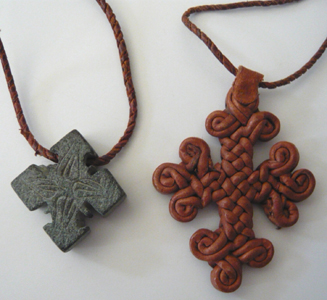
The Ethiopian Cross is a very famous item, also handmade one by one. However, unlike the crosses made by the Tuareg people, they exude a different kind of charm. While leaning towards a masculine style, they could also create an interesting look for women.
Ethiopia has a large Christian population that follows the Old Testament, and many accessories carry religious significance, such as crosses made of stone or leather.
As a side note, the capital city, Addis Ababa, is said to have been named when the Empress, looking down from the highlands, mistook the white steam rising from hot springs for white flowers in bloom. Indeed, Addis Ababa has hot springs, and its name means "white flower"... Solomon, a young man, told me this. I wonder if it's true?
Trade Beads (Drawn Glass Beads)

Although not commonly worn by Africans today, old European beads (mainly Venetian and Czech) that entered Africa as trade beads during the colonial era are exquisite items with collectors worldwide.
It seems that good condition beads are rare nowadays, but occasionally, village chiefs in rural areas are said to possess extremely rare pieces. The prices for such items are astonishingly high for collectors from developed countries... It is said that celebrities, tired of diamonds, enjoy using these beads for hair ornaments, hairpins, and necklaces.
African JAG Project / Noriko Asano
