May 1, 2015
#002 A Chat with Kōmu Yoshida (Yoshida & Co. Designer) (Part 1)
#003 A Conversation with Kōmu Yoshida (Yoshida & Co. Designer) (Part 1)
'M a', a communication tool from Eiichi Izumi, director of the fashion brand 'MINOTAUR'.
'M a' signifies the Japanese concept of 'Ma'—the space between things, the interval between moments, the connection between people. It is a communication tool created with creators worldwide to share people, objects, and events that enrich daily life through fashion, art, and music, thereby crafting creative time and space.
For the second installment of 'M a', we spoke with Kōmu Yoshida, a designer at Yoshida & Co., about the company's origins, their approach to craftsmanship, and future projects.
Text and Photography by M aEdited by Hidenori Kaneko (This Magazine)
Izumi: How did the company originally begin?
Yoshida: It all started when my grandfather, Kichizo Yoshida, at the age of 12, left Samukawa in Kanagawa Prefecture to work for a bag maker in Tokyo as a 'detchi-bōkō', a form of apprenticeship.
He learned the skills of a bag craftsman and then went independent in 1935, establishing Yoshida & Co. At the time, the company was located near a brick warehouse under the railway overpass in Akihabara.
He founded the company, but was soon conscripted into the war, and his family evacuated to the countryside. During that time, he entrusted the bag materials to that warehouse before going to war.
Tokyo was devastated by air raids, but by chance, only that brick warehouse did not burn down. It still stands today. My grandfather miraculously returned, and when he went to the warehouse, the bag materials were still there, so he could immediately
resume work. That was fortunate, to begin with.
Initially, he apparently made everything himself and sold them by handcart. That handcart still exists, though of course, this is all hearsay.
Back then, there was a scarcity of goods, so it seems that if he made ten bags, they would all sell out immediately.
Izumi: Who were the customers?
Yoshida: It seems a variety of people bought them, including members of the occupying forces.
At that time, areas like Ginza and Shimbashi were essentially black markets. My father, who was still young, helped push the handcart behind him.
However, my grandfather was apparently a craftsman with a strong sense of pride, and he only sold items of truly excellent quality. Even if a stitch was slightly off or crooked, he apparently wouldn't sell it, despite having made it.
He apparently argued with my grandmother about this often (laughs).
Izumi: That's remarkable. I feel that's where the identity that connects to today lies.
Yoshida: Yes. So, the starting point was as a craftsman.
He was a craftsman, but also a planner. He designed the bags himself, didn't he? He apparently had many ideas, like 'Wouldn't this kind of bag be good?'
He even apparently obtained patents for some of these ideas.
Izumi: Were business bags the main focus initially?
Yoshida: It seems to have varied.
He also made Boston bags and coin purses by hand. My grandfather's catchphrase was essentially 'eliminate waste.' For example, if you make a large bag, there are always leftover pieces of fabric or leather. He was the type to utilize those scraps.
So, not only large bags, but also small accessories made from the leftover materials. You could call it frugal, or tenacious (laughs).
Izumi: But that story connects to the coin purses that have been featured recently, doesn't it?
Yoshida: Yes, it does.
That's why the small accessory series is helpful for us as craftsmen and as a company. The unusable parts would just be discarded. My grandfather used to say that when I joined the company, 'How much waste is there?'
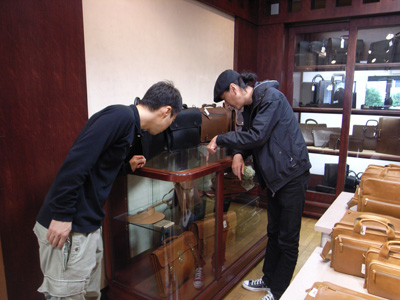
Izumi: I see. Recently, with concepts like ecology and recycling, the core idea is 'mottainai' (what a waste) or 'this can also be used,' which is essentially the essence of creation. Therefore, direction is crucial.
Yoshida: But these things are only said by manufacturers, craftsmen, and those who make things, aren't they? It's a sensibility that people who don't create things can never understand. My grandfather was a craftsman, so he could say such things.
Izumi: I see.
Yoshida: Craftsmen are more amazing than we imagine. They understand which part of the leather is best for handles, for example. Cutting isn't arbitrary; they know that the back part of the hide is the strongest for areas that bear stress. They know all of this.
I'm involved in design, but there's so much I need to learn from the craftsmen.
Izumi: Hearing about the company's early days gives me insight into your current approach to manufacturing. Was there a turning point from handmade bags to the next stage?
Yoshida: My grandfather started as a craftsman, but his designs were likely recognized. Gradually, he began to do business with department stores. In my father's era, foreign products—or rather, it was a time when Japanese people couldn't easily travel abroad—my father went and saw foreign-made bags for the first time. That was in the 1950s.
My father (Shigeru Yoshida) was the second generation. At that time, it was customary for second-generation businessmen in Tokyo to train in Osaka, learning from Osaka merchants. My grandfather said, 'If you're going to Osaka, go abroad instead!' and sent my father overseas. That was around the late 1950s.
So he went to Italy, saw Europe, then went to America and saw New York before returning. This was before the height of the Ivy League boom. When he returned, my father said, 'Japan is 30 years behind foreign brands.' He was utterly shocked and felt they could never compete.
So, he brought back leather and other materials he bought there and experimented, saying, 'Can we make this in Japan with 'Made in Japan'?' My father's era was a time of 'Catch up with foreign countries!', wasn't it?
But it seems they couldn't quite catch up.
Then, in the 1960s, the Ivy League movement, with brands like 'VAN', emerged. My father was acquainted with Kensuke Ishizu and Toshiyuki Kurosu, key figures in 'VAN', and he made bags for them.
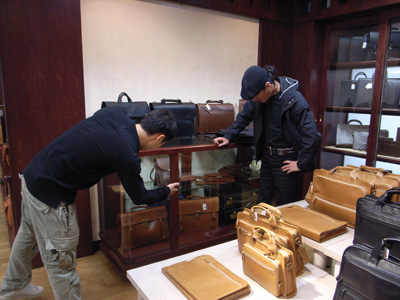
Izumi: Really!?
Yoshida: Yes. They requested it.
Izumi: So, just as you make bags for 'Comme des Garçons' today, were the bags for 'VAN' back then also made by Yoshida & Co.?
Yoshida: Yes. When you think of 'Ivy,' you think of attaché cases, right? My father was the first to make attaché cases in Japan.
Izumi: So you were involved with fashion from that era?
Yoshida: My grandfather apparently collaborated on 'something' with figures like director Akira Kurosawa, photographer Shōtarō Akiyama, and painter Setsu Nagasawa. In fact, there's a famous bag used in Kurosawa's film 'High and Low,' which he commissioned directly from Kurosawa.
Historically, our company is about people. It's always been about human connections.
Craftsmen, material suppliers, and of course, you and I—our manufacturing process always involves people. In my grandfather's time, it was Kurosawa; in my father's time, it was the members of 'VAN'; for (Katsuyuki) Yoshida, it was Beams and Comme des Garçons. It's a chain of human connections.
My father worked with the pioneers of the Japanese fashion scene at the time. When he went to America, he saw new fashion movements like Ivy League, button-down shirts, and short-sleeved shirts.
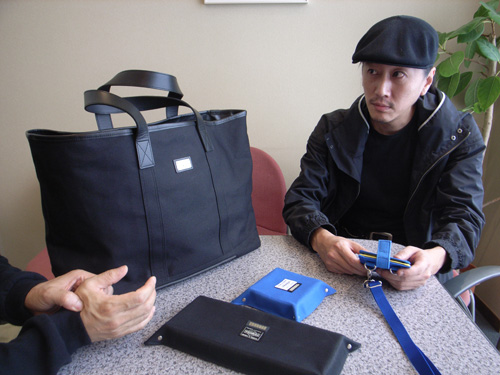
Izumi: More sporty than British traditional?
Yoshida: Yes.
It was the precursor to what we now call Ivy or Preppy style. When he returned to Japan, he showed these shirts to Mr. Ishizu and Mr. Kurosu, who were also keen on pursuing Ivy style, and they reacted very positively.
That led to the request, 'Please make bags for us,' and they started making attaché cases. However, my father said, 'It wasn't an era for designing myself.' He saw products and materials in Italy and thought, 'Can we make leather this good in Japan?' It was an era of imitating foreign products.
Around 1964, when I was born, it was the era of the Tokyo Olympics. Highways were being built, the Shinkansen was being developed—Japan was in the midst of rapid economic growth, and everything, including materials, was booming.
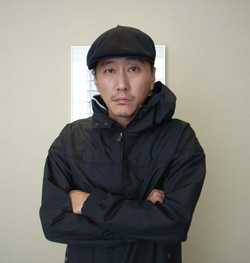
Kōmu Yoshida
Joined Yoshida & Co. in 1987.
He has worked on collaborations with major companies, as well as the classic PORTER SMOKY and CONDITION series. For Fall/Winter 2005, he designed PORTER TANGO BLACK and PORTER MAGNUM.
The urban life line of fashion brand 'MINOTAUR',MUG's products
can be purchased at the web shopping magazine 'Rumors'.can be purchased at.