
May 11, 2015
32nd Session: Masamichi Katayama of Wonderwall Intersects M.Y. LABEL's Maki Yoshida (1)
32nd
Wonderwall Masamichi Katayama × M.Y. LABEL Makiko Yoshida
“Things Men Love”... (1)
This is a conversation between Masamichi Katayama of Wonderwall, the interior designer currently active worldwide who designed the shop for M.Y. LABEL, and Makiko Yoshida of M.Y. LABEL. The two, who pursue creative activities in their own unique worlds and are also friends, brought together their favorite things to discuss everything from their perspectives on selecting objects to their thought processes on design.
Compiled by Fuyuki TogawaPhoto by Jamandfix
Drawn to Objects with a Story
YoshidaIt all started about seven or eight years ago when I happened to read an interview with Katayama-kun in a car magazine and thought, “This guy must be interesting!” Then, through a fortunate turn of events, he designed this “M.Y. LABEL” shop for me… I’m indebted to him.
KatayamaNot at all. Oh, Makiko-san, it’s been such a long time.
YoshidaIt has, hasn’t it? As expected, you’ve brought some strange things with you (laughs).
KatayamaThis one, isn’t it cute? It’s a small, hand-cranked sewing machine for home use, made in America and imported to Japan. It even has a Japanese instruction manual and warranty. See? It says “1860 (Taisho 5).”
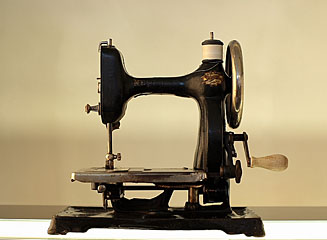
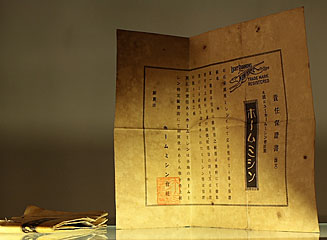
YoshidaYou’re right. It’s lovely. It was actually used. (Picking up the instruction manual) It says “New Home Sewing Machine Company, USA.” This logo is quite Art Deco, isn’t it? Is the wooden case made in Japan?
KatayamaHmm. This style feels Japanese. The blend of Japanese and Western is nice. After this sewing machine was made in America and imported to Japan, they even created a Japanese instruction manual… When I heard that story, I just had to have it. Even though I won’t actually use it. I seem to like things that nobody else would probably buy…
YoshidaI thought you, Katayama-kun, bought things more on instinct, on a gut feeling, but you’re surprisingly analytical (laughs).
KatayamaOf course, there are times when it’s intuitive, but I like an object even more if it has a story. With this sewing machine, the fact that it came with a Japanese case and a translated manual is precisely why I bought it…
YoshidaSo, in a way, the instruction manual is more important (laughs). I see.
Objects Made with Love Have Charm
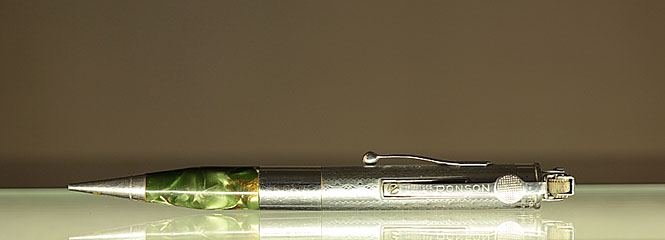
YoshidaWhat I brought is a “lighter with a pen” made by the American company RONSON. I have the full set, including the price list. I love this series. It’s what inspired me to start making pens.
KatayamaIs that so? Does the company Ronson still exist?
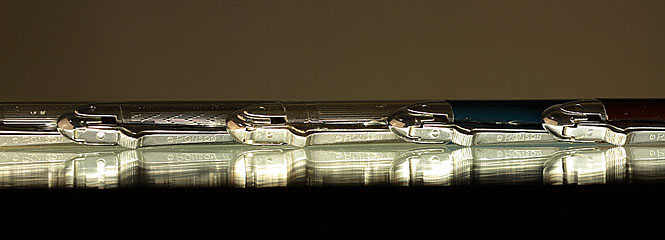
YoshidaYes. I think so. It’s a lighter manufacturer. I first encountered this pen-lighter when I was a teenager, saw it in an old catalog or something, and thought it was so cool. Then, as an adult, I found one in a dingy antique shop in New York and recognized it. So I got one first. Strangely, things like this seem to collect themselves, and I later came across them in Paris and other places. Now I have nine of them. The oldest is from the 1920s, but most are from the 1930s. This pen-type lighter was apparently made by Ronson for only about four or five years.
It seems I really like various objects made in the 1930s and 1940s. They have an overall elegant feel…
KatayamaThat era was when design still had a subtle sensuality. It still retained that sense of being made for the bourgeoisie… Jean-Michel Frank’s furniture is similar. In the 1930s, furniture wasn’t mass-produced yet; each piece was made for a specific client. In class-conscious France, decorators for the bourgeoisie shone brighter than interior designers. Architecture and furniture also changed drastically from the 1950s onwards.
YoshidaI see, I understand. I feel that today’s manufacturing is too focused on pleasing everyone, catering to popular tastes. It’s marketing-first. Objects from around the 1930s lacked that entirely; they were made with a sense of personal preference and enjoyment. I really like that feeling of, “Buy it if you like it” (laughs).
Beauty Where Function Naturally Becomes Design
Yoshida(Picking up a rusty object) What on earth is this? It has a very intricate shape.
KatayamaThis is a “gutter filter” used in Paris around 1800. It prevents leaves from clogging the gutters. A Japanese person would probably make this part out of mesh, right? It’s inside the gutter, so it’s not visible, but that’s the French for you. The function naturally became the design. And I like the way it has naturally rusted over many years of exposure to rainwater. It must have been a common item in Paris back then.
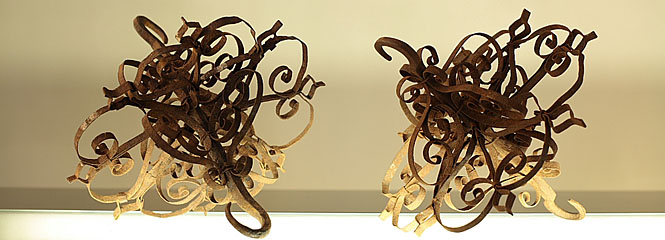
YoshidaYou really do love stories, don’t you? (laughs) Your face is lighting up.
KatayamaIt’s useless to have, but if it has a story, I can’t help but be intrigued. I want it because I can imagine the mood of the era, the scenery, and the life surrounding the object.
Everyday Good Design: Special Interview
Wonderwall Masamichi Katayama × M.Y. LABEL Makiko Yoshida: “Things Men Love”...(2)To be continued
Wonderwall Masamichi Katayama × M.Y. LABEL Makiko Yoshida: “Things Men Love”...(2)To be continued

Wonderwall Masamichi Katayama
Interior Designer
Born in 1966. Established Wonderwall in 2000. He handles architectural design direction, product design, and more, earning high international acclaim for his unique sense of balance and design construction skills. His first collection of works, “Wonderwall Masamichi Katayama Projects,” was published by an overseas publisher in 2003. He is currently preparing his second volume.
Official Website | http://www.wonder-wall.com/