May 1, 2015
Chapter 15: Journey to Africa | Preparations
Chapter 15: Let's Go to Africa | Preparation
I've written a lot about Africa so far. For those of you who have become interested and might want to visit, I'd like to write a series on the basic knowledge, how to enjoy, and precautions for traveling to Africa independently.
However, the African continent has 53 countries, with numerous ethnic groups within them, and languages and cultures vary from place to place, so please take this as a "reference only."
About Visas
Most African countries require a visa to enter. While you can obtain one in a neighboring country, it can be quite troublesome, sometimes requiring a letter from the Japanese embassy or a letter from a friend in the destination country. Therefore, it's best to get your visa in Japan from the embassy of your destination country if one exists there. Visa fees vary by country but are often quite expensive. Additionally, some countries take about a week to issue a visa, so apply early.
Application documents differ by country, and you may be asked to provide a profile, accommodation details in the destination country, and flight tickets. Applications are generally filled out entirely in English. For countries where French or Spanish is the official language, you might encounter English words not commonly used in English-speaking countries, so it's advisable to have a dictionary. Also, visas for many African countries take up an entire page of your passport, so if you plan to visit multiple countries, be sure to check how many pages you have left!
While visas can sometimes be obtained at airports or border crossings, be aware that you may occasionally be subjected to unreasonable demands and requests for bribes.
Since there are Japanese staff at embassies in Japan, if you have any questions, they can provide helpful information.
For the countries I've visited, Morocco, Senegal, and South Africa do not require a visa. Malawi and Uganda allow visa acquisition upon arrival at the airport. For Kenya, Mali, Ivory Coast, Nigeria, Ethiopia, Eritrea, and Mozambique, I obtained visas in Japan.
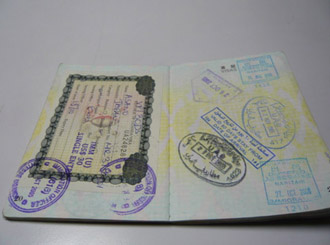
Visa
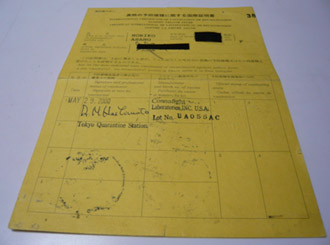
Yellow Fever Certificate
Yellow Fever Vaccination
The Yellow Fever vaccination is valid for 10 years, so it's advisable to get it.
While not all countries require it, many demand proof of Yellow Fever vaccination (the "Yellow Card"). It requires an appointment and becomes valid 10 days after inoculation. Depending on the season, appointments can be scarce, so it's best to book and get vaccinated early.
Quarantine station information is available at http://www.forth.go.jp/tourist/vaccine.html
Air Travel
To travel from Japan to West Africa, transiting through Europe is the easiest option. You'll likely spend a night in a European city, and from there, it's only a 5-6 hour flight to Africa, which is much easier on your body. When traveling to Africa, it's crucial to take care of yourself as much as possible!
Personally, I book my flight to Europe in Japan and then purchase the onward ticket from a discount ticket shop in Europe. For flights from Europe to West Africa, depending on the destination, I use Air France for former French colonies, and KLM or British Airways (BA) for former British colonies. Off-season fares can be quite low. Agencies like HIS offer services in Japanese, which can be helpful. If you have time before your trip, you can pay an additional fee to have tickets sent to Japan.
When traveling to Malawi, the combination of Singapore Airlines and South African Airlines is by far the best. The legroom is generous, the service is excellent, and the layover times are short. Cathay Pacific is also not bad, but they often have many noisy Chinese tour groups.
Recently, Emirates also flies to African countries via Dubai. However, when departing from Japan, the flights usually leave from Kansai Airport, and the layover times from Dubai to African countries are long, with airport hotels being prohibitively expensive, so I don't use them often, despite the decent service. Aeroflot offers cheap tickets, but the connections are poor.
Also, all airlines have mileage programs, so be sure to collect them. You'll accumulate miles quickly when flying to Africa. I've used them multiple times to upgrade from economy to business class or to get free tickets.
Luggage on Airplanes
Crucially, always carry important items in your hand luggage. The basic rule is: "Anything vital to your survival, keep it with you!" This goes without saying for valuables, but if you have a chronic illness, carry your medication in your hand luggage as well. Unlike developed countries, you can't always easily find what you need, and in some places, even national hospitals may run out of medication.
Especially during long layovers, your checked luggage might be damaged, its contents stolen, or even the entire suitcase lost. Therefore, never pack medication in your checked baggage.
I once used a suitcase with a combination lock, and someone forced it open with a screwdriver or similar tool, stealing only the contents (on Aeroflot). The exterior showed no damage, so I didn't realize anything was amiss until I reached my hotel. When I tried to open the suitcase at the hotel, the combination lock wouldn't work. I had to pry it open with a flathead screwdriver. Everything that seemed valuable was gone. Incidentally, medication can fetch a high price.
In places like South Africa, there's a service (for a fee) to wrap your checked luggage in plastic wrap.
Below is a breakdown of my luggage and belongings when flying to Africa, which I hope you'll find helpful.
(During African JAG Support)
■ Waist Pouch
Airline tickets, cash, traveler's checks, passport, credit cards, mobile phone, paper with emergency contacts and personal information, electronic dictionary, medication for chronic conditions, mask, lip balm, tranquilizers, sleeping pills, earplugs, eye mask, ballpoint pen, handkerchief, tissues, etc.
■ Carry-on Backpack
Traveler's checks, cash, credit cards (from different companies than above), antibiotics, anti-diarrheal medication, malaria prophylaxis, cold medicine, fever reducers, stomach medicine, probiotics, laxatives, iodine gargle, disinfectant, bandages, insect repellent wipes, overseas travel insurance certificate, paper with emergency contacts, doctor's note explaining medical condition and treatment, T-shirt & underwear (1 day's supply).
■ Carry-on Suitcase(JAG/Reporting Trip)
Cash, passport copies, video camera, digital camera (1 DSLR/1 compact), computer, HDD, memory cards, voltage converter, extension cord, charger, lenses, and other items.
■ Checked Luggage
Change of clothes, sandals, insect repellent spray, mosquito coils, spare batteries, 3-year roasted green tea, retort pouches, towels (2), water purification straw, poison extractor (available at Tokyu Hands), spare medication, passport copies, and other items.
Airports in African Countries
One thing to be cautious about is airports in African countries.
Firstly, upon entry, your luggage is thoroughly checked, and it's common for officials to find fault and demand money for various reasons (e.g., Nigeria, Malawi, Ivory Coast). Sometimes, your passport may be confiscated and money demanded (Nigeria).
The same applies to departure. What requires particular attention upon departure is the currency export. Many African countries have restrictions on currency export. This applies not only to local currency but also to US dollars in some places. However, this information is not provided when obtaining a visa at the embassy, and it's often poorly communicated, sometimes only written in small print on a baggage check wall after passing through immigration at the local airport. This is particularly frustrating.
Just recently, when I went to Mozambique, during baggage check, I was suddenly told about this regulation and almost had my cash confiscated. I was entering for JAG research and planned to revisit, so I had about $1000 worth of local currency. They tried to confiscate it. I said, "Absolutely not! If that's the case, I'll exchange it all back." They replied, "That's not possible." It escalated into an argument, causing a scene. Eventually, a police officer intervened and agreed to let me go exchange it, but that kind of tactic is cowardly and completely wrong. Incidentally, the Caucasian man behind me paid a bribe to the baggage checker to get through.
While it might be true that paying bribes to airport staff on arrival and departure could smooth things over, doing so only leaves a negative impression of the country and discourages repeat visits. This is also true for Japanese airports, but the airport is often a foreigner's first point of contact with a country. A negative experience at the airport can sour one's overall impression of the nation. I believe airport staff in many African countries should be held to stricter standards. Furthermore, African embassies in Japan should properly inform visa applicants about the precautions foreigners need to take. Simply handing out brochures that only highlight the good aspects to attract tourists is insufficient.
Incidentally, I have no desire to visit Mozambique again.
Choosing Accommodation
Hotels in Africa range dramatically in quality and price, from around $1 to $500 USD per night. It's best to think of it as paying for security.
However, when I stayed at the Sheraton Hotel in Nigeria (around $300 per night), I was dining at the restaurant and presented my AMEX Gold card. The waiter asked to see my identification to verify it was mine and took my passport. While it was resolved at the time, a few weeks later, when I tried to use my AMEX at a hotel in London, the transaction was blocked. Upon inquiry, I was told, "We blocked it because a large number of mail-order purchases were made from Nigeria, which seemed suspicious." This was the only time I used my card during that trip, at the Sheraton Hotel in Nigeria.
I was quite surprised. Lagos, Nigeria, is notoriously unsafe. At that time, it was considered the only safe and reliable hotel, frequented by dignitaries from around the world. For such an incident to occur there...
Since that incident, I have not stayed at the Sheraton in Nigeria. Of course, the reason isn't solely the fraudulent card use; their subsequent handling of the situation was infuriating. If it were a cheap hotel, I might think "it can't be helped," but this was an extremely expensive hotel in Africa, where "safety" and "reliability" are its selling points. They should have handled my complaint properly, but they did nothing. It's unacceptable...
In recent years, I've found hotels in cities for $40-$150 per night and in rural areas for $20-$80, and I haven't had many bad experiences. In fact, hotels in Africa at these prices are generally mid-range to upper-class. I usually ask to see the room beforehand, but there are rarely any problems.
If you're staying in budget accommodation, here are points to check when viewing a room: Is it clean? Does the toilet flush? Is the shower working? Are there toilet paper and bath towels? If it's hot, is there air conditioning or a fan? Is the mattress excessively saggy? And be aware of mites, fleas, and bedbugs in budget hotels. If you plan to stay in budget accommodation, it's a good idea to bring a plastic bedsheet (available at 99-cent stores in the US).
Generally, unless it's a high-end hotel, bath towels are rough, and shampoo is not provided. While soap is usually available, I've never seen toothbrushes or toothpaste, even in luxury hotels.
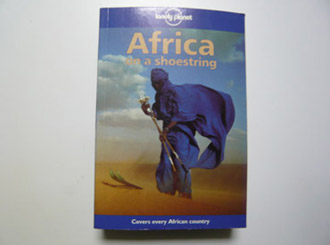
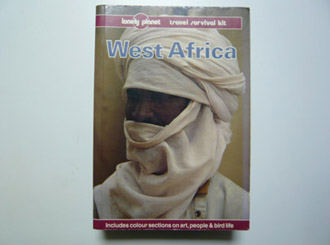
Guidebooks published in Japan often lack useful information about hotels. However, Lonely Planet's books on Africa provide very detailed hotel listings. I own the English version, but they seem to have released Japanese versions recently, so check them out at bookstores! (Though I'm unsure if they have Japanese versions for Africa).
Nowadays, with the internet, it's best to research in advance. However, for hotels, even staying at a decent one for the first night and then searching locally the next day usually works out. Asking a taxi driver for recommendations within your budget is also an option.
Accommodation is extremely important in Africa! It's a place to gather information, and to have a good trip, you need to take care of your body. Getting sick in Africa is tough, losing luggage is problematic, and most importantly, it's too late once you're caught up in a crime!
So, this time I've written about "Let's Go to Africa / Preparation." Next time, I'll cover how to enjoy your trip locally and other precautions. Please look forward to it.
African JAG Project / Noriko Asano
Addendum: Oh, and I have a complaint to make. Frankly, the guidebooks on Africa published in Japan are dangerously outdated. It's unthinkable to sell information that's nearly 10 years old for places with unstable situations like Africa. Such books are utterly useless as a reference!
Also, please use the information written here only as a reference and always verify it yourself. Try to obtain the most up-to-date information possible! Beyond that, it's up to your own judgment and responsibility.