May 1, 2015
Chapter 13: 2007 International AIDS Day
Chapter13: 2007 International AIDS Day
Unice Café × African JAG… Photo Exhibition: "Winds of Africa"
December 1st… International AIDS Day
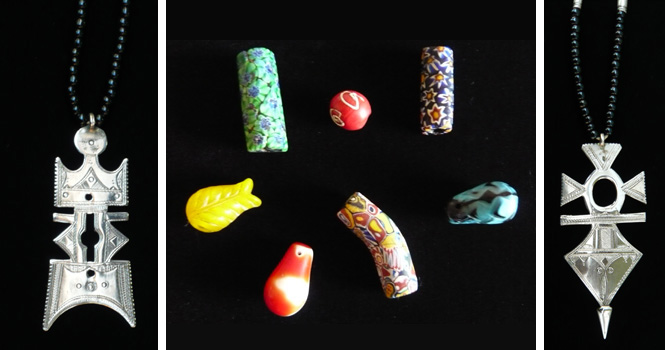
This time, the "African JAG Project," in which I am involved, will be holding a photo exhibition of African children we met through our support activities, in collaboration with "Unice Café" in Daikanyama, Tokyo, from December 1st to 3rd, as part of our International AIDS Day initiatives.
Children who help each other and live their lives to the fullest, no matter how harsh their circumstances. We want to share the smiles of these children with you all.
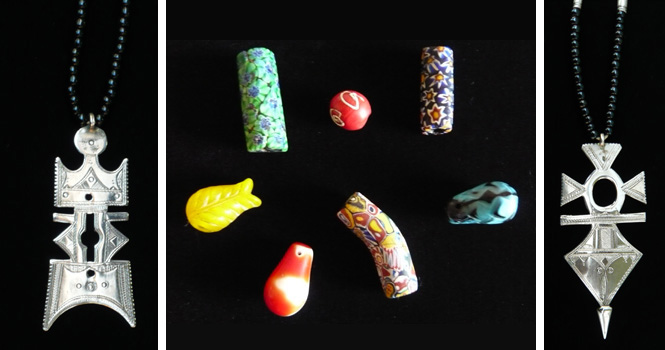
In the sales area at the venue, you can purchase a variety of items, including CDs from African JAG, a collaboration DVD released recently with top Japanese skaters and African JAG, silver accessories from the Tuareg, a nomadic people of the Sahara Desert, colorful West African fabrics, Senufo standing figures, and postcards featuring art from the Osogbo school in Nigeria. Most of these are one-of-a-kind, handmade items. Please come and experience these delicate, high-quality crafts made by African artisans firsthand.
A portion of the proceeds from sales will be donated to African JAG and used for local support.

We hope that by enjoying a drink at the café, you can feel closer to the lives of people in Africa, and perhaps turn your attention, even just a little, to the realities behind the smiles of African children.
If you have the time, please visit "Unice Café" during the exhibition period.
Please note that "Unice Café" will be open as usual during the photo exhibition, and you are welcome to enjoy food and drinks.
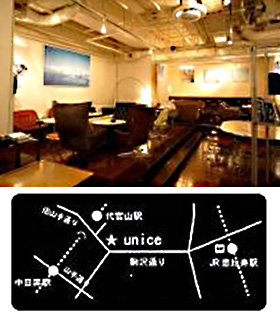
Location: Unice Café (B1F, Daikanyama UNIT, Tokyo)
Dates: December 1st - 3rd (Opening hours vary each day. Please see below.)
December 1st (Sat) = 9:00 PM - 5:00 AM
December 2nd (Sun) = 11:30 AM - 4:30 PM / 9:30 PM - 2:00 AM
December 3rd (Mon) = 11:30 AM - 5:00 AM
Address: Za HOUSE Bldg. B1F, 1-34-17 Ebisu Nishi, Shibuya-ku, Tokyo
Tel: 03-5459-8631
HP: http://www.unice.jp/
HIV/AIDS and the Current Situation in Japan
/>December 1st is International AIDS Day.
The WHO established "International AIDS Day" with the aim of promoting AIDS prevention and eradication, and fostering accurate knowledge and understanding of AIDS through global campaigns.
Member countries of the WHO have achieved significant results through various campaigns, events, and lectures.
However, there is one developed country where the number of AIDS patients is increasing… and that country is Japan.
Infections among homosexual men, and unprotected sexual activity among young people with multiple partners. According to the Ministry of Health, Labour and Welfare's 2006 report, 3.7 new HIV infections occur daily. However, in Japan, where blood testing is not widespread, this figure is far from reliable, and it is said to be nearly ten times higher in reality.
The reality of AIDS that remains hidden.
The reasons for this are likely "prejudice" and "discrimination" based on misconceptions about HIV/AIDS, as well as the image of "AIDS" as a "death sentence."
Reflections on supporting AIDS patients in Africa
I had previously heard that discrimination against AIDS patients and their families in Africa was severe.
However, upon visiting, it seemed that due to the sheer number of HIV/AIDS infections, people were instead helping each other to survive. Children whose parents died of AIDS and who were infected through mother-to-child transmission are cared for by the villagers as if they were their own, treated the same as other children. They laugh together, cry together, and are disciplined when they misbehave.
Once, a child named Ale, infected through mother-to-child transmission, injured herself. Her wound worsened due to immunodeficiency, and she was close to death. At that time, many villagers expressed concern for Ale's condition and urged me to "Please let her go to the hospital!"
Later, when Ale's wound healed and we met again, we heard cheers of "That's great, Ale!" from all around the village. Ale nodded, looking truly happy.
Everyone is poor. One in three people is infected with HIV/AIDS… They have no choice but to help each other.
But there is "something" more than just that reason. It might sound naive, but perhaps it's "love"…
If you had HIV/AIDS, could you face it?
Now, what if this were Japan? If you knew you were infected with AIDS, how many people could you tell?
In my case, given my past, I feel there's nothing to hide now, and I believe that "how one lives" is "expression," so I'm probably an exception to the norm. But what about the average person?
First of all, how many "friends" do people really have? Not just acquaintances, but true friends.
Whether they are seniors, colleagues at work… how many people can you trust, people to whom you can show your tears…?
In Japan today, human relationships are breaking down… cold parent-child relationships, selfish romantic relationships, superficial friendships… Am I the only one who feels this way?
In such a situation, if you were infected with HIV/AIDS, would you be able to tell anyone?
Afraid of being ostracized, even though you desperately want to lean on someone, wanting them to say "It's okay!"… would you pretend everything is fine, force a smile, and fight the disease of AIDS alone? That would be too lonely.
If human relationships were smoother, if there were people you could confide in, I believe more people would be able to confront HIV/AIDS. Don't you think so?
HIV/AIDS Treatment is Advancing Rapidly
Also, there seems to be a tendency to view AIDS as a uniquely terrible disease.
"AIDS" = "Death." This was common thinking in the past, but today, HIV/AIDS treatment is advancing rapidly. It is even said that in the near future, it may no longer be an incurable disease.
Admittedly, there is no specific cure for AIDS at present. However, by consistently taking medication, it is possible to prevent the proliferation of HIV viruses for a considerable period. At the very least, the rapid progression from HIV to AIDS has been eliminated. Compared to other intractable diseases, the research is progressing at a remarkable pace.
In fact, in Africa, patients whose AIDS had progressed due to poverty and inability to access medical care have shown astonishing recovery after receiving support from African JAG to go to the hospital, obtain medication, and take it consistently. People who were bedridden can now walk normally, and some have returned to work.
Therefore, the notion of "AIDS" = "Death" is incorrect.
Get a Blood Test!
It is said that it takes an average of 7 to 10 years for AIDS to develop after HIV infection. However, during this incubation period, the HIV virus is still capable of infecting others. Therefore, anyone who has even the slightest concern or a reason to suspect infection should get tested as soon as possible. If you were to transmit the virus to someone you love without knowing you were infected, you would surely regret it.
Nowadays, test kits can be purchased online, so it might be a good idea to start with one of those. Public health centers and certain testing facilities offer anonymous and free testing.
Condoms
Also, when engaging in sexual activity, if it's with a specific partner, and both test negative, there's no problem. But if that's not the case… for example, if one partner is positive, or if you have sex with multiple partners… you might not like it, but… please use condoms!
African JAG Project / Noriko Asano