May 11, 2015
Part 20: Tales of "Clothing" - Backpacks
The 20th Installment
Tales of 'Clothing' – The Backpack Edition
Autumn deepens with each passing day, and the fall foliage will soon be at its peak. I'm fond of picnics, so on my days off, I often shoulder a backpack and head for the mountains. Inside, I pack a blanket, sandwiches, and a bottle of wine… A drink in the crisp autumn air is truly special. But enough about that; this time, I want to write a bit about backpacks.
Photo by Jamandfix
Designing for Survival
Modern hiking packs, adorned in fluorescent colors, showcase various functions born from technological advancements. For instance, there's the ability to drink from an internal reservoir through a tube. While it might seem lazy, in the harsh conditions of climbing thousands of meters, even the small act of drinking water can be bothersome and lead to fatigue.
Similarly, the belts that secure the waist and chest, and the mechanisms to cinch the main compartment closer to the body, can be seen as details aimed at 'minimizing fatigue.' Like military gear, the functions of a hiking pack are about preserving life. Consequently, the seriousness invested in product development is exceptional.
However, would it be unfashionable to wear such a high-performance pack for a mere picnic hike? Rather than making a statement with a garish fluorescent bag, I'd prefer one with a more natural texture to enjoy communion with nature.
Ingenious Structures Born from Snowy Environments
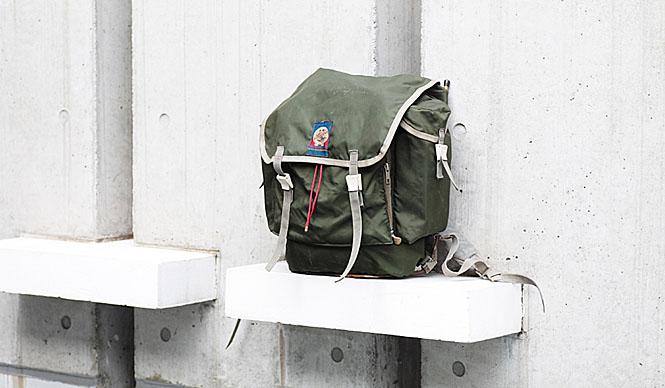
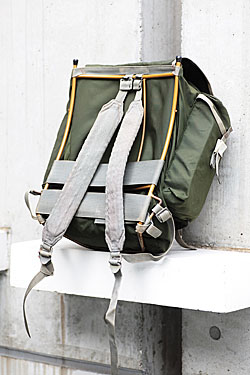
The photograph above shows a vintage piece from a now-defunct Norwegian brand (year unknown). I bought it a few years ago at Tamaki Sports, a niche mountaineering shop in Kanda, instantly captivated by its simple design. The logo features a skier, and indeed, in Scandinavia, where skiing was a primary mode of transport, ski brands were synonymous with outdoor brands.
The structure is extremely simple, yet it's remarkably well-made. A band at the bottom of the curved metal frame prevents the back from direct contact with the bag, creating space for heat and moisture dissipation. Sweating on a snowy mountain is a matter of life and death, which is likely why such a structure was developed.
A Sweater, Tweed Trousers, and a Canvas Bag!
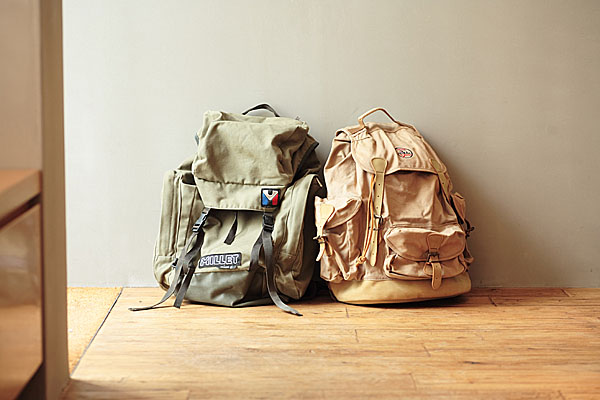
Next, these are retro canvas bags from Millet, a classic brand for mountaineering gear (the top right photo shows a deadstock item). There's nothing particularly noteworthy about their functionality, but as I mentioned, I'm not an alpinist, so I don't need such advanced features. With tweed trousers, classic trekking shoes, and a sweater, a more casual bag like this fits the style perfectly. If prioritizing sentiment, a canvas backpack is ideal. Its weakness in rain is also a non-issue, as I tend to stay home on rainy days.
Incidentally, there are many well-designed military canvas bags, and I was quite into them for a while. However, used ones can have bullet holes or strange stains that are too authentic, making them intimidating to buy now. So, be very careful with military surplus…
Modern Nylon Bags Can Be Chic in Black
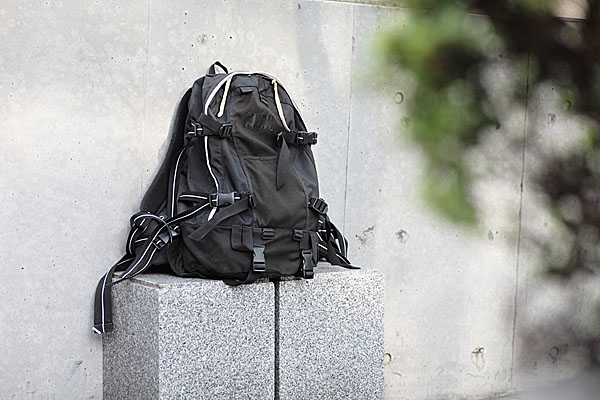
The last one is a bag from General Research, which I find useful for ski training. When skiing, I wear modern materials like Gore-Tex, so a canvas bag wouldn't match. Yet, I dislike overly flashy fluorescent backpacks, which is why I chose this chic black one. Although it's a fashion brand's product, its structure follows that of serious outdoor brands, so I have no complaints about its functionality.
The reason for wearing a backpack during skiing is that when training, you often ski the same course repeatedly. Carrying cold-weather gear and other equipment to the summit beforehand allows for easy access when needed, which is convenient.
Then, you carry it back down on your descent. That's all for this little anecdote.
Next time,Tales of 'Living' – The Chair Editionit will be.