Chapter 12: The Reality of African Children - I
Chapter 12: The Reality of African Children - I
This marks the 12th installment of the "Winds of Africa" series in OPENERS. Exactly one year has passed.
I first set foot on African soil in 1994, and since then, I have visited 12 African countries more than 30 times, learning something new with each trip. Experiencing the fundamental essence of "living" firsthand, something I could never have grasped through bookish learning, has been profoundly meaningful for my life ahead.
Especially since starting "African JAG," I've connected with many children and learned so much from them. This time, I'd like to share a part of that experience...
Text and photos by Noriko Asano
The Smiles of Children
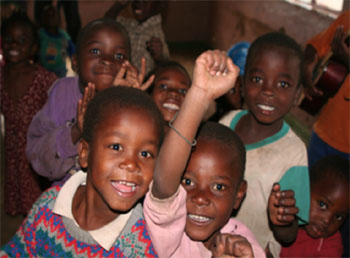
Children in the Orphanage
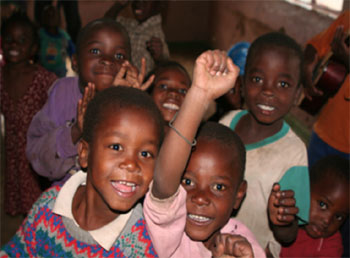
Every time I visit Africa, I am struck by the children's sparkling smiles and their vibrant life force, returning home with renewed energy.
Even in tattered clothes or emaciated, their energetic running barefoot fills me with an overwhelming sense of power.
Many children are orphans.
Many children cannot go to school. Even without having eaten anything all morning, they greet you with a smile if you meet their eyes.
As I walk through the village, many hands reach out to hold mine. Even without a common language, smiles can convey understanding.
Each time, I ponder what I should do to ensure these children never lose their smiles.
Many African nations depend on developed countries. Many politicians who only care about their own steak dinners. Power-holders who resort to force. Villagers full of lies. Hands reach out, pleading, "Please, please..." It's disheartening at times.
"This is your own problem!!" I exclaim, my voice rising. I vow never to return. But then, the children are there. There are smiles that offer salvation.
And so, I return to Africa.
Give Me a Condom!
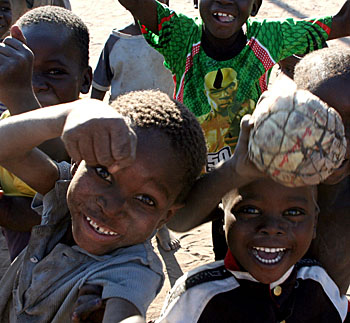
Children playing with soccer balls made from condoms
As I drive through the villages, children call out from all directions, "Give me a condom!"
For a moment, I was bewildered. "What is going on?" But the children were perfectly serious.
When I asked, "What do you use them for?" they replied, "To make soccer balls."
African children love soccer. No matter which country I visit, I see them chasing a soccer ball barefoot.
Of course, only a small number of children can afford a real soccer ball. They cherish even worn-out balls with peeling leather.
I once encountered a ball made from tightly rolled long leaves in a refugee camp. It didn't bounce at all.
It was hardly suitable for soccer.
So, I tried playing catch with them. The children laughed at me. But the balls I saw this time were made from condoms. They would tie two condoms together, inflate them, seal the opening, and then cover them with about five thin plastic bags, the kind used at supermarkets. They'd tie it all together with string to shape it. These balls bounce remarkably well. All the children in the poor villages play soccer with these balls.
They are resilient. I don't dislike these children! But... is this really okay?
This time, I couldn't help but think. While adults are facing a crisis of national survival due to AIDS infections from unprotected sex, these children are making soccer balls out of condoms...
I Want to Go to School...
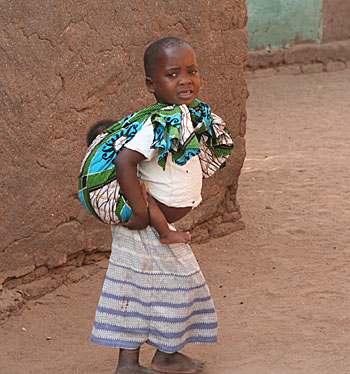
A five-year-old girl carrying a baby on her back
In poor villages across Africa, many children are unable to attend school, instead being sent to work or made to care for infants.
Boys are often made to help on farms or with fishing.
For girls, the main tasks are housework and babysitting.
While "helping out" sounds pleasant, it's vastly different from helping in developed countries; it is true "labor."
These children work from dawn till dusk, collapsing from exhaustion at night.
Naturally, they cannot go to school. I have met many such children.
Their development is severely stunted.
A 13-year-old might appear to be only about seven years old compared to a child from a developed country.
When I talk to these children, they all say, "I want to go to school."
I suspect most children in Africa have never even seen a pristine white notebook. Come to think of it, I once saw a child in Uganda with a notebook made by stapling together scrap paper (advertisements or the backs of used pages) that had been donated by Japanese junior high school students.
This child showed me the handmade notebook with great care. The notebook was filled with the alphabet... He said he was about to graduate from primary school. He wanted to go to secondary school, but his mother had passed away, his father had abandoned him, and he couldn't continue his education. "I want to study..." he said, looking at me with earnest eyes.
This is for Sale...
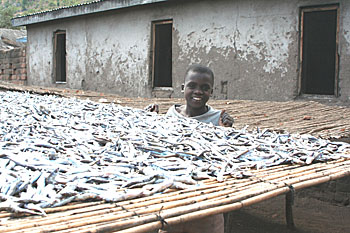
After helping with the fishing
Despite catching so many fish, they rarely make it to the children's stomachs.
"This is for sale..." a small boy murmured.
During a drought, I visited a village where children were dry-roasting a few dozen kernels of corn in an aluminum pot. That was their only meal for the evening.
Fish are caught in this village too. Yet, the children are always hungry.
The children told me, "Being fat is a sign of wealth."
Back in 1994, as someone raised in the material civilization of "Japan," I found the reality of Africa at that time almost unbelievable.
To think that such different worlds existed simultaneously on the same planet. But this is their reality. I felt as if the ground had been pulled out from under me. Since then, I have continued to visit the African continent.
But lately, I've been thinking. In my home country, at the forefront of material civilization, the news daily reports "parricide," "infanticide," "suicide," "hikikomori," "bullying," "politician corruption," and "scandals involving money." Something is wrong. It seems like a spiritual sickness. Returning to Japan makes my heart heavy. I have never felt this way in Africa. Which place is truly happier?
Africa faces a multitude of problems. It's hard to even know where to begin. However, for some issues, the causes are understood. Therefore, with wisdom, knowledge, and a little help, even if it takes time, I believe progress towards solutions is possible. Yet, from an outsider's perspective, the dark aspects of my own country, which may appear happy at first glance, seem to have deep roots and present more serious challenges.
Speaking of which, at the "African Market Cafe" I used to hold annually in Tokyo during the summer, we invited African drum and dance masters and their children to interact with Japanese children. Participation was free and open to all, so many adults also joined. Many of the Japanese children were those struggling with school refusal or social withdrawal. Listeners of the radio show I was DJing at the time also came from all over the country. Initially, the Japanese children seemed poor at communicating with others, and I wondered how it would turn out.
However, as they played the drums together, smiles gradually appeared, and by the end, they were laughing out loud. Of course, we couldn't communicate with the African children through words. But they exchanged addresses through gestures, took photos... Some children came every single day of the event. Children who were completely silent at first began to talk animatedly with their new friends. Watching that scene, I felt that this was the right approach. Instead of forcing open closed hearts, perhaps music, dance, art, and smiles... these things naturally open the heart. Perhaps it is the unreservedly bright smiles of the children from Africa's impoverished villages that can heal the "darkness" that has taken root in the hearts of Japanese people.
Five people will be randomly selected each month from those who send feedback, opinions, or questions about my content page "Winds of Africa" to receive a gift of African accessories, crafts, CDs, fabrics, etc.
To apply,herePlease send an email with the subject line "Winds of Africa Gift Application," including your thoughts and requests for OPENERS.
*Winners will be contacted at their registered email address. Please ensure your address is entered accurately. (OPENERS Editorial Department)