March 9, 2015
Ryuichi Sakamoto | Part 1: Asserting Fortune-Telling
Part 1: A Definitive Statement on Fortune-Telling
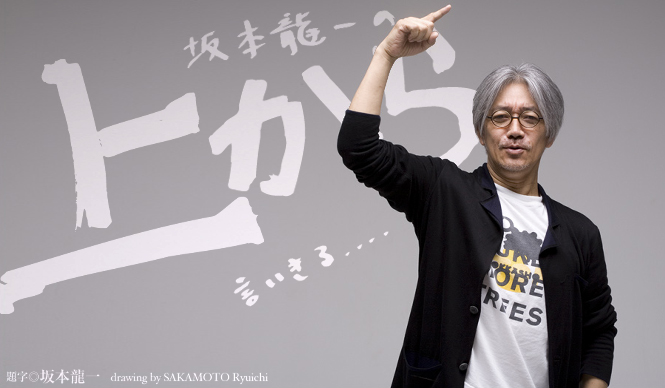
Introducing a highly anticipated new series, Ryuichi Sakamoto's "From Above" Declarations...
This is a corner where the Professor, who declares "I have no worries!", resolves everyone's concerns.
Please, pour out your everyday anxieties and questions to the Professor with all your might!
For this first installment, we have a special question from Masafumi Suzuki, Editor-in-Chief of "ENGINE" magazine.
Summary by OPENERSphoto by Jamandfix

Fortune-telling seems to be quite popular these days.
I've never really engaged with fortune-telling, and
I don't intend to in the future, but
what about you, Sakamoto-san?
And what are your thoughts on fortune-telling itself?
Masafumi Suzuki

I Met Mongolia's Foremost Fortune Teller
I don't really understand fortune-telling either.
Magazines always have such columns, there are "Mothers of" everywhere in town, and it's often on TV, but I have absolutely no interest in any of it.
However, last year I had a reading from a "Yuta" (shaman) on Amami Oshima, said to be the most accurate, and when I went to Mongolia, I met the country's top fortune teller. I was interested from an ethnological perspective.
For the Mongolian encounter, I traveled all the way across the steppes, but this fortune teller was incredibly haphazard (laughs).
First, the elderly fortune teller said, "The gods are angry."
"The order of offerings is wrong."
"Why didn't you offer the money first?" (laughs).
I had contacted the fortune teller in advance, and they had instructed me to prepare "money," "candy," and "gasoline" as offerings for that day.
Candy, I could understand, as there aren't many sweets on the steppes. Money, well, that's fine too. But why gasoline? When I got there, I saw the fortune teller's grandson had a motorcycle (laughs).
Since the gods were apparently angry, I restarted the ritual and offered the money, candy, and gasoline in that order. She seemed to calm down, and finally gave me a reading.
I asked, "I'm concerned about environmental issues, so what will happen to the Earth if things continue like this?" But the elderly fortune teller didn't understand the question.
"Hmm, in Mongolia, a new president will emerge..." she said. I wasn't particularly asking about Mongolia (laughs). But for her, Mongolia is the "Earth," so she doesn't have the concept of the Earth as a whole.
Incidentally, I asked her what kind of questions ordinary Mongolians usually ask.
Apparently, most questions are about "where are the lost livestock?" She can see, "They are over that mountain," (laughs).
The Relationship Between Science and the Non-Scientific
Rather than fortune-telling or past lives, I have an anthropological and folkloric interest in divination and shamanism.
For example, Newton, also known as an alchemist, was scientific in his approach to mathematics and observation, but he also had astrological aspects. In Newton's era, science and astrology were not yet separated.
This was true in Europe, and even earlier in civilizations like Egypt, the Inca, and the Maya, scientific disciplines like astronomy were not separated from non-scientific ones like astrology.
Modernity is perhaps what separated the spiritual aspects, or astrological ones, from science, but the human desire for things like fortune-telling likely remains unchanged.
As history shows, humans have always been interested in the astrological, and in that sense, I am not entirely without interest in things like fortune-telling.
Fortune-Telling as a Way of Interpreting the World
In other words, fortune-telling is a "way of interpreting the world."
Humans live their lives surrounded by things they have created in their own minds.
We tend to place around us what we imagine in our brains.
We are animals that perceive the world not as it is seen, but as it is interpreted by our brains.
As Professor Yōro (Takeshi) calls it, "brain-ization," but that's just the nature of human beings.
We cannot experience the future, yet we must make decisions and move forward. In this sense, a form of fortune-telling is taking place.
It might be right, or it might be wrong. This is likely an expression of humanity's ability to try and minimize those errors.
The psychology behind fortune-telling stems from a fear of the future.
I believe this psychology will continue eternally.
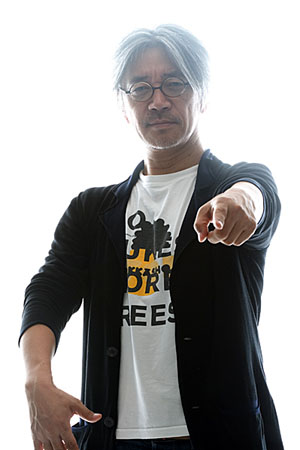
But even so, I also wonder, "Who is my romantic partner?" or "Will I find a job?" Why ask others such things? (laughs).
People like that probably already know the answer before they even ask a fortune teller.
Therefore, I can't definitively say that "relying on fortune-telling equals being weak." It feels like a performative weakness. Perhaps they are simply enjoying the experience.
So, to those people, let's declare this:
"Don't rely on fortune-telling, believe in yourself!!"
We're accepting questions for the Professor!Please send in your worries about work or family, or any questions you have for the Professor.
Ryuichi Sakamoto will "declare from above."
How to Ask a Question:
Click the "ask sakamoto !" button below.
On the page that opens, enter your email address in the "Reply Address" and "Confirmation Address" fields, write your question in the "Content" section, and press the "Send" button to complete.

→ Ask Ryuichi Sakamoto!