May 1, 2015
Chapter 7: "Learning from 'Genocide' at the Rwanda Film Festival" - 2
Chapter 7
Rwanda Film Festival: Lessons from the Genocide
In our previous "Winds of Africa," we introduced "The Man Who Remembers" by director Eric Kabera. This time, we present "Sometimes in April" by Haitian-born African director Raoul Peck.
This film festival is being held at Uplink in Shibuya until April 20th, so please visit if you have the time.
※Screening schedules change daily, so please check http://www.uplink.co.jp/top.php for details!!
photo & text by ASANO Noriko
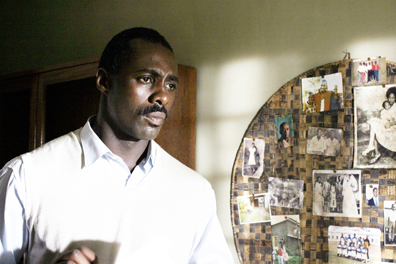
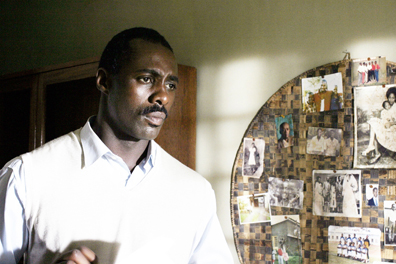
"Sometimes in April" (140 min, France/USA/Rwanda, directed by Raoul Peck, 2005)
"Sometimes in April"
The Rwandan genocide of '94 began when the plane carrying the Rwandan president (Hutu) and the Burundian president (Hutu) was shot down. It is also said that the genocide began when Hutu-led radio broadcasts, reporting the incident, incited the populace with messages like "kill or be killed." Radio penetration and influence are high in African countries. Television is a luxury item owned by a limited few in urban areas, and everyone craves it during events like the World Cup. But ultimately, many people gather around radios, sharing in their joys and sorrows. Radio is a necessity for Africans. And that radio was used for genocide...
The story depicts the genocide of that time, focusing on the tragedy of a Hutu police officer, his brother who was a popular radio DJ, his wife who was Tutsi, and their children who were of both Hutu and Tutsi heritage.
It was not uncommon for Hutus and Tutsis to marry at that time. However, a faction of the Hutu military advocating for ethnic cleansing began the extermination of Tutsis, triggered by the downing of the presidential plane. Even those who protected Tutsis, including spouses, were branded as traitors and killed.
On the night the genocide began, the wife and children were sheltered for one night by a white neighbor. Gunshots and screams could be heard from the vicinity. It was the beginning of an unprecedented genocide. Those without Hutu identification were killed without question. The manner of killing was horrific, with scenes that seemed to revel in murder. People wielding machetes, engaging in killing. The terrifying power of mob mentality. Amidst this, the UN and developed nations evacuated only white individuals to safe zones, making no effort to help those being massacred just steps away.
At the root of ethnic conflict lies the worst ideology: the eradication of DNA. DNA that might become an enemy in the future must be eliminated. Therefore, no mercy was shown to women and children. I heard a story from that time: suppose a father was Hutu, the mother Tutsi, and they had six children. The father then killed three of the children and their mother in front of the other children, forcing the mother to choose which three to kill. Many of the remaining children were traumatized by their father's brutal act, with some developing psychological disorders. In this film, the father helps his wife and children escape. However, I heard that in reality, this was often not the case. Also, let me recount one of the massacres depicted repeatedly in this film. One evening, someone said, "There will be a Hutu attack tonight, so gather in the church." Many villagers, trembling with fear, fled to the church. When the church was full, the doors were locked from the outside and set ablaze. Hundreds of Tutsi villagers, trapped inside, writhed, suffered, and died. It is said that the remains of many massacred people are still preserved at that site. This film repeatedly shows scenes that make one want to cover their eyes. But we must not forget that these are merely images on a screen; the actual site was permeated with the smell of blood.
Brothers and their families on different sides. What happened in Rwanda, Africa, in '94? What is "blood"? I hope you will reflect on these questions after watching this film.
Media
Watching this film, I was once again struck by how terrifying media-induced brainwashing can be. My African friends, of all people, want televisions. Each time, I find myself sighing. Born and raised in Japan, I have lived alongside television. Yet, sadly, even working in a media-related field, I cannot wholeheartedly celebrate their desire for a TV. This is because, lacking the means to verify information, they are heavily swayed by unilaterally broadcasted content. Indeed, this genocide spread through such "media control"—in other words, "brainwashing."...
Even in developed countries, information is manipulated and facts are distorted according to the intentions of those who control the media. One-sided reporting possesses a strange persuasiveness that prevents people from questioning its truthfulness. When charismatic figures speak through the media, the public tends to be swept away by their words. Furthermore, the media understands its influence, and many people seem to believe that those involved with it must be saying the right thing, often accepting media statements at face value. Of course, many media outlets and individuals meticulously verify information and strive to report facts. However, this is not always the case.
I've strayed from the film's topic, but what I wanted to convey is that the media can even instigate mass murder. I wish for a world where everyone, keeping this in mind, pursues the truth individually. ...However, in many parts of the Third World, including African nations, this remains a difficult reality...
The Role of Developed Nations
What did the developed nations do during the genocide of '94? The truth is, I believe they let lives that could have been saved slip away. Many developed nations knew what was happening in Rwanda. But instead of intervening, they turned a blind eye. It was only when the Rwandan Patriotic Front (RPF) gained control of the government forces and Hutus, fearing reprisal, fled to neighboring countries as refugees, that many developed nations finally began to act. I believe it was around the time refugee flows began that Japanese media also started to cover this genocide in detail. Therefore, the scenes of Rwandan refugees that many people know are of the Hutu people, the perpetrators, not the Tutsi people, nearly a million of whom were killed. And among those refugees were many leaders who had spearheaded the genocide. ...That said, the majority who walked hundreds of kilometers to become refugees were the vulnerable, women and children.
This Rwandan genocide would not have escalated to such a degree if the developed nations had intervened sooner. The UN could not secure the cooperation of developed nations. The responsibility for letting lives be lost, including Japan's, is immense.
Furthermore, as I wrote last time, Japanese media barely covered the genocide while it was occurring. Approximately one million lives were lost in 100 days. Had it been reported earlier, I believe many Japanese people would have become interested, and the government might have acted. Public opinion moves politics, and it is the media's role to provide information. I believe there is a need to provide information with a broader perspective, encompassing both good and bad. I always think they should stop making programs by looking at their neighbors and saying, "It's about the ratings..." Japan is an island nation with little international exchange, so if they don't cover more about overseas affairs, they will truly become "frogs in a well."
Afterword
There are 53 countries in Africa. But these are 53 countries drawn by Western powers; in reality, there are said to be 5,000 to 6,000 ethnic groups, each with its own language and culture. Before Western colonization, these ethnic groups coexisted and prospered. ...Many African countries, less than 50 years since liberation from colonial rule, are like toddlers, needing much assistance. The Rwandan genocide is a tragedy, but it has left us with many lessons. That genocide is by no means a distant issue. When I consider it in the context of my own life, there is so much to learn. Things that must not be repeated...
...This year, I plan to visit Rwanda, 13 years after the genocide. I hope to find many smiles there!!
Cinema Africa Film Festival Now Underway!
■ Cinema Africa Website
http://www.cinemaafrica.com/
■ Venue Uplink Website
http://www.uplink.co.jp/top.php