May 1, 2015
Chapter 1: Encountering Africa
Chapter 1: Encounters with Africa
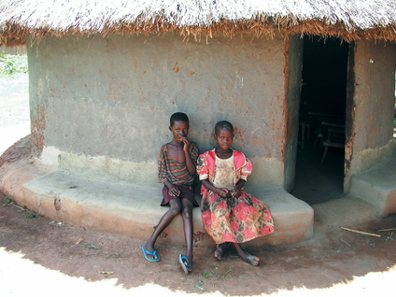
May 1994… I visited Eritrea, a country on the Red Sea. This nation, the 53rd on the African continent, had gained independence from neighboring Ethiopia in '93 after a 30-year struggle. Invited for the first anniversary of its independence, I set foot on African soil for the first time. It was nothing like the Africa I had imagined.
A country that had been at war until just a year prior. The airport, built of wood, bore clear scars from gunfire, with holes dotting its structure. Inside the city's museum, numerous firearms were displayed, and tanks used until the previous year stood in imposing, eerie silence. Among the weapon controls and communication devices, the words "MADE IN JAPAN" appeared frequently. The realization that we were, unknowingly, complicit in war…
There were no photographs from the war years in the museum; instead, the events were depicted through paintings. One painting showed a woman being held down by a soldier, her chest being cut open. It is said that in African liberation struggles, to prevent future retribution, women carrying children were killed, and the breasts of nursing mothers were severed without hesitation. The severance of DNA. For someone like me, from a peaceful, ethnically homogeneous society, it was incomprehensible.
The eve of the first anniversary of independence was a solemn occasion, with people in traditional attire holding candles, remembering the souls of the fallen. Yet, it was also filled with the joy of having achieved their long-sought independence. From various places, high-pitched cries of "A-la-la-la-la…" rose from the women. At this time, Eritrea suffered from power shortages, with electricity only available in limited areas after dark. Consequently, the thousands of candlelight flames flickering in the darkness created a dreamlike atmosphere. The faces of the people were bright, imbued with a sense of mourning for those lost in the 30-year war and a prayer for a peaceful future. I prayed for this nation's bright future.
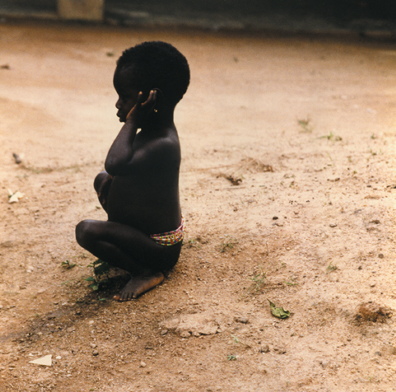
After a week in Eritrea, I extended my journey to Ethiopia, the defeated nation in that independence struggle. Dry air swirled with dust. That year, Ethiopia faced the imminent threat of a severe drought. Reports in Europe warned that if rain did not fall, six million people could perish (though Japan, supposedly awash in information, remained silent…).
Addis Ababa sits at an altitude of 2,400 meters. With its many hills, even a normal walk left me breathless. The added dust further blurred the scenery. …One day, the sky turned completely dark, even though it was daytime. The view from my hotel room was starkly different from usual. …And then, soon after, rain began to fall in immense, heavy drops. A sound like the earth rumbling. Mixed with a crackling noise, lightning flashed across the sky. The lightning didn't streak vertically but ran horizontally, illuminating the sky endlessly. The sound of the rain transformed, resembling the roar of a jet engine. It was a first for me.
…To me, it felt as if the earth itself was enraged. My feet froze. Then, suddenly, the sound of whistling erupted from various directions. Children had run outside, welcoming the rain. The rainy season, long awaited, had arrived. Even if it rained in the highlands of Addis Ababa, it wasn't guaranteed to rain in the lowlands where many farmers lived. The unchanneled land quickly absorbed the rainwater. …Yet, the joy at the rain's arrival was palpable. Until then, I had taken water for granted, never conserving it, never considering its importance. But here, the situation was entirely different. Water meant life. I felt profoundly ashamed, realizing I didn't even grasp the fundamental aspects of existence.
In Ethiopia, I learned another lesson about living… about surviving. …At that time, tens of thousands of homeless children roamed the streets of the capital, Addis Ababa. Some were missing limbs. I heard that their parents had cut off their limbs to make them more effective beggars… because children without limbs would elicit more pity. Stepping out of the hotel, I was constantly surrounded by children's cries of "Money!" and their small hands reaching out. The sight was horrifying. Giving a few coins to a handful of children wouldn't change the grim reality. I couldn't meet the gaze of the emaciated children begging for their lives. Despite living in the same world, in real-time, a vastly different reality existed, with death always lurking nearby. My first visit to the African continent had shaken me to my core. I felt as though my soul had become lost in the vast expanse of Africa.
Twelve years have passed since I first set foot on the African continent. Africa, which had slapped me across the face, shattering my illusion of knowing everything in this so-called information age. My journey to find my lost soul continues. How much reality will I witness, feel, and connect with in my lifetime? And how much of it will I be able to convey to others? Thinking about it, there is so little time.
There are 53 countries on the African continent. Yet, on this continent, five thousand, or perhaps six thousand, ethnic groups live, each with its own language and culture. Is Africa truly just 53 countries? …At the very least, it was not the people of Africa who drew those lines.