Part 14: The Lee Friedlander Exhibition (1)
Lee Friedlander: The 14th Exhibition
Special Talk Show
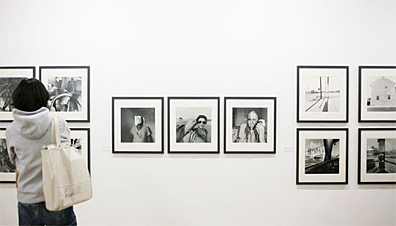
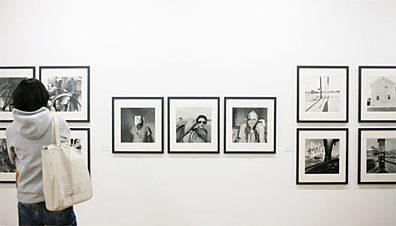
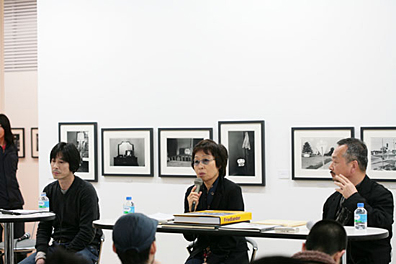
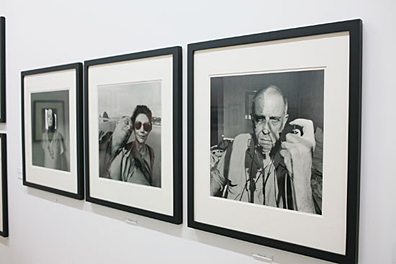
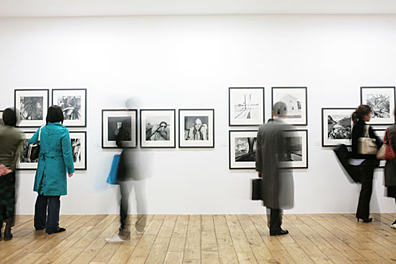
Ratt Hole Gallery is currently hosting the 'Lee Friedlander Exhibition' until May 6th. Friedlander is an American photographer who has been active at the forefront of his field since the 1960s and has had a profound influence on the Japanese photography scene. To mark the exhibition, the gallery held a talk show on April 6th featuring three individuals closely connected to Friedlander.
The participants were Yo Oshima, a photographer and critic; Kyoko Yamagishi, the curator who produced this exhibition; and Osamu Wataya, a photographer from Hysteric Glamour. In this installment of 'Rat Hole,' we will present the proceedings of that talk show over two parts. (Nobuhiko Kitamura)
Photo by Jamandfixedit by TAKEUCHI Toranosuke(City Writes)
Photography Named "Social Landscape"
Osamu WatayaI first encountered Lee Friedlander about 20 years ago and was deeply drawn to his somewhat common, quiet demeanor. Though he is not a contemporary artist to me, how was he perceived when he first broke through in the 1960s?
Kyoko YamagishiHis initial rise to prominence came with the exhibition 'TOWARD A SOCIAL LANDSCAPE.' This exhibition was met with contemporary resonance not only in America but worldwide, even giving rise to the term 'Compora' in Japan. Until then, photography was generally understood as public statements, exemplified by photojournalism. However, a rapid shift in thinking was emerging, suggesting that photography could be a more personal medium. 'TOWARD A SOCIAL LANDSCAPE' was born from this context, and its depiction of more everyday, personal themes resonated with the younger generation.
The Intellectually Framed Everyday Was Revolutionary
Yo OshimaWhen I was in my twenties, I vaguely sensed a very intellectual atmosphere around Compora. Looking back now, I can interpret those feelings in various ways, but at the time, I think I perceived it simply and ambiguously as 'cool.' Regarding the theme 'TOWARD THE SOCIAL LANDSCAPE,' perhaps I had an image akin to 'provocative material for the coming urban society,' following the spirit of the magazine 'Provoke,' which was later founded with the slogan 'provocative material for photography and thought.' However, recalling that period, I feel I accepted everything more vaguely.
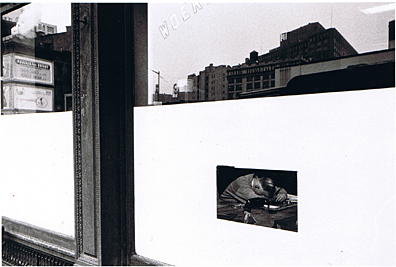
New York City 1964
YamagishiMy first impression was also, 'Can photography be this cool?' However, I believe it differs somewhat from what is called Compora in Japan. His approach isn't about mood, as is often seen in Japanese photography; rather, it's a rigorous style, characteristic of American photography's tradition, where each shot is self-contained.
WatayaI see. My theory is that photography can only be either Compora or Anonymous, and Friedlander's work, while Compora, is also somehow Anonymous. I believe that's where the persuasive power of his photographs lies.
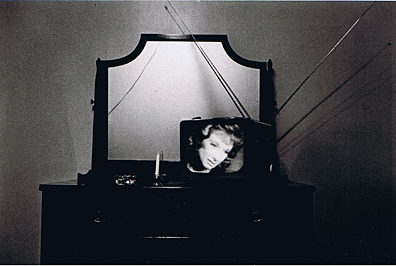
Portland, Maine 1962
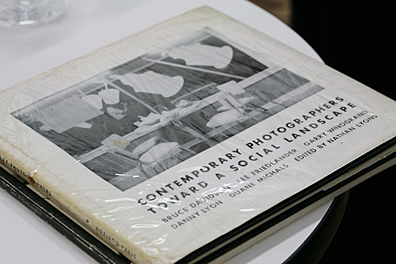
From Oshima's private collection
OshimaI felt a great sense of novelty in his photographs at the time. While influenced by artists like Robert Frank, his work had a more detached quality, and I felt that detachment conveyed the sensibility of the era.
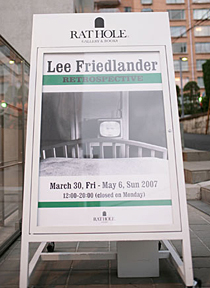
Lee Friedlander Photography Exhibition "RETRO-SPECTIVE"
Dates: Friday, March 30, 2007 – Sunday, May 6, 2007
Hours: 12:00 PM – 8:00 PM (Closed Mondays)
Venue: RAT HOLE GALLERY
B1F, HYSTERIC GLAMOUR Aoyama, 5-5-3 Minami-Aoyama, Minato-ku
TEL: 03-6419-3581
LEE FRIEDLANDER
Lee Friedlander was born in Aberdeen, Washington, in 1934. He began taking photographs in his youth and studied under Edward Kaminski at the Art Center College of Design in Los Angeles from 1953 to 1955. Moving to New York in 1956, he continued his career as an independent photographer, earning high acclaim as a central figure of the new generation of American documentary photography.
In 1966, he was introduced as one of the standard-bearers of 'Compora photography' at the 'Toward a Social Landscape' exhibition (George Eastman House). His work greatly influenced photographers both domestically and internationally. In 1970, he established his own publishing company and released his first photo book, 'Self Portrait.'
During the 1960s, a period when photography was exploring new directions as a medium for personal expression, Friedlander's journey began by focusing his gaze on everyday street scenes. He captured ordinary moments as social landscapes, asserting that viewing his photographs meant not seeing reality, but rather the personal world interpreted by the photographer. His works, which captured the everyday from a personal perspective, profoundly influenced the development of contemporary photography thereafter.
While centering on street photography, Friedlander's subsequent photographic output has included diverse works such as portrait collections born from family and personal relationships, and series focusing on trees and natural landscapes he deeply cherishes.
In 2005, he received the Hasselblad Foundation International Award in Photography. In the same year, the comprehensive retrospective 'Friedlander' at the Museum of Modern Art, New York, featuring approximately 500 works, encapsulated his half-century career and deeply moved audiences.
This exhibition presents a culmination of his work, from his early pieces to his latest creations captured with medium-format cameras.