May 11, 2015
Part 46: S.T. Dupont - Olivier Cochet x M.Y. LABEL's Maki Yoshida Dialogue (1/1)
The 46th: S.T. Dupont Olivier Coindre x M.Y. LABEL Maki Yoshida
On Dressing for Men (1)
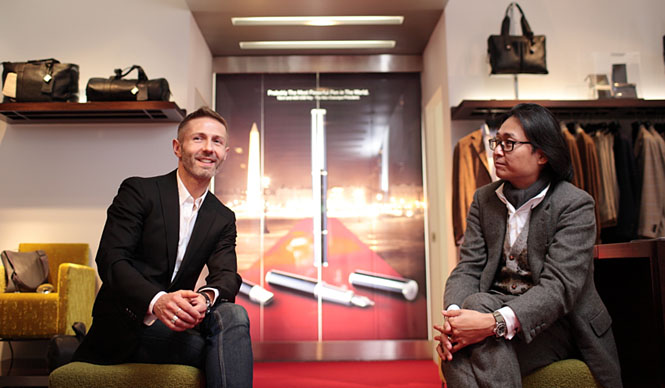
This time, we are delighted to present a conversation with Olivier Coindre, Artistic Director of S.T. Dupont, our guest from France.
Olivier, who is internationally active and extremely busy, had just arrived from Hong Kong the day before. We spoke with him about the current fashion scene in France, what it means for men to dress well, and S.T. Dupont's perspective on fashion.
Summary by Fuyuki TogawaPhoto by Jamandfix
Conservative, Yet Playful
Maki YoshidaTo begin, how do you think French men generally perceive dressing well?
Olivier CoindreIn a word, I believe French men are quite conservative when it comes to fashion.
YoshidaReally? Our impression is that French people are always fashionable and seem very free (laughs).
OlivierIn a sense, there's a strong tendency to adhere to tradition. Of course, many young people are interested in fashion, but when it comes to clothing, I think many men prefer to dress in a 'masculine' way, much like their grandfathers or fathers did.
YoshidaI see. So, are there any prominent fashion trends currently observed in France?
Ties Disappearing from the Office?
OlivierThe number of people wearing ties is definitely decreasing. It's becoming polarized: either extremely conservative individuals or those who are exceptionally stylish wear ties.
YoshidaThat's quite surprising. In Japan, the image of a working man in the office is often someone wearing a tie. Does it depend on the profession?

OlivierCertainly, for certain professions like banking or law, ties are a kind of uniform, so I imagine they are always worn. However, in general companies, most people no longer wear ties.
Within our company, Dupont, the majority of managers in their 30s to 50s do not wear ties on a daily basis.
YoshidaIn Japan, there's the 'Cool Biz' movement for energy saving, encouraging a no-tie style in summer. Is the situation in France different, perhaps reflecting a desire for a more relaxed work atmosphere?
OlivierI believe the trend towards no ties began as the American concept of 'Casual Friday' influenced France. It's not driven by ecological considerations like in Japan.
YoshidaHowever, if ties are no longer an opportunity for sartorial expression, doesn't that make cufflinks and other accessories even more important?
OlivierYes, exactly. In fact, more and more people are forgoing ties and instead enjoying fashion with cufflinks or belts. Furthermore, they seek a sense of fantasy in these items, choosing colorful designs, shapes, and fun materials to express their playfulness. Nowadays, you're unlikely to be refused entry to a restaurant for not wearing a tie.
YoshidaI see... In France, a fashion capital, I had always assumed that a smart appearance meant a suit and tie (laughs).
OlivierHowever, regarding rings, it's a bit different. In Tokyo, I often see businessmen wearing rings as a fashion statement, but in France, a man wearing a large ring is still considered quite bold.
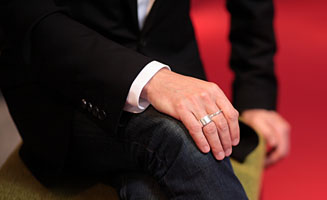

YoshidaIndeed, I think Japanese men started wearing rings for fashion quite early. In Europe, men have a history of wearing accessories since the Middle Ages, so perhaps accessories originated from formal wear. In Japan, lacking such a history, there might have been less resistance.
First, they wear jeans, then casual accessories... Reaching the level of cufflink fashion seems to require some training; in Japan, it's perceived as something for fashion connoisseurs (laughs).
OlivierI see. It seems the situation is a little different in France (laughs). However, when it comes to rings, France is not yet a mature market (laughs).
Men's Accessories: Increasingly Popular
YoshidaLooking ahead, how do you anticipate the trend for men's accessories evolving in France?
OlivierI believe the demand for men's accessories, including cufflinks and belts, will continue to grow.
YoshidaWhy is that?
OlivierWhen the younger generation, who now regularly wear cufflinks and earrings, enter the workforce as adults, they are likely to bring their casual style into business settings.
YoshidaIndeed, many other jewelry brands are also launching full-fledged men's lines, aren't they?
OlivierThe burgeoning of men's accessories is a global fashion trend, and I predict a boom is on the horizon.
YoshidaWhat specific image do you have in mind?
OlivierTo use cooking as an analogy, French cuisine used to be dominated by rich, butter-laden dishes. However, since the advent of Nouvelle Cuisine in the 1970s, lightness and simplicity have become valued in cooking, with popular menus featuring a blend and fusion of different genres, unconstrained by tradition.
This is also true for fashion; I believe light styles that fuse various tastes will become mainstream.
YoshidaSo, it is indeed an era of 'lightness'…?
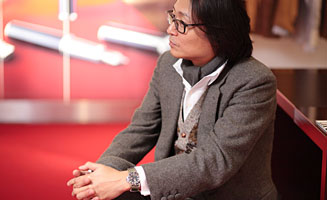
OlivierIt's possible to appear polished without a tie, and it's no longer accurate to say that 'informal' equals 'not elegant'.
Everyday Good Design: S.T. Dupont Artistic Director Olivier Coindre x M.Y. LABEL Maki Yoshida - On Dressing for Men (2)To be continued
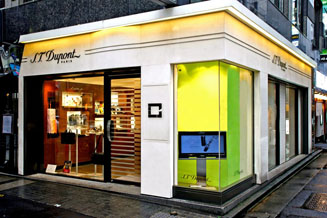
Ginza Store
S.T. Dupont
Tel. 03-3448-1391 (General Inquiries)
http://www.st-dupont.com