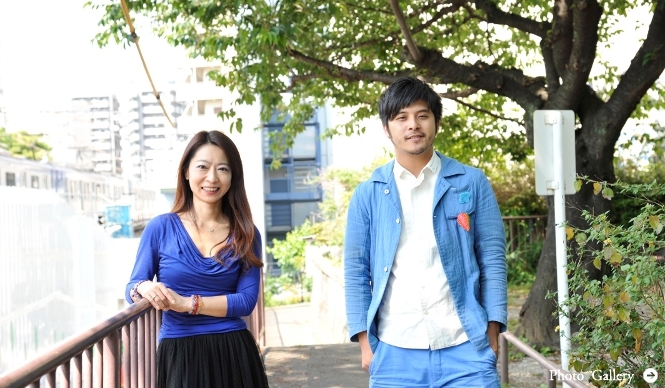
Reika Ito x Kyohei Sakaguchi: A Spiritual Dialogue (Part 1)
Spiritual Dialogue Vol. 14 | Kyohei Sakaguchi
The Portrait of a Guest 'Seen' by Reika Ito
“A Peacemaker Dedicated to Realizing a Society Full of Compassion” (Part 1)
We invite creators active on various stages as guests, and spiritual healer Reika Ito uses her “reading” of the energy emitted by people, combined with multiple astrological systems, to appraise the source of their creative power. She uncovers past lives directly connected to the present, hidden potential, and delves into the charm of the creators themselves, which often remains hidden behind their work.
Photographs by KADOI Tomo
Text by TANAKA Junko (OPENERS)
Our guest for the 14th installment is Kyohei Sakaguchi, who holds various titles including architect, artist, and author. At times, he is known as the “architect who doesn’t build,” and at others, as the “first Prime Minister” of an independent nation established at the “Zero Center” in Kumamoto City. He is a celebrated figure of our time, constantly generating buzz. This year, his first documentary film, titled “How to Build a Mobile House,” is set for release, and we delve into the allure of Sakaguchi, who continues to captivate us with his ever-expanding achievements.
The Purpose of Writing is Simply to Convey Fundamental Feelings
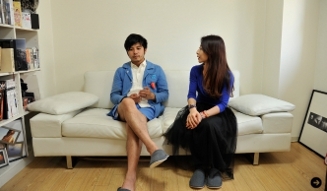
Reika Ito (hereafter, Ito)It’s difficult to definitively state the scope of your activities, Sakaguchi-san.
Kyohei Sakaguchi (hereafter, Sakaguchi)That’s right. But it’s interesting. I remember everything I say, so they call me “Savan” (※). It’s like recording with a video camera; I spatially memorize everything. Like, how many meters it is from here to there, or the distance between myself and that person from elementary school, all that stays in my head. Then I imagine what it looks like from the back.
ItoAh, I understand! I’m the same way.
SakaguchiFor example, I can write about 50 pages of text a day. The maximum is around 20,000 characters. Normally, that would take quite a bit of time, right? But for me, I install most of it the day before, so I just write without thinking. Between 5 AM and 11 AM. I decided from the start that I would work while others sleep.
ItoThat’s amazing! How do you spend your time outside of writing?
SakaguchiOn weekdays, I walk around town and observe the neighborhood aunties, cats, and flowers. Then I hear various voices, and I understand things like, “The pill bugs are in trouble.” Then I develop a certain hostility, thinking, “I’ll punish those who are paving over the concrete.” My wife told me, “Why don’t you explain that in words?” So, I just say, “Okay, I’ll explain it in words.” The only reason I write is to convey those fundamental feelings.
ItoYes, you just want to convey your feelings.
SakaguchiLike, “Don’t dig up the soil.” That’s all. Or, “We must never think that a society where we can’t live without money is natural.” So, “When you see homeless people, talk to them properly. They must have some kind of technique.” I call it the “genius of you.” I can see the form of that genius, so I just listen to what that genius says. No matter how trivial it may be, even if it comes from a homeless person. Then, they teach me many things. I am constantly seeking their guidance, so it’s like my profession is “student.”
ItoYour profession is “student.” That’s wonderful!
SakaguchiHowever, for about 8 years, I wasn’t able to sustain it. This way of life is quite difficult within capitalism. That said, my life is still manageable. I knew there were people who would help me at the very last minute. But I started to feel like I wanted to “jack into” society a bit more. That’s when my activities began to shift, around 2009.
ItoYes.
SakaguchiAfter that, for about four months of the year, I do almost nothing and enter a state of “hibernation.” It’s time to think about dreams. During that time, I visit central libraries in various regions and find books I want to read.—But I hardly read the main text; I only read the table of contents. I read only the table of contents of other people’s books and then write my own. If I continue this for a while, after about four months, I’m set to write the manuscript.
ItoThat’s incredible! Are you still writing now?
SakaguchiIn the past five months, from December last year until now, I’ve written 3,000 pages worth of manuscript paper. I can’t stop. Even so, in the past, I would break down and couldn’t control it, short-circuiting immediately. But now, I’ve gotten much better at controlling myself. However, my mental state, or rather, my brain state, is always in super-high gear, with absolutely no rest.
ItoExactly. Actually, I did a brief reading beforehand, and it seems your mind is constantly in a state of high-speed fiber optics.
Spiritual Dialogue Vol. 14 | Kyohei Sakaguchi
The Portrait of a Guest 'Seen' by Reika Ito
“A Peacemaker Dedicated to Realizing a Society Full of Compassion” (Part 1)
I Will Forever Keep the Promise I Made in Elementary School
SakaguchiWhen I go to the central library, I usually turn to classics. Things that have endured over time. I check the books of those kinds of people.
ItoDid you like books from a young age?
SakaguchiI often read autobiographies. Like “Gandhi” or “The Voyage of the Kon-Tiki.” Of course, I read fairy tales too, but I preferred non-fiction over fairy tales. When I read autobiographies, I noticed that most people fell into dire circumstances, but only those who kept the promises they made in elementary school succeeded.
ItoI see.
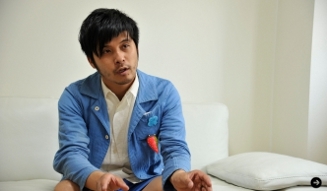
SakaguchiThat’s why I will forever keep the promise I made in elementary school. In elementary school, I made the space under my desk my home. I decided in my heart, “I’ll do this for the rest of my life.” School equations were boring, but I found these autobiographical equations interesting. When I thought about writing my own autobiography someday, I realized my life would be directly reflected. So, I decided to make it a game with a clear goal, which makes it engaging. It allows for dynamic expression, so I decided to do it that way.
ItoThat’s fascinating. Was the promise you made in elementary school to build a house?
I Decided to Become an Architect at the Age of 10
SakaguchiMy starting point was architecture, or rather, space, as we call it now. I was deeply struck by the inability to express this world through another medium. You can’t do it, can you? You can take photos, but they’re different from seeing it in person. You can shoot videos, but they’re also different. No matter how much you try, you can’t replicate the exact state of what’s in front of you in real-time. Movies can’t do it, plays can’t do it. In other words, this experience can only happen now. I recognized the immense importance of this at a young age.
ItoI see.
SakaguchiSo, as a child, I often built houses out of empty boxes behind a liquor store. My parents said, “Since it’s on the liquor store’s property, it belongs to the liquor store.” I didn’t understand what they meant, so I said, “No, this is my house.” But my mother persuaded me, and I understood. I understood that this wasn’t considered a “house” in modern society. Although I understood, I told my mother at the time, “This is definitely my house. For now, I won’t forget about this, but I understand what you’re saying too.”
Ito(Laughs) Your mother must have been surprised.
SakaguchiBut “owning” something… you don’t know what you’re owning, and it’s obvious if you think about it normally. Humans can’t own things. I always wondered why these people couldn’t grasp such a simple concept. I said, “For me, this is simply a house, and I want to live in something I consider a house.” Then my father told me, “There’s a job called an architect.” That’s when I decided to become an architect at the age of 10.
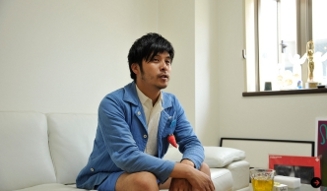
ItoYour father is quite remarkable too. That was very pertinent advice.
SakaguchiYes. They were quite sophisticated parents. We were a middle-class family, and it was decided from the start that we couldn’t own our own home. I often asked, “Why doesn’t our house have a telescope or a globe?” And they’d say, “We can’t live like that.”
ItoChildren have aspirations, don’t they?
SakaguchiEven so, the wine glasses were Baccarat, and they’d serve tea in Ko-Imari ware. They had unique tastes and were quite sophisticated.
ItoBaccarat, Ko-Imari… How stylish!
I'm Interested in Nests, Rather Than Houses
SakaguchiI didn’t realize it at the time, but looking back, it was all Okinawan glass. They were also very particular about chopsticks. In other words, they invested heavily in things people touch. It was that kind of household. The clothes they wore were the same. They bought truly good quality items with solid materials. I later realized that I was taught these things.
ItoThey were particular about certain things. What lovely parents.
SakaguchiThe clothes we wear and the things we touch are also part of a home. A minimal home. With that sense, I’ve been interested in what I wear, shelters, and places of refuge.—It’s closer to an animal’s nest than a house. I’m interested in things like that. The reason I had to be interested was because there was nothing comparable.
ItoI see, I see.
SakaguchiI wondered why the “nest” within me wasn’t present in this environment. I could only glimpse it when I visited my grandfather’s house. But even that wasn’t quite enough for me. I wondered why people didn’t just lie down together in a jumbled mess. In my home, the five of us always slept together in a row, all mixed up. I really loved that.
Spiritual Dialogue Vol. 14 | Kyohei Sakaguchi
The Portrait of a Guest 'Seen' by Reika Ito
“A Peacemaker Dedicated to Realizing a Society Full of Compassion” (Part 1)
I Was Seeking Buildings Without Foundations
SakaguchiSo, while thinking about these things, I entered high school. It was a prestigious school, and everyone was aiming for the University of Tokyo. When I asked them, “Why are you going to the University of Tokyo?” they’d say, “It seems like it’s better to go to the University of Tokyo.” That’s when I started to think. I liked thinking. So, I concluded that those who can’t explain why they’re going to university probably won’t be popular (laughs).
Ito(Laughs)
SakaguchiSo, I asked all the teachers at school, but I couldn’t understand why we had to choose the University of Tokyo. Then I thought, “It becomes unclear because you focus on the ‘thing.’ It should be the ‘person,’ the ‘person’!” In other words, “Instead of thinking about going to university, you should think about who you want to meet.”
ItoYes, yes.
SakaguchiThen I came up with the answer: “Right! Among the many architects, I just need to find the one I want to meet.” From there, it’s simple what I need to do. Read all the architectural magazines and meet the person who resonates most with me. First, I went to the library. I looked through all the back issues of architectural magazines, starting from around 1979. And there was only one person. There was a perfectly round iron cylinder buried in the ground, stopped only by gravel, without a concrete foundation. In other words, there was someone who didn’t dig.
ItoThey dig quite deep, don't they?
SakaguchiThat’s right. They kill all the pill bugs, earthworms, and centipedes, and then fill it with concrete. Saying, “This is a place for humans to live.” But when you think about it, they haven’t created laws, so it’s not about the structural integrity of the building. What is it for? It’s for the economic system. And the tax system. Also, to instill a sense of ownership and create loans. Friedrich Engels (※) was talking about this extensively back in the 19th century. The problem is obvious, but it creates labor.
ItoThat’s true.
SakaguchiBut I realized all this later. At the time, I didn’t know that, and I was simply seeking buildings without foundations. That architect must have seemed free. That person, Osamu Ishiyama, was a professor in the Department of Architecture at Waseda University's Faculty of Science and Engineering.
ItoHmm! So that’s how you ended up going to Waseda University.
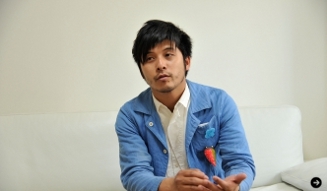
SakaguchiHere, another idea struck me: I told the school teachers, “I don’t need to take the exams.” Because I had found the person I wanted to meet, why would I bother taking an exam? I could just go meet that teacher without taking the exam. So, I said, “I won’t take the exam,” and the teacher, in a panic, found a special recommendation admission. In the end, I was accepted into Waseda University without taking any exams.
Ito(Laughs) That’s interesting.
Encounter with an “Old Man” Living by the Tamagawa River
SakaguchiSo I went to university, but there was no teacher who could teach me about nests, so I still couldn’t find my nest there. I decided, “That’s enough,” and while walking along the Tamagawa River, I happened to meet an old man who had been living by the river for 20 years. As I went into the bamboo grove, I saw that the bamboo fence was tied with ropes from a certain point. It looked like a hallucination, and I thought I had gone crazy.
ItoReally? How did you know someone was living there?
SakaguchiI was with three friends, and we decided to go inside. When we did, we found an old man who had been living there for 20 years. He said, “I made my house entirely out of trash and sell bamboo shoots to people in the neighborhood to eat (i.e., live).”
ItoWow.
SakaguchiHe said, “I live self-sufficiently with my cats. Is there any greater happiness than this?” When I asked him, “Are you that happy?” he replied, “I am truly happy. Just living is truly happiness.” He told me, “We can become like animals, you know.” He was truly living like an animal. Until then, of course, I knew about people called homeless, but I suddenly met someone who wasn’t like that.
ItoYes.
SakaguchiI asked him, “Do you have an address?” He replied, “I don’t have an address, but what’s the point of that?” I thought, “That’s true.” He then asked, “What do you get by having an address? Isn’t it just paying taxes? Are you okay?” I realized, “You’re right.”
ItoThat must have been an incredible encounter!
SakaguchiIt was. He gave me a hint. He said something like, “You guys are performing. Or rather, aren’t you being made to perform?”
ItoHmm.
SakaguchiThat led to the book “0 Yen House.” So, I said, “I’ll do my graduation thesis on that project.” The professor I met said, “You will definitely become an important person in 10 years, so please, don’t starve to death. And please, don’t build anything. If you feel that strongly about it.” Then he added, “I built things. Everyone makes mistakes.”
ItoWow! Your professor said that to you?
Spiritual Dialogue Vol. 14 | Kyohei Sakaguchi
The Portrait of a Guest 'Seen' by Reika Ito
“A Peacemaker Dedicated to Realizing a Society Full of Compassion” (Part 1)
To What Extent Do I Need to Organize Myself to Be Understood?
SakaguchiI believe that mistakes made cannot be undone. How to adjust little by little from the state of being unable to escape. I always had such crises, which is why I couldn’t draw blueprints. I graduated without drawing blueprints or building anything, barely escaping. But since there were no job openings, I just worked part-time. Since I was good at talking, I earned more in tips than my salary working at a hotel (laughs).
ItoAmazing! One of the things I saw from your past lives, Sakaguchi-san, was a kind of traveling performer—though that term is too simplistic. In various historical contexts of literature and art, there was a traveling performer who ceaselessly told stories of their creations and fantasies, perhaps to help people feel even a moment of joy or pleasure in life, to experience happiness in a different perspective in that fleeting reality. Therefore, it’s certain that you have a vast array of resources in your subconscious.
SakaguchiIs that so! At that time, I thought, “I just need to be good at talking,” and I had a dream of becoming a speaker someday. By this time, my first book, “0 Yen House,” had already been published. However, most people only think of me as a “researcher of the homeless.”
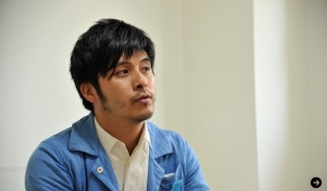
ItoA researcher of the homeless (laughs).
SakaguchiFrom my perspective, I thought, “I discovered a nest, so shouldn’t I be celebrated as the discoverer of the nest?” Because this society has no nests. From there, I started doing various things. Since I wasn’t understood, I thought about how much I needed to organize myself to be understood.
ItoYes, yes.
SakaguchiFor example, in places where people say, “We can’t afford to pay for book translations,” I’d ask, “How much can you afford?” Then I found students who would do it within the budget and had them translate it in two weeks. I told them, “I can only give you this much, but in return, your name will be remembered forever.”
Ito(Laughs) It’s an endorsement. Amazing!
SakaguchiI started setting all of that up myself. Then, I took it to bookstores in London and Paris. They understood. I also took it to the Frankfurt Book Fair, an international exhibition, and from there it spread worldwide. It began to be displayed at places like the Pompidou Centre in Paris, MoMA in New York, and the Museum of Contemporary Art in California.
ItoWow!
SakaguchiThen, someone from the Vancouver Art Gallery saw it and came to me, saying, “You should work in the field of contemporary art in Canada. Because Canada has that perspective.” At that time, “0 Yen House” had just been released, and I was contemplating my future, so it sounded interesting, and I accepted. It was a great success, and sponsors started to come on board.
ItoExactly. In business, when you diversify your activities, it’s good to have partners who excel in each area.
SakaguchiI see. They would say, “You always bring us news,” and every time we met, they’d ask, “What’s the news?” So, I started telling them stories about interesting old men I’d recently met, along with some food. They’d say, “That’s interesting!” Then I’d say, “Actually, I brought some paintings with me” (laughs).
Ito(Laughs) That’s funny.
“The Nation is Concerned” – It’s at That Level
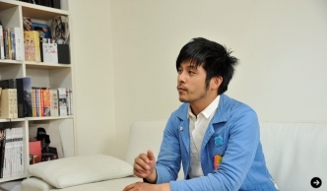
SakaguchiI don’t want to be thought of as a researcher of the homeless. I want to explain, “I am more chaotic than that,” but I can’t explain it well. Even a diary isn’t enough. So, to maintain balance, I started drawing. Then, those drawings began to sell.
ItoWow!
SakaguchiWith that money, I invited disaster victims (from the Great East Japan Earthquake) to Kumamoto and took care of them. The drawings are planned to become currency for the new government (※) in the future.
ItoOh!
SakaguchiThe reason I do these things is that since childhood, I’ve always helped those who were being bullied. I’ve also helped children who attempted suicide. How to guide them towards life is my main theme. That’s why I do various things.
ItoYes.
SakaguchiIn the past, people would ask, “Why do you do such things?” They’d ask, “Is it your religious beliefs?” or “Do you have ulterior motives?” I used to answer, “I have none of that.” But now I can say, “Because I am the Prime Minister.” That’s how I found the most natural profession. It’s at the level of saying, “The nation is concerned.” It’s like, “If I can be of help, I’ll do something.”
ItoUm, when I did a preliminary reading, I saw that you always have multiple perspectives that are completely different from those of ordinary people. This seems to be inherent in your disposition, Sakaguchi-san. When you say “work,” it’s your entire life, and it’s synonymous with you, Sakaguchi-san himself; everything is equal.
SakaguchiYes, it’s simply my mission. I’m just living with a mission.
…And so, in the first part, we heard extensively about the story that inspired you to aspire to be an architect, up to your activities as an artist that began in Canada. In the second part, Ito will interpret a surprising episode where Sakaguchi suddenly shed tears in Yoyogi Park late at night and its connection to his past lives.
Kyohei SAKAGUCHI
Born in Kumamoto Prefecture in 1978. Graduated from Waseda University, Faculty of Science and Engineering, Department of Architecture. In 2004, he published the photo collection “0 Yen House” (Little More), documenting the dwellings of homeless people, which garnered attention. In 2006, he held his first solo exhibition at the Vancouver Art Gallery in Canada. In 2008, he published “TOKYO 0 Yen House 0 Yen Life” (Kawade Shobo Shinsha), documenting the life of Mr. Suzuki, a master of living on the streets along the Sumida River. The following year, 2009, he himself lived on the streets along the Tamagawa River. In March 2011, he moved to his hometown of Kumamoto City and established the “Zero Center.” He declared the establishment of a new government and assumed the title of its first Prime Minister. In May 2012, he published his new book, “How to Build an Independent Nation” (Kodansha Gendai Shinsho). On June 30, his first documentary, “How to Build a Mobile House,” was released at Eurospace Shibuya and other theaters.