April 15, 2015
Diary-T 228 - An Unhinged Person
An Exhibition of Masterpieces: Meeting the Masters, from the Collection of Kawamura Memorial Museum of Art
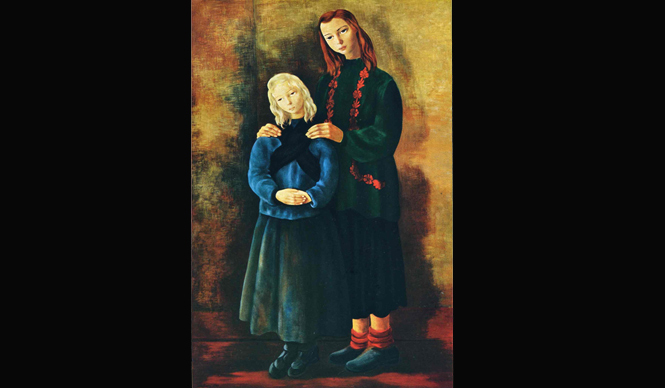
Moïse Kisling: Sisters (1950)
Look at this tilted head.
It's no wonder I felt it was unhinged.
The painting is titled "Sisters."
I was so strangely drawn to the oddity of this tilted head, I searched for the artist, Moïse Kisling.
Moïse Kisling
(Moïse Kisling, January 22, 1891 – April 29, 1953) was a Polish painter of the École de Paris.
He was a Polish painter of the École de Paris.
His birth name was Mojżesz Kisling.
Kisling achieved success as a painter in his late twenties and was known as a cheerful, supportive leader of the Paris School. He was even called the "King of Montparnasse." Among the École de Paris artists, who often had a self-destructive image—like Pascin who committed suicide, Modigliani with his alcoholism, and Utrillo—Kisling was unusual in that he lived a happy life.
Is that really true?
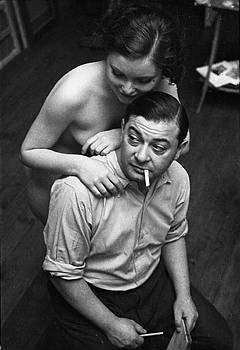
Certainly, this photo of him exudes an undeniable charisma, but considering his tumultuous relationship with Kiki, Man Ray's former lover, can we truly say he lived a happy life?
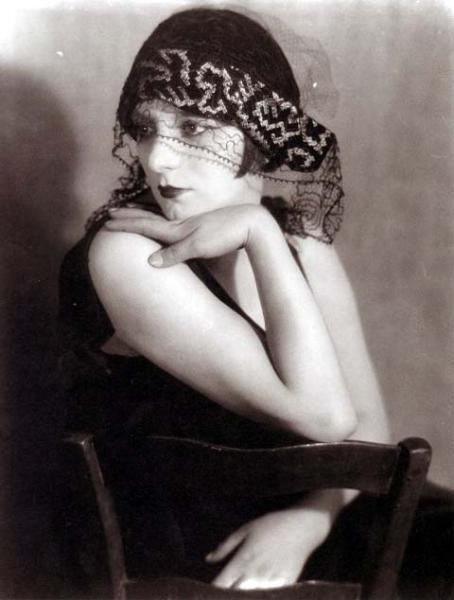
Man Ray, "Kiki de Montparnasse in Veil," 1922
Kiki, photographed by Man Ray
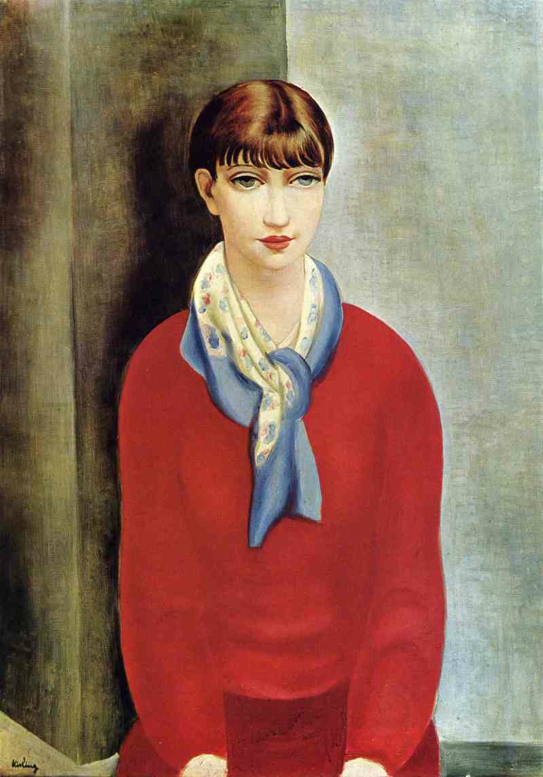
Moïse Kisling, "Kiki of Montparnasse in a Red Sweater and Blue Scarf," 1925
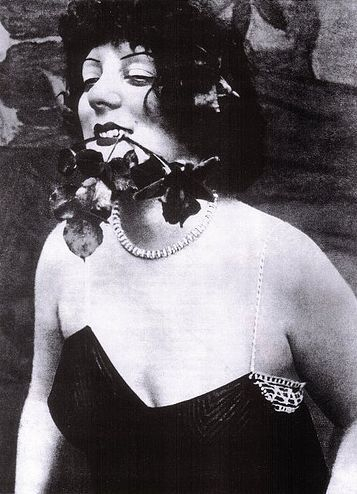
This is Kiki, known as the Queen of Montparnasse.
Her real name was Alice Prin. She came from Burgundy to work in a munitions factory in Paris during the war. Frequentng the cafes of Montparnasse, Kiki met impoverished artists and began modeling for them at the age of sixteen.
She was sometimes mistaken for a prostitute due to her habit of darkening her eyebrows with burnt matchsticks, but ten years later, she became famous enough to be featured in Parisian magazines and newspapers.
Kiki became the lover of Man Ray, a leading Surrealist photographer, but she also became the lover of the painter Kisling.
Adored by painters and film directors alike, she captivated audiences as a character in René Clair's films and as a model for Foujita's paintings.
In the photographs taken by Man Ray, Kiki provocatively challenges men with a certain broken beauty.
She had bright, white teeth and loved to hold a rose in her mouth to show them off.
Once, while posing, she imitated an opera singer to liven things up, and Kisling laughed so hard that Kiki was inspired to sing at the famous nightclub "Le Jockey." Twice a night, she belted out chansons, emphasizing the more risqué verses.
The chansons she performed to applause, such as "Les Trois Orfèvres," "Les Filles de Camaret," and "La Voie Lactée," were by Parisian street singers. Afterward, she would collect tips by borrowing patrons' hats from the cloakroom and circulating among the tables.
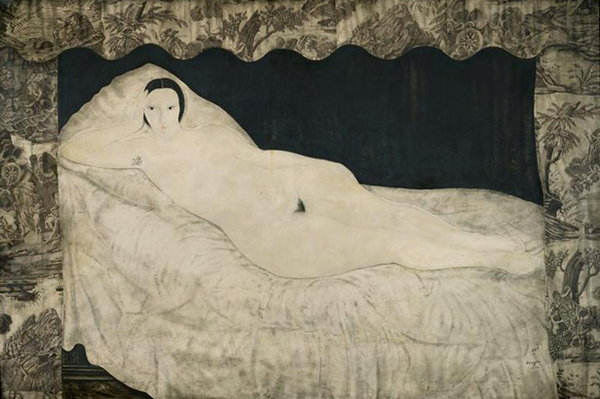
Tsuguharu Foujita, "Nude with Chintz," 1922
*This work, modeled by Kiki, was well-received at the Salon.
Yet, this alluring beauty met a pitiable end. After World War II, ravaged by alcohol and drugs, she became emaciated like an asthmatic Gypsy woman. She would drag herself from table to table at "Le Dôme," soliciting patrons by saying, "Shall I read your palm?"
Kiki died at the age of fifty, but her funeral procession resembled a carnival parade. Several ribbons on the wreaths bore gilded inscriptions of the names of the nightclubs where she had performed, such as "Le Jockey," "Le Jungle," "Le Dôme," and "Le Coupole."
These marked the various stages of her unfortunate life. Of the Montparnasse artists who had already achieved fame, only Tsuguharu Foujita accompanied her body to the cemetery in Thiais.
The Paris newspapers that reported on the funeral noted:
"Kiki, the Queen of Montparnasse, is no more. Fujita, faithful to her memory, paid his respects to her remains at the Hôpital Laennec."
Royal Art School
Excerpt from Royal Art School

When three male artists depict one woman, she changes so much.
Even though it's the same woman, the Kiki each saw was
actually a different person.
To me, that feels more natural. Isn't love about acknowledging each other's illusions? If they appear identical, it suggests a truly unhinged state of affairs.
It's not just women who change; it's only natural that men's perceptions also shift depending on whom they are observing.
Someone who looks the same to everyone strikes me as deformed.
The subject is the painter Moïse Kisling.
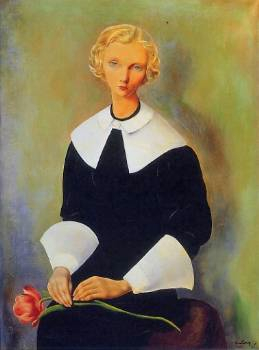
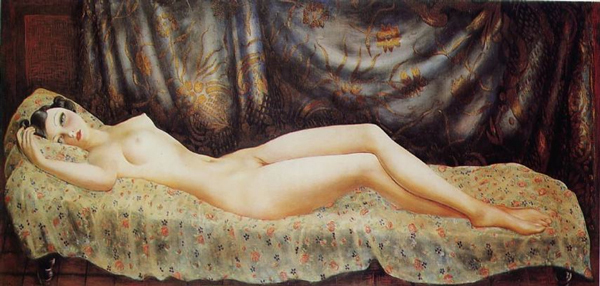
The essence of men never truly changes, regardless of the era.
Girl and Nude
Perhaps these seemingly ordinary desires are the conditions for happiness.
Let's assume for now that he was an artist who lived a perfectly conventional life.
So, what motivated me to write this blog post?
To the DIC Kawamura Memorial Museum of Art
http://kawamura-museum.dic.co.jp/index.html
Abstraction and Form: The Unseen, Forever Unrevealed
Drawn by the works of Tomoo Gokita and Jun Kakuta,
I made a trip on a rain-soaked Saturday.
Beyond the captivating works of these two artists,
and including Rembrandt's "Man with a Wide-Brimmed Hat,"
the exceptionally famous permanent collection
once again left me utterly astounded by the sheer artistry.
I intend to share those impressions here over the next while.
Oh, and the intense impression of Sean Penn and David Byrne's film, Monet...

← Diary-T 225-230

Purchase here
http://ckstore.shop-pro.jp/?pid=41033425