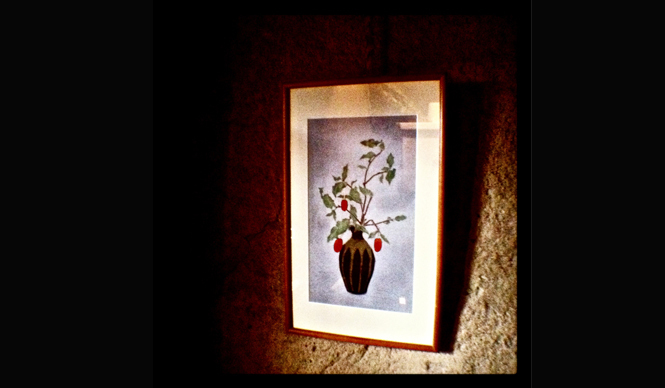
May 7, 2015
Diary-T 189 Flower Language
“With slender stems like hair, numerous small, five-petaled white flowers bloom in clusters at the tips. Seen from afar, they resemble a forgotten goddess's veil or a misty haze, hence the name Kasumi-so (Gypsophila). It is one of the easiest annuals to grow and is often used as a filler flower for cut arrangements. In the realm of Ikebana, even the elegant Dahlia must yield to its charm…”
“Petunias, known in Japan as Tsukubane-so, were once admired for their small, purplish-red blooms. However, recent advanced hybrid varieties now reach about 10cm in stem length, boast a variety of beautiful colors, and are quite pleasing as cut flowers…”
“Sowing time: In spring, sow in seedbeds from the equinox until around May…
Flower language: With you, my heart naturally softens.
That’s quite a long flower language. …Salvia, flower language: My heart is burning, I see.”
As his expression read those two flower languages,
it became ambiguous.
Excerpted from Plants on Sand by Junnosuke Yoshiyuki.
First Edition, March 1, 1964. Price: 380 yen.
One of the four books I impulsively bought at a used book sale held on the second floor of Le Vent in Ueda was
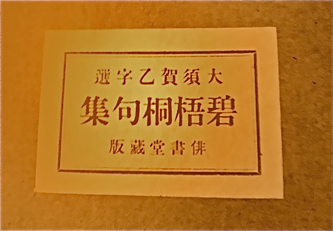
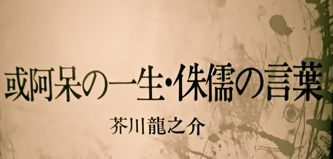
Plants on Sand.
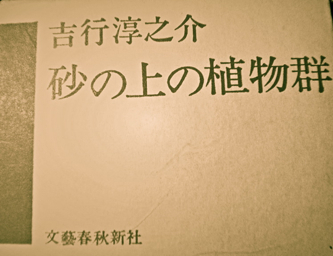
I don't know why I suddenly felt inspired to 'read it' at that moment.
Was it because of the title, or perhaps somewhere in my memory,
was there an input of 'Read this someday'?
I felt compelled to ask, 'Why?'
I finished reading Plants on Sand with complex emotions.
I recall reading somewhere that a novel is about weaving time,
but
perhaps I found the novel's structure, where the author explains their own writing or seems to be making excuses, to be fresh. This method might alleviate the writer's embarrassment to some extent? In other words, it's like automatic writing, or a feeling of being possessed and made to write? If so, one can write almost anything (with exceptional literary talent, of course), as if having a ready-made excuse for taking off one's pants in public. By objectively and distantly distancing oneself from the novel, one can substitute something else for potentially indecent stories that violate public order and morals, hiding the true message deep within. By mitigating embarrassment in this way, it's as if someone other than myself is writing it, so you, the reader, can fully enjoy the somewhat risqué world of this novel without shame, and I am completely unconcerned about whether you will grasp its deeper meaning. Like the protagonist who cannot be freed, you and I, who wrote this, are accomplices. Cheers! This feeling, which can be seen as akin to alcoholism, is something we can all enjoy together, arm in arm, sharing drinks… I have no idea who is making me write all this. Somehow, it seems that the suspicious desires lurking within me, which the novel frankly calls 'molestation,' are being expressed, but whether they would actually be acted upon is another matter. It's easy to imagine that this literary erotic novel caused a stir in society at the time. It was likely an era when, as Kohei Kitayama says, 'communication through alcohol' dominated most aspects of Japanese life. Perhaps that hasn't changed one bit even now… So, listing all these trivial things means I'm making excuses for recognizing a similar impulse within myself, but that's not true. Please, for tonight's sake. After all, tonight is the first dream of the year. Let's start the new year fresh with "Let's photograph the New Year!" Still, what is this sense of excitement… It's been a good New Year.
Am I drinking and writing this? Of course I am!
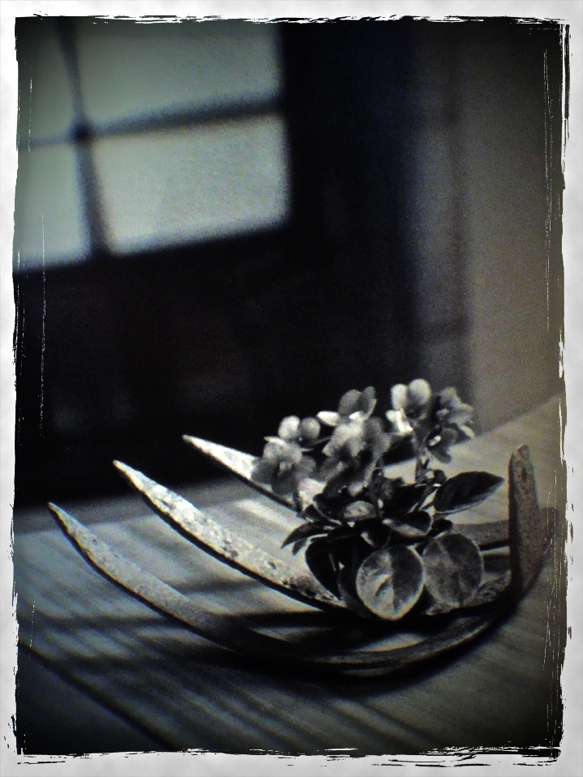
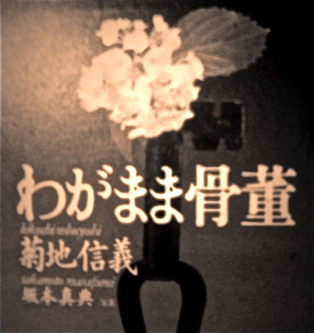
“Hoe and Saintpaulia”
“Selfish Antiques”
From “Shin-yoshi Kikuchi’s Hoe and Saintpaulia,” photographs by Masanori Sakamoto.
I served as the iPhone grapher.
Saintpaulia flower language:
“Little Love”
← Diary-T 189–194
Purchase here
http://ckstore.shop-pro.jp/?pid=38406798