
May 8, 2015
Diary-T 132 Temporary Foster Care

Gold is said to be resistant to inflation. When inflation occurs, the price of gold also rises.
But what if the world's reserve currency, the US dollar, weakens? Or what if there's no confidence in the Euro, struggling with fiscal deficits in countries like Greece and Portugal? Can Germany alone support the Euro? China's Yuan is pegged to the US dollar, making it a sibling in terms of currency. Considering this, you might realize that few currencies offer true peace of mind.
At the government level, both Japan and China have accumulated vast amounts of US Treasury bonds under political leadership. However, if the creditworthiness of US Treasury bonds were to be damaged, it could lead to a double blow of falling bond prices and a declining dollar, potentially resulting in immense losses. Since government accounts do not have impairment loss recognition, they would have to continue holding these unrealized losses indefinitely.
Consequently, some countries are aggressively pursuing risk hedging. China, Brazil, and Russia are intentionally moving away from the US dollar. Meanwhile, India and Russia are increasingly buying gold, perhaps because it is more 'trustworthy' than any national currency. With only about four swimming pools' worth of gold available globally and its limited influence from politics or religion, it's likely a significant reason.
Seen this way, gold might be akin to a safe deposit box, serving as a form of 'temporary custody'.
The price of gold is rising out of necessity; that's how it appears. Due to the strong, imposed bias, gold mining company stocks are finding it difficult to rise. This is how I understand the current gold market's implications.
In Japan today, there is a Gold Management Act that stipulates citizens must surrender gold to the government at a price determined by the government in times of emergency. Furthermore, since 2008, restrictions have been placed on gold transactions, and it is believed that virtually all transactions are currently recorded. The Japanese government's stance is for its citizens to trust the Japanese yen and not buy gold. The public should be outraged.
Japan has also undergone several currency revaluations.
The most recent was the new yen conversion after the war.
At that time, the old yen became virtually worthless. Gold can be exchanged for currency worldwide. Gold possesses monetary value, used in transactions like drug trafficking and, in Japan, pachinko. Central banks in various countries, though differing by nation, still hold a significant portion of their foreign exchange reserves in gold. Exporting gold exceeding 1 kilogram also requires declaration.
It is said that there are currently 200,000 tons of gold in the world. This amounts to approximately 800 trillion yen. This quantity of currency should be sufficient. It represents about one-fifth of the world's GDP. Having savings equivalent to about two months' worth of expenses per person should be adequate.
People who win the lottery often lead unhappy lives. When one possesses money, they become dependent on it. It might be more liberating to be penniless than to suffer from money addiction.
Japan from the Outside, Japanese People Observed
http://blog.livedoor.jp/fromvancouver/archives/52168299.html
Cut and pasted from a blog I stumbled upon.
Why are people fascinated by GOLD? Is it the golden hue?
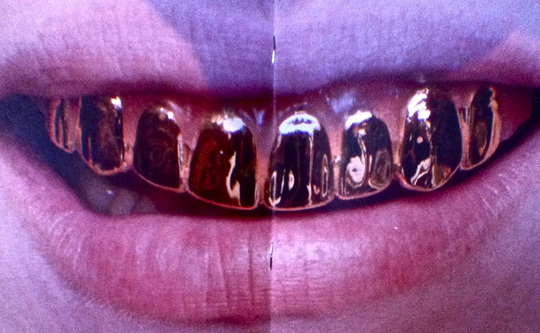
From A WEEK BOOK GOLD Designed by Hideyuki Yamano
Honeycomb Selection 100 0010
Even without gold...

← Diary-T 128-133

Click here to purchase
http://ckstore.shop-pro.jp/?pid=35061730