Toshio Matsuura | Summer Running Challenge!
Toshio Matsuura | From TOKYO MOON, July 17 ON AIR
Summer Running Challenge! (1)
Sunday nights, with quality music, your own time flows leisurely. This is the ultimate bliss for adults. Delivering such rich moments is DJToshio Matsuura's radio program, TOKYO MOON.──He selects wonderful music from around the world and presents topics that stimulate intellectual curiosity for adults, every Sunday from 7 PM on Inter FM 76.1MHz. Here, we bring you the latest broadcast program each week. This week, we presented a bluesy selection, and as preparation for the Tokyo Marathon scheduled for next February (though it's uncertain if I'll be able to participate), I reported on my recent experience at the "ASICS Running Lab Tokyo."
Text by Toshio MatsuuraPhotos by JAMANDFIX
Blues to Beat the Summer Heat
This time, we introduce a collection of bluesy tracks, from James Torme, son of Mel Torme—one of America's great vocalists, on par with Frank Sinatra—singing a modern rendition of his father's classic "Comin' Home Baby," to masterpieces from the 1960s by Sammy Davis Jr. and Oscar Brown Jr. We also played a cover version of "Armageddon" from Wayne Shorter's album "Night Dreamer" (1964), by the samurai jazz collective Soil & "Pimp" Sessions, from their soon-to-be-released new single.
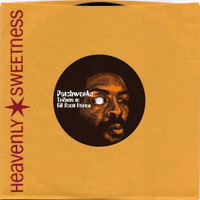
Patchworks / RIP with John Coltrane
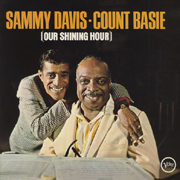
Sammy Davis Jr. & Count Basie /
Our Shining Hour
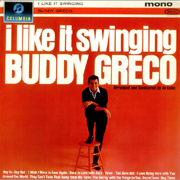
Buddy Greco / I Like It Swinging

James Torme /
Love for Sale

Soil & "Pimp" Sessions / Movin'
REVIEW | TRACK LIST
01. Sammy Davis Jr. & Count Basie / Work Song (Verve)
02. Buddy Greco / Fever (EMI Columbia)
03. James Tormé / Comin' Home Baby (Victor)
04. Oscar Brown Jr. / Mr Kicks (Columbia)
05. Earth, Wind & Fire / Running DK- Edit (Columbia)
06. Soil & "Pimp" Sessions / Armageddon (Victor)
07. Herbie Hancock / Come Running To Me (Columbia)
08. Patchworks / RIP with John Coltrane (Heavenly Sweetness)
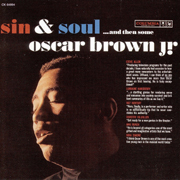
Oscar Brown Jr. / Sin & Soul
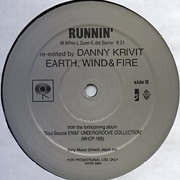
Earth, Wind & Fire / Running DK- Edit
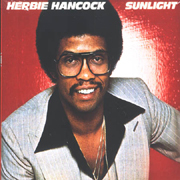
Herbie Hancock / Sunlight
Physical Assessment for First Full Marathon Attempt
I've been enjoying running as a hobby for some time, but I was inspired when my friend Gilles Peterson completed his first full marathon at the London Marathon in April. This led me to decide to enter the Tokyo Marathon next February. I wanted to properly check if my physical condition would allow me to complete a full marathon, so I found "ASICS Running Lab Tokyo" in Ginza, a facility that scientifically measures running ability and advises on optimal training methods for individuals. I visited immediately.
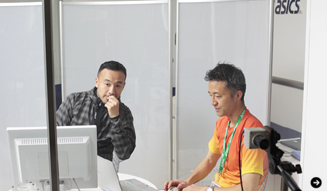
Guidance
First, at the lab, Jiro Kusayama, a staff member, explained the measurement procedures and precautions. I suppressed my excitement and listened for about 15 minutes, my heart pounding.
Foot Shape, Lower Limb Alignment, and Body Composition Measurement
The measurements began! Proper shoe selection is essential for running, so using a 3D foot scanner, they measured seven items including foot length and circumference to the nearest 0.1 millimeter. It was here I truly realized I have flat feet... which apparently makes my feet tire easily.
Next, they checked bone alignment, joint range of motion, and flexibility, and finally, they measured body fat percentage using professional-grade body composition scales. My muscles were described as "very stiff" or "stiff" in almost all areas... which was also as expected. My body fat percentage was 20%, which is high for a runner; the target is around 13%. No wonder I haven't caught a cold in years (laughs).
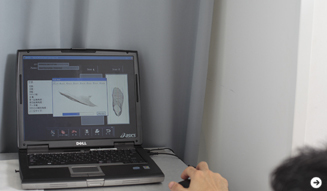
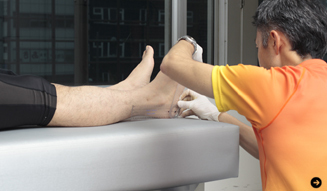
KusayamaMuscle strength is important, but body flexibility is even more so. When exercising, a major cause of injury is either stiffness or weakness in the body.
Toshio Matsuura | From TOKYO MOON, July 17 ON AIR
Summer Running Challenge! (2)
Now for the main event!
Leg Muscle Strength Measurement
Running places three times your body weight on your legs, so leg strength capable of withstanding that is necessary. Using a "isokinetic strength testing machine," similar to a leg extension machine found in gyms, I performed a full-force, single-motion swing of my lower leg, forward and backward, for each leg to measure maximum muscle strength for each movement. Unlike a leg extension, the isokinetic machine moves at a constant speed regardless of how much force you apply, making it feel incredibly heavy... My strained groans on the program probably conveyed how grueling it was (laughs).
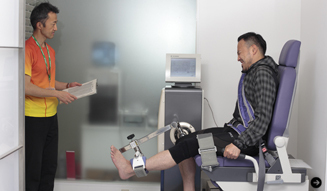
Imagine professional athletes undergoing rehabilitation, grimacing in pain. I could already feel the muscle soreness for the next day at this point (laughs).
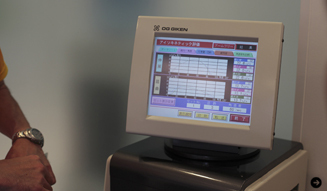
KusayamaThe numbers represent maximum muscle strength. Since muscle strength is proportional to the cross-sectional area of the muscle, the front muscles will naturally show higher values. A ratio of about 10:5 to 10:6 between the front and back is considered standard. For running, the posterior muscles are important. To run, strengthening the gluteal muscles originating from the hamstrings is necessary. Also, even though you're always trying your hardest, the graph shows that the force exerted varies depending on the angle. This reveals whether you're applying force appropriately.
If there's a strength difference between the left and right legs, you'll rely more on one leg when running, which can lead to injury in the weaker leg. The danger with running injuries is that if you feel pain in your left leg, for example, but keep running while compensating, you put a strain on your right leg, and then your right leg also starts to hurt – a vicious cycle.
Toshio Matsuura | From TOKYO MOON, July 17 ON AIR
Summer Running Challenge! (3)
Let's gradually increase the distance at this AT pace.
Running Form & Aerobic Capacity Measurement
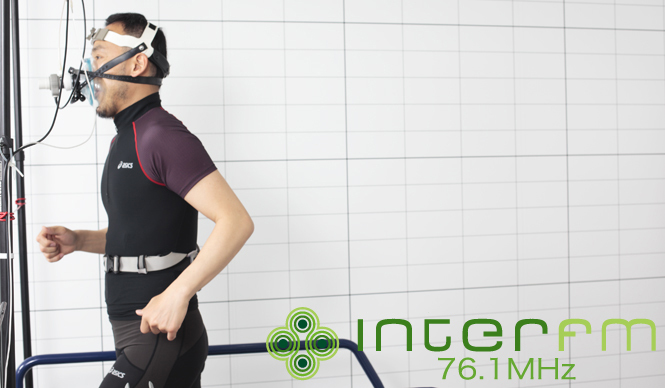
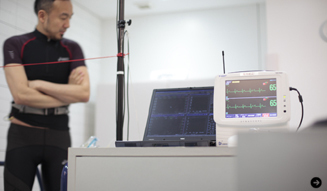
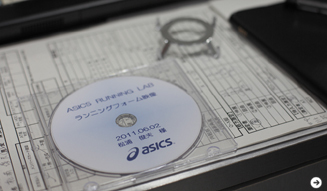
Finally, it was time to run. On a "treadmill," another machine found in gyms, I wore electrodes on my chest (for heart rate) and a rubber mask over my mouth (for respiration) while being filmed from the front, side, top, and back to check my form. I was relieved to hear that my running form was surprisingly good. I'll receive a digest DVD later, so I can check my form myself. That's great.
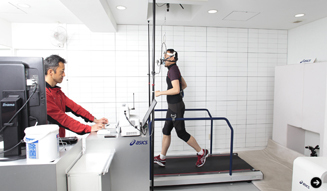
For the endurance test, I started at the lowest pace of 7.0 km/h (8 minutes 34 seconds per kilometer) and increased the speed by 0.5 km/h every minute, running for 17 minutes up to 14.5 km/h (4 minutes 8 seconds per kilometer). This determines my "AT pace," where my heart doesn't fatigue, and my "RCT pace," where I start to feel exertion, and calculates my estimated half and full marathon times. Of course, I've never run a full marathon before, so I'm not entirely sure, but they said I have a "heart capable of running" at a pace of 4 hours 35 minutes (1 hour 59 minutes for a half marathon).
Of course, this number is meaningless without the muscle strength to withstand running those distances.
KusayamaThe "AT pace" is the intensity of exercise that can be sustained indefinitely with sufficient energy replenishment – essentially, the engine keeps running as long as you provide fuel. 4 hours 35 minutes is a purely theoretical calculation; it indicates the current capacity of your heart. However, whether you can actually complete 42 kilometers in 4 hours 35 minutes this weekend is unknown. If the goal is to complete the Tokyo Marathon in 4 hours 35 minutes, the core of your training should be gradually increasing distance while maintaining this AT pace. However, running at the same pace every time can become monotonous, so variation is necessary. I recommend incorporating training that includes changes in speed and distance.
Toshio Matsuura | From TOKYO MOON, July 17 ON AIR
Summer Running Challenge! (4)
Recommended for those graduating from beginner-level running!
The room felt a bit cool before the run, but after finishing, sweat poured from my entire body, and I felt overwhelmingly hot. I borrowed the lab's shower to wash off the sweat and then had a final consultation. They explained and analyzed the measurement results for each part very clearly and thoroughly, offering advice. They also explained the detailed report that would be sent later, and finally, they encouraged me, saying, "Even for your first marathon, you have plenty of time to prepare properly!" which further boosted my motivation.
Participation is by lottery, so I don't know yet if I'll be able to run, but if I do, I'd like to consider a system for charity to the disaster-stricken areas of the Great East Japan Earthquake, along with Gilles and others. The comprehensive measurement, lasting about three hours, was informative in many ways. I believe it's a perfect program for those looking to move beyond beginner-level running. If you're interested, please give it a try!
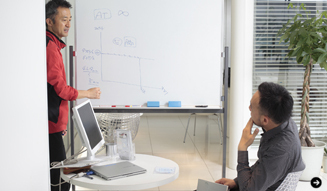
Finally, I asked Kusayama for advice on what to keep in mind when jogging in this intense heat. He said, "Above all, hydration. Drink frequently and early. Aim to drink about 150ml every 15 minutes." Please everyone, be careful and get through this heatwave!
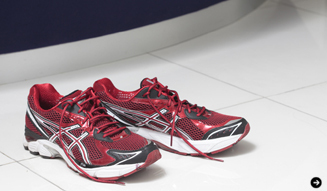
ASICS Running Lab Tokyo
DK Building, 8-3-4 Ginza, Chuo-ku, Tokyo
Inside ASICS Store Tokyo
Running Ability Measurement
Foot shape, lower limb alignment, body composition, leg muscle strength, running form, and aerobic capacity measurement
Price: ¥21,000
Running Form Measurement
Price: ¥5,000
Aerobic Capacity Measurement
*Only for those who have previously undergone the Running Ability Measurement.
Price: ¥8,000
*Reservations are accepted from one month prior to the measurement date, only through the members-only form.
*Participants must be 20 years of age or older (on the day of measurement).
Running Lab Tokyo
Tel. 03-3572-8303
Tokyo Marathon 2012
Date: Sunday, February 26, 2012
Entry Period: Monday, August 1, 2011 – Wednesday, August 31, 2011
Apply via internet or dedicated postal transfer form.
Tokyo Marathon Entry Center
Tel. 03 -5772-7667 (Weekdays 10:00-17:00)
http://www.tokyo42195.org/2012/
Toshio Matsuura's "TOKYO MOON"
Every Sunday 24:00-24:30 ON AIR
Inter FM 76.1MHz
Messages for "TOKYO MOON" to:
moon@interfm.jp
Inter FM 76.1MHz
www.interfm.co.jp