March 13, 2015
Keiko Toda: The Great East Japan Earthquake
Keiko Toda | What Can I Do Now?
The Great East Japan Earthquake (1)
March 11th.The Great East Japan EarthquakeMy deepest sympathies go out to everyone affected by the Great East Japan Earthquake. Three months have passed since this unprecedented disaster. Since then, I've tried to write about it many times, only to stop. Then I'd start again, and stop again.—The more I wrote, the more futile words and letters felt.
Text by Keiko Toda

We who support must also remain strong.
On the day of the earthquake, I was filming the drama series 'Misaki Number One!!' at Ikuta Studio in Kawasaki. It was the first time I had ever experienced such a violent tremor. I was truly terrified. If the shaking was that intense in the Kanto region, I can only imagine the fear felt by those in Tohoku. Then came the tsunami and the nuclear accident, a situation beyond comprehension.
Filming was canceled that day. When I finally managed to get home, I found my Buddhist altar toppled, flower pots broken, and various other damages, which left me feeling dejected. However, as I watched the images unfolding on television, I realized my own damage was insignificant in comparison...
Soon after the start of the week, we held a meeting asking, "What can the Anpanman team do?" As a result, we recorded a message of support for the children in the affected areas, making it available on a portal site. We are currently working on a second and third series of messages, as well as delivering character shows.
This situation has made me realize many things. Even though I am the voice of Anpanman, there are many hurdles to overcome for Anpanman himself to be active, which is a bit frustrating. However, reconstruction is a long road ahead. We who support must remain strong and continue to work towards it.
Keiko Toda | What Can I Do Now?
The Great East Japan Earthquake (2)
My heart aches, and words fail me.
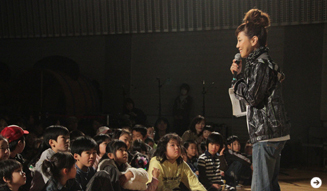
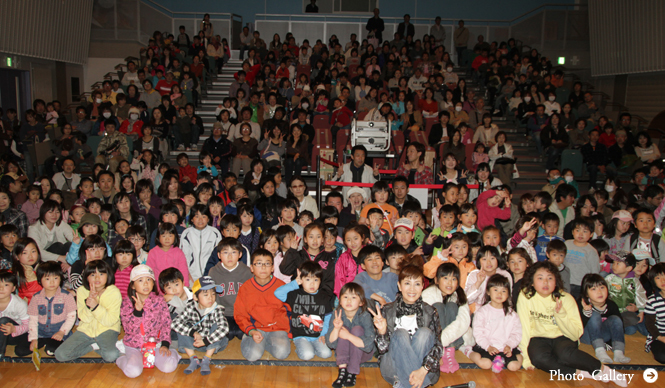
I have visited the affected areas twice so far. On April 16th, I drove for about six hours to Watari District, Miyagi Prefecture. I toured the disaster-stricken areas, visited four evacuation centers, shook hands, took photos, signed autographs, and gave away Anpanman plush toys and postcards. I also appeared on community FM radio, at Watairi Town Hall's Aozora FM and Yamato Town Hall's Ringo FM, where I read a message from Mr. Takashi Yanase. While I was broadcasting, people were coming to the town hall to file death certificates, and I was confronted with the raw reality of the situation.
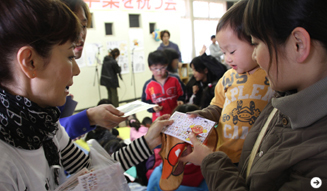
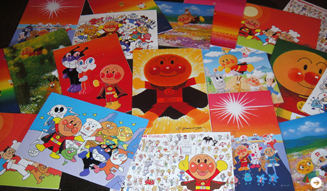
Until then, I had never truly grasped the meaning of words like "total destruction" or "devastation." The mountains of rubble I had seen on TV. The towns where nothing remained——. What I saw on TV was fragmented, but in reality, the devastation stretched endlessly. Mountains of rubble. Boats and cars were not where they should have been... My heart ached, and words truly failed me.
Amidst this, when I visited an elementary school that had been hit by the disaster, where children had escaped the tsunami by going up to the rooftop, cherry blossoms were blooming in the schoolyard. Despite the tsunami likely reaching the very tops of the cherry trees, they stood firm and bloomed. They seemed to be in full glory. They were cherry blossoms that had every right to be proud. Tears welled up.
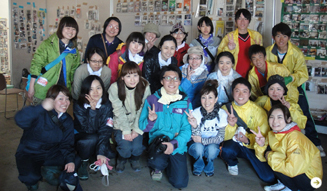
Finally, I visited a gymnasium where volunteers were staying. I took photos and signed autographs with them as well.
As I was leaving, the volunteers waved goodbye, saying, "We can do our best again starting tomorrow!" I was deeply moved. On the contrary, I received strength from them. I can only bow my head in admiration for their efforts.
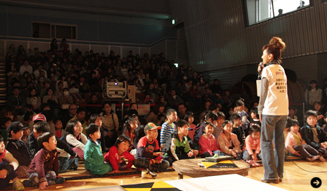
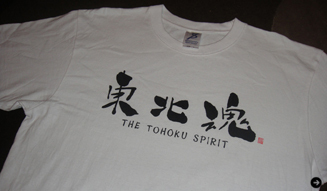
On May 2nd, 3rd, and 4th, I went to Iwate. Iwate is vast. I shamefully learned for the first time that it is the second-largest prefecture in Japan after Hokkaido. I traveled across Iwate by Shinkansen and rental car. Wearing T-shirts with "Tohoku Damashii" (Tohoku Spirit) purchased from the comedy duo Sandwichman, I performed live dubbing of five short films, including "Thomas the Tank Engine," at three locations over the three days of Golden Week with the Kinder Film team.
Even during Golden Week, a month and a half after the earthquake, reconstruction was still a distant goal, and the affected areas in Iwate were in a state beyond words.
Keiko Toda | What Can I Do Now?
The Great East Japan Earthquake (2)
A society where we live by helping each other within our capabilities.
In the past, during my singing career, I had toured Iwate with Kenji Niinuma. The names of the towns in the affected areas were all familiar to me. While a sense of nostalgia welled up, my heart ached at the sheer devastation.
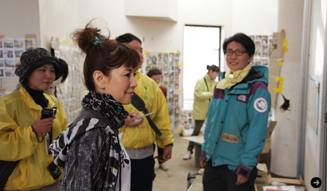
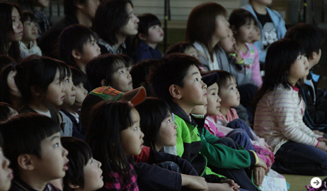
Amidst this, the children at every venue watched the films with sparkling eyes. They laughed out loud. On the first day, in a small kindergarten classroom in Kamaishi. Many children from nearby kindergartens gathered, turning the room into a packed temporary cinema. It was the world's smallest cinema. They cheered, "Go, Thomas!" I was deeply impressed by how well-behaved the children were as they watched. When they said, "Thank you," I couldn't help but shed tears.
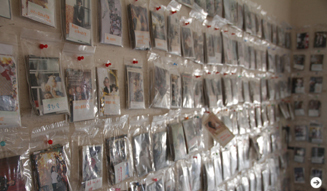
On the second day, at the community center in Noda Village, we held a screening powered by solar panels. Here too, everyone watched the film politely until the end. Near the venue, a volunteer team was collecting and cleaning photos from the rubble. It was a tremendous amount of work, sorting through so many pictures.
I met disaster victims who were overjoyed to find their photos. When everything else is washed away, a single remaining photograph becomes a true "treasure."
On the third day, we held two live cinema events at "Kodomo no Mori" (Children's Forest) in Ninohe District. This was a very well-equipped facility, and many people were able to attend. Overall, I was truly happy that the children at all the venues were so cheerful. However, I heard that some children still couldn't smile, and some cried at night. How terrifying it must have been. How painful it must have been. It is truly immeasurable.
During my journey across Iwate, I saw a large sign that read, "Ganbare! Iwate" (Do your best! Iwate). The words struck me deeply, and my heart couldn't help but echo the sentiment. I believe the Japanese people have never before thought so intensely about "What can I do now?" Everyone wants to do something, to help.
Mr. Takashi Yanase (92), the creator of Anpanman, said that while he cannot clear rubble in the affected areas, he might be able to encourage children with wounded hearts. Those who can cook should cook, the wealthy should contribute money, and the strong should use their strength. He believes this is a society where we live by helping each other within our capabilities. He feels this is an era that demands resolve from each individual.
The journey is far from over. I want to continue working on what I can do, keeping Mr. Takashi Yanase's words in mind. And strangely, I feel drawn to return to the affected areas.