Levi's® Made & Crafted™ | Essayist Dialogue: Tokichi Kimura x Ke
Levi's® Made & Crafted™
Essayist Dialogue: Tokichi Kimura x Hanae
Bridging the City and Nature (Part 1)
A modern line that incorporates innovative, high-quality materials and sewing techniques into designs rooted in Levi's history.—This is "Levi's® Made & Crafted™." The concept for Fall/Winter 2014 is "New West: Outdoor." "City and mountains," "indoors and outdoors," "old and new"—We present clothing that reflects the unique balance between opposing elements. As a prologue, we invited essayists Tokichi Kimura and Hanae for a dialogue. The theme: "Bridging the City and Nature." How should people living in cities engage with and process nature? We explore fulfilling and attractive ways of living for modern people.
Photographs by JAMANDFIX
Styling by TOCHIGI MasahiroHair & Make-up by SUGA MotokoEdit & Text by KASE Tomoshige
We are all equal in the outdoors.
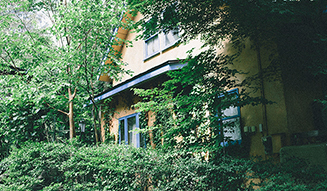
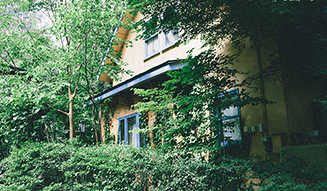
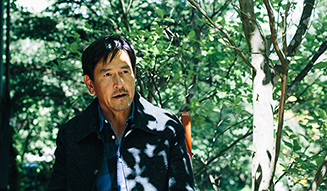
Lake Kawaguchiko, one of the Fuji Five Lakes, is located about 100 km from Tokyo. Living on the shores of this lake is essayist Tokichi Kimura. Born in the bustling streets of Osaka, Kimura moved to Tokyo at age 20. After a successful modeling career, he became a prominent figure in magazines like Popeye in the late 1970s and 80s, embodying the original "city boy" persona.
While continuing his modeling work, he moved to Lake Kawaguchiko in 1995 to pursue an outdoor lifestyle. Since then, he has engaged in various outdoor activities, including canoeing, and has shared the allure of nature with a wide audience through his books and numerous media appearances on magazines, TV, and radio.
We visited Kimura with Hanae, also an essayist. Hanae began her modeling career at age 10, appearing in fashion magazines. Around the same time, she won multiple awards in the "National Elementary and Junior High School Composition Contest," showcasing her literary talent. She has since published numerous books. Her passion for mountaineering, which she began as a hobby, has significantly influenced her work. She continues to appear in and contribute to many mountaineering magazines, including "Yamato Tani" and "Randonnée."
This dialogue between two essayists, who both emerged as models, have engaged sincerely with urban life, and simultaneously cultivated expertise in nature and outdoor activities, aims to shed light on what it means to bridge the city and nature, and to offer clues for a richer life in contemporary times.
HanaeMy interest in the outdoors began with climbing.
KimuraClimbing, as in rock climbing?
HanaeYes, rock climbing. I had an opportunity to go hiking, and my shoes broke. When I went to a mountain gear shop to buy new ones, the owner saw my long arms and legs and said, 'Climbing might suit you.'
However, when you get serious about climbing, the gear and shoes become very sport-oriented, and I felt it might not be quite right for me. So, for me, it's climbing for hiking, climbing to expand where I can go.
KimuraExactly. Competition shifts the focus from the goal to the process. It's the same with trail running; it becomes about racing for speed. But originally, it was based on the philosophy of "minimalism," aiming to engage with nature using the least amount of gear.
Climbing is similar. The origin was to develop climbing techniques to reach the summit or go to desired places. But when it becomes a competition, it shifts from climbing natural walls to artificial ones, competing on time.
HanaeThat's right. The route (※1) should ideally be free. At first, on natural walls, I was told, 'Climb up however you like,' and I found the process of finding my own routes and thinking about it to be enjoyable. Conversely, I found it difficult to follow predetermined routes with colored holds (※2).
KimuraHave you ever been to Ogawayama (※3)? It's wonderful. The rocks are beautiful, and the surrounding campsites are great.
HanaeYou climb too, Mr. Kimura?
KimuraYes, I do almost all outdoor activities (laughs). In 1992, I participated in an adventure race called "Raid Gauloises" (※4). It involved mandatory horseback riding, difficult climbing sections, and sea kayaking... I learned various skills there.
HanaeWhat prompted you to start outdoor activities?
KimuraI apologize for bringing up old stories in front of a young lady (laughs), but my youth was in the 1970s, the era after the Vietnam War, amidst a strong anti-war sentiment. Folk music was very popular then. James Taylor, John Denver. I also loved the Eagles and Jackson Browne, and listened to them a lot in my teens.
There are commonalities with today's era; there was a "return to nature" movement. I moved to Tokyo at 20. Of course, at first, I was focused on building my modeling career. When I started earning money, people usually bought cars like Mercedes or BMW. But in my teens, influenced by those American nature-oriented philosophies, I bought a pickup truck, loaded it with gear, and went camping with my wife.
HanaeI got into mountains just before the big mountain boom. During a modeling shoot, I mentioned, 'I'm really looking forward to going to the mountains with my school.' One of the staff members from that shoot invited me, saying, 'Let's go to the mountains then,' which was the direct trigger.
Thinking back, the reason I got hooked was very personal... I had started writing while modeling, and there were so many things I didn't understand about success or failure. Some people praised whatever I did, while others criticized it. I think my own foundation wasn't solid.
But when I went to the mountains, it was satisfying to have something tangible, like 'I climbed this high.' The goals and the process were clear.
After that, I went with colleagues for work, and the relationships became flat. You could see everyone's fatigue, so we naturally supported each other. The dynamic was completely different from school or the workplace.
KimuraI really understand what you're saying, Hanae. For me, that's running. The modeling profession often involves being chosen based on unpredictable factors. Basically, work is something you "wait" for.
Even if you put in the effort and feel you're in top condition, you might not get the job after an audition. Conversely, even if you feel you're not at your best, work might pour in. There's an aspect where it's hard to grasp value.
However, climbing a mountain, or what I've continued to do, "running," requires training to see results. Conversely, if you put in the effort, your time will definitely improve. If you go to the mountains, you have to climb with your own legs to see beautiful scenery, and in nature, everyone is equal.
Since I was 35, I've been teaching outdoor practical skills at Nihon Kōgakuin, a vocational school in Hachioji. That message has remained constant: in nature, everyone is equal, and without effort, you won't encounter "beautiful scenery."
→ To "Bridging the City and Nature (Part 2)"
※1 A line to the destination in climbing or bouldering.
※2 Protrusions installed on artificial climbing walls, mimicking handholds.
※3 A mountain located on the border of Hokuto City, Yamanashi Prefecture, and Kawakami Village, Nagano Prefecture, belonging to the Okuchichibu Mountains. Known as a mecca for free climbing. 2418m.
※4 An early example of a modern adventure race, first held in New Zealand in 1989. Participants navigate a course of approximately 650 km through pristine wilderness using only a map and compass.
Levi's® Made & Crafted™
Essayist Dialogue: Tokichi Kimura x Hanae
Bridging the City and Nature (Part 2)
Communicating through one's own body
HanaeI'm not much of a talker in the mountains; I tend to become quiet as I climb. As I ascend higher, closer to the heavens, it feels akin to participating in a Mass. I'm Christian by birth.
So, when I go to the mountains, I feel like I've completed a Mass (laughs). Especially when climbing mountains with many rocks, which I love. After enduring a harsh landscape, the sky suddenly opens up. When I repeat the same motion of silently climbing, my thoughts also swirl, and I feel like I reach a different place than usual. I feel I've found my own unique space.
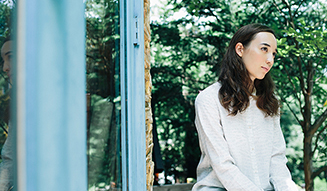
Also, at high altitudes, my fingers swell up. Many other unfamiliar physical experiences occur, and when I try to articulate these first-time experiences, I have to expand my vocabulary, even if it feels forced. I feel that has trained me.
KimuraI'm not sure if it immediately affects my writing or is immediately reflected in it... Lu Xun (※5) said, 'The more wonderful the things I see, the more I am struck by the inadequacy of my own expression.' The magnificence and threat of nature that I witness are, almost without exception, impossible to capture in writing. In such cases, visual media is powerful. I feel the limitations of writing.
HanaeI agree. I can never truly reach it, but I resist (laughs).
KimuraExactly. Of course, I understand the effort and the desire to extract something from it. But sometimes, no matter how hard you try, you can't reach it, and you just fall silent within yourself.
I now hold the title of outdoor essayist, but I not only enjoy writing but also love visuals and am very interested in photography. I lack talent in drawing (laughs). I want to convey messages using all these tools. Sometimes, using my own body.
Michio Hoshino (※6) wrote, 'When you see a sunset so beautiful it brings tears to your eyes, how do you convey it to the person you love? It's by changing yourself. By changing yourself after witnessing that scene.' Ultimately, it's about conveying it through your own body. It's about becoming a better version of yourself, one worthy of such beauty.
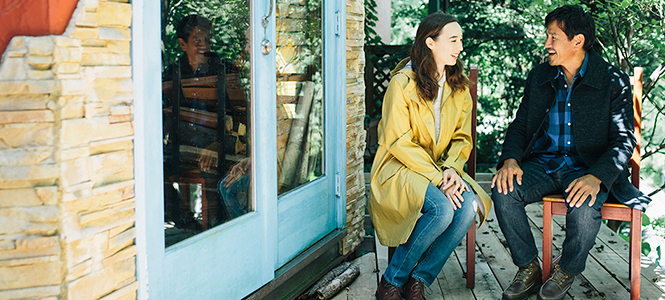
HanaeI tend to go at my own pace and generally believe that nothing changes no matter what I see. I was once told in a work setting, 'Whether it's nature or a documentary, you have a "responsibility to have seen it."'
This has always been a question for me: Should I change because I saw it? But isn't that also a fine line between arrogance and having witnessed something profound? And in the end, don't I just have to face my daily life? I was pondering this. But hearing you now, I feel I do have some responsibility, having seen or heard something.
KimuraYou mentioned arrogance just now. People can become very arrogant, can't they? Sometimes when I go to Tokyo, I see elementary school students on the subway at 11 PM. Or office ladies sleeping on the train seats after drinking. It feels very out of place. It would be dangerous overseas.
But living in the countryside, the nights are simply frightening. Although there are houses around, we are the only permanent residents, so it's incredibly quiet. In that silence, you feel the presence and gaze of living creatures. The fear arises because nature instills humility in our arrogance.
However, urban life is convenient, so even elementary school students can go out late at night if they know how to navigate the subway, and women can doze off after drinking. Outdoor life offers many wonderful things, but for me, it mostly provides humility.
→ To "Bridging the City and Nature (Part 3)"
※5 Chinese novelist and thinker. His representative works include "The True Story of Ah Q" and "A Madman's Diary" (1881–1936).
※6 Japanese explorer, photographer, and poet. A leading figure in Arctic and North Pole expeditions, he published numerous photo collections and writings. Died in an attack by a brown bear on the Kamchatka Peninsula, Russia (1952–96).
Levi's® Made & Crafted™
Essayist Dialogue: Tokichi Kimura x Hanae
Bridging the City and Nature (Part 3)
Urban dwellers in the countryside
HanaeI've considered living in the suburbs several times, but I just can't. I don't know if it's because of my age or my personality.
When I'm in the city, I long for the mountains, and when I'm in the mountains, I miss the city. I feel irresponsible for being caught between the two.
KimuraThere's an old mountain saying: 'When you think of the mountains, you long for people; when you think of people, you long for the mountains.' That's exactly it. Everyone feels this. It's about where you place your stance. Whether you live in a place like this and constantly long for people, or stand in the middle of a crowd and constantly think of the mountains. That's your way of life.
HanaeI tend to define mountains as a place for "non-daily life," and even though it's challenging when I'm there, I quickly forget about it once I return to my regular life... I felt irresponsible for this, and for a while, I wondered if I had the right to go into nature.
KimuraI don't think you need to worry about that at all. After all, I'm not living a self-sufficient life here. I have electricity, and the internet is connected.
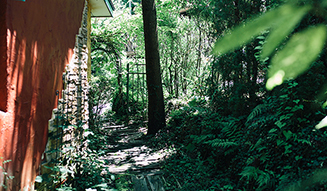
I often say this in various places, but I am an "urban dweller living in the countryside." Furthermore, whether in the countryside or the city, I prefer smart interpersonal relationships. It's not that city dwellers are cold and unkind, or that rural people are simple and pure.
This area became "Fujikawaguchiko Town" during the great municipal mergers of the Heisei era. Before that, when we moved here, it was called "Aritadaira Village." The population was 1,300 at the time, and I felt like 1,000 of them must have been named Miura, given how many relatives there were.
In 1973, the road finally opened to the foot of Mt. Fuji, and the Kawaguchiko Interchange was built. In a sense, it was a secluded area, and then many people started coming. This means that no matter where you are, there are differences in values, but I believe it's important to maintain your own values while respecting the values of others, and finding the next direction by respecting the points where they intersect.
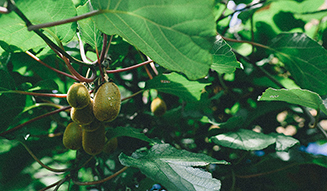
HanaeHearing what you just said has put my mind at ease (laughs). This is a bit different, but I once realized I had to be prepared when I went into nature. While on a traverse (※7), my mobile phone lost signal for a while. During that time, my grandfather passed away.
Of course, my family was desperately trying to contact me... but the looks and atmosphere I felt when I returned from the mountains...
Even if it was for work, you were in the mountains, right? That was quite strict. But I went back to the mountains, and the mountain guides told me, 'Time doesn't wait, and perhaps that was the time you were chosen.' I think of the mountains as a "distant friend." Like a friend from abroad. We can't coexist, but because I like them, I go to see them again. Thinking that way, I've been able to face the mountains and nature with a renewed sense of balance.
KimuraYou have a strong sense of responsibility (laughs). But perhaps living in the countryside also requires a certain degree of irresponsibility. I moved here because I wanted to canoe every morning. It's right by the lake. But at the time, I was in my 30s, working as a model, and had three children... I hesitated.
Why did I hesitate? Because of my responsibilities. Interpersonal relationships at work, family matters. But... I didn't care! Because "I want to canoe" was my first priority. That's just my personality (laughs).
HanaeHow can one reach that state?
KimuraIt's probably... personality (laughs).
→ To "Bridging the City and Nature (Part 4)"
※7 A mountaineering term referring to traversing a series of peaks in a mountain range in a single expedition.
Levi's® Made & Crafted™
Essayist Dialogue: Tokichi Kimura x Hanae
Bridging the City and Nature (Part 4)
From the lakebed to the summit
HanaeStill, I think this location with both mountains and a lake is wonderful. You can enjoy so many outdoor activities.
KimuraThe best part about climbing the mountains around here, besides seeing Mt. Fuji, is the view of the lake from the mountains. It's incredibly beautiful.
HanaeBecause the ground continues from beneath the water of the lake, it's a bit of a cliché, but you feel the Earth, the land.
KimuraIndeed, that's the essence of the Fuji Five Lakes. Lake Saiko, Shojiko, and Motosuko next to Lake Kawaguchiko were once a single lake 1,200 years ago. Lava flowed from Mt. Fuji, dividing it into three. Lake Saiko is half sandy beach and half solidified lava. You can understand these things as if they were right in front of you.
Of course, all the mountains in this vicinity are uplifted. Shells have been found at the summit of the Misaka mountain range. It truly connects from the lakebed to the summit. It's fascinating how you can see the lake from everywhere in the mountains.
Models and clothing
HanaeMr. Kimura, what do you think is the appeal of modeling?
KimuraIt's ultimately about the diverse experiences and the people you meet. A modeling project involves many people. Of course, you get to know some faces, but often it's a first encounter for each job.
In such settings, I'm often called not because I'm particularly good-looking, but because "Tokichi's presence will liven things up." If the looks and the fee were the same, it's better to have someone who livens things up. And since I tend to do that (laughs), I get requests like, "Hey Tokichi, make the other model laugh more!"
Therefore, you need to have something to talk about. Read books, watch movies, visit trendy restaurants. Each modeling job is like a stage, where you work hard to liven it up, and then say goodbye with "Otsukaresama desu" (Thank you for your hard work).
While working and getting paid, I was able to learn so much... I'm very grateful.
HanaeI only modeled from age 10 to 14, so it was a long time ago, but listening to you now, I thought, "Ah, that's right."
Even if you're not good at posing, everyone is watching, so you have to commit, right? (laughs). I naturally enjoyed performing in front of people, but modeling really honed that skill.
Since I didn't meet the same people often, I wanted to be remembered and to work well together, so I think my communication skills improved. Also, while being photographed, I would think, "What if I tried this? Would it look strange?" So, even at 10 years old, I think I unconsciously learned to view myself objectively. That might be helpful for my writing.
KimuraThe clothes I wore for the shoot today, when I first saw them, I thought they would be uncomfortable to wear. The silhouette was slim. But when I actually put them on, they were very easy to wear.
Also, like with building a house, I love how things get better with age, becoming worn and developing character. For example, flooring is usually made of hard wood like oak. But at my house, we deliberately used pine. It's soft and easily scratched, but that's what I like.
Japanese houses are beautiful at first, but they become worn and dilapidated over time. Like a woman at a party, dressed up in a formal gown, who becomes disheveled by the morning after.
Hanae(Laughs)
KimuraInstead, I really like clothes like jeans, or like in the video for Levi's® Made & Crafted™... clothes you can sleep in the back of a pickup truck and then wear to hike or go out to eat the next day.
I perceive the Levi's® brand itself in that way. So, I like the idea of taking this off (jacket) and using it as a blanket to sleep under. I'd probably get scolded for doing that (laughs).
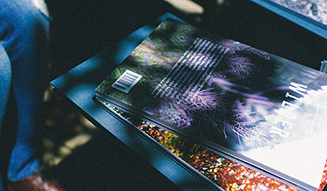
Clothes should be clothes, but also tools that can be used in various ways. And I like clothes that become more flavorful with wear, developing wrinkles and tears, revealing the wearer's personality.
I prefer clothes that aren't just a brand that looks the same on anyone, but clothes that gain their unique character only when worn by a specific person, when they wear them. That's the kind of clothing I like.
HanaeI was surprised to learn that there are "various kinds of Levi's®" this time... Levi's® Made & Crafted™ gives me a great sense of security. You can tell from wearing it that the materials are absolutely high quality, and I'm confident they are made to be used and cherished over time. They have strength and beauty.
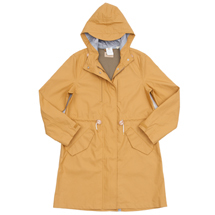
And I really like colors like this (mustard yellow hooded jacket). It suits my skin tone well.
I was born in New Orleans, and last year I took a memorable trip there, visiting my birthplace. There are wetlands, and just outside the city, there's a lot of nature.
My car got a flat tire while driving with my father. Then we were hit by a downpour, and even hail started falling. I wish I had been wearing Levi's® then. They feel like they protect you in rough situations.
But they also fit perfectly in the city, in Tokyo, in Omotesando. They felt like they truly embraced me.
→ To "Bridging the City and Nature (Part 5)"
Levi's® Made & Crafted™
Essayist Dialogue: Tokichi Kimura x Hanae
Bridging the City and Nature (Part 5)
For the goal
KimuraI've never tried to force a connection between modeling and outdoor work. I see myself purely as a messenger. It's just that outdoor life is where I place my emphasis within that message.
Cooking is the same. If asked for outdoor cooking, I'll use a two-burner (※8) or a Dutch oven (※9), but originally, I had a cooking series in "Popeye" called "Delicious Meals You Can Make Even in a 4.5-Tatami Room." So, I used to invite people into my 4.5-tatami room, and now I invite people to the sea or mountains for meals. The core activity hasn't changed.
To those who can relate or aspire to it, I've been sending a message: "If you try this way, or change your perspective like this, you can make things more comfortable and enjoyable." That's what I do. Now, it's just through outdoor living.
Outdoor living is physically demanding. I moved here at 35, and I believe I can continue this lifestyle until I'm 75. Hypothetically, at 76, it might be easier to live in Tokyo. In an apartment building. Shoveling snow here, gathering firewood, renovating a broken deck... it's very demanding.
After 76, I might send a message for the "golden age" living in the city. While outdoor life is irreplaceable for me, I believe my core self is fundamentally urban.
HanaeLiving here until 75 is impressive in itself.
KimuraMy marathon time is usually around 3 hours 30 minutes to 40 minutes. If I'm not careful, it's about 4 hours. So, for the next 20 years, until I'm 75, I want to continue to "laugh my way through 4 hours." To do that, I'm training and maintaining my physical strength.
HanaeThat's an amazing goal. I'm also the type to decide where I want to go and then figure out what's necessary for it. For example, if I want to see the bottom of the ocean, it's diving. If I want to see the aurora, I need to prepare accordingly. That way of thinking has become very strong for me now. So, to build my stamina, I swim 1 km every day.
Even if I don't have specific destinations or activities in mind, I'm making basic preparations so that I can respond when they arise.
KimuraI can really relate to that. If I want to go somewhere. But the approach to getting there isn't that important. Some people obsess over gear, or routes, but I love the simple idea of: I want to go here, so I will do this.
※8 A slightly larger outdoor cooker with two burners.
※9 A cast-iron pot with a lid that can also hold charcoal on top, allowing heat to be applied from both above and below, similar to an oven.
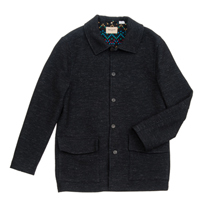
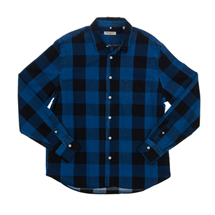
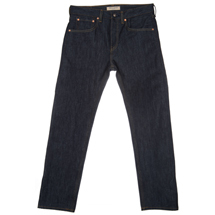
Clothing worn by Tokichi Kimura
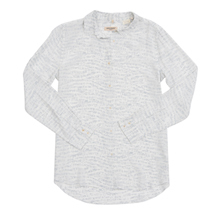
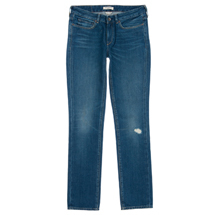
Coat ¥57,024, Shirt ¥18,900, Denim Pants ¥19,008 (all Levi's® Made & Crafted™)
Clothing worn by Hanae
Parka ¥66,744, Shirt ¥24,300, Denim Pants ¥23,004 (all Levi's® Made & Crafted™)
Levi's® Made & Crafted™
http://levismadeandcrafted.com/
Levi's® XX
Tel. 03-6418-5501
Tokichi KIMURA
Born in Osaka in 1958 (age 55). Essayist. Active as a fashion model in the late 1970s and 80s for magazines such as Popeye, Men's Club, and Checkmate. Simultaneously developed a passion for outdoor activities like canoeing and camping. Currently resides by Lake Kawaguchiko, where he writes essays, lectures at vocational schools, and works as a radio personality. He balances life in nature with urban living, sharing the appeal of the outdoors through camping and canoeing classes.
http://greatoutdoors.jp/greatlife/
Hanae HANAE
Born in the USA in 1991 (age 23). Began modeling at age 10. Also demonstrated early literary talent, winning the Minister of Education, Culture, Sports, Science and Technology Award at the National Elementary and Junior High School Composition Contest. Appears in many mountaineering magazines such as Randonnée and Yamato Tani as a model and contributor. Has published numerous books, including "Yorimichi Komichi" (Kadokawa Shoten).
http://hanae-orihime.com/