Japanese-Inspired Graphics Resonate with Sportswear | adidas HIROKO TAKAHASHI COLLECTION
adidas HIROKO TAKAHASHI COLLECTION
Focus on adidas' First Happi & Yukata Jackets!
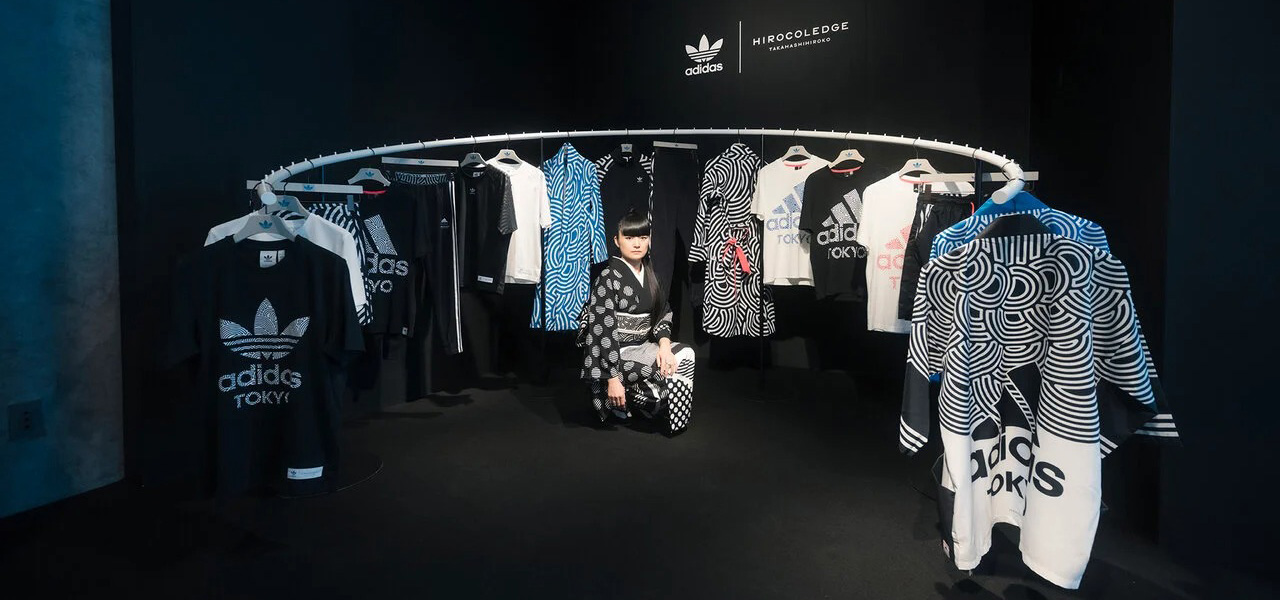
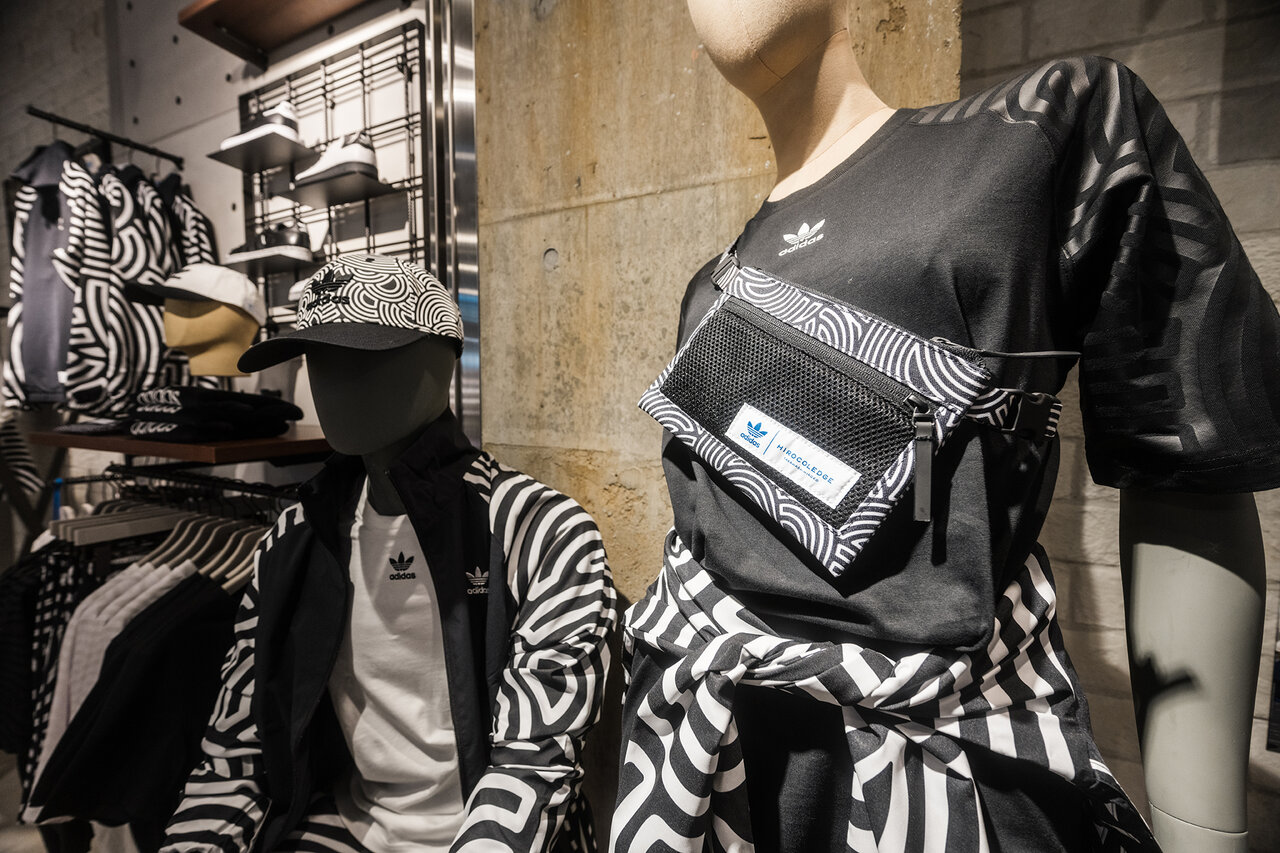
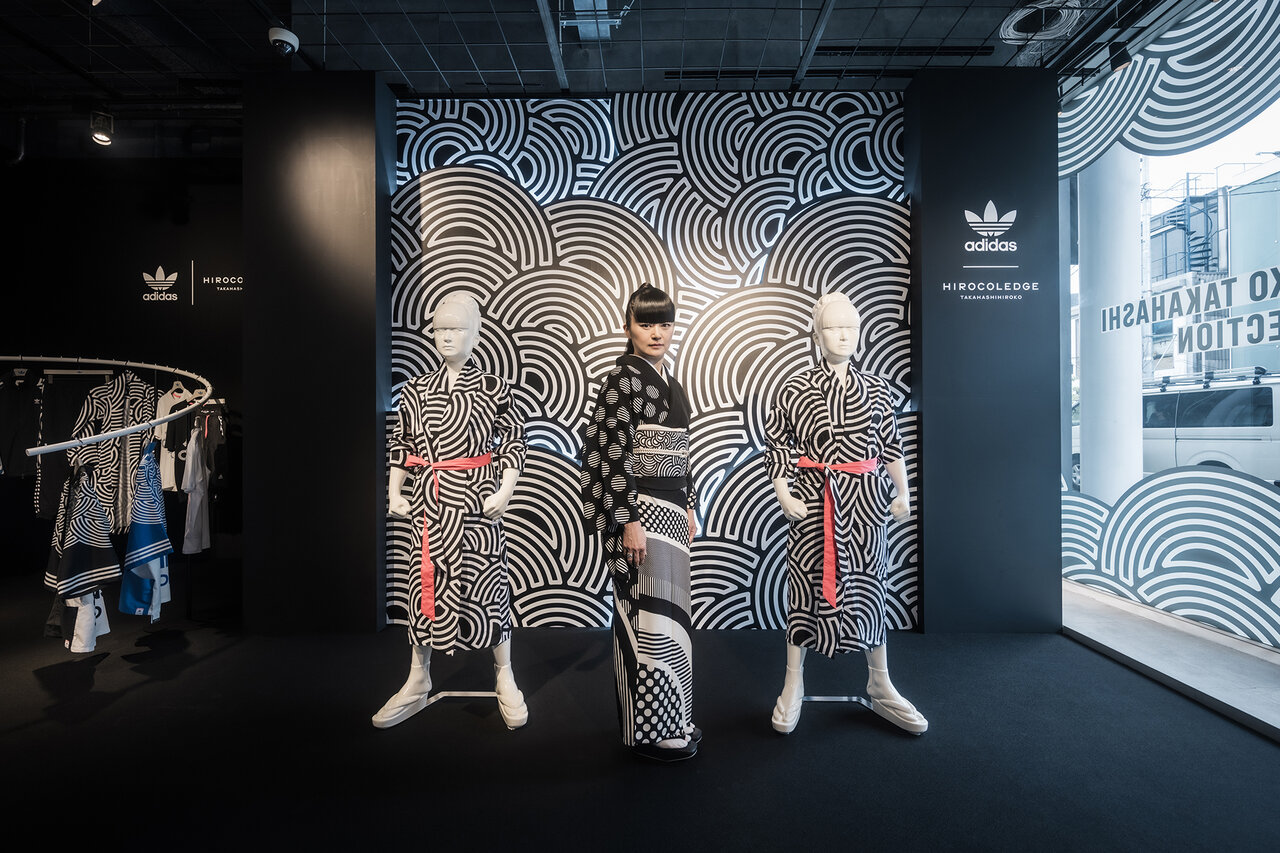
Hiroko Takahashi's graphics, reminiscent of the Seigaiha pattern often used in kimonos. adidas leads the sportswear industry with its sustainable initiatives. Though seemingly disparate, the completed products have been elevated into contemporary, street-ready real clothes.
An Interview with Artist Hiroko Takahashi
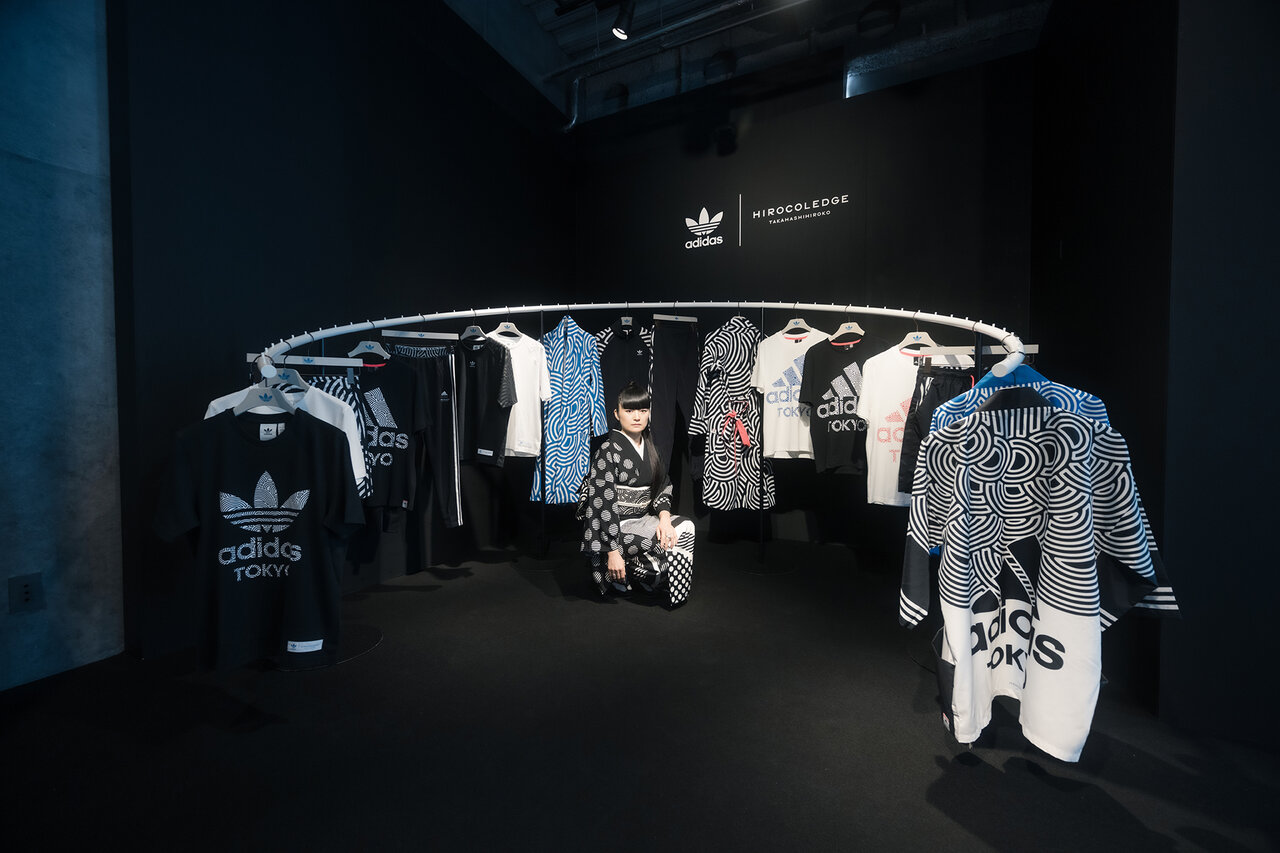
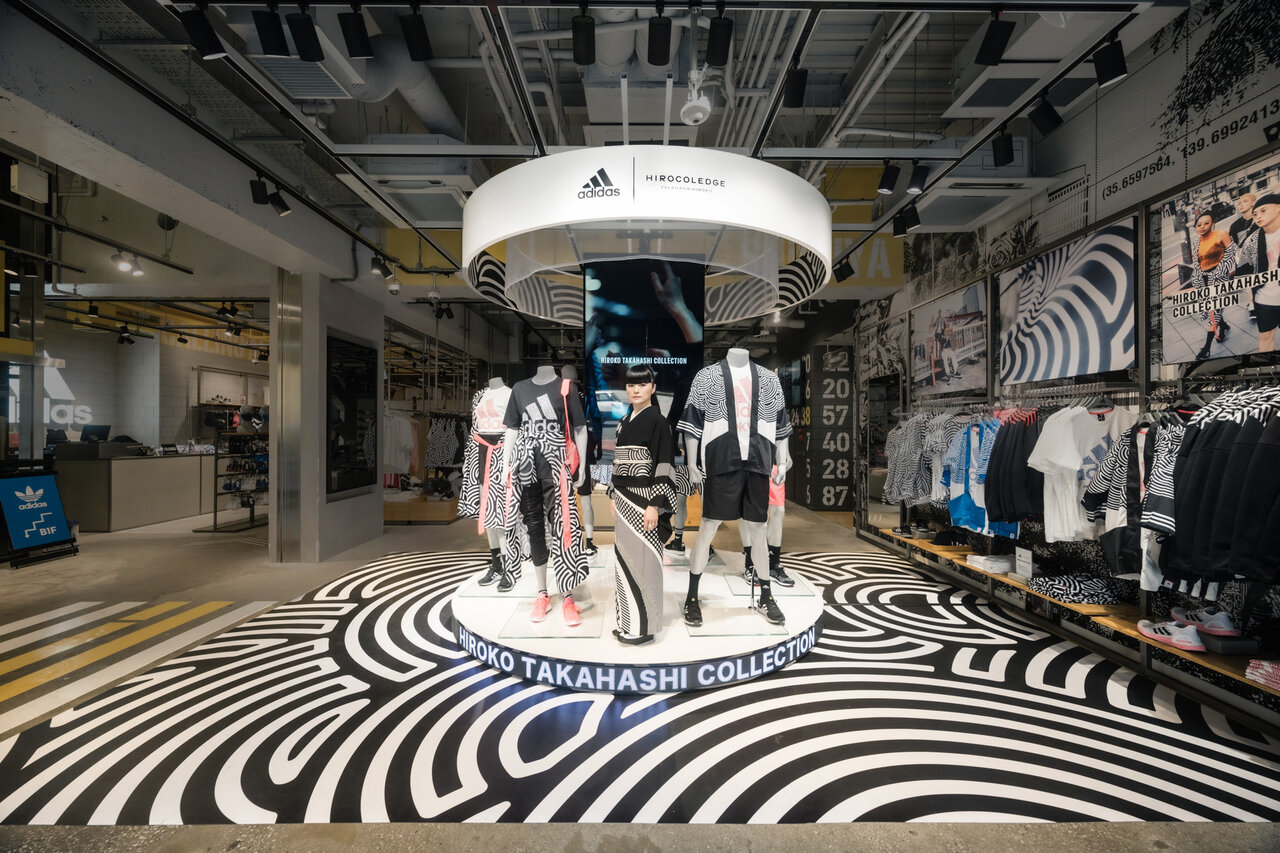
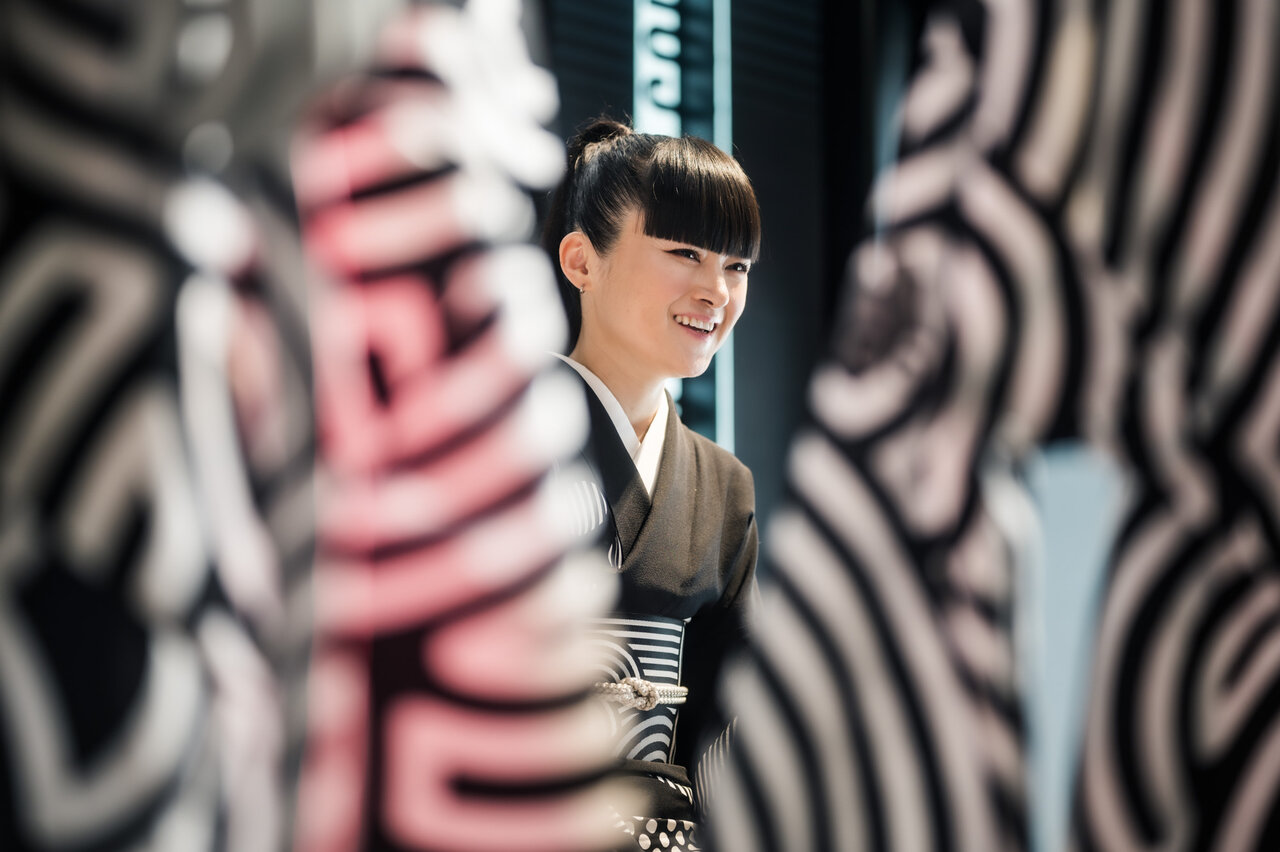
Launched in 2015, adidas' Key Cities is a global strategy that involves strategic investment in six major cities worldwide, developing products and marketing activities that incorporate the local culture of each city. Tokyo, one of these six cities, has seen various initiatives, and for this season's product strategy, the chosen artist is Hiroko Takahashi. Her signature graphics, composed solely of perfect circles and straight lines, have been used to release a total of 89 limited-edition items, including adidas' first-ever Happi jackets, Yukata jackets, and kids' Jinbei. We spoke with her at a pop-up store.
—Are there any sports or activities you incorporate into your daily life?
“I don’t currently have any regular sports, just stretching. However, I was on the judo team in high school. Our coach was a renowned figure, a contemporary of Yasuhiro Yamashita, and we trained very rigorously. I received strict guidance, so I believe I have a strong will myself (laughs). I aspired to be a fashion designer from childhood, and the high school I attended specialized in fashion, but I always wanted to do some kind of sport.”
—So you were truly a well-rounded athlete in school. When did you first encounter adidas?
“When I was in elementary school, I was in a gymnastics club, and my middle school tracksuits were adidas, so it was a very familiar sportswear brand. Also, my uncle was a professional baseball player for the Hiroshima Carp and later worked as a scout. He gave me adidas tracksuits and other items that were hand-me-downs from my father, which I also wore. If I had saved those tracksuits from back then until now, they would probably be valuable vintage pieces (laughs).”
Could you tell us about the process that led to your collaboration with adidas this time?
“I received the offer for this collaboration from adidas about three years ago. Throughout high school and university, I thoroughly studied pattern making so that I could create jackets and dresses from a single piece of fabric. Therefore, some of the items are designed from their shape itself, not just by placing graphics on existing products. The material properties and printing techniques differ for each item, and for some, we had to adjust the position and size of the graphics for each size, requiring different printing plates. Although it caused extra work for adidas, I had my own specific ideas, so I checked each sample meticulously. Because of this, it took nearly three years for all the item samples to be ready.”
—The graphics used this time resemble the Seigaiha pattern, and some might even see Ainu motifs. Sportswear and traditional Japanese attire seem unrelated, yet I was surprised by how naturally they coexist. Were there any specific requests from adidas?
“They approached me because they resonated with the sentiment I imbue in my graphics of circles and straight lines, so I created new graphics using circles for this project, as I always do. As you mentioned, some parts resemble Seigaiha, and some people have pointed out that they also look like adidas's Three Stripes, which I find interesting how different people perceive and feel them differently. In reality, it's a pattern where perfect circles spread out from the center like a flower. Circles have been used universally since ancient times and are an indispensable element in my work as a universal motif. Circles can also symbolize connection, circulation, and regeneration, and I would be happy if this graphic helps people connect or boosts their motivation when they exercise.”
—Many of the items are in black and white, with graphics drawn in lines of uniform thickness, which is also unique.
“My work is fundamentally monochrome. While I sometimes use color intentionally to leverage the characteristics of a technique, I always strive to express myself with the minimum necessary colors. Most items are black and white, but there are also some items that incorporate blue, symbolizing adidas's lifestyle line. Additionally, some items feature neon pink accents on the lining or stitching.”
—Adidas was a pioneer among sports brands in adopting sustainable materials and manufacturing processes. Sustainability is now a keyword for many brands, but what are your thoughts on this?
“Although the blend ratios vary by item, recycled polyester is used in most of them. Furthermore, the kimonos and yukatas I offer in my own brand inherently have very little fabric waste. By adjusting the amount of stitching, the width can be modified, and they can even be re-tailored. As a result, the environmental impact is reduced. In addition to traditional Japanese clothing, I also release tenugui (hand towels) as a staple. They are simply square pieces of cloth, but they can be used in various ways and last a long time, making them sustainable in the end. I've also added T-shirts with a square shape, similar to kimonos and yukatas in that they are made with minimal material waste, to this collection, so I hope people will check them out.”
Many of the items in this collection are genderless and possess a unique charm that defies categorization. The Happi and Yukata jackets, in particular, have a powerful presence that can transform any styling.
“Many kimonos are often categorized as men's or women's based on their color or pattern, but in my brand, I design them to be enjoyed regardless of gender, and the same applies to this collection. I always want people to incorporate kimonos and yukatas into their daily lives, and I especially want the Yukata jacket from this collection to be used for everyday wear. It's made of a lightweight, quick-drying fabric, so it's great to wear over swimwear. It also folds flat without taking up much space, making it ideal for travel as relaxing wear or a light outer layer, allowing for enjoyment in various situations.”
Hiroko Takahashi
Born in Saitama Prefecture in 1977. Studied traditional dyeing and weaving at Tokyo University of the Arts, and while pursuing her doctoral degree, she was invited by the French Ministry of Foreign Affairs' AFAA to work in Paris. In '06, she established HIROKO KORAGE Inc. (now HIROKO TAKAHASHI Inc.). In '08, she completed her doctoral program at Tokyo University of the Arts, earning a Ph.D. in Fine Arts. In '19, her work was permanently acquired by the Victoria and Albert Museum in London. In April '21, she was appointed Professor at the Department of Crafts and Industrial Design, Faculty of Fine Arts, Musashino Art University.