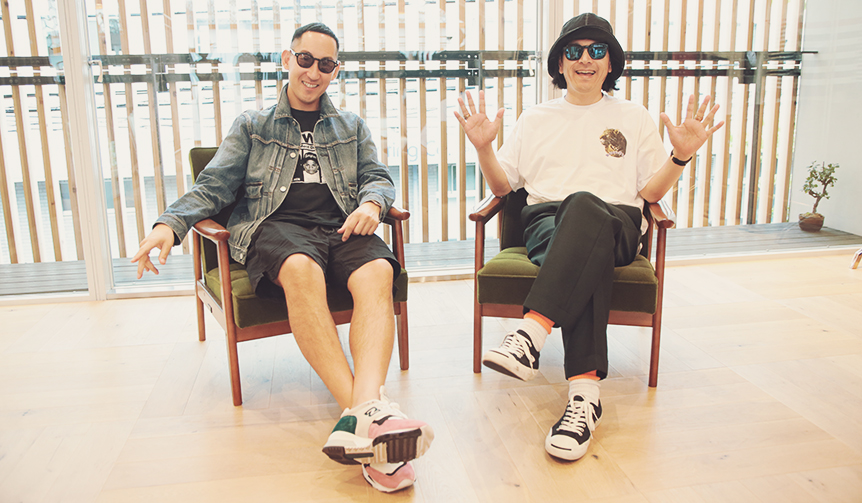
Tomoki Yuzuka & Editor-in-Chief's Dialogue | Vol. 29, Riya Kuroki
Page. 1
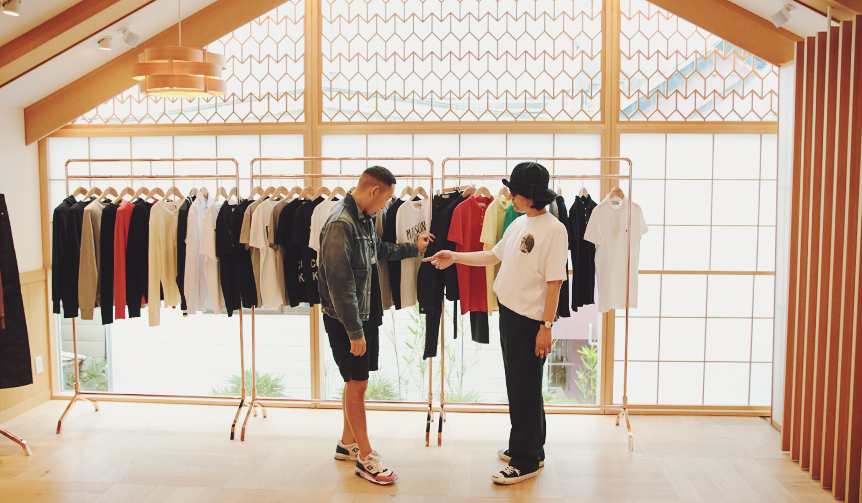
This time, the Editor-in-Chief welcomed Riya Kuroki, co-founder and Creative Director of MAISON KITSUNÉ, as his conversation partner. We spoke with him at the MAISON KITSUNÉ Daikanyama store, which recently celebrated its first anniversary, about the Australian band "Parcels," which he produced, his own brand and cafe, and his future plans.
Interview by Yuma TomokiPhotographs by SATO YukiText by HATAKEYAMA Satoko
What is "Parcels," produced by Daft Punk and hailing from Byron Bay?
Yuma Tomoki & Editor-in-Chief (hereinafter, Yuma)Today, I'd like to start by talking about music. The Australian band "Parcels," produced by Daft Punk and releasing music on the KITSUNÉ label, is quite the topic. Have you done this kind of thing before?
Riya Kuroki (hereinafter, Masaya)No, this is the first time. Gildas (Loaëc) and I have had a label for 15 years. While we've produced many artists, I've always had the desire to produce a band someday. We were always keeping an ear out, and we discovered Parcels, who were active in Byron Bay, Australia.
YumaByron Bay is famous for its beautiful beaches, and it's more of a mecca for surfers, isn't it? But how did you find them?
MasayaByron Bay is a place I really liked when I toured Australia as a DJ a few years ago, and I had a couple of days off there. So, when Parcels, who are from Byron Bay, happened to send us a demo, Gildas and I listened to it and were blown away. "At this age, this is incredible." At the time, they were five surfer friends, all 18 years old, with long blonde hair, wearing vintage clothes from the 70s. Their sound was pop, like what you'd hear on FM radio in L.A., and we felt that with a little polish and production, they had the potential to grow. From then on, we put more effort into them than we ever had with any other artist on the label; Gildas and I even planned their entire management direction. Once the songs were finished and we promoted them, radio stations started playing them, they got booked for festivals quickly, and their live shows fell into place smoothly.
YumaWhen you and Gildas both felt "This is incredible!" was their sound quite new?
MasayaIt had a funkiness that was unlike anything before. The sound was new, but the melodies were old. It was music that everyone, from young people to adults, could enjoy – in other words, it had a freshness like "new vintage." And when we introduced them in Paris, Daft Punk happened to be there, and around the second song, Thomas (Bangalter) suddenly asked Gildas, "Can I go to the studio with this band?"
YumaIt's amazing that Daft Punk would suddenly say that (laughs).
MasayaWe were like, "Huh?" (laughs). We watched their live performance until it ended, and as soon as it was over, we took them backstage. When we told Parcels that Daft Punk wanted to meet them, they froze up, and when I asked, "They want to go to the studio with you, do you want to meet them now?" all five members were like, "Whaaaaat?!" (laughs).
YumaWell, of course they would be. I can picture their surprised faces (laughs).
MasayaIt's a simple thing, when you think about it, for world-famous artists to feel something from a young band and go to the studio together. I also thought that this is the true nature of things – creating something through the feeling between artists. And the song "Overnight," which we released last month, was completed after six months of production with Daft Punk. Since then, thanks to social media like Instagram, it's become quite well-known, which is wonderful.
Page02.One year since MAISON KITSUNÉ Daikanyama opened. What are your future prospects?
Page. 2
One year since MAISON KITSUNÉ Daikanyama opened. What are your future prospects?
YumaThat's a great story. How old are they?
MasayaThe leader is 23, and the others are 20-21. When they sent the demo, the keyboardist was only 17. They live in Berlin now (shows a photo) and look like this. They have great visuals, and they're all handsome!
YumaTheir fashion also evokes that new vintage feel, which is nice. By the way, not all artists on the KITSUNÉ label wear MAISON KITSUNÉ, do they?
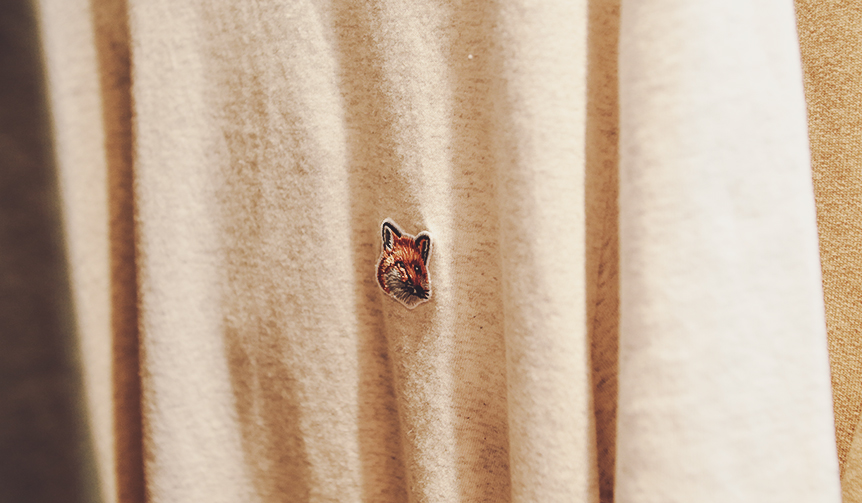
MasayaIf they say they want something, I'll give them a discount at the store, but of course, we don't force them. For artists, their lifestyle, environment, and what they wear are all part of their style. When Parcels came to Japan, they went to vintage shops every day and didn't sleep. In this era, you can get information in real-time, but they look at and wear things from the past, going back in time. They even seek out and use equipment that produces old sounds. So, after looking through vintage clothes, they went to old musical instrument shops in Shibuya and Shinjuku. They didn't even look at modern Tokyo (laughs).
YumaThat's interesting! It's unusual to have young people from Australia in the first place. It's quite far from Europe and America, and the culture is different. But there must be hidden talent there if you look for it, right?
MasayaI'm sure there is, and they have a uniqueness in their ideas that we don't have. The environment changes, and so does thinking; that's definitely true.
YumaI was also into the Gold Coast for a while and went there for about three years around New Year's. I stopped going when the direct flights were discontinued, but it's a comfortable place, and the people are great.
MasayaEveryone is friendly, and at festivals, they seem happy and hugging all day. Also, it's interesting how they have styles on the street that you would never see in Tokyo. It's an Aussie style, so to speak; they wear ripped skinny jeans and have a long culture of wearing VANS. Above all, there are kids who wear fluorescent colors in the cutest way in the world.
YumaThey do have an image of actively wearing fluorescent colors. In places like the Gold Coast, there might only be Adidas, and not stylish Adidas, but real Adidas. Or Billabong. But when I tried wearing them, I thought, "Billabong is cool!" and I wore them to a barbecue (laughs).
MasayaWearing products that aren't globally recognized and aren't part of the trend cycle to a barbecue must feel incredibly liberating (laughs). What's best about Australia is the lack of time difference. Since I'm living in Japan now, I'm thinking of going to Australia more often.
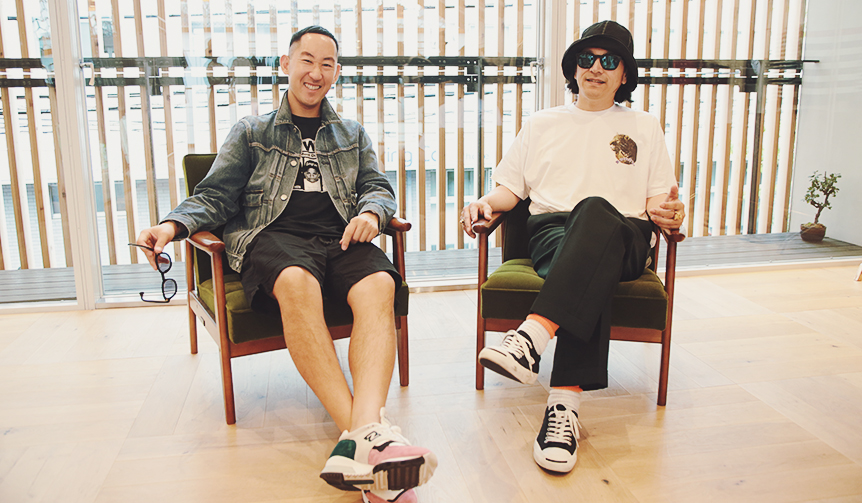
YumaSo, shall we talk about clothes now? It's been a year since the MAISON KITSUNÉ store opened in Daikanyama. How has it been received?
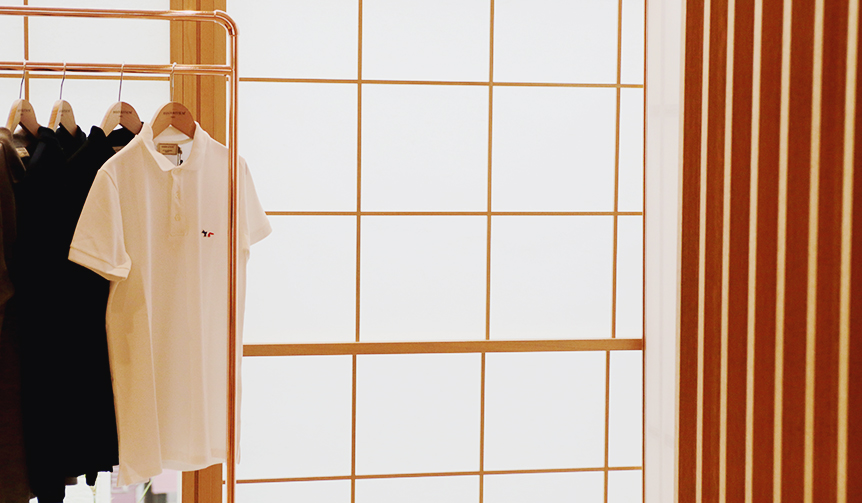
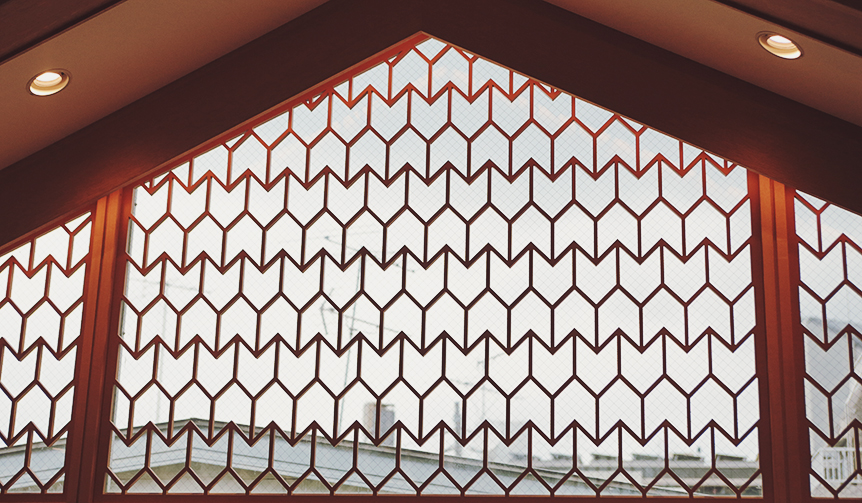
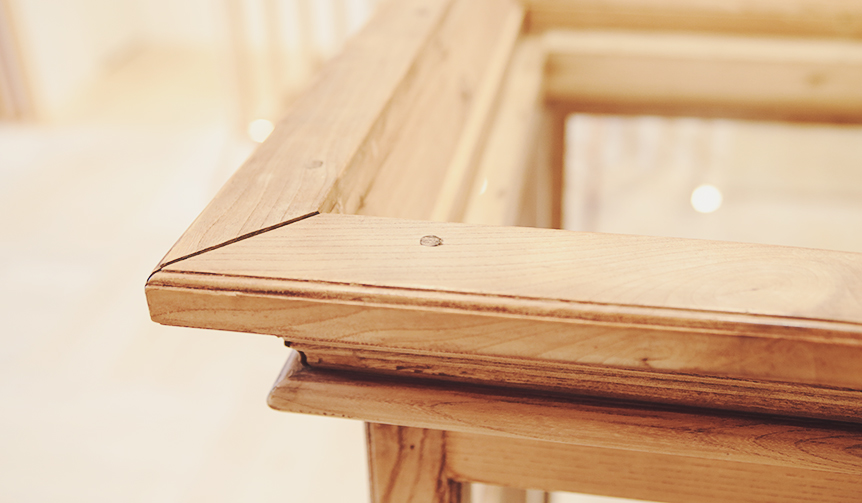
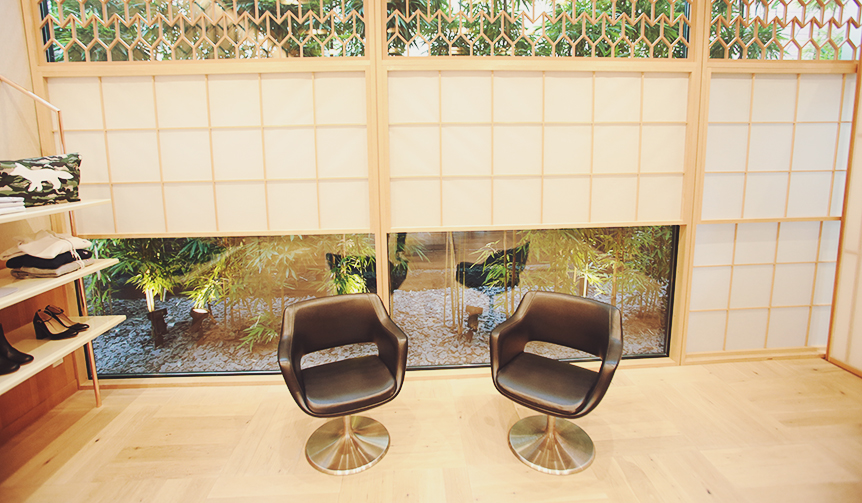
MasayaWe're happy to say it's going well. What makes me particularly happy is seeing foreign tourists take photos of the Daikanyama store's space and share them on social media. I was particular about creating a modern Japanese space that I envisioned, breaking away from the traditional Japanese style, so I'm genuinely pleased with such reactions.
YumaThe Daikanyama store is also an homage to the Hotel Okura before its renovation, isn't it?
MasayaEspecially the first floor. The walls and lighting, and when we opened, we even placed chairs inspired by the Okura's lobby. Perhaps a new feeling emerged, wanting to show the coolness of Japan to more people overseas. I grew up abroad from a young age, spent my teens in Europe, then lived in New York, and now I reside in Japan. It's precisely because I had a certain distance from Japanese culture that I was able to come up with the idea for this space.
YumaWith your background, Masaya, that kind of thing would naturally emerge. Also, I heard you're opening a store in New York in September?
MasayaThat's right. We'll be having a review in SoHo to coincide with New York Fashion Week. Some people told me, "Aren't you pushing yourself too hard?" but you have to do it when you can. Also, a directly managed store will open in Kyoto in October. It has a history of 140 years...
YumaFujii Daimaru! I made my fashion debut at Fujii Daimaru when I was in junior high school (laughs).
MasayaThen please DJ at the opening (laughs). We decided on Kyoto when MAISON KITSUNÉ was going to debut in the Kansai region. In the future, we want to open in Osaka and Kobe too, but Kyoto first. People in Kyoto are always sensitive to new things, and their sense is sharp. I wondered if people like us, who run a coffee shop, have a music label, and also do clothing, would be accepted, but we've had a positive response. So, I go there frequently now. Kyoto is stylish, isn't it?
YumaPlease tell me the good things about Kyoto (laughs). It's been a while since we last met, but you're always energetically on the move, Masaya. You're making music with young Australians, opening stores, traveling around the world, and it looks like you're having fun. Moreover, these are all things that only you could do.
MasayaI'm having a lot of fun doing it myself, and I don't think I could do it if I wasn't enjoying it. Also, I think everyone else is more of a realist than I am. I tend to be less grounded in reality (laughs).
YumaYour strength is in being able to communicate outwards. Japan has many good things, but it's not always good at presenting them outwards in a good form. It must be unique to you, Masaya, having spent your formative years in Europe.
Page03.We want to connect our lifestyle directly to our business
Page. 3
We want to connect our lifestyle directly to our business
MasayaCertainly, in Europe, you can't get anywhere without "creativity" and "expressiveness." This philosophy is particularly strong in France.
From there, I went to New York at 18 and met many people, and I was greatly influenced by the people I hung out with on the streets. I believe the people I used to hang out with in the park are still living peacefully somewhere, and they were all true artists. I think living joyfully like them is the most important thing. I'm not telling the younger generation to "rebel more," but I wish they had a bit more spirit.
YumaWe need to be interested in various things, right? Nothing new will be created if you just do what everyone else does.
MasayaThe France where I grew up is a melting pot of mixed cultures, and I think Asia is becoming like that too. I believe children who take such chaos for granted will create the next generation. I hope to be a bridge for that.
YumaPlease keep doing more and more. After a music label, a coffee shop, and a clothing brand, what's the next stage? Resorts? Hotels?
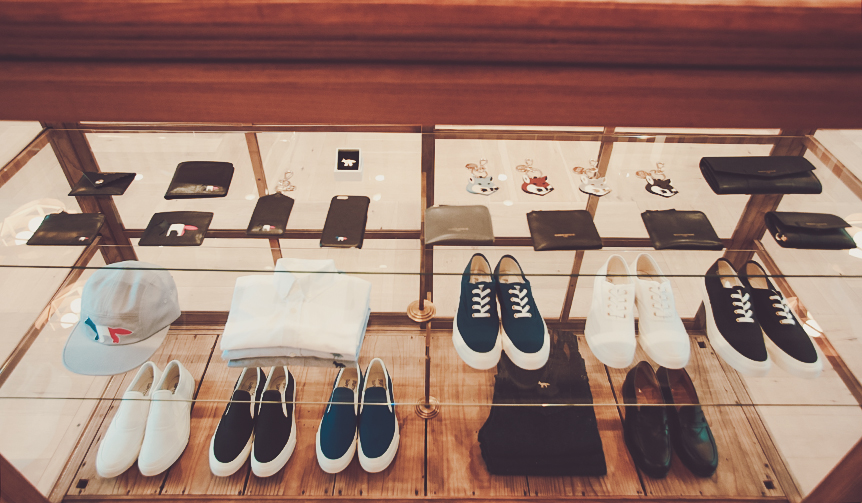
MasayaYes. Since we've started, we want to do everything we can. As I've said for a long time, my aspiration is Ralph Lauren. He created a brand based on his own lifestyle, and he did branding that could be passed down to the next generation. And before we knew it, Gildas and I also found our lifestyles becoming our business. Fortunately, we've received offers for resorts and hotels, so if possible, we'd like to try them. We have too many things we want to do, and not enough time. And I want everyone to have more fun.
YumaYes, having fun is the most important thing. Thank you very much for today.
Riya KUROKI
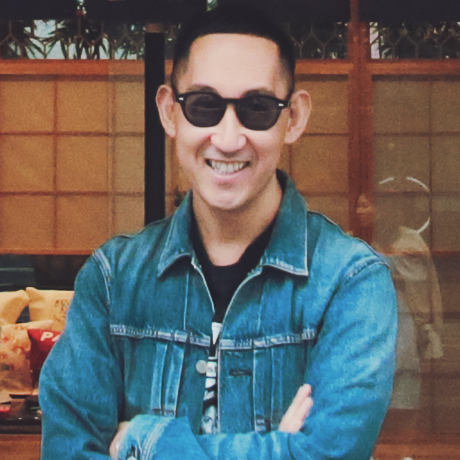
He lived in Paris from the age of 12 and obtained a national qualification in architecture. In 2002, he started "KITSUNÉ" with Gildas Loaëc. He began his career primarily in music activities and presented his first collection in 2005. In 2008, he opened the first directly managed store in Paris. From the Fall/Winter 2010 season, the name was changed to "MAISON KITSUNÉ." In 2012, he opened a shop with a cafe in Aoyama, Tokyo, in 2013, and a directly managed store in Daikanyama, Tokyo, in 2016.