Yoji Yoneyama x Shido Nakamura: A Special Dialogue on "The Meaning of Taking on Challenges" | M・A・R・S
M·A·R·S | MARS
Yoji Yoneyama x Shido Nakamura: A Special Conversation
The Meaning of Taking on Challenges (1)
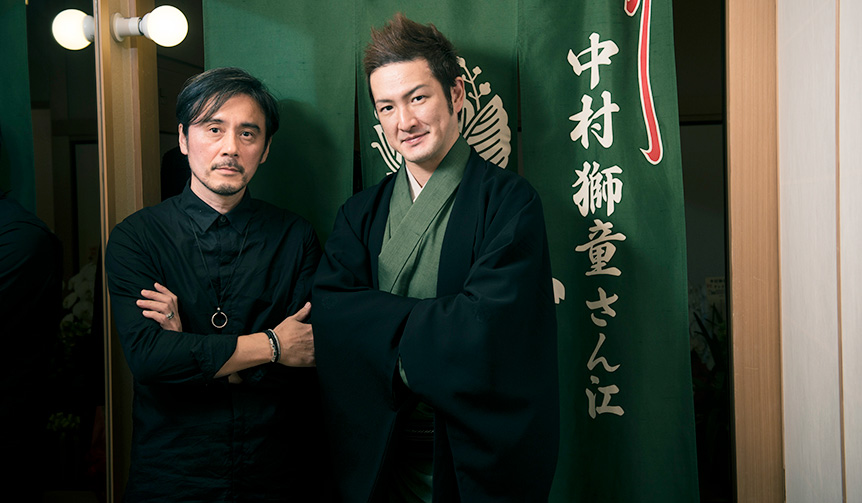
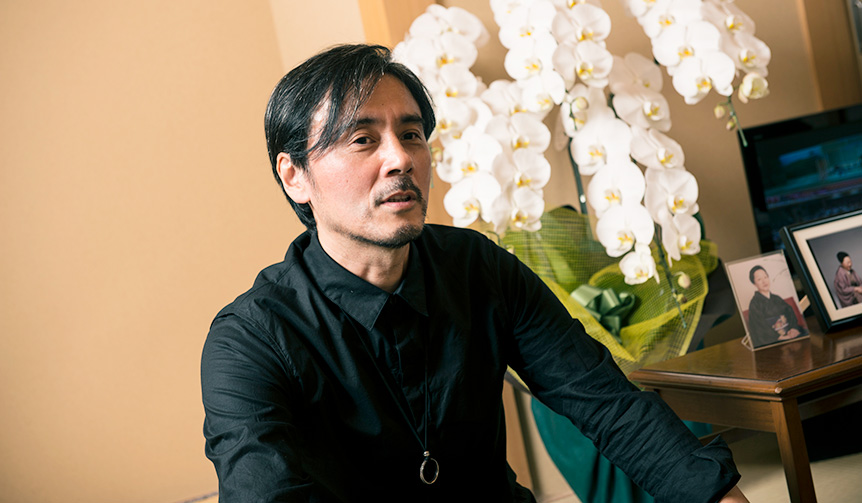
M.A.R.S celebrated its 25th anniversary in 2016. This is a special interview series with designer Yoji Yoneyama to commemorate the occasion. Our guest this time is Kabuki actor Shido Nakamura, with whom Yoneyama shares a close personal friendship. As both men have continuously challenged themselves with new endeavors and forged their own paths, their conversation was filled with passionate exchanges.
Photographs by ISHIBASHI MasahitoText by TOMIYAMA Eizaburo
I Wanted to Grow Up Quickly from a Young Age
Yoji Yoneyama (hereafter, Yoneyama)Shido-kun, you started Japanese dance at age six and debuted on stage at eight. You even left the world of Kabuki once and then returned, and you formed a rock band in junior high. It's a life path most people don't experience.
Shido Nakamura (hereafter, Nakamura)Perhaps so.
YoneyamaI imagine there were many struggles involved. When was the period you felt most uncertain or confused?
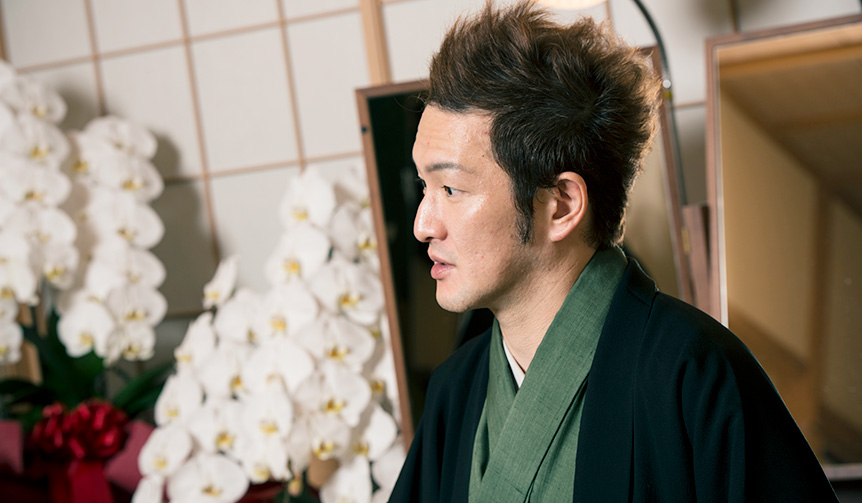
NakamuraI'm always feeling a bit uncertain. But perhaps junior high and high school were the most intense periods. I think everyone feels that way during adolescence.
YoneyamaAnd rock music was what helped you overcome that.
NakamuraI was surrounded by adults from a young age and was quite precocious, so I wanted to grow up fast. I thought listening to Western music would make me an adult. We wore our own clothes to school, so I also liked fashion. It was the era of the band boom, so I joined a band to follow the trend.
YoneyamaSo, you were part of the 'Ika-ten' generation?
NakamuraYes. When I was in elementary school, bands like Duran Duran, Madonna, and Michael Jackson were popular. I started with that kind of pop music, and in junior high, I was shocked when I saw an old Rolling Stones music video. Through them, I discovered blues and started listening to a wider range of music.
Concerts and Kabuki Share the Same Foundation
YoneyamaWe went to see The Rolling Stones together once, didn't we?
NakamuraThat was quite an experience! (laughs) It was their second visit to Japan, I think. I went through a lot of trouble to get seats in the third row from the front at Yokohama Arena. We had often talked about rockabilly before, so I assumed Yoneyama-san also liked The Stones and invited him. As expected, he readily agreed, saying 'I'll go!' But after the concert, our conversation wasn't as lively as I'd hoped.
YoneyamaHahaha. I love rockabilly and The Clash, but I only knew the famous songs by The Stones and The Beatles (laughs).
NakamuraI was so surprised. And we even went to the wrong place at first.
YoneyamaThat day, Nakamura-kun happened to be wearing our products for a photoshoot. On the way back, he suddenly asked, 'I have tickets to The Stones, want to go now?' So of course, I said yes immediately. We were supposed to meet Hiroto Kōmoto and myself at the lobby of the Shin-Yokohama Prince Hotel. But for some reason, I set the destination on my navigation to the Yokohama Prince Hotel.
NakamuraWhen we finally arrived at the Yokohama Prince Hotel, they told us, 'That's the Shin-Yokohama Prince Hotel!' (laughs).
YoneyamaIt was good we made it somehow. But I realized that as a performer, Nakamura-kun looks at things differently. He commented on the lighting and the transitions, observing the overall picture. Hearing such comments, I understood why he could arrange 'A Stormy Night' into a new Kabuki production and take on leading roles. He truly has the skills.
NakamuraSince it's a service industry, I've always paid attention to the lighting and the audience. That's what moves me. Concerts can have 50,000 or 60,000 people, while we perform for about 2,000. The audience numbers differ, but in the same space, we share the same dreams, tears, and laughter. In that sense, I believe the core is the same. When I feel that human energy, it inspires me to work harder and gives me a good stimulus.
YoneyamaTo begin with, why did you want to become a Kabuki actor when you were a child?
NakamuraIt was more of an admiration, like wanting to be Ultraman or Kamen Rider. I liked Ultraman and Kamen Rider, and Kabuki was in the same category for me. So, I asked to wear makeup and perform on stage myself.
If the Choice is Between Giving Up on a Dream or Forging Your Own Path, the Latter is More Enjoyable
YoneyamaDid music have a similar aspect for you?
NakamuraI wanted to stand out. Although I've been a show-off since childhood, I'm also shy, which is a peculiar personality trait.
YoneyamaI totally get that! I have my moments of wanting attention too, but my shyness usually wins out. That's why I was incredibly nervous when I was in a band. By the way, Nakamura-kun, are there any works that inspire you as an actor?
NakamuraIt's not music, but in that sense, perhaps actor Masaji Kaneko. He came to Tokyo from an island with the dream of conquering it all, vowing not to return defeated. He won numerous film awards for his role in 'Ryuji,' but he had already passed away. His life itself is dramatic. I was influenced by his way of life, forging his own path and seizing opportunities. Also, Eikichi Yazawa's 'Nariagari.' That's also about seizing opportunities and rising to the top.
YoneyamaYou've fought with a passionate heart.
NakamuraIn my case, my father retired from Kabuki acting when I was a child, and without that backing, I was told it would be difficult to play leading roles in the future. But if I had to choose between giving up on my dream or forging my own path, isn't forging your own path more enjoyable? At times like that, the lives of people like Masaji Kaneko and Eikichi Yazawa, who achieved success through their own efforts, were encouraging, and I wanted to be like them. Also, The Rolling Stones and Hiroto Kōmoto – they live in the present, not clinging to past glories, which is why they aren't just nostalgic acts. I want to be an actor who lives in the present, because if I become complacent, I feel like it's over. I want to be prepared to abandon my career at any moment.
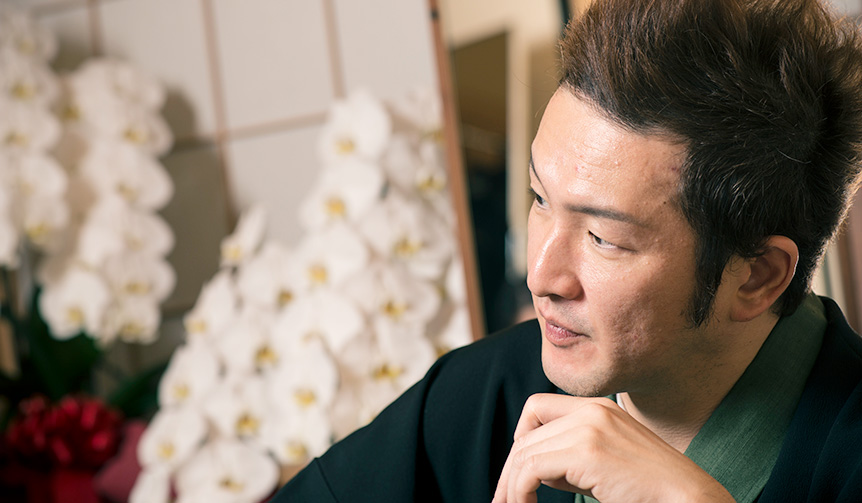
YoneyamaI understand completely. But the resolve to abandon one's career takes courage when the time comes.
NakamuraIf you cling to the past, you can't move forward, and you can't create anything new. There's no need to create. The reason I pursue new things is that while preserving tradition, I want to strive for a 'Kabuki unique to Shido.' That, I believe, is the meaning of my existence as an actor, Shido Nakamura. If I find comfort in past accolades, it requires even more courage to try something different.
Page02.Creators Must Remain Analog at Heart to Inspire Emotion
M·A·R·S | MARS
Yoji Yoneyama x Shido Nakamura: A Special Conversation
The Meaning of Taking on Challenges (2)
Creators Must Remain Analog at Heart to Inspire Emotion
YoneyamaYou have a very bold image, Nakamura-kun.
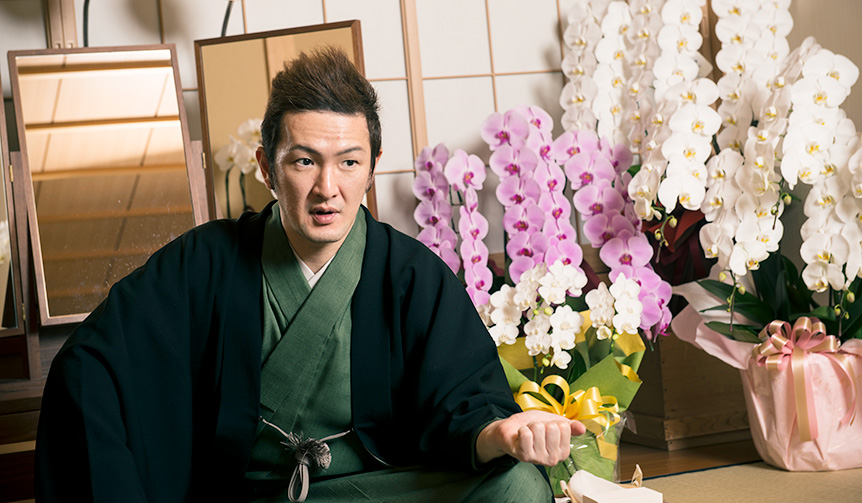
NakamuraIt's boring if you don't take risks, isn't it? I don't want to sound like an old man, but I sometimes wonder what the younger generation finds enjoyable. I was born in 1972, and by the time I was nearing adulthood, the bubble economy had burst. I grew up admiring the adults who were out there having a wild time. That's why I'm still interested in many things.
But we live in an era where interacting with people feels like a hassle. Everything has become digital, and you can find out anything you want with just a smartphone. You can get information without going to a bookstore, a photo exhibition, or a museum. It's truly convenient. But on the other hand, I wonder if creators can't inspire emotion if their hearts aren't analog. Especially in Kabuki, we portray people from centuries ago.
YoneyamaDo you talk about these things with younger people?
NakamuraNo, I don't. That's a personal matter, and I believe everyone has their own way of thinking. I've also had the opportunity to experiment with digital and Kabuki in a project with Hatsune Miku, exploring various possibilities. However, the audience comes by analog means, taking buses and trains, to see a live performance. To meet their expectations, we must pursue that once-in-a-lifetime emotion that can only be experienced there.
YoneyamaIndeed, the more convenient the world becomes, the more we crave the inconvenient.
NakamuraSelf-driving cars would be convenient, but they lack the joy of driving.
YoneyamaDuring the Christmas season, when I'm at a department store pop-up shop, I meet girls choosing gifts for their boyfriends. Seeing their indescribable expressions at those moments is wonderful. I'm happy they chose our brand, and I'm grateful to be a part of that moment. It's a feeling you can't experience digitally.
NakamuraIt would be tough if people found that kind of thing bothersome.
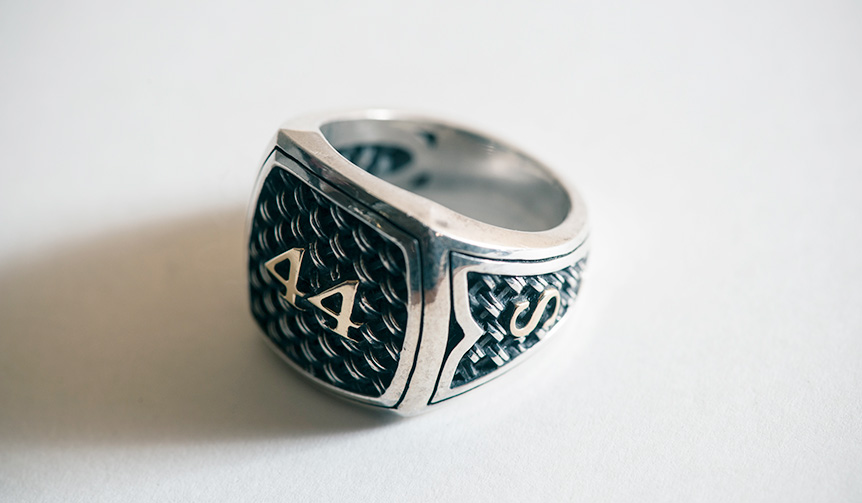
M.A.R.S Jewelry is Popular Among Actresses
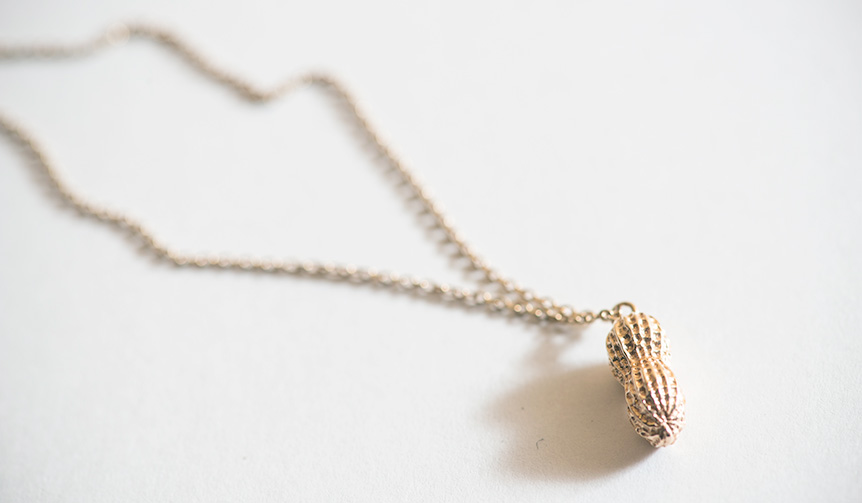
YoneyamaIn today's world, surprises often carry risks. There's a growing trend to avoid them, suggesting it's better not to take chances. But what you do, Nakamura-kun, is a surprise. The audience comes thinking, 'What will Shido-kun do next?' You perform what you believe in, and the audience takes that experience home with them. When a surprise becomes a significant one and spreads, it's a wonderful thing.
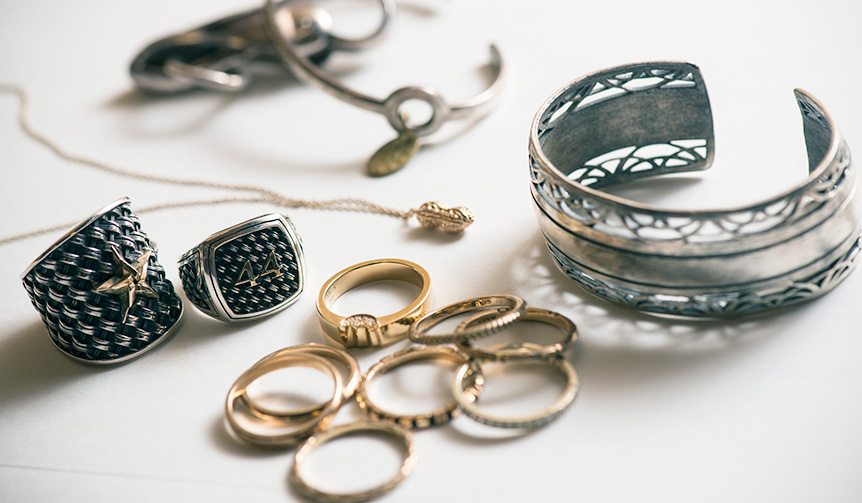
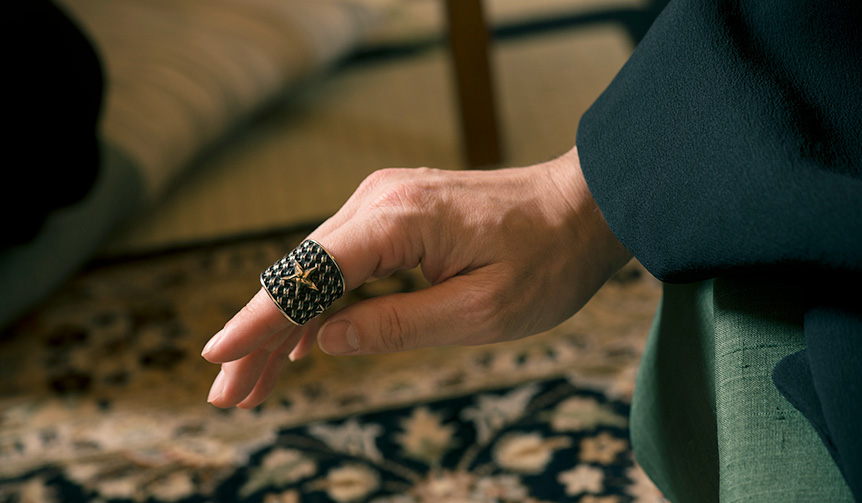
NakamuraIt's the same with creating accessories, isn't it? It's becoming increasingly important for things to have true value and not be disposable. It's an era where each of us must question what is essential and what is not. I use M.A.R.S jewelry with great care. I love that each piece is delicate yet has a presence and a touch of flair. When I wear them on set, they are very popular with the women. The actresses I co-star with really like them.
YoneyamaThat makes me very happy. Is there anything else you cherish, Nakamura-kun?
NakamuraFor example, these brushes are lifelong tools. I've used this one since my debut, so it's over 30 years old. As a child, I used it for my eyebrows, and now I use it for fine touch-ups. This other one is also over 20 years old. It's reinforced with thread and secured with glue to maintain its shape. Good things last. With this set, I can handle most roles.
YoneyamaI see.
NakamuraAnd this portable cabinet, too. It's used backstage to carry props for disciples. When I was younger, I didn't get enough roles to need it, so it wasn't necessary. But my mother had it custom-made by a craftsman when I was a teenager. I first used it when I was finally given a major leading role. So, each item is a lifelong possession. My father retired early, so I didn't inherit a dressing table, but there are many things that are passed down.
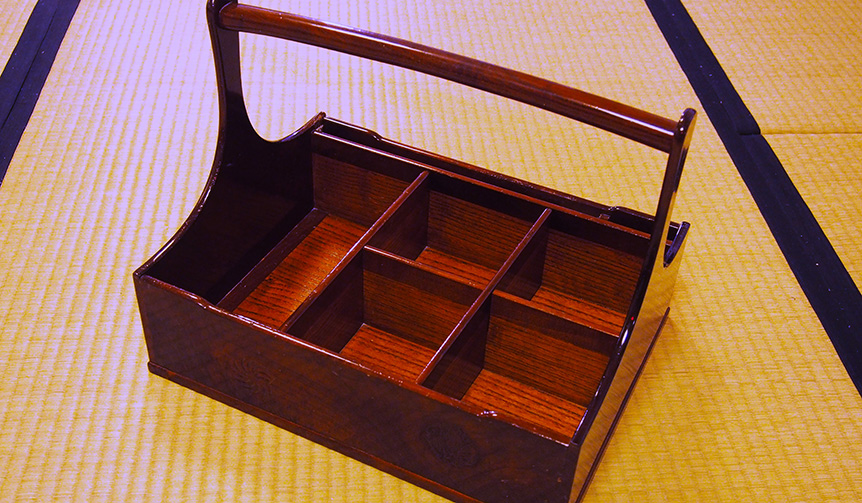
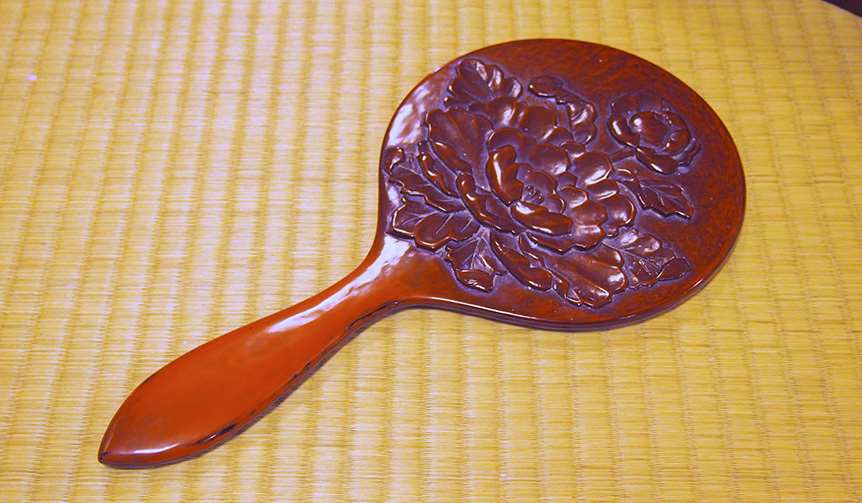
YoneyamaYou each use your own dressing tables!
NakamuraThey are custom-made for each actor. Mine was made by a specialized furniture maker in Zushi. When you're young and sharing a room, you can't use a large dressing table, but once I was given my own room, I could finally use it.
YoneyamaDo you have any plans to challenge new things in the future?
NakamuraIt will likely take shape next year or later, but I'm already working on it. I want to continue moving forward without forgetting the spirit of challenge, no matter my age.
YoneyamaWe look forward to your continued success. Thank you for your time today.
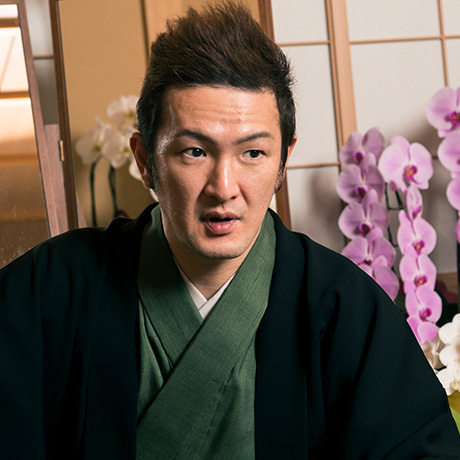
Shido Nakamura
Born September 14, 1972, in Tokyo. Graduated from the Department of Drama at Nihon University College of Art. His grandfather was Tokizo Nakamura III, renowned as a master onnagata of the Showa era. His father was his third son, Mikio. His uncles include film actors Kinsuke Yorozuya I and Katsutaro Nakamura. His cousins are Karoku Nakamura, Tokizo Nakamura, Matagoro Nakamura, and Kinnosuke Nakamura. He made his stage debut at the Kabuki-za Theatre at age eight and later assumed the name Shido Nakamura II.