Paris and Lacoste: To the Source of Sportive Elegance (2) | LACOSTE
LACOSTE
ROLAND GARROS—A Legend Born on Clay (1)
It's functional, elegant casual wear that lightly leaps over the boundaries between sportswear and fashion.—Could it be that the "sporty mix" fashion, now commonplace and a major trend, would not have emerged without the existence of the "Lacoste" brand?
In the first installment, we focused on the "cutting edge" of Lacoste, which was so epoch-making. This time, through the eyes of model Licht, who visited Roland Garros in Paris during the French Open, we will delve into its "history" and "background."
Photographs by KINAKA YusukeStyling by IKEDA NaokiText & Edit by HASEGAWA Junya[america]
To Roland Garros, the Home of Lacoste
"Unlike the city, there's so much greenery here, and the air feels very clear. The stadium architecture is also very modern and beautiful, and above all, the atmosphere within the venue is sophisticated and wonderful. I can't wait to see the matches..."
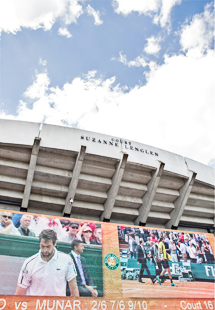
About 20 minutes by car west of central Paris. Within the vast 8.5 million square meter Bois de Boulogne forest park, lies a tennis stadium called Stade Roland Garros (hereinafter referred to as Roland Garros). The French Open, one of the Grand Slam tournaments, has been held here since 1928, making it a historic international event.
During the tournament, held from May to June, the area around the venue, as well as Paris itself, is filled with tennis fans, making it a major event. Licht, the model who visited the venue, was struck by the atmosphere, uttering the words above.
Thanks to a special arrangement by Lacoste, a tournament sponsor, Licht was invited to Court Suzanne Lenglen on the ninth day of the tournament and to a cocktail party. This report details the excitement of the clay court as seen from the special seats for VIPs, and the atmosphere of Roland Garros, the origin of Lacoste and its "style."
What René Lacoste Aimed For
The French Open, the only Grand Slam tournament played on clay courts, is known for its unpredictable matches with top seeds often eliminated early. The high-contrast colors of the azure sky, the deep green of the stands, and the vibrant brick-red of the court surface, visible on almost all 24 courts, create an overwhelmingly captivating mood.
It is no exaggeration to say that Lacoste, now a globally popular premium casual wear brand, was born here at Roland Garros. The brand was founded in 1933 by René Lacoste, a legendary professional tennis player who won the French Open three times (1925, 1927, 1929) and achieved a total of seven Grand Slam titles, including Wimbledon and the US Open.
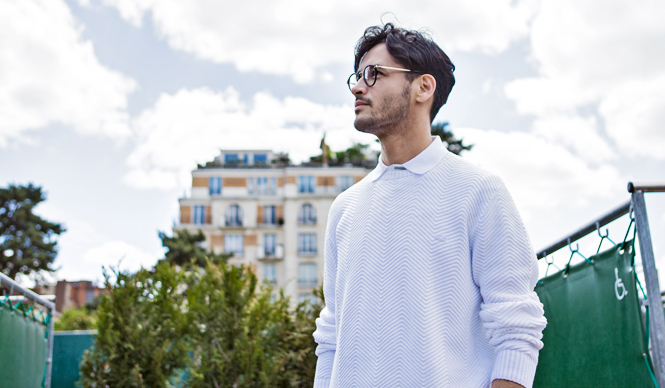
His innovative tennis wear, both novel and functional, brought a revolution to the world of tennis, and its legacy of "sporty elegance"—combining style, comfort, and functionality—continues to this day.
Page02.The Excitement of Court Suzanne Lenglen
LACOSTE
ROLAND GARROS—A Legend Born on Clay (2)
The Excitement of Court Suzanne Lenglen
Day 9 of the Tournament—Although the previous day's rain continued into the afternoon, the sky cleared to reveal brilliant sunshine, creating a perfect, clear day. While postponed matches were being played smoothly, the tournament saw upsets, with top players like Roger Federer and Maria Sharapova being eliminated, characteristic of the "unpredictable Roland Garros."
Licht was invited to Court Suzanne Lenglen, located on the west side of the vast venue, directly opposite the main street. This is the second-largest court after Court Philippe Chatrier, a semi-center court. This stadium court, with a capacity of approximately 10,000 spectators, is named after Suzanne Lenglen, a legendary French female player, much like René.
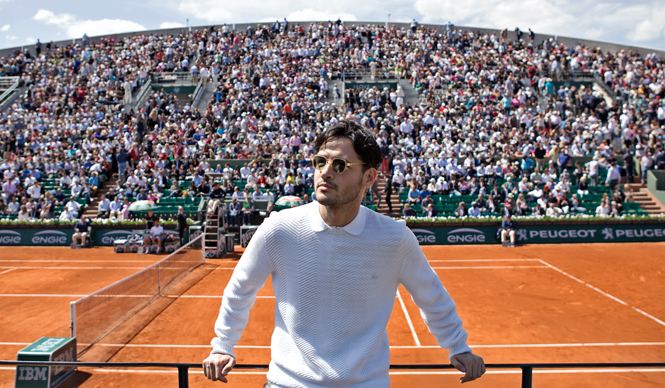
Suzanne Lenglen, who was very close to René, not only for her skill but also for revolutionizing fashion, and even became his mixed doubles partner. "It feels as if we were guided here by their connection," Licht remarked with a smile.
Licht's ticket, marked "EST-3-23," was for a box seat one row in front of the first row of general seating, a position so close one could almost hear the players breathing. It was a genuine VIP seat prepared for Lacoste officials, the tournament sponsor. Upon entering, Licht was overwhelmed by the sheer power and immediacy of the experience.
"Not only the proximity to the court and players, but the 'sound' was the most surprising thing. I could even hear the players' muttered words, which you wouldn't hear from the general seats (laughs). This live feeling is something you don't get to experience very often."
The match was between the popular local player, Jérémy Chardy, and the third seed, Andy Murray. After a back-and-forth battle, Chardy, a Lacoste contracted player, was unfortunately defeated.
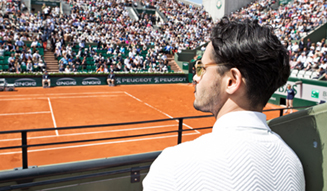
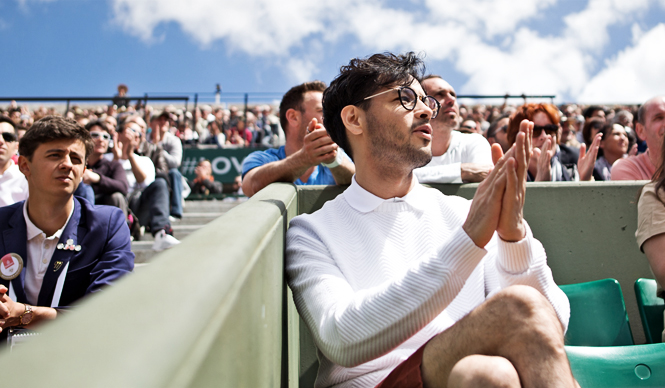
"I'd heard about it, but the crowd's support for local players at Roland Garros is incredibly passionate (laughs). The pressure on the opponent must be immense. Even though he lost today, I'm sure many players are able to win thanks to the crowd's support."
He spoke with a slightly bewildered expression about the intense cheers for a favored player, regardless of the match's progress, and the merciless boos for their rivals—the unique atmosphere and "specialty" of the French Open, which he experienced firsthand.
After the passionate match featuring the local player, it was the turn of "Clay King" and Roland Garros's absolute monarch, Rafael Nadal. His match against the rising American star Jack Sock ended in a decisive victory for Nadal, with a score of three sets to one.
"Nadal's presence on the court is truly exceptional. I was surprised by how large a tennis player can be! His physique is like a boxer... you don't get that sense from TV. It was a great experience (laughs)."
Page03.The History of French Tennis and Lacoste
LACOSTE
ROLAND GARROS—A Legend Born on Clay (3)
The History of French Tennis and Lacoste
Just inside the main entrance of the venue, next to Court Philippe Chatrier, is "Le Musée de la Roland-Garros" (The Roland Garros Museum). Although it appears to be a small shed, it actually extends underground, covering a vast 2,200 square meters, making it a pivotal institution—the hall of fame for French tennis.
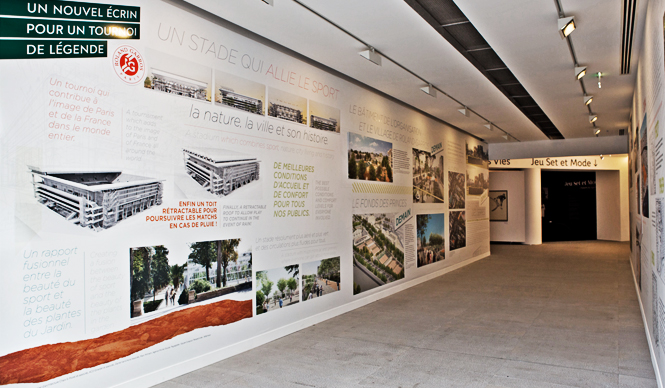
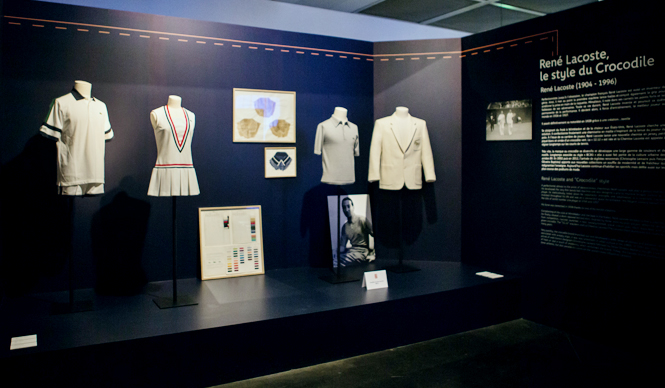
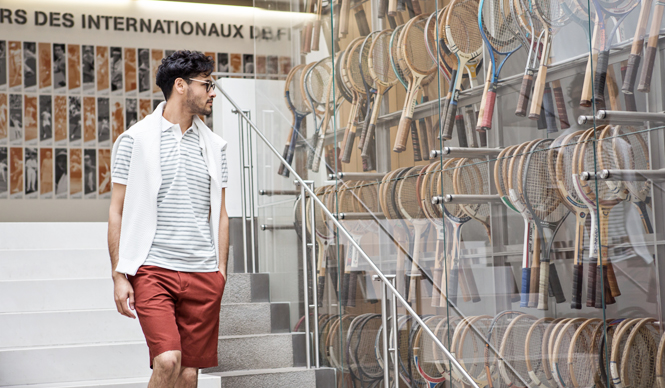
The history of French tennis is, in essence, the history of Lacoste. While displaying cherished items and trophies of legendary players, along with contemporary newspaper clippings, meticulously chronicling the journey of French tennis and Roland Garros, a significant portion is dedicated to René Lacoste and Lacoste. The collection includes items like the jacket with the crocodile embroidery worn by René, a crocodile leather racket bag made by Hermès, and special polo shirts created in collaboration with top designers—a truly breathtaking display of priceless treasures. The modern presentation, utilizing multimedia, is superb, and Licht seemed deeply impressed.
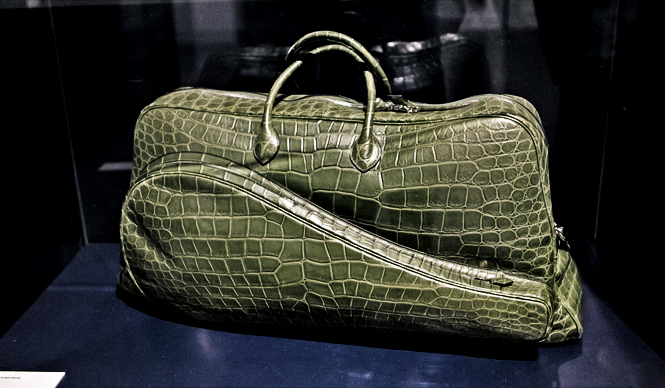
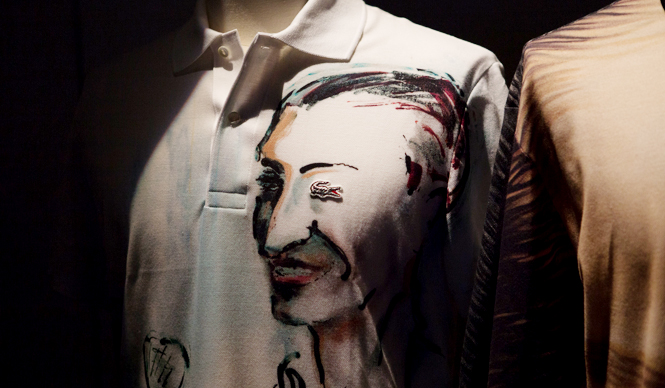
"It's quite a large museum, but there's an astonishing amount of information and exhibits related to Lacoste. It really highlights how important Lacoste is in the history of French tennis. Everything is a historical treasure, so it's definitely worth a visit."
Reaffirming the Aristocratic World of Tennis and Lacoste
"I knew that tennis was originally a sport enjoyed by the upper class, but coming here to a Grand Slam venue really makes me realize it anew. Perhaps it's because Lacoste's invitation gave me access to the box seats and celebrity areas... (laughs)"
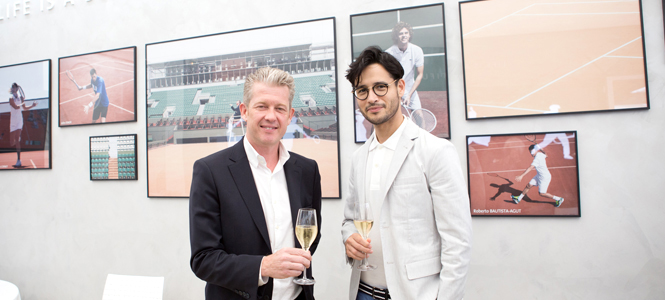
On this day, a cocktail party was also held, hosted by Jean-Louis Duram, who oversees Lacoste's operations in the Asia-Pacific region.
The venue was a special area called "Le Village," accessible only to officials. It's a space where a limited number of sponsors, including Lacoste, Moët & Chandon, Peugeot, and BNP Paribas, host parties and events for their VIP guests.
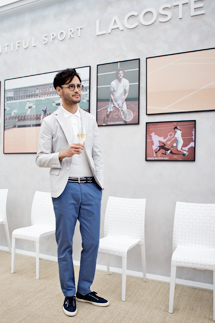
"Discussing this year's Roland Garros over a glass of champagne is truly elegant. The guests are all celebrities and media professionals, creating a very luxurious atmosphere. It makes me realize again that sports like horse racing and tennis are aristocratic pursuits. Lacoste, too, has its roots in French tennis, a sport that values history and tradition. I bought a T-shirt at the gift shop for myself, printed with a message from René himself: 'Without style, play and victory are meaningless.' It truly feels like a brand where that philosophy lives on. They continue to support players as well. It's remarkable that after more than 80 years since its founding, the brand still upholds the founding principles and aesthetic sensibilities."
The "sporty elegance" that Lacoste expresses throughout its rich collections is indeed imbued with the spirit of René Lacoste's "style" and the history and mood of French tennis. This journey to Roland Garros brought Licht such a realization.
Lacoste Customer Service Center
0120-37-0202
www.lacoste.jp