Suddenly Appearing at Laforet Harajuku: "BE AT STUDIO HARAJUKU." A New Hub for Culture Has Arrived! | FASHION
FASHION | BE AT STUDIO HARAJUKU
“BE AT TOKYO” Revives the Spirit of Old Harajuku
Many consider Harajuku a special district within Tokyo. It's where numerous designers launched their brands, and the ripple effect drew in people from various fields, expanding its influence. We spoke with the team behind “BE AT TOKYO,” a project aiming to revive Harajuku's past cafe society for the modern era. Their first base is Laforet Harajuku.
Harajuku's Legend, Reborn!
The word “legendary” suits Harajuku. It’s a place with a unique temporal and spatial quality that belongs only to Harajuku, unlike Omotesando, Aoyama, Minami-Aoyama, Daikanyama, or Shibuya.
About 40 years ago, I used to wear an engineer's sweatshirt printed with just “BEAMS” inside a rectangle almost every day. I wore it so much that the sleeves, collar, and elbows became tattered. The reason I wore it so much was that it was “BEAMS,” and I bought it in Harajuku. A chambray light blue button-down shirt also had a “BEAMS” tag. Its collar and cuffs frayed just the same. My mother eventually threw it away, but it was a memory of truly cherished use, my own sustainable memory.
As a side note, in the 80s, sweatshirts from Harajuku shops like “BEAMS,” “SEA’S,” “CREW’S,” and “CANOE,” as well as Shibuya shops like “Boat-House” and “SHIPS,” caused a social phenomenon where they went directly from the delivery box to the register. It was the era of preppy fashion's peak.
For me, who grew up in Higashi-Nakano, Harajuku was that kind of special “world.” It was a daunting place, a place where you’d get burned if you weren’t dressed fashionably. And even now, Harajuku is constantly broadcasting the “now.” Many are captivated by it. Harajuku, without a specific purpose of “what can be done,” was a place where something could indeed be done, a place with a unique scent of anticipation that something was about to begin.
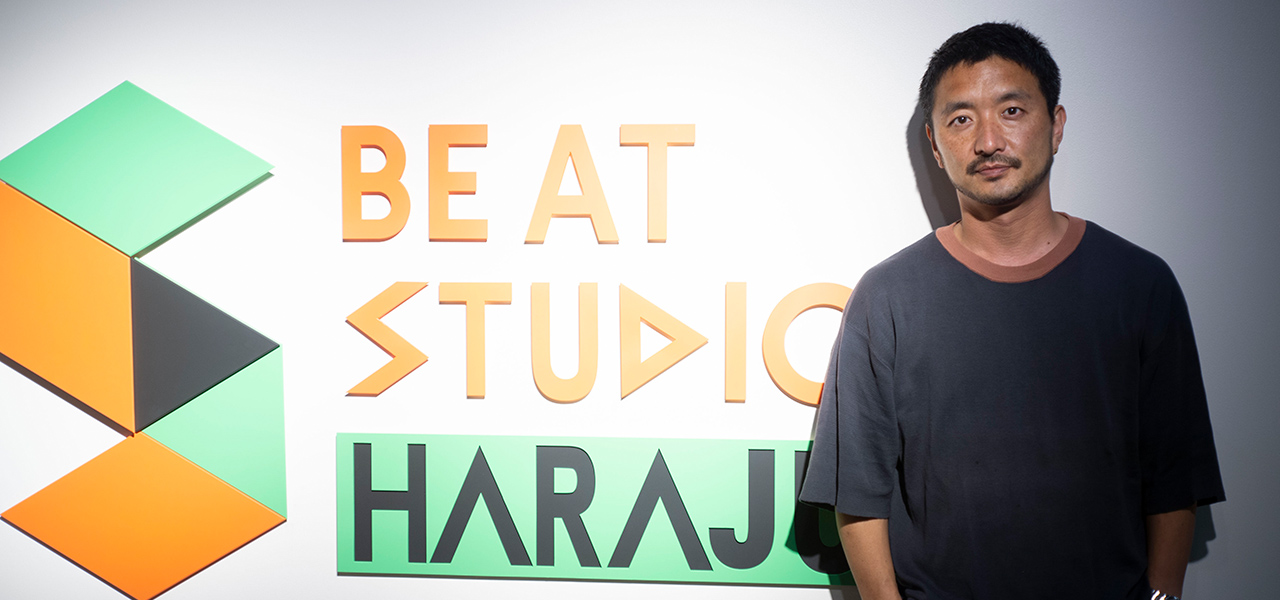
At Laforet Harajuku, a symbol of this very Harajuku, a space has been born that feels both nostalgic and incredibly new. It’s named “BE AT STUDIO HARAJUKU.”
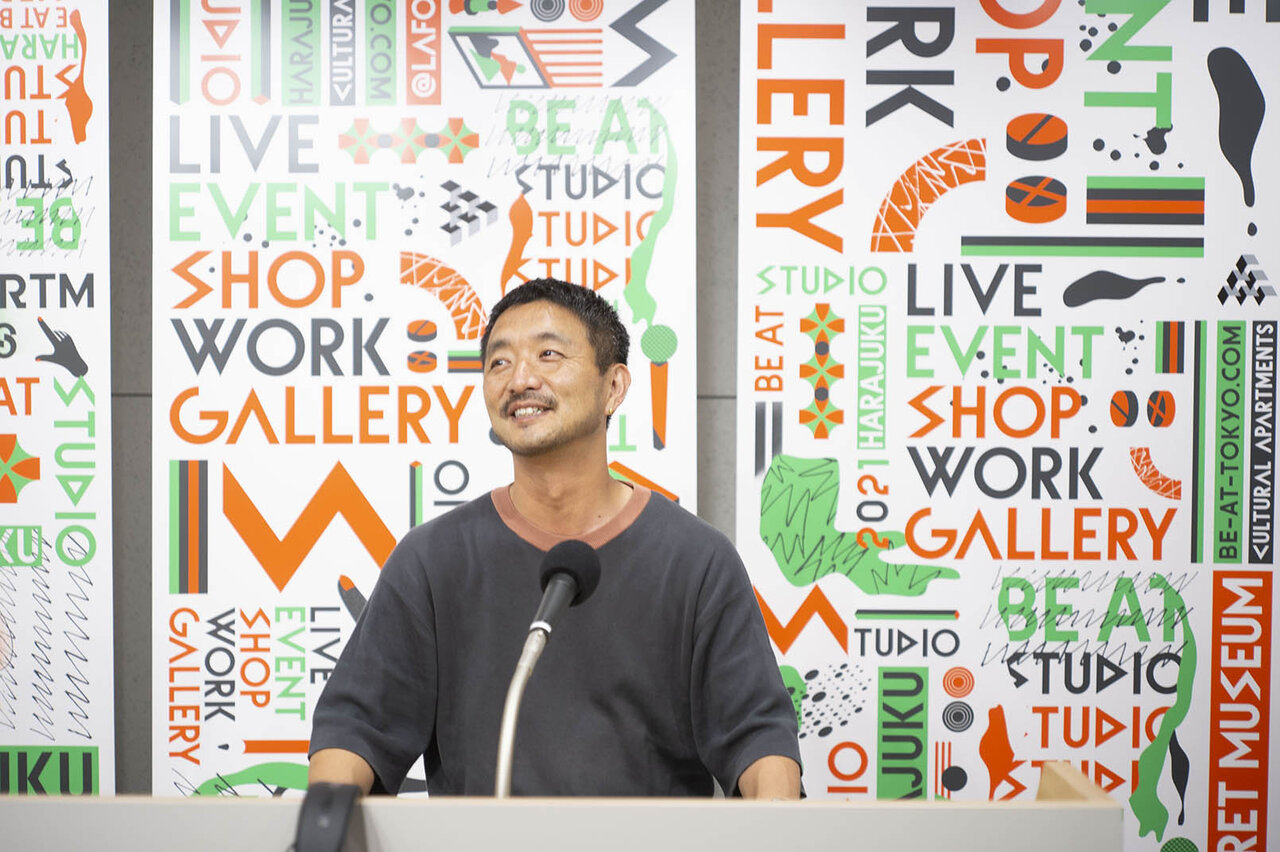
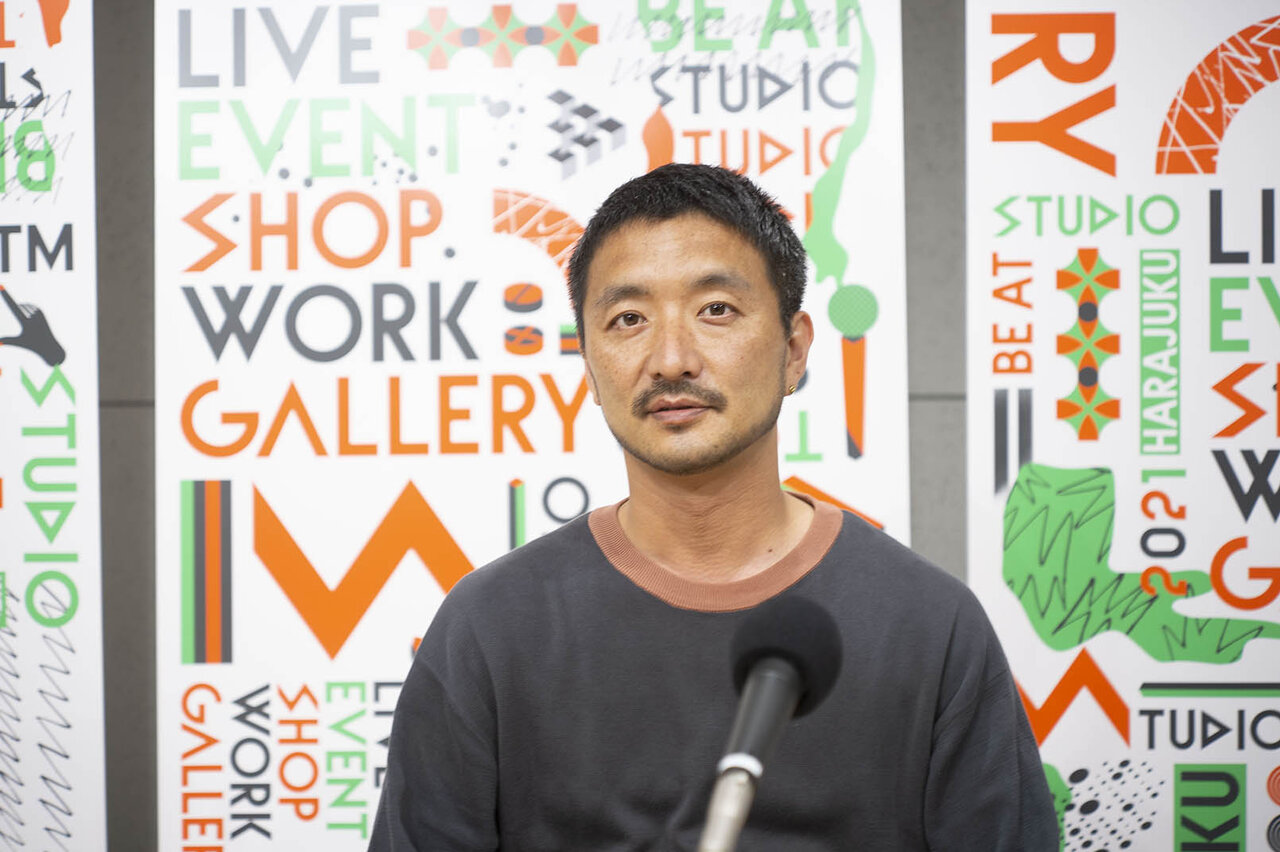
We spoke with Hiroshi Doi, Executive Officer of BEAMS and Representative Director of BE AT CO., LTD., who launched this “place.”
“Although I didn’t experience it firsthand 40 or 50 years ago, there was a coffee shop called ‘LEON’ below Central Apartment in Harajuku, and it became a cafe society where interesting people gathered. I wanted to recreate that kind of Harajuku, and Tokyo apartments, here.”
At that time, Harajuku was dotted with what we’d now call “iconic shops” like Bigi, Milk, Mademoiselle Non-Non, and Goros. Stories are still told about how Comme des Garçons opened its first shop at a place called Help. Leon was at the center of it all.
“Creators of the time gathered at Leon, and culture was disseminated. Just being there was stimulating, fostering communication, and sparking interesting things. It was a gathering place for culture across generations. Nowadays, the connection between creation experts and new generation creators tends to be a master-apprentice relationship. But I believe we need to blend together now. The older generation needs to lead the younger generation, to build the future, while the younger generation doesn’t listen or think about it, so it’s difficult to have genuine consultations or collaborations. I think it’s important to change the system, or at least the ‘twist’ in society, and to convey Tokyo. To do that, I want to break down the ‘BEAMS’ facade and make it a cultural apartment.”
This sentiment seems to be reflected in the company name as well.
“The company name is BE AT. This signifies both ‘BEAT’ and ‘BE AT.’ It has meaning. It’s the project BE AT TOKYO, undertaken by the company BE AT. It’s about being here, where something is born, where something is transmitted. I hope this concept will eventually extend to ‘KYOTO,’ or ‘SHANGHAI.’ Our subtitle is to do this as a cultural apartment.”
This clearly shows an aim to recreate the intensely passionate, almost scorching, atmosphere of Harajuku from the past.
A Cultural Apartment.
“While talking with President Shiraishi (President of BEAMS) about what we could do in the future, we visited America in February. We definitely went to Los Angeles. We then went to Seattle to visit Amazon headquarters, and to Apple’s headquarters in the suburbs of San Francisco. Early on, we visited the so-called ‘GAFA’ (Google, Apple, Facebook, Amazon). We interpreted and understood the counterculture of the West Coast alongside global companies like GAFA and Starbucks. It’s about experiencing contemporary America just as Shiraishi felt American culture 50 years ago. Previously, in my role at BEAMS, I was in PR and advertising, but I went beyond that to act as an intermediary between people and projects. This led to projects and products. They grew as value, and we did interesting things. While the subtitle for BE AT is ‘Cultural Apartment,’ it evokes the residents of Central Apartment, Harajuku Apartment, Dojunkai Apartment, and Coop Olympia talking late into the night about ‘what kind of Tokyo we want,’ ‘what kind of Harajuku we want,’ ‘what kind of Japanese culture we want to convey.’ I believe that over time, this has led to Tokyo becoming a city of culture that captures global attention.”
Doi continues, stating that the biggest changes over the past 50 years have been the development of PCs and the advent of smartphones, bringing technology into play beyond the physical realm.
“The situation is similar to the coffee shop Leon era, and I feel that the good aspects of 50 years ago are present now. With the addition of technology, I felt it was time to recreate the apartments of 50 years ago. Shiraishi and I have been discussing this.”
The BE AT TOKYO logo was also designed to resemble apartment rooms. The inclusion of TOKYO was intentional.
“It’s also a question: What is Tokyo? Don’t we all collectively make the brand ‘Tokyo’ famous, or elevate it? That’s the thought behind adding TOKYO after BE AT. Nowadays, with social media, it’s no longer the era where art school graduates become artists, right? Someone becoming popular on TikTok and appearing on Kohaku Uta Gassen in the same year—that was unthinkable before. Doesn’t it seem interesting that this is happening now?”
Children’s desired professions have also changed significantly. Even before the term “YouTuber” was widely established, it became a popular profession alongside soccer players and celebrities, ranking alongside game programmers.
“The current situation is unimaginable from 10 years ago. However, on the other hand, with countless products lined up on Amazon and Rakuten, there’s actually no one to select and recommend what’s good. While 10 bottles selected by a specialized connoisseur, like a wine sommelier, might be delicious, what’s the point? I sometimes wonder. It’s more appealing to be guided by 10 bottles selected by someone like Mr. Kitahara (the author here) who is creating ‘PLEASE.’ It’s more interesting to drink while hearing the story and thoughts behind the wine, based on their profile. Previously, everyone followed the same path, but now it’s individual. If you say ‘this wine is good,’ they only stock that one (laughs). It’s different now. In such times, we must rediscover and mix culture. DNA becomes more interesting with distance and a wider range. For example, a range from master craftsman to otaku. Traditional crafts and technology. We need to discover these, mix them, and convey the story properly. Writing it down, recording it on video, or telling it is important. I wonder what would happen if we mixed people like that, say, a 50-year-old person here and a 10-year-old person there, and created apparel together. In an era where side jobs are accepted, second-hand items become self-expression. Someone might be a salaryman but a great photographer, or a fisherman but a DJ.”
Creating an Atmosphere of Liberated Space and Time.
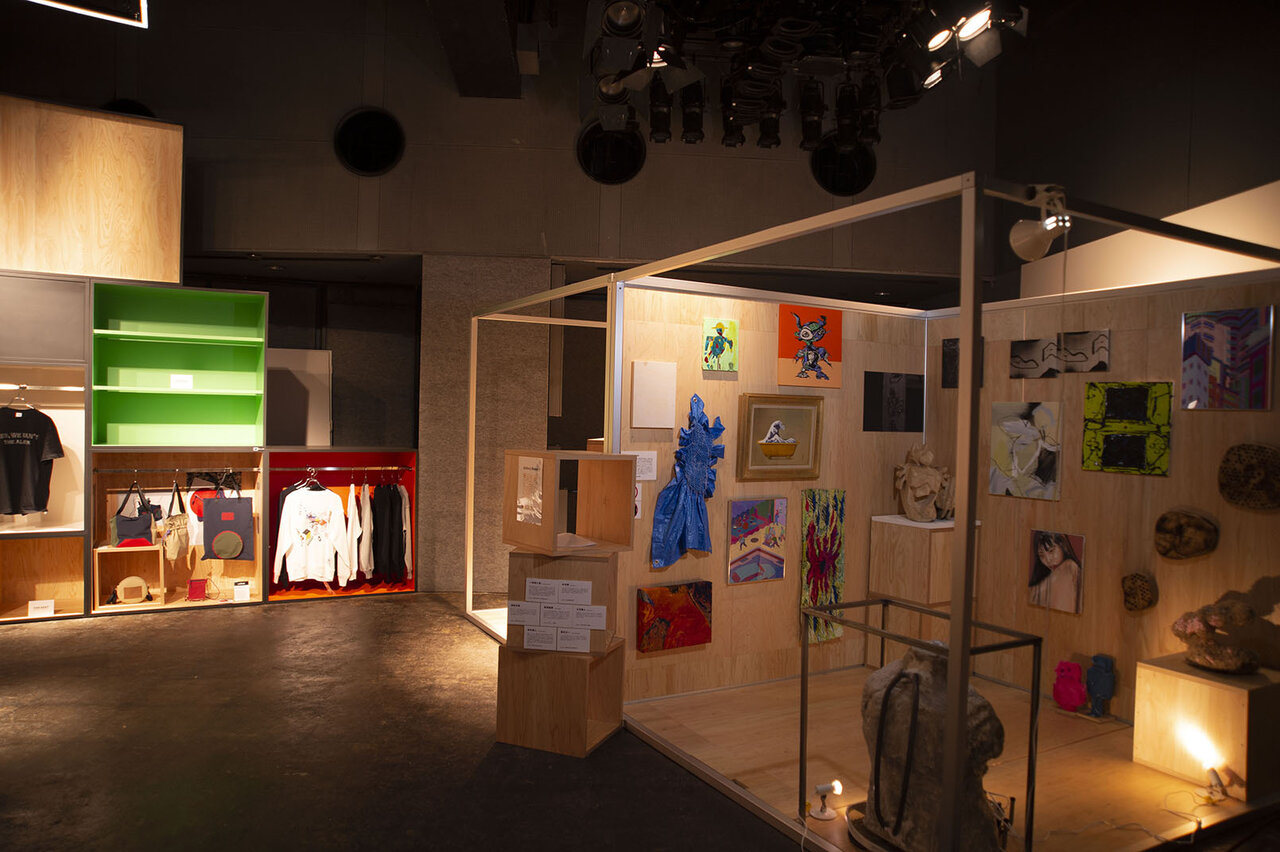
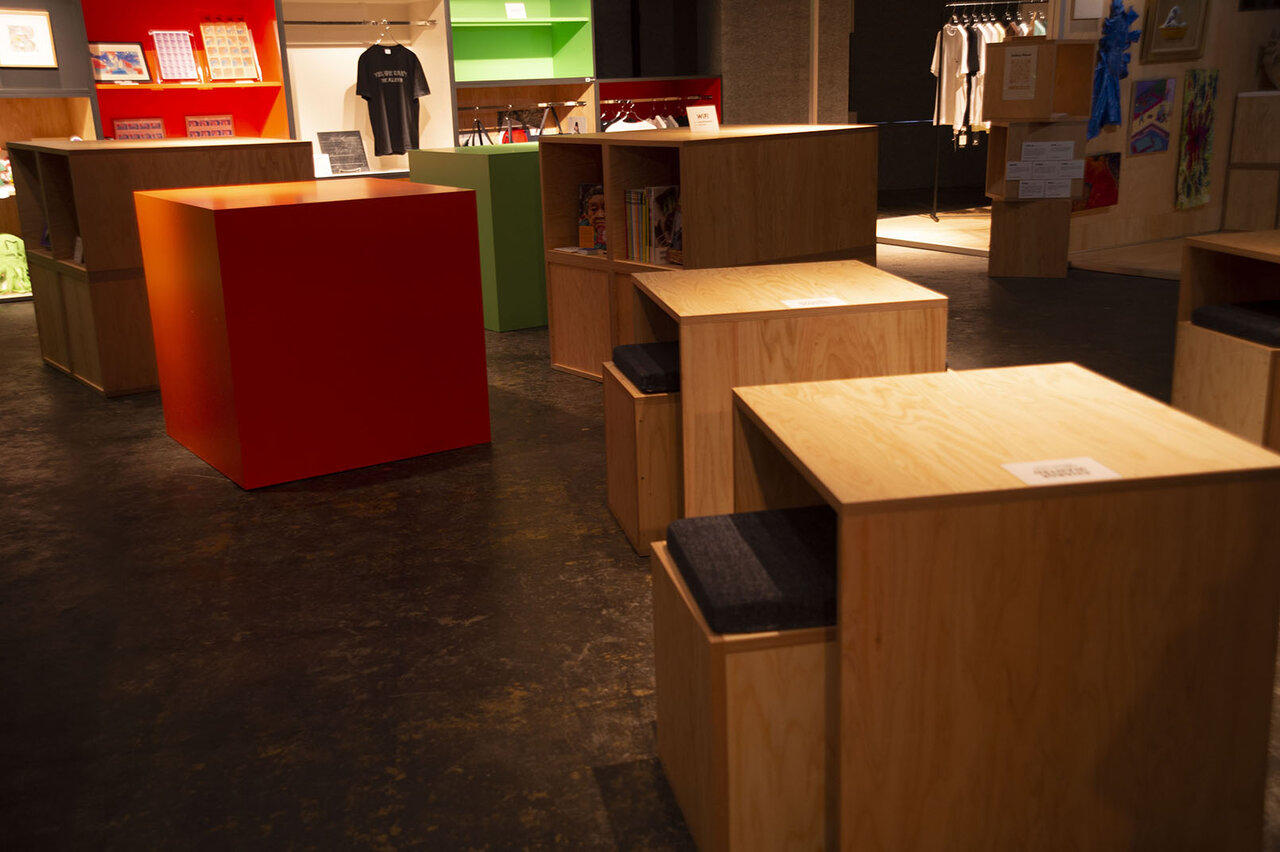
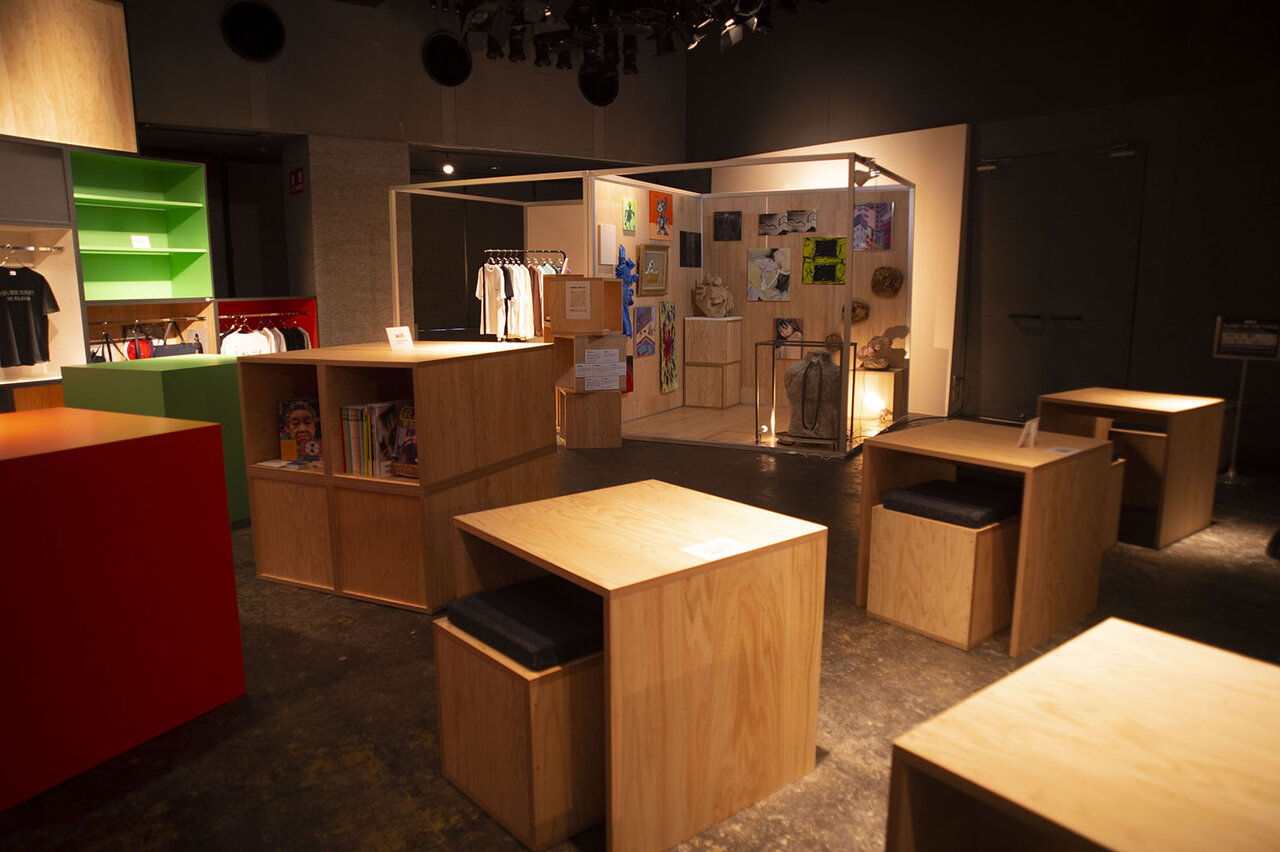
Looking at BE AT STUDIO HARAJUKU, it gives the impression of many small boxes stacked together, each box representing a unique expression.
“Rather than selling products and doing business here, I want it to be a place where people who gather as BE AT members can create together when expressing themselves through cultural support from the Agency for Cultural Affairs or corporate tie-ups. For that, it’s important for people to gather at BE AT STUDIO HARAJUKU.”
Individuals creating things on their own may not be easily accepted when pitching directly to companies, but belonging to a group can lead to success. By becoming a production entity, it plays a role in facilitating the smooth movement of creators.
“BE AT is a joint venture. In addition to BEAMS, we are collaborating with Flow Plateau, a company that integrates culture and technology based on comprehensive creative capabilities cultivated by Rhizomatiks (now Abstract Engine). Our concept is to discover, multiply, and convey.”
BE AT STUDIO HARAJUKU has a studio where live performances, public recordings, and YouTube streaming can take place. There are also approximately 300 seats. Events can be held, films can be screened, and extracurricular classes for Vantan Design Institute are offered. Esmod Japon has a permanent atelier here at BE AT STUDIO HARAJUKU. BE AT continues to provide opportunities to encounter society and people that one wouldn't meet in a classroom. We are developing a curriculum for social implementation that isn't taught in traditional classes.”
The initiatives are truly diverse and fascinating. It gives the impression that they are doing everything possible to approach things differently than before.
“What I feel firsthand is that this business model is something that hasn’t existed before. We are approaching the Ministry of Education, Culture, Sports, Science and Technology for academic support, but BE AT has other approaches. For example, cars. New models are released, but young people don’t buy them. However, they are interested. Where do you go with a car? What do you listen to in that room, which is the car, when that room is added? You have to convey these things for cars to sell. Running advertisements is one method, but what else can be done? This is also a place where we want people to consult us about anything. We interact with various companies daily.”
BE AT TOKYO includes the subtitle “Cultural Apartments.” If you actually visit the site (
https://be-at-tokyo.com), you can see a diverse range of people in “BEAT CAST.” Doi refers to them as “residents.”
“We give them keychains with apartment keys. This helps them feel a sense of belonging as residents. I hope it leads to situations like, ‘Oh, an interesting person has moved in next door, shall we have tea?’ On the site, some people writing about the 23 wards are general members of the public. Previously, we would have hired writers, but now residents of those districts write direct articles. It’s an era where you can meet people you would never have met before. Even starting with social media is fine. It’s a device that brings people together. A DM can be the start of an acquaintance. I believe social media and the internet are magic that instantly bridges 99% of the distance between people. You connect standing on the other side of the globe. The remaining 1% is the support of someone you trust—someone you admire or empathize with.”
“Creating a Society Where All Expressive Individuals Can Thrive Through Creation.”
The small spaces at BE AT STUDIO HARAJUKU can be rented for 5,500 yen per month. Even if you can’t afford a large gallery, you can rent space here. It’s a place filled with the anticipation of new beginnings. You can also see the activities of various artists on the website.
“While our main focus is corporate tie-ups, these artists have the potential to turn a value of 1 into 1,000, so corporate expectations are high.”
I wrote at the beginning that Harajuku, without a specific purpose of “what can be done,” was a place where something could indeed be done, a place with a unique scent of anticipation that something was about to begin. Listening to the conversation, I realized that something is indeed beginning so effortlessly. Just as there was the coffee shop Leon, BE AT is playing a light beat, carrying the city of Tokyo along with it.
The legends of the past are now history. Yet, the power of this place remains unchanged. The enduring BEAT of Harajuku will undoubtedly become a new groove, making the city of Tokyo dance.
Hiroshi Doi
Executive Officer, BEAMS Corporate Planning Office, General Manager of Global Alliances, Director of Communications; Representative Director, BE AT Co., Ltd. Personality of “Cultural Apartments produced by BE AT TOKYO” on INTER FM 897 (Wednesdays 18:40-18:55), guest lecturer at universities, master of ceremonies, and various speaking engagements.