March 11, 2015
Yasuhiro Mihara's Japanese Craftsmanship: "Tailor & Cutter" (Part 2)
MIHARAYASUHIRO × Tailor & Cutter
Part 1: Tailor & Cutter (2)
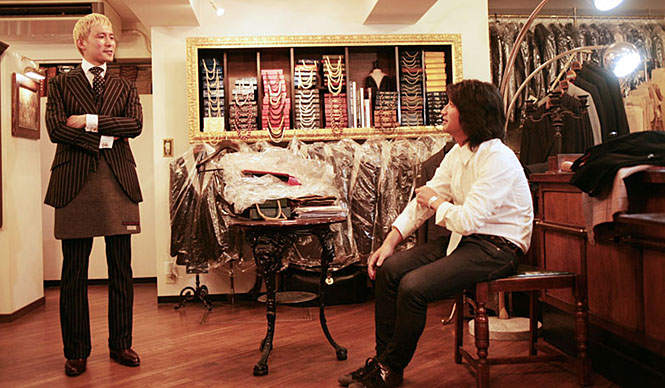
A special conversation between Yasuhiro Mihara, designer of the fashion brand "Sosuu," and Kazunari Arita, tailor at the bespoke tailor shop "Tailor & Cutter" in Aoyama. This is the second installment.—
Composition by Yasuhiro Takeishi (City Lights)Photo by Jamandfix

House Style and Japanese Craftsmanship
Yasuhiro MiharaI feel like many of your suits have flared sleeves, perhaps due to customer requests. Is there a particular reason for this?
Kazunari AritaActually, while they might appear to be flared, most sleeves are quite standard.
MiharaIs that so? I requested flared sleeves myself, and I was a bit worried it might seem ostentatious, but they look natural and elegant when paired with double-cuffed shirts.
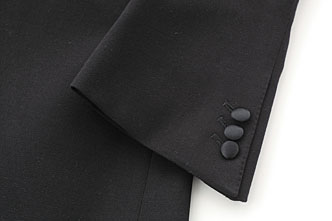
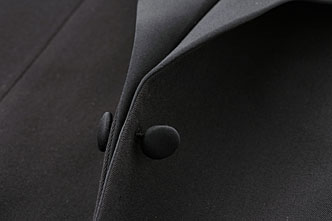
AritaFlared cuffs have been a detail for a long time. Similarly, the cutaway front, which is also said to be common, is a classic cut. It's not really innovative; people just weren't aware of it. Flared cuffs were also devised to look elegant when paired with double cuffs, so they are, in a sense, quite standard.
People often say, "Arita's house style is a cutaway front with flared cuffs," but I always tell them, "That's not quite right" (laughs). I don't recommend them to clients they wouldn't suit, and if someone insists on having them made, I'll politely suggest something else.
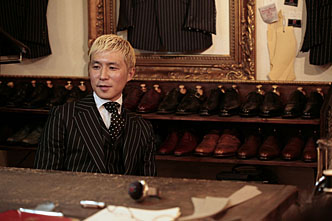
Mr. Kazunari Arita of Tailor & Cutter
MiharaIs that so? (laughs) By the way, you trained at "Ichibankan Yofukuten" in Ginza after returning to Japan. What do you see as the strengths and weaknesses of Japanese tailors?
AritaAs for strengths, their technical skills are exceptionally high. The older the craftsman, the more skilled they are, and they are very stubborn about their work. However, that stubbornness is both a strength and a weakness.
For instance, I believe they need to embrace newness in design to remain relevant, but they find that difficult. They have pride in being top tailors in Japan, and this pride manifests in both positive and negative ways.
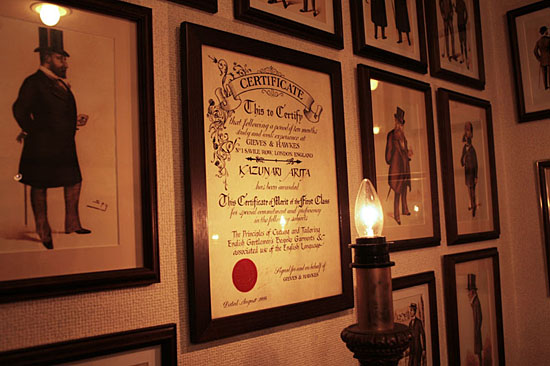
I thought that if young, fresh sensibilities could merge with Japan's top-tier skills, something even better could be created. However, I also find it remarkable that "Ichibankan" deliberately chooses not to do so.
I Want to Grow with the Younger Generation
MiharaI see. In contrast, you're quite dynamic, aren't you? (laughs) This is just my impression, but tailors are often perceived as stubborn, taciturn, unapproachable, and intimidating. However, you don't give off that impression at all. You're very talkative, natural, and your shop is easy to enter. I find that atmosphere very comfortable.
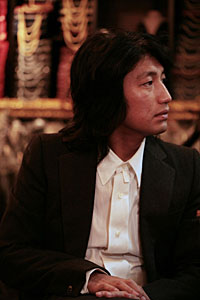
AritaThe reason for that is, if you open a high-end shop in Ginza with high prices, your clientele would naturally be wealthy older gentlemen. While it's interesting to engage with them, consider someone who is 40 now; they've been wearing suits for 20 years. They have disposable income and have likely worn various expensive brands. If I were to completely change their established style from those 20 years, they'd be upset (laughs).
This becomes more challenging with older clients. For example, if a client asks, "What about this kind of fitting?" and I don't think it's suitable, I won't outright reject it but say, "That's different from my approach." If they then say, "Just make it as I like," and I do, they might find it too constricting.
Of course, I can create something similar to what they've worn before, but I don't see the value in that for myself. Instead, I want to enjoy suits with the generations who are just starting to build their wardrobes, those in their 20s and 30s. While I could cater to older, affluent clients, that's not truly where my passion lies.
MiharaSo, Tailor & Cutter is a tailor shop that welcomes younger generations.
AritaCurrently, yes. However, I don't intend to stay this way indefinitely. As those in their 20s and 30s age and grow, I will also evolve. Therefore, I aim to gradually become more sophisticated alongside my clients. This will make it easier for them to embrace a more luxurious style. The overall suit culture in Japan has become quite stylish recently, but I believe there's still much room for growth.
MiharaIndeed, the Japanese suit culture has changed dramatically even in just the last few years.
AritaYes. Some clients are even more knowledgeable than we are (laughs). I expect this trend to continue, and I hope to gradually increase the number of people who appreciate my style, growing the shop into an even better establishment.
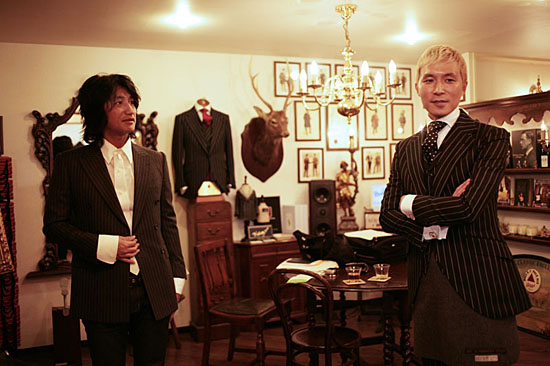
Tailor & Cutter
6-3-11 Minami-Aoyama, Minato-ku, Tokyo
Tel. 03-3499-7725
12:00 PM - 8:00 PM
Closed Tuesdays
http://www.tailorandcutter.jp/
