8th and 9th pairs
#8 & 9: The Untold Story of Beams' Birth
Riki / 1973 & 1975
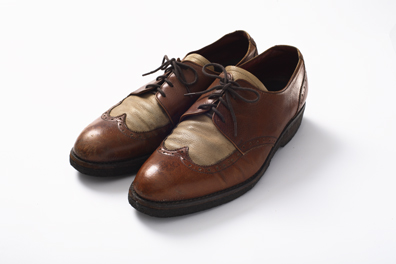
photo by Jamandfix
After graduating from university, I joined a women's apparel company where I was in charge of the Suzuyya account. I achieved quite good sales results, and within about two and a half years, I was promoted to deputy manager. However, my vision for product development clashed with that of the planning director, which caused a lot of stress. I desperately wanted to quit and started considering a career change, seeking advice from friends.
I was introduced to Mr. Rikuzo Suzuki of Sazaby, who lived in the same town, Zushi. I had an interview and was hired, but Sazaby wasn't involved in clothing at the time. They dealt in bags, imported antique furniture, fabrics, and had a small knitwear manufacturer, but I was set on working in apparel and ultimately turned down the offer.
Then, I was introduced to the former president, Mr. Shitaru, through Mr. Shohshin Tsuchihashi, my senior from junior high school who was in charge of the fashion pages for 'Heibon Punch' at the time. Mr. Tsuchihashi, who later became a reporter for Kodansha's 'Checkmate' and editor-in-chief of Hinode Publishing's 'Fine Boys,' was friends with Mr. Shitaru. That's how I met him.
At that time, Mr. Shitaru's company, Shinko Co., Ltd., was recovering from the oil shock. Fortunately, the president himself was eager to engage in value-added work, and he also had a passion for clothing. Mr. Tsuchihashi and I submitted a proposal for an 'American Life Shop' that would introduce American lifestyle and culture to Japan through clothing.
I submitted the proposal in September, at the age of 25. The project was approved, and I quit my job in January of the following year. Shinko Co., Ltd. established an apparel division, and we opened the store in February, when I was 26. That means we had six months for preparation. Mr. Tsuchihashi participated in an advisory capacity as his main job was editing. Initially, it was just me and a saleswoman. Then, Tetsuya Iwagaki (now Representative Director and President of United Arrows), who had been working part-time at Miura and was hired for his sales experience, joined us. I was the first store manager, and the three of us were there from opening day. Mr. Tsuchihashi had an argument with the president on the first day and didn't come back after the second day (laughs). But he continued to advise us for two years.
While still employed at my previous company (laughs), I went to America in December before the opening to purchase merchandise. Mr. Tsuchihashi accompanied me. We bought directly from stores in Los Angeles and San Francisco, negotiating discounts like, 'We're buying $1 million worth, so give us a 20% discount.' We brought them back as hand-carry, and that's how the 6-tsubo Beams store began.
We chose Harajuku for our store because I had started my career in Jingumae, and there was a sense that Harajuku would be the future of fashion. It was a time when creators were starting to gather, and interesting shops were beginning to open. While Laforet Harajuku opened in '78, even before that, Central Apartments existed, and though not mainstream, Harajuku had an energy.
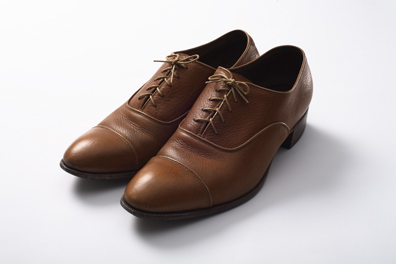
photo by Jamandfix
Before starting Beams, I was completely obsessed with Saint Laurent (laughs). Even when I met Mr. Iwagaki, I was wearing a leather jacket, a scarf, and a thoroughly European style. When I went to Los Angeles at 23, London Pop was all the rage, and everyone was wearing high heels. It wasn't the America of the 60s that Japanese people had admired. Seeing that, I thought Europe was the way forward.
However, for business, it was America. At the time, American casual wear wasn't directly imported into Japan, and I realized that by bringing it to the forefront, we could create a market. I saw it as a business opportunity.
In February 1976, the opening month, we made ¥1.8 million in sales. By October, we achieved our target of ¥5 million, and by February of the following year, sales reached approximately ¥12 million. For the first six months or so, we continued to buy directly from stores, but after that, we sourced from small trading companies.
I was able to go to America every month because my older sister was a Pan Am flight attendant. With family discounts, I could fly for 90% off. That's how I was able to travel so frequently.
When I was in my third year of high school, my sister lived in Hawaii, and I would visit her. I also looked at 'Men's Club' and she would tell me where to buy things. Of course, the 90% discount tickets were standby, but back then, if you added another ¥10,000 to the ticket price, you could upgrade to first class. That's when I started enjoying champagne and caviar (laughs).
I couldn't travel to Europe yet, but my sister told me about a bespoke shoemaker in Hong Kong, so I often had shoes made there.
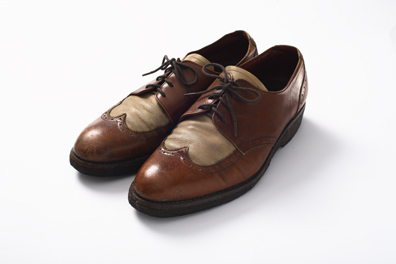
The shoes in the top photo are from 1973. They are a two-tone design of the existing blucher style, with a last that was so elegant it would still be considered beautiful today.
The shoes in the middle are also custom-made by 'Riki.' I designed these myself. This was in 1975, but there are two other pairs between 1973 and 1975. I'll share those another time.
(1973 & 1975 / ¥30,000)