Exploring the Allure of Kodo: Part 1
Exploring the Charms of Kōdō: An Interview with Yoshihiro Inasaka
Part 1: The Origins of Incense Lie in Ancient India
Starting from the idea of creating one's own scent, I've spoken with Hiromi Kobayashi and Yasuko Yoshioka. However, the concept of "Kōdō," Japanese incense culture, has lingered in the back of my mind. As a Japanese person, I felt a desire to understand the signature scents of Japan and to use them to create fragrances. This led me to discover Kōjū in Ginza. This time, I have the honor of speaking with Yoshihiro Inasaka, the president of Kōjū Ginza.
photo by Emiko Fukuda
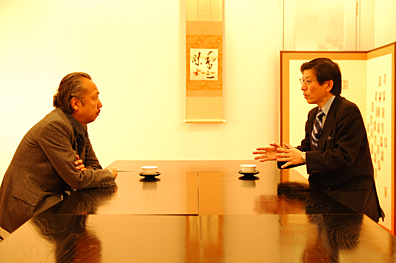
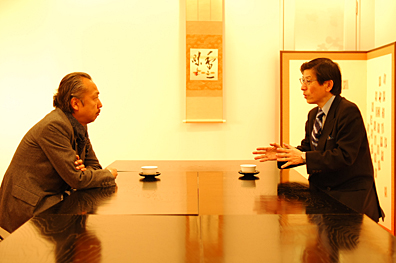
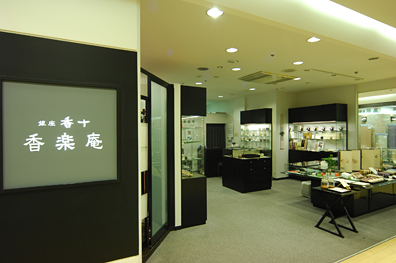
At Kōrakuan, Ginza
Understanding Kōdō as an Art Form
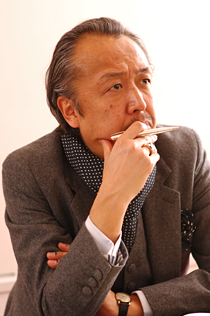
Tokito YoshidaThank you for your time today. You have a luxurious space here in the heart of Ginza.
Yoshihiro InasakaThank you. This space is used for Kōdō classes. Next door, we have "Kōjū," which offers a wide range of incense goods, and this shop, "Kōrakuan," which is a professional store dealing in Kōdō tools and traditional incense.
YoshidaI called it luxurious, but perhaps it's fitting for Ginza.
InasakaWe've had a lot of media attention recently, from magazines and other publications. While tea ceremony and flower arrangement were traditionally considered the main pillars of "Japanese culture," Kōdō, the culture of Japanese incense, is now being featured even in business magazines as part of self-improvement.
YoshidaAre there men attending the classes?
InasakaLately, we've seen an increase in men, particularly those over 40. Incense is linked to "wellness," to the health of mind and body, and to maintaining youthfulness, so we are very pleased about this trend.
YoshidaI see. May I ask you about the history of incense culture then?
InasakaAs I believe you are also studying, Mr. Yoshida, if we trace the origins of incense, we arrive at ancient India, about 4,000 years ago. Even then, incense was burned for both religious and practical purposes.
YoshidaSo, India is the source of incense culture?
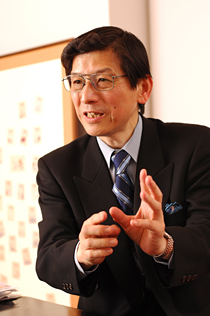
Mr. Yoshihiro Inasaka
InasakaTo put it simply and schematically, yes. When it spread eastward, burning solid materials became the mainstream, and Japan, in the Far East, reached the pinnacle of incense culture by using solid incense. Through the application of techniques, it was perfected as a spiritual "art form" centered on fragrance.
YoshidaSo, Kōdō is an art form.
InasakaConversely, when it spread westward, incense became liquefied. While incense oils have existed since ancient times, in medieval Europe, essential oils were produced as incense oils, leading to the birth of aromatherapy. Further development in medical and therapeutic knowledge culminated in the flourishing of perfume culture, particularly in France during the 18th and 19th centuries.
YoshidaIt's fascinating how it evolved so differently depending on how it was transmitted.
InasakaIndeed. In Japan, incense arrived with Buddhism, so its initial purpose was for prayer. This is the origin of Japanese incense culture. Incense smoke (kōen) was burned to convey prayers. It was about purifying oneself with incense in the present world. However, while Heijo-kyo embraced foreign cultures as they were, the concept of "Wa"—Japan's unique creativity—emerged during the Heian period.
YoshidaSo, unique culture originated in the Heian period?
InasakaDuring the Heian period, incense began to be enjoyed as a pastime, akin to what we now call healing and relaxation, and was incorporated into the cultural life of the aristocracy. Then, in the Muromachi period, the formal structure of the practice was established, evolving into a uniquely Japanese art form. At that time, all tea masters were also practitioners of Kōdō, and figures like Nobunaga, Hideyoshi, and Ieyasu were all enthusiasts of incense.
YoshidaSo it was something for those in power at the time?
InasakaIncense, both East and West, has been utilized by the powerful figures of each era and has always been at the forefront of its time. This has been the case since the era of conflict between the Mononobe and Soga clans during the introduction of Buddhism. It also applies to the dynamics between the imperial court and the samurai class.
YoshidaIn China, too, it seems to have been treated as a symbol of power.
InasakaYes. In ancient China, before Buddhism arrived, emperors burned incense at altars to commune with the will of heaven. It was interpreted that as the incense smoke rose to heaven, they could hear the voice of heaven.
YoshidaIn that case, it was considered extremely sacred.
Kōjū Ginza
Ginza Main Store
4F Ginza Core Bldg., 5-8-20 Ginza, Chuo-ku, Tokyo
TEL: 03(3574)6135
Main Store "Kōrakuan"
4F Ginza Core Bldg., 5-8-20 Ginza, Chuo-ku, Tokyo
TEL: 03(3574)6176
http://www.koju.co.jp/