March 9, 2015
Yasuhiro Mihara's
Yasunobu Mihara's "Openers Declaration" (1)
The new series by Yasunobu Mihara, "MEANING MADE IN JAPAN MIHARA YASUHIRO," starting on Openers, is...
a groundbreaking collaboration where Mihara, a world-renowned fashion designer, visits and reports on Japan's finest artisans and factories.
The resulting Made in Japan products, born from these encounters, will be exclusively sold through Openers' affiliated shopping sites, "rumors" and "SOSU MIHARA YASUHIRO."
Before the official launch, we spoke with Mihara about his thoughts on the series.
Text by Yasuhiro Takeishi (City Lights)Photo by JAMANDFIX

It's often said that Japanese people are diligent and serious,
which is why they can create excellent products.
But is that truly the whole story?
—Please tell us about the series title, "MEANING MADE IN JAPAN MIHARA YASUHIRO."
I used the word "MEANING" because I wanted to re-examine the significance of Made in Japan.
In today's market, flooded with imported goods from Western brands or inexpensive items from China, Japanese craftsmanship is increasingly being re-evaluated for its added value. However, there are still few opportunities to see the actual production sites.
While someone in my position naturally visits these workshops to some extent, I want ordinary people to see them too, and I myself want to see more.
I want to delve deeper into the meaning of Made in Japan.
It's often said that Japanese people are diligent and serious, which is why they can create excellent products. But is that truly the whole story?
Could there be other spiritual aspects, attitudes towards work, or a sense of understanding that comes from shared language?
While it may not happen every time, I plan to conceive products for this series and, through the process of creation, share the true meaning of Made in Japan with everyone.
—Was there a particular trigger that inspired this series concept?
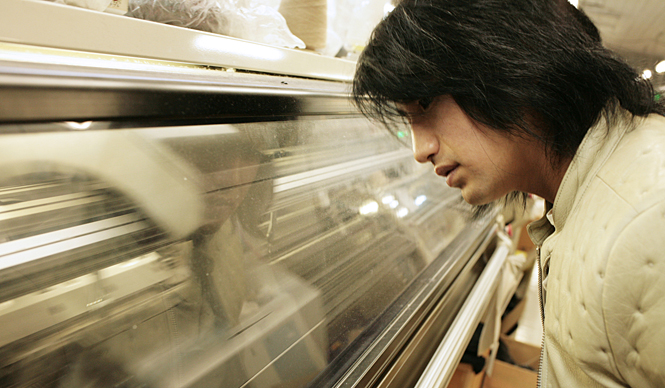
As one example, I once heard about a superb knitwear factory in Italy and went there to commission some work.
However, when I saw it firsthand, the knitting machines were Japanese, and the silk yarn was also Japanese.
Of course, the experience and skill of the technicians and artisans play a role, but there are many such products within Made in Italy.
It's true that these experiences abroad made me want to re-examine Japanese manufacturing.
That said, it's not about judging which is better, Japan or overseas; Italy has its own strengths, and China has its own.
Japan also has unique qualities, and I believe we overlook many aspects.
These are the parts I want to understand. I don't necessarily believe all Made in Japan is superior; I hope to discover and convey Japan's unique strengths.
—As you continue the series, what do you see as the unique strengths of Japanese manufacturing?
I believe it's humility in craftsmanship.
In my work with Japanese artisans, I've rarely had them boast about their skills.
Conversely, abroad, perhaps due to a national tendency to promote oneself, boasting is common (laughs).
I sense a certain ego in that, and I don't particularly like products that reflect it.
On the other hand, the items Japanese artisans create with effortless skill embody a humility that I find truly appealing.
It must be difficult to employ advanced techniques without drawing attention to them, and I think that's remarkable.
I also find that humility in artisans to be quite cool.
—Where do you think these unique qualities of Japanese manufacturing originate?
While traditional crafts like kimonos are distinct, I believe it's not solely a product of the environment but rather something cultivated by people.
The Made in Japan that I'll be introducing in this series will represent not just the country of Japan, but the products created by Japanese people nurtured in Japan.
—Do you plan to visit the production sites for each installment of the series?
Even when I go to see the manufacturing process, the people on-site sometimes seem a bit put off (laughs).
But just as you wouldn't ask a sprinter to run a marathon, or a ballet dancer to do ballroom dancing, even within the same genre of factories or artisans, as I talk with them, I start to sense things like, "This person might be good at sprints," or "Perhaps this person likes breakdancing."
This influences the design and the direction of the project.
Even when using machinery like sewing machines, it's still about people thinking and communicating together to create something.
There are aspects you can only understand by meeting in person. It might be an era where things can be made with a single phone call, but I find that rather strange.
